

Why OTFS Outperforms OFDM in High-Mobility Scenarios
No se pudo agregar al carrito
Add to Cart failed.
Error al Agregar a Lista de Deseos.
Error al eliminar de la lista de deseos.
Error al añadir a tu biblioteca
Error al seguir el podcast
Error al dejar de seguir el podcast

Why OTFS Outperforms OFDM in High-Mobility Scenarios
-
Narrado por:
-
De:
This story was originally published on HackerNoon at: https://hackernoon.com/why-otfs-outperforms-ofdm-in-high-mobility-scenarios.
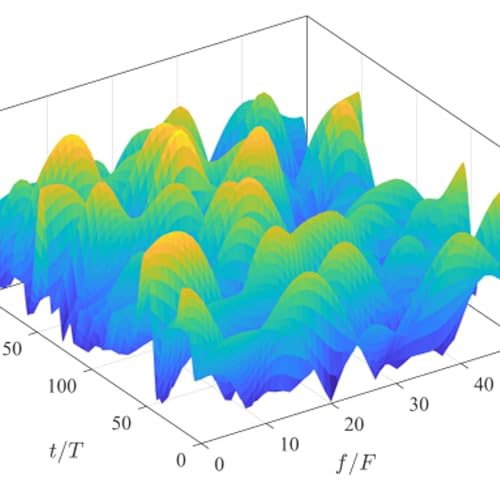
Explores how OTFS uses D-D domain predictability to interpolate, extrapolate, and track wireless channels, reducing pilot overhead in high-mobility scenarios.
Check more stories related to tech-stories at: https://hackernoon.com/c/tech-stories. You can also check exclusive content about #wireless-communication-systems, #otfs-modulation, #doubly-dispersive-channels, #spectral-efficiency, #delay-doppler, #aliasing-and-isci, #ltv-channel-models, #mimo-systems, and more.
This story was written by: @extrapolate. Learn more about this writer by checking @extrapolate's about page, and for more stories, please visit hackernoon.com.
The article explains how OTFS leverages the slow-varying nature of the delay-Doppler domain to interpolate and extrapolate channel states, enabling accurate tracking, lower pilot overhead, and reduced processing delay even in high-mobility, doubly-dispersive environments.