Episodios

  • Episode 487 - Jack Owen from Six Feet Under shares stories, gear tips, new album and songs for overcoming depression
    Mar 26 2026

    Host, James Cox, the “handicapped” yet unstoppable champion of healing riffs, sits down with a true legend of extreme metal: Jack Owen, founding guitarist of Cannibal Corpse and longtime member of Six Feet Under.


    In this conversation Jack opens up about the power of heavy music to combat low moods, shares the song that always pulls him out of a dark spot (classic early‑Metallica), and offers practical advice for aspiring guitarists—from mastering power chords with Kiss and AC/DC to tackling Iron Maiden’s “Phantom of the Opera.”


    Listeners also get an inside look at Jack’s gear journey (from Blackheart to Solar), his tour schedule (June 4 – August 11 across North America, Europe and possibly South/Central America), and the new Six Feet Under album “Next to Die”—including its collaborative songwriting split, the fresh artwork, and why the band is leaning into “groovy horror” vibes.


    Jack reflects on the evolution of the death‑metal scene, the challenges of streaming royalties, and why physical media still matters to him. He even reveals a lightning‑round of fun facts—the heaviest riff he ever wrote, his favorite Cannibal Corpse record, an underrated guitarist (Jeff Waters), and the surprising truth that before touring he worked in drywall.


    Whether you’re a metalhead looking for inspiration, a guitarist wrestling with finger limitations, or simply someone seeking music’s therapeutic punch, this episode delivers a raw, heartfelt, and unforgettable glimpse into the life of a metal pioneer who truly believes that when words fail, the riffs speak. Tune in, crank the volume, and let the music do the healing.

    Más Menos
    35 m
  • Episode 486 - Michale Graves keeps it real: depression, faith, punk, and why music still speaks louder
    Mar 23 2026

    From the tumultuous days as the lead vocalist for the Misfits—where he helped shape landmark albums like American Psycho and Famous Monsters—to his gritty solo projects such as Graves and Gotham Road, Michale Graves opens up about the highs and lows that have defined his career. He talks candidly about battling depression, the pain of being pushed aside by bandmates, the loss of his father, and the relentless search for purpose—all while finding salvation in the very songs that once felt like a burden.


    James and Michale dive deep into the creative process: why many of his tracks start on an acoustic guitar, how he balances horror‑themed aesthetics with an underlying message of hope, and the surprising role his Christian faith plays in his music today. They also share behind‑the‑scenes stories—like the bizarre dinosaur‑bone ink on a limited‑edition record—and discuss what makes a perfect, “no‑skip” album.


    The conversation wraps up with a sneak peek at Graves’s upcoming “God Bless America” tour, his new EP on Epochal Records, and a heartfelt reminder that, even when words run dry, music remains the most powerful bridge between pain and peace.


    Tune in, get inspired, and remember: when words fail, music speaks. 🎧✨

    Más Menos
    58 m
  • Episode 485 - From Ancient Instruments to Modern Therapy: Wally Bartfay Explains Music’s Role in Depression and Dementia
    Mar 19 2026

    Welcome back to When Words Fail, Music Speaks, the podcast that explores how melody, rhythm, and vibration can mend the mind and body. In today’s episode we’re reunited with a familiar voice from our archives—Dr. Wally Bartfay, the “rock‑in‑the‑lab” professor who retired in August 2024 after a distinguished career at Ontario Tech University’s Faculty of Health Sciences.


    Wally isn’t just an academic; he’s a singer‑songwriter who just dropped two new rock tracks, Poison & Desire and Sweet Old‑School Rock & Roll. He’ll walk us through his journey from childhood camp‑fire folk songs that soothed his father’s vascular dementia, to creating a Clinical Demonstration Unit for advanced dementia patients where personalized playlists cut behavioral and psychological symptoms of dementia (BPSDs) by an astonishing 600 %.


    We’ll travel back 40‑60,000 years to the first known instrument—a bear femur with drilled holes—then jump forward to cuneiform musical notation, Chinese characters that equate music with medicine, and ancient Greek deities who ruled both health and harmony. From there, Wally unpacks the modern science of music therapy, binaural‑beat stimulation, and “noise therapy” (white, pink, brown, and gray noise) while revealing why the Earth’s 7.83 Hz Schumann resonance and the universe’s 432 Hz hum can calm our nervous systems.


    Along the way we’ll hear vivid case studies: an 80‑year‑old Alzheimer’s patient who rediscovered herself on an upright piano, the surprising attraction of ACDC’s “Thunderstruck” to great‑white sharks, and how acoustic guitars, reverb‑rich by nature, soothe listeners far more than a sterile electric tone.


    Finally, Wally shares the personal inspiration behind his latest songs, the creative spark of writing versus listening, and a simple, actionable tip for anyone feeling stuck, anxious, or down: play the song that takes you back to your “happy place” and let the music transport you to a calmer present.


    Grab your headphones, tune your mind to 432 Hz, and get ready to hear how science, art, and the ancient heartbeat of the planet converge in the most accessible prescription—music. 🎶

    Más Menos
    1 h y 22 m
  • Episode 484 - Healing Beats: Veteran Sean Martin Shares PTSD Journey Through Hard Rock and Rap Fusion
    Mar 14 2026

    Welcome back to When Words Fail, Music Speaks, the podcast where we harness the healing power of music to battle depression, trauma, and the everyday battles we all face. I’m your host, James Cox—a lover of music who knows firsthand how a riff can become a lifeline.


    In today’s episode we sit down with Sean Martin, the powerhouse vocalist and guitarist behind the hard‑rock outfit The Quarantine. Sean’s journey weaves together grunge grit, military grit, and raw, unapologetic honesty. From his days in the airborne infantry and covert training in Alaska and Thailand to the darker corridors of PTSD and a “temporary psychotic breakdown” that landed him in a VA inpatient program, Sean shows us how music can become both therapy and rebellion.

    Together we explore:

    • Art as Therapy – how Sean turned a scathing rap‑rock track, “Nemesis,” into a cathartic outlet for trauma.
    • The Weight of OPSEC – why soldiers often stay silent, and how breaking that silence unlocks healing.
    • Band Identity – the meaning behind “The Quarantine” and its stance against societal other‑ization.
    • Discipline Meets Creativity – what military rigor taught Sean about practice, improvisation, and pushing beyond the sheet music.
    • Grunge Roots & Influences – his first connection to Alice in Chains, Nirvana, Soundgarden, and how those sounds still echo in his writing.
    • Lightning‑Round Favorites – from Soundgarden and Pantera to Incubus, Deftones, and even Michael Jackson, revealing the eclectic soundtrack that fuels his soul.


    If you’ve ever felt the sting of isolation, the roar of anxiety, or the need for a musical spark to pull you back from the edge, this conversation is for you. Grab your headphones, take a breath, and let Sean’s story remind you that, no matter how loud the world gets, there’s always a chord that can bring us back to center.

    Stay tuned—because when words fail, music speaks.

    Más Menos
    1 h y 5 m
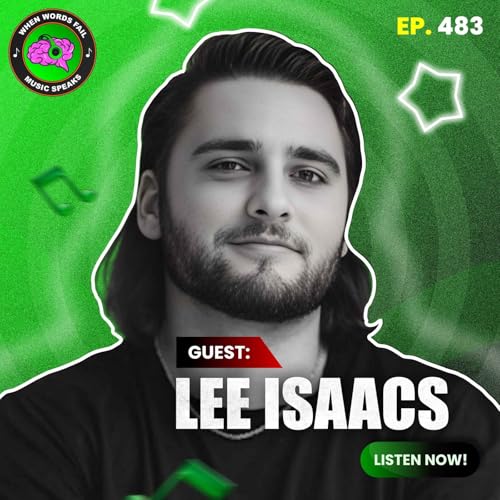
  • Episode 483 - Connecting Humanity Through Sound: Lee Isaacs Reflects on Music, Privacy, and Personal Growth
    Mar 12 2026

    Welcome back to When Words Fail, Music Speaks, the podcast that battles depression and everyday anxiety with the universal power of music. I’m your host, James Cox, and today we’ve got a truly special guest who embodies the ethos of our show: independent rocker‑songwriter Lee Isaacs.


    For the past four and a half years Lee has made Nashville his home, carving out a path that favors authenticity over industry labels. In this conversation he shares:

    • Insider Nashville tips – from the bustling “Country Row” on Broadway to the hidden gems of Midtown (Live Oak, Tin Roof, Odie’s) and his favorite food spots, including McDougal’s hot chicken and Edley’s BBQ.
    • Songwriting stories – the spontaneous creation of “Runaway Romeo” during COVID, the narrative mystery behind “Spell on Me,” and the heartfelt tribute “Take Me Back to Lexington” that bridges his Kentucky roots with his Nashville life.
    • The business side of being indie – why Lee founded his own publishing entity, Little Radical LLC, how he navigates self‑promotion, and the challenges and freedoms of running a solo label.
    • Stagecraft and vulnerability – candid moments from his first Nashville gig, opening for Flo Rida, and the mental tricks musicians use to calm nerves before stepping on stage.
    • Music as healing – the song U2’s “Bad” that helped him through his dad’s near‑fatal car accident, and his belief that music is “God’s voice,” a language that connects us across languages, cultures, and generations


    Whether you’re a songwriter looking for inspiration, a budding indie artist curious about the business, or just someone who needs a reminder that music can mend the soul, this episode delivers raw honesty, practical advice, and a whole lot of heart.


    Grab your headphones, press play, and let Lee’s story remind you why, when words fail, music always speaks.

    Más Menos
    57 m
  • Episode 482 - Healing Through Song: Stella Soleil’s Journey From Ballet to Pop and Depression Recovery
    Mar 5 2026

    In today’s episode, host James Cox—a self‑described “handicapped” presenter with cerebral palsy—welcomes the fiercely honest and soulful artist Stella Soleil (formerly Estella Asole, aka Sister Soleil). From the icy streets of Chicago to the sun‑kissed suburbs of Lexington, SC, they explore how music has been a lifeline through depression, trauma, and artistic evolution.


    What you’ll hear:

    • A candid back‑story: Stella’s journey from ballet prodigy at three, through an indie‑rock, post‑punk Chicago scene, to the industrial‑pop persona Sister Soleil and her eventual reinvention as Stella Soleil after a turbulent stint with Universal Music.
    • The first spark of songwriting: The acapella “Red” that finally found its shape when a late‑producer friend added piano chords, marking her true arrival as a songwriter.
    • Music‑therapy moments: A group‑therapy Pink Floyd session that illustrated “healing frequencies,” plus a dive into divine harmonies, and how those concepts fuel her upcoming love‑and‑joy concept album.
    • Tech & ethics: The rise of AI‑driven composition, copyright gray zones, and Stella’s own workaround—a voice‑to‑MIDI tool that lets her compose without learning every instrument.
    • Behind the scenes: The story behind her new single “Hello,” its 14‑year gestation, collaboration with producer John Fryer, and plans for a limited‑edition colored‑vinyl release.
    • Personal quirks & inspirations: From Yorkie‑Morkie dogs that think they’re pit bulls, to early‑morning meditations, true‑crime documentaries, and her all‑time favorite voices—Elizabeth Fraser (Cocteau Twins), Chino Moreno (Deftones), Trent Reznor (Nine Inch Nails), and the haunting female vocalist on Pink Floyd’s “Great Gig in the Sky.”


    All of this is framed by James’s mission to prove that when words fall short, a well‑crafted song can lift us out of the darkness. Whether you’re a struggling songwriter, a mental‑health advocate, or simply a lover of great music, this conversation offers practical insights, heartfelt anecdotes, and a reminder that you are worthy, you are heard, and you are never alone.

    Stay tuned, press play, and let the music speak.

    Más Menos
    Aún no se conoce
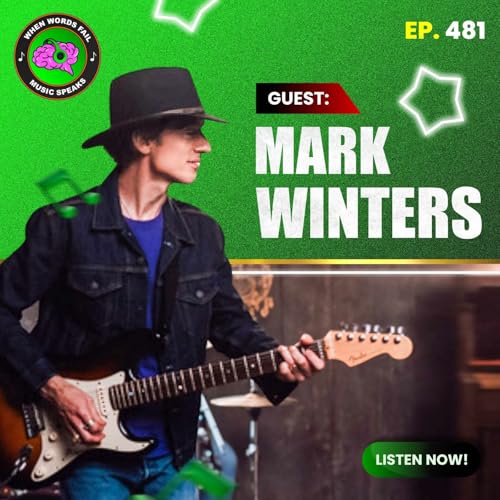
  • Episode 481 -From Rocket Engines to Rock Guitars Mark Winters Explains How Math Powers Creative Expression
    Feb 26 2026

    Welcome back to When Words Fail, Music Speaks, the podcast that explores how melody, poetry, and science can lift us out of life’s toughest moments. I’m your host, James Cox—a self‑identified “professional handicapped” host who knows all too well how depression can shadow the daily grind, but also how a single chord can pull us back into the light.


    Today’s guest is nothing short of a renaissance man: Mark Winters. Hailing from Texas, Mark is a rock‑blues‑pop songwriter, poet, entrepreneur, mentor to budding creators, and—yes—an aerospace engineer who’s spent his career wrestling with orbital mechanics and computational fluid dynamics. He’s the mind behind four albums and the fresh single “Let It Rain,” a heart‑wrenching track about loss, guilt, and the healing power of music.


    In this episode we’ll dive into:

    • How Mark’s grandmother’s voice still guides his lyrics.
    • The delicate dance between poetry and song—where meter meets melody.
    • The surprising math inside music: octaves, rhythms, polyrhythms, and how an engineer’s eye can shape a chord progression.
    • The crossroads of AI and humanity—what happens when machines start to write the songs that make us feel human?
    • The raw emotions behind “Let It Rain” and the deeper conversation about suicide, grief, and community support.


    Whether you’re a musician, a science nerd, or simply someone looking for a soundtrack to navigate life’s ups and downs, this conversation will remind you that when words stumble, music always finds a way to speak. Grab your headphones, press play, and let Mark’s story and songs resonate. 🎙️✨

    Más Menos
    47 m
  • Episode 480 - Balancing Jazz Improvisation and Pop Discipline: Insights from John Von Seggern’s Global Career
    Feb 19 2026
    Welcome back to When Words Fail, Music Speaks, the podcast where host James Cox uses the universal language of music to battle depression, spark creativity, and explore the hidden stories behind the sounds that shape our lives.In today’s episode James sits down with John Von Seggern, a true sonic architect whose career reads like a world‑tour playlist: from jazz clubs in New York and Tokyo to massive Chinese pop concerts in Hong Kong, from avant‑avant ambient bass‑guitar experiments to cutting‑edge electronic production. John walks us through his musical evolution—starting on cello, trombone, and even a flute, then falling in love with the upright bass, discovering the 10‑string Chapman Stick, and finally forging an identity that blends live improvisation with immersive digital soundscapes.Together they dive into:The therapeutic power of music in moments of depression and how ambient textures can become both background and foreground.The gritty realities of making a living as a jazz musician versus the discipline required on pop‑star stadium tours.The cultural contrasts James and John observed while performing in Japan, Hong Kong, and Los Angeles, and why Asian pop musicianship is often underestimated in the West.A “happy accident” story from the making of John’s Taking Shots of Mountain album, sparked by a chance encounter with a Chapman Stick.The future of music education through FutureProof Music School, where AI‑driven personalized pathways meet human mentorship to help beginners and pros alike create electronic dance music without losing the tactile joy of playing an instrument.Whether you’re a seasoned bassist, a bedroom producer, or simply someone looking for a melodic lift, this conversation offers a deep, heartfelt look at how one artist turned curiosity, discipline, and a love for…​​​​​​​​​​​​​​​​​​​​​​​​​​​​​​​​​​​​​​​​​​​​​​​​​​​​​​​​​​​​​​​​​​​​​​​​​​​​​​​​​​​​​​​​​​​​​​​​​​​​​​​​​​​​​​​​​​​​​​​​​​​​​​​​​​​​​​​​​​​​​​​​​​​​​​​​​​​​​​​​​​​​​​​​​​​​​​​​​​​​​​​​​​​​​​​​​​​​​​​​​​​​​​​​​​​​​​​​​​​​​​​​​​​​​​​​​​​​​​​​​​​​​​​​​​​​​​​​​​​​​​​​​​​​​​​​​​​​​​​​​​​​​​​​​​​​​​​​​​​​​​​​​​​​​​​​​​​​​​​​​​​​​​​​​​​​​​​​​​​​​​​​​​​​​​​​​​​​​​​​​​​​​​​​​​​​​​​​​​​​​​​​​​​​​​​​​​​​​​​​​​​​​​​​​​​​​​​​​​​​​​​​​​​​​​​​​​​​​​​​​​​​​​​​​​​​​​​​​​​​​​​​​​​​​​​​​​​​​​​​​​​​​​​​​​​​​​​​​​​​​​​​​​​​​​​​​​​​​​​​​​​​​​​​​​​​​​​​​​​​​​​​​​​​​​​​​​​​​​​​​​​​​​​​​​​​​​​​​​​​​​​​​​​​​​​​​​​​​​​​​​​​​​​​​​​​​​​​​​​​​​​​​​​​​​​​​​​​​​​​​​​​​​​​​​​​​​​​​​​​​​​​​​​​​​​​​​​​​​​​​​​​​​​​​​​​​​​​​​​​​​​​​​​​​​​​​​​​​​​​​​​​​​​​​​​​​​​​​​​​​​​​​​​​​​​​​​​​​​​​​​​​​​​​​​​​​​​​​​​​​​​​​​​​​​​​​​​​​​​​​​​​​​​​​​​​​​​​​​​​​​​​​​​​​​​​​​​​​​​​​​​​​​​​​​​​​​​​​​​​​​​​​​​​​​​​​​​​​​​​​​​​​​​​​​​​​​​​​​​​​​​​​​​​​​​​​​​​​​​​​​​​​​​​​​​​​​​​​​​​​​​​​​​​​​​​​​​​​​​​​​​​​​​​​​​​​​​​​​​​​​​​​​​​​​​​​​​​​​​​​​​​​​​​​​​​​​​​​​​​​​​​​​​​​...Grab your headphones, tune in, and ...
    Más Menos
    50 m