We Are Not Saved Podcast Por Jeremiah arte de portada

We Are Not Saved

We Are Not Saved

De: Jeremiah
Escúchala gratis

We Are Not Saved is a podcast covering Eschatology. While this concept has traditionally been a religious one, and concerned with the end of creation, in this podcast that study has been broadened to include secular ways the world could end (so called x-risks) and also deepened to cover the potential end of nations, cultures and civilizations. The title is taken from the book of Jeremiah, Chapter 8, verse 20: The harvest is past, the summer is ended, and we are not saved.© 2016 Ross W. Richey Cristianismo Espiritualidad Ministerio y Evangelismo Mundial
Episodios
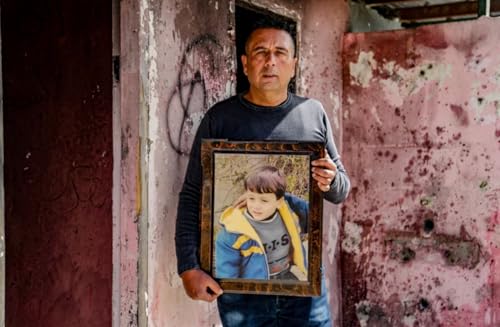
  • A Day in the Life of Abed Salama - More Palestinian Sadness
    Apr 12 2026

    A Day in the Life of Abed Salama: Anatomy of a Jerusalem Tragedy

    By: Nathan Thrall
    Published: 2023
    272 Pages


    Briefly, what is this book about?

    The book operates on three levels:

    First, the book spends quite a bit of time giving you Abed's history: his youth, his participation in the Palestinian resistance, his marriages, the associated family dynamics, etc.

    Second, there's the actual "day" from the title. Abed's desperate search for his son after he was involved in a horrific bus accident, and the various difficulties presented by Israeli control (checkpoints, different passes, separate roads, etc.)

    Third, there's everything beyond Abed and the "day". Including the backstory on how the roads were routed, the walls were built, and the rules implemented by the Israelis. The book also contains histories on dozens of characters, including Abed's many loves, an Israeli colonel who designed the wall, ultra-Orthodox volunteer rescuers, and Israeli settlers living in the area. I found the story of Huda Dahbour, who works as a physician with a UNRWA mobile clinic, to be particularly interesting. She also has a child involved in the wreck, and has to deal with a tragedy that's depressing for both its similarity to and differences from Abed's.

    Taken all together, it's a level of tragedy, complexity, poverty, and culture that's hard to process for someone living in relative ease on the other side of the world.

    What authorial biases should I be aware of?

    The book is clearly centered on the Palestinian side of things, and it's obvious that Thrall largely views the Israelis as being immoral, unjust, and using their greater power to impose ridiculous restrictions. That said, he does offer sympathetic accounts of some Israelis, but most of his sympathy is reserved for the Palestinians.

    Who should read this book?

    Más Menos
    11 m
  • Plagues upon the Earth - You're Not Sufficiently Horrified
    Apr 8 2026

    Plagues Upon the Earth: Disease and the Course of Human History

    By: Kyle Harper
    Published: 2021
    704 Pages


    Briefly, what is this book about?

    A comprehensive historical overview of the never-ending war between humanity and disease. From its earliest days all the way down to the COVID-19 pandemic. With a specific focus on what he calls the "paradox of progress": every new advance creates new opportunities for diseases. But it's not just us driving diseases, they're driving us as well. Efforts to mitigate the negative effects of these pathogens are scattered throughout our history, our civilization and our genes.

    What authorial biases should I be aware of?

    None that you'd really be surprised by. He explicitly takes a very global view of humanity's disease burden, knowing that the story of European diseases like smallpox and the plague have already received plenty of attention. (Which is not to say he ignores them. Merely that he locates them as just one among many.)

    Who should read this book?

    I think everyone should be more aware of the potential dangers of pandemics, and the monstrous impact plagues have had on the development of humanity and civilization, and this book does a fantastic job with the second part, but it has less to offer on future danger than I hoped. Speaking of which:

    What does the book have to say about the future?

    Harper definitely takes the stand that our long war against diseases is far from over, and there is a lot of great discussion about how pathogens evolve alongside us, changing tactics as we change our environment. But there's almost no discussion (none that I really remember) of the danger of bioengineered pathogens, which felt like a significant oversight.

    Specific thoughts: Two things which continue to baffle me

    Más Menos
    9 m
  • Phenomena - Why Must It Always Be a Spoon?
    Mar 31 2026

    Phenomena: The Secret History of the U.S. Government's Investigations into Extrasensory Perception and Psychokinesis

    By: Annie Jacobsen
    Published: 2017
    544 Pages


    Briefly, what is this book about?

    An exhaustive history of the government's attempts to systematize and weaponize paranormal abilities. It also covers the broader paranormal research landscape, with lots of discussion of Uri Geller.

    What authorial biases should I be aware of?

    Jacobsen claims to be approaching the subject as a neutral observer, but I got a strong "I want to believe" vibe from the book. Her approach appears to assume what it claims to be investigating. The overarching question of the book is: "Why did the government spend so much time and effort on these areas if there's nothing there?"

    As one example of bias, I grew up reading Carl Sagan, and in his telling the appearance of Uri Geller on The Tonight Show with Johnny Carson was the smoking gun. Carson went to great lengths to make sure that Geller couldn't influence the demonstration, and, what do you know? Geller failed to bend any spoons. I read about this when I was a teenager and it has loomed large in my memory ever since, so I was very interested to see how Jacobsen would handle it. She devotes one sentence to it:

    Geller was nervous, he said, having recently been unable to demonstrate psychokinesis on Johnny Carson's Tonight Show.

    I'm sure I'm reflecting my own biases with this focus, but if she was truly being a neutral observer, I would have expected Geller's Carson appearance to have gotten several pages.

    Who should read this book?

    ...

    Más Menos
    23 m
Todavía no hay opiniones