

Very Good Is a Long Way from Perfect - Part 2 - Immortal or Conditionally Immortal?
No se pudo agregar al carrito
Solo puedes tener X títulos en el carrito para realizar el pago.
Add to Cart failed.
Por favor prueba de nuevo más tarde
Error al Agregar a Lista de Deseos.
Por favor prueba de nuevo más tarde
Error al eliminar de la lista de deseos.
Por favor prueba de nuevo más tarde
Error al añadir a tu biblioteca
Por favor intenta de nuevo
Error al seguir el podcast
Intenta nuevamente
Error al dejar de seguir el podcast
Intenta nuevamente

Very Good Is a Long Way from Perfect - Part 2 - Immortal or Conditionally Immortal?
-
Narrado por:
-
De:
Episode 4
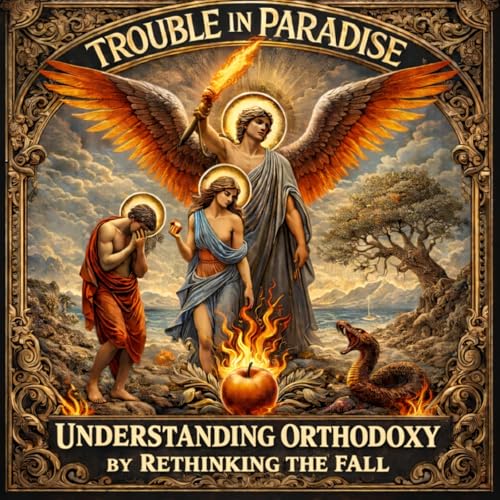
If Adam was created perfect… why did he fall?
And if God knew he would fall… what does that mean for evil?
In Part 2 of Very Good Is Far from Perfect, we follow the logic of perfection all the way to the edge — into the question many people are afraid to ask:
Does our theology accidentally make evil necessary?
In this episode:
- Why “perfect Adam” creates pressure in theodicy
- A simple breakdown of free will: libertarianism, determinism, and compatibilism
- Why Arminians and Calvinists may share more assumptions than they realize
- What “God permitted the Fall” really means — and how that differs in Western and Orthodox theology
- Leibniz and the “Best of All Possible Worlds”
- Why evil becomes instrumental in some systems
- Evil as parasitic, not necessary
- “I am the Vine, you are the branches” — an organic vision of salvation
This episode isn’t about attacking traditions.
It’s about asking whether our starting assumptions — especially the idea that Adam was created perfect — force us into theological tensions that never fully resolve.
What if the problem isn’t sovereignty versus free will?
What if the problem is the assumption that Adam was perfect?
Very good is far from perfect.
And that difference changes how we speak about God.
Todavía no hay opiniones