

“Truth Denied: Blacks and the American Revolution”
No se pudo agregar al carrito
Add to Cart failed.
Error al Agregar a Lista de Deseos.
Error al eliminar de la lista de deseos.
Error al añadir a tu biblioteca
Error al seguir el podcast
Error al dejar de seguir el podcast

“Truth Denied: Blacks and the American Revolution”
-
Narrado por:
-
De:
https://youtube.com/shorts/IO5Whq5FKX0?si=H74fTlRrL2p8LEIK
Mr. Positive, M.A., B.Soc.Sci., CIT, PEL, A.S.P.D.
Black Americans: Nothing But the Truth All parents, teachers, and fellow Americans must listen to this episode. Share it with someone—then ask them to share it with someone else. Keep it moving. Keep the truth alive.
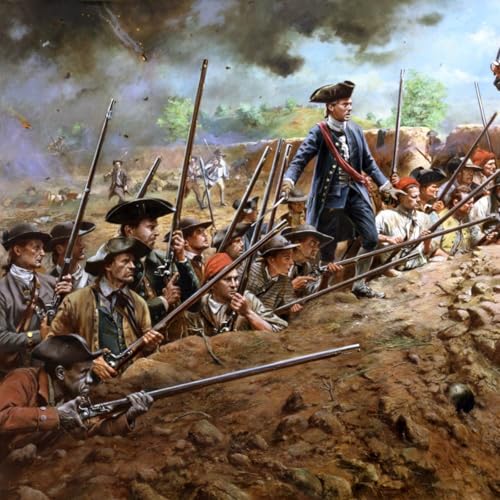
"We were never told the full story about Black Americans and the American Revolution. Pull up images of the Battle of Bunker Hill and Washington’s crossing of the Delaware. Look closely. Find the Black patriots. Learn the truth." Mr. Positive.
🧭Lesson Plan to Be Used with This Podcast: Reclaiming Black Patriots of the American Revolution
Presented by the Positive People USA Podcast
🎯 Learning Objectives (with Examples)
Students will:
- Identify and explain the contributions of Black patriots in the Revolutionary War, such as:
- Wentworth Cheswell, the first Black elected official in U.S. history, who rode north in 1774 to warn of British troop movements.
- James Armistead Lafayette, a double agent whose intelligence helped secure victory at Yorktown in 1781.
- Analyze how post-Civil War political forces erased Black contributions from historical narratives, using:
- David Barton’s claim that Southern Democrats rewrote textbooks between 1870–1890 to support segregation and suppress Black patriotism. "Verbal Presentation."
- Evaluate primary sources to restore historical truth, including:
- William Cooper Nell’s 1855 book, The Colored Patriots of the American Revolution, which documents figures like Crispus Attucks and Salem Poor.
📈 Learning Outcomes
By the end of the lesson, students will be able to:
- Name and describe at least five Black patriots, including:
- Peter Salem, who killed British Major Pitcairn at Bunker Hill (June 17, 1775).
- Phillis Wheatley, who corresponded with George Washington in 1775–76, praising his leadership through poetry.
- Explain the mechanisms of historical erasure, such as:
- The removal of Black figures from post-Reconstruction textbooks to justify Jim Crow policies and white supremacy.
- Create a civic restoration message that reclaims a forgotten legacy, such as:
- A podcast script honoring Lemuel Haynes, the first Black ordained Protestant minister, who preached liberty and pastored churches in Massachusetts and New York.
🧪 Assessment
Formative:
- Quick write: “Why was Wentworth Cheswell’s election in 1768 historically significant?”
- Group discussion: Analyze Prince Whipple’s symbolic presence in Washington Crossing the Delaware and its implications for visual legacy.
- Draw a picture and explain the significance of any part of the podcast that strikes you as important.
Summative:
- Civic Restoration Project: Students will produce a mini-podcast script, PSA, or infographic that reclaims one Black patriot’s legacy and critiques the mechanisms of historical erasure.
- Rubric will assess:
- Historical accuracy (dates, locations, roles)
Comments: educatorsocialscience@gmail.com