Episodios

  • The Autumnal with Keith Lehtinen
    Apr 15 2026

    We're back with another episode of Trade School! This time, we're talking about The Autumnal! Our host this week is Keith Lehtinen!

    Support us on Patreon! https://patreon.com/CertainPOVMedia

    Edited by Case Aiken

    Scored by Bret Eagleston

    Certain Point Of View is a podcast network brining you all sorts of nerdy goodness! From Star Wars role playing, to Disney day dreaming, to video game love, we've got the show for you! Learn more on our website: https://www.certainpov.com

    Join us on Discord: https://discord.gg/wcHHer4

    FOLLOW US: ▶ Instagram: @certainpovmedia

    Time Stamps
    • Introduction to "The Autumnal" (00:00)
    • Character Analysis of Cat Somerville (01:23)
    • Artistic Contributions by Chris Sheehan (05:30)
    • Recommendation to Read the Comic (08:15)
    • Future Comic Discussions (07:25)
    Más Menos
    8 m
  • Invincible Vol. 1: Family Matters with Case Aiken
    Apr 8 2026
    We're back with another episode of Trade School! This time, we're talking about Invincible Vol.1 Family Matters! Our host this week is Case Aiken! Support us on Patreon! https://patreon.com/CertainPOVMedia Edited by Case Aiken Scored by Bret Eagleston Certain Point Of View is a podcast network brining you all sorts of nerdy goodness! From Star Wars role playing, to Disney day dreaming, to video game love, we've got the show for you! Learn more on our website: https://www.certainpov.com Join us on Discord: https://discord.gg/wcHHer4 FOLLOW US: ▶ Instagram: @certainpovmedia Foundational Story and Themes: Mark's superhero journey begins with humorous discoveries and key character introductions, avoiding major twists. Art and Design Choices: Cory Walker's initial art contrasts with later styles; Ryan Otley is praised for quality and evolution. TV Show Pace and Coverage: The show condenses the comic for clarity, preserving essential story elements while speeding up the narrative. Trade Paperback Format: Each trade offers digestible arcs and extras like commentary, enhancing the reading experience. Longevity and Scope: The series spans over 160 issues, maintaining high quality and innovative storytelling throughout its run. Cultural and Fan Engagement: Podcasts and YouTube content keep the Invincible community active, fostering ongoing discussions and celebrations. Notes Invincible Comic Series Overview The first volume of Invincible establishes a grounded, classic superhero story that gradually evolves into a complex narrative. Foundational Story and Themes center on Mark's early superhero journey, highlighting his discovery of powers and team interactions (02:49) The story begins with Mark working a fast-food job and discovering his powers with humorous moments like throwing a bag into space Introduces key characters including Titan, Atom Eve, Robot, and Rex Splode, setting up long-term arcs Early plotlines feature a mad scientist subplot and Flaxen invasions, providing initial conflict without major spoilers The volume avoids major twists about Omni Man's true nature, reserving that for volume two, emphasizing a slow, character-driven pace Art and Design Choices reflect the evolution of characters and visual storytelling in the series (06:45) Cory Walker's art in volume one sets the tone, with a lighter, almost white costume for Omni Man rather than the darker blue seen later Ryan Otley's art, which dominates the series, is praised for its quality and is considered a perfect fit for the story's evolution Character sketches and supplemental material provide deep insight into design decisions for key characters like Robot and Atom Eve The art direction under Cory Walker for the show maintains continuity with the comic's visual style Narrative Tone and Progression balances straightforward superhero storytelling with deeper, deconstructive and reconstructive elements (10:49) The series starts as a pure superhero comic before introducing deconstructive elements later, then returns to an optimistic tone The slow burn narrative allows for rich character development, culminating in hopeful resolutions Major villains remain mysterious in volume one but are hinted at behind the scenes, building suspense Speaker Case Aiken highlights the series' success in sustaining a long, coherent run with over 160 issues Media Adaptation and Audience Engagement The Invincible TV show condenses and adapts the comic's story, making it more accessible while honoring the original. TV Show Pace and Coverage compresses the content of the first comic volume into the first episode to fit the medium's needs (13:27) The show moves at a much faster pace compared to the comic's slow burn, streamlining subplots for clarity Key story beats from volume one are preserved, but some elements are consolidated for narrative efficiency The show's abridged approach suits modern viewing habits, while the comic remains a deeper experience for those interested Casting and Character Focus enhances key roles for broader appeal (04:06) Atom Eve's role in the show is amplified, with Gillian Jacobs cast as the character, underscoring her importance Other characters like Rex Splode and Robot receive significant arcs, reflecting their importance in both comic and show This casting and character focus helps engage viewers beyond the comic's original fanbase Audience Recommendations and Access Points provide guidance on how to experience Invincible (16:01) Case Aiken recommends watching the TV show first for newcomers due to its accessible format For deeper appreciation, the comic offers superior art and supplemental content that the show cannot capture The trade paperbacks are preferred over omnibuses for new readers due to their manageable size and extra material Product Packaging and Supplemental Content The Invincible trade paperbacks offer rich supplemental ...
    Más Menos
    18 m
  • Lone Wolf and Cub Vol. 1 The Assassin's Road with Jay McKiernan
    Apr 2 2026
    We're back with another episode of Trade School! This time, we're talking about Lone Wolf and Cub Vol. 1 The Assassin's Road! Our host this week is Jay McKiernan! Support us on Patreon! https://patreon.com/CertainPOVMedia Edited by Case Aiken Scored by Bret Eagleston Certain Point Of View is a podcast network brining you all sorts of nerdy goodness! From Star Wars role playing, to Disney day dreaming, to video game love, we've got the show for you! Learn more on our website: https://www.certainpov.com Join us on Discord: https://discord.gg/wcHHer4 FOLLOW US: ▶ Instagram: @certainpovmedia Notes Manga Publication and Legacy This section highlights the publication history and enduring influence of Lone Wolf and Cub as a landmark manga and samurai story. First Publishing's initial release and impact established Lone Wolf and Cub in North America in May 1987, capturing mature comic readers with a striking Frank Miller cover and a unique samurai story (00:30) The series combined samurai action with a deep father-son relationship, standing out against contemporary superhero comics. Despite First Publishing's financial struggles and cancellation at issue 45, the series built a dedicated fanbase. The manga's influence extended beyond comics, inspiring six movies, four plays, and a TV show and shaping popular stories like The Mandalorian and The Witcher. Jay McKiernan emphasized the series' importance as one of the most popular and influential manga ever created. Dark Horse Comics' revival and faithful re-release began in 2000, completing the series with all 28 volumes in correct story order and size, though still left-to-right format (04:45) Dark Horse's editions included contextual essays and glossaries to help readers understand feudal Japan themes. The publisher later released omnibuses and higher quality versions, making the series widely accessible today. Jay acknowledged the strong market demand despite the high cost, as he personally purchased all volumes promptly. These reprints helped cement Lone Wolf and Cub's status as a definitive samurai manga for new generations. Story and Character Depth This section explains why the series' narrative and character design make it compelling beyond typical action comics. Central father-son dynamic drives emotional engagement, with Ogami and Daigoro's journey blending innocence and harsh realities of death in feudal Japan (02:50) Daigoro's perspective adds depth, showing both childlike innocence and trauma from violence. Ogami's decisions are guided by Buddhist beliefs and samurai codes, making him arguably the most moral assassin in comics. The story balances brutal violence with strong character development, avoiding a simplistic assassin tale. Volume one sets a strategic tone and moral framework, introducing Ogami's assassin work and his demand for clients to reveal motives (05:50) References to Sun Tzu's Art of War highlight Ogami's tactical intelligence. The iconic moment where Daigoro must choose to follow his father or join his mother in death reveals deep emotional stakes. These early stories establish the themes of honor, strategy, and personal sacrifice that define the series. Creative Talent and Artistic Excellence This section covers how the writer and artist contributed to the manga's artistic and storytelling brilliance. Kazuo Koike's writing blends history, religion, and character work to hook readers quickly with compelling new characters and meaningful conflicts (07:20) Each story introduces new characters with clear motivations, making even villains like Retsuo Yagyu multidimensional. Koike's skill ensures every sword fight matters because readers care about the people involved. Goseki Kojima's detailed artwork elevates the narrative, using ink and white space masterfully to create gallery-worthy visuals (08:20) Kojima's technique includes washed ink effects that give scenes emotional weight and clarity. Every brushstroke and panel is carefully placed to guide readers and enhance storytelling. Jay highlighted Kojima's art as some of the most beautiful and deliberate in comics history. Frank Miller's endorsement underscores the manga's literary quality, calling it a full-fledged adventure novel with rich world-building and deep characterization (08:55) Miller praised the creators for devoting time to moments that would be brief in superhero comics, deepening reader understanding. This external validation reinforces the manga's artistic and storytelling stature. Audience Engagement and Accessibility This section describes how the series has been made accessible and why readers should engage with it. Dark Horse's editions improve accessibility by including educational glossaries and historical essays to explain Japanese culture and references (05:10) These additions help readers new to Japanese history appreciate the story's context and deepen ...
    Más Menos
    11 m
  • Zero Hour: Crisis in Time! with Paul Kaminski
    Mar 25 2026
    We're back with another episode of Trade School! This time, we're talking about Zero Hour! Our host this week is Paul Kaminski! Support us on Patreon! https://patreon.com/CertainPOVMedia Edited by Case Aiken Scored by Bret Eagleston Certain Point Of View is a podcast network brining you all sorts of nerdy goodness! From Star Wars role playing, to Disney day dreaming, to video game love, we've got the show for you! Learn more on our website: https://www.certainpov.com Join us on Discord: https://discord.gg/wcHHer4 FOLLOW US: ▶ Instagram: @certainpovmedia Notes DC Universe Event Storytelling The discussion highlights how the Zero Hour Crisis in Time omnibus delivers a masterclass in orchestrating a cohesive superhero universe across multiple titles (01:24). Dan Jurgens' leadership on Zero Hour showed expert control of the DC universe narrative, blending characters and eras into one unified story (02:51) Jurgens combined multiple creative teams' efforts under a single vision, providing coherence to a sprawling event. The storytelling balanced nostalgia, surprises, and straightforward superhero drama effectively. This approach gave readers a vivid sense of a lived-in, interconnected DC universe. The event's complexity was managed without digital tools, relying on physical scripts and printouts. The event stands as a key example of 1990s DC storytelling style and structure with a wide range of tones and genres across titles (05:52) It included diverse styles: horror noir in Hawkman, classic superhero stories in Superman and Batman, and experimental stories like the silent Green Arrow issue. Lesser-known characters like Damage were given major roles, enriching the story's depth. The omnibus serves as a snapshot of DC's mid-90s era, reflecting the company's creative diversity and market position. This period had DC competing with Marvel's dominance while still producing successful hits. Continuity and Universe Management The event's primary function was to address and streamline DC continuity issues while still delivering an engaging story (09:06). Zero Hour aimed to straighten out conflicting timelines and story paths to restore clarity after Crisis on Infinite Earths (09:06) Notable changes included reshaping Legion of Superheroes continuity and altering character arcs like Hawk and Dove merging. The villain Extant was integrated into the story as a continuity-driven antagonist. The event was remembered more for its structural fixes than its story, but it performed well on both fronts. Jurgens' story balanced continuity corrections with punchy, colorful action sequences. The event's legacy is tied to its success in blending story with continuity fixes while maintaining reader engagement (10:32) It preserved the fun spirit of Crisis on Infinite Earths with a fresh 90s tone. The story's melodrama and bold action made it feel lively and relevant despite being a second major crisis event. The omnibus format allows readers to appreciate both the narrative and its role in DC history. It demonstrates how continuity management can coexist with strong storytelling. Creative Collaboration and Production Context The production of Zero Hour reflected a complex, pre-digital creative process involving many contributors (04:22). Editor Casey Carlson and Dan Jurgens coordinated multiple writers, artists, and editors across titles to ensure event cohesion (04:22) The team worked with printouts and physical scripts, moving pages around to track storylines. This analog method demanded intense coordination and attention to detail. Diverse creative voices contributed unique styles that still fit into the unified event. The process shows the challenge and craftsmanship involved in large comic events before digital workflows. The anthology-style omnibus captures this creative diversity and era-specific artistry across DC's line in the mid-90s (07:14) Iconic contributors like Mark Waid and notable covers by artists like Balent appear throughout. The variety in tone and art styles reflects the experimental and evolving nature of comics at the time. This snapshot reveals DC's creative strengths and market challenges during a competitive period. The collection provides a rich, immersive experience for fans wanting to explore DC's 1994-95 era. Personal and Strategic Reflections Paul Kaminski's reflections reveal both personal engagement and strategic insights into DC's evolving storytelling (00:00). Kaminski's journey from Marvel reader to DC insider informs his fresh appreciation of DC's complex events (00:00) His deep dive into Zero Hour expanded his understanding beyond iconic characters like Superman and Batman. His work with Dan Jurgens on Superman titles gave him insight into superhero storytelling craft. Kaminski values events that show the interconnectedness and depth of the DC universe. He recommends the omnibus as a must-read for fans interested ...
    Más Menos
    14 m
  • Flash: The Return of Barry Allen with Bill Barber
    Mar 18 2026
    We're back with another episode of Trade School! This time, we're talking about Flash: The Return of Barry Allen! Our host this week is Bill Barber! Support us on Patreon! https://patreon.com/CertainPOVMedia Edited by Case Aiken Scored by Bret Eagleston Certain Point Of View is a podcast network brining you all sorts of nerdy goodness! From Star Wars role playing, to Disney day dreaming, to video game love, we've got the show for you! Learn more on our website: https://www.certainpov.com Join us on Discord: https://discord.gg/wcHHer4 FOLLOW US: ▶ Instagram: @certainpovmedia Notes Comic Book Impact and Personal Engagement This discussion highlights how a specific 1993 Flash storyline deeply influenced a collector's passion and understanding of comic characters. Mark Waid's Flash Run Sparked Collecting Interest (00:00) Bill Barber described how the 1993 storyline "Return of Barry Allen" drew him into collecting trade paperbacks. The storyline clarified Wally West's character, who was less likable in earlier comics. Waid's writing helped redefine Wally as a relatable hero, increasing Barber's attachment to the series. This run became Barber's gateway into comic collecting, shifting focus from single issues to trade collections. Fan Connection Rooted in Character Development (01:24) Barber grew up a DC fan, influenced by the DC Animated Universe and Justice League shows. Discovering Waid's comics helped reconcile the difference between the animated Wally West and earlier comic portrayals. The storyline's treatment of legacy characters like Barry Allen enriched Barber's understanding of Flash's history and character arcs. This character depth is why Wally West became Barber's favorite comic character. Narrative Themes and Storytelling Approach The story explores themes of legacy, identity, and heroism through a layered plot involving multiple characters. Barry Allen's Return and Identity Conflict (02:56) The story tackles fans' frequent question about Barry's comeback and the impact of his earlier death. Waid's narrative shows Barry returning but not immediately accepted, reflecting Wally's skepticism and internal struggle. The arc explores Barry adjusting to changes in the DC universe, such as reformed villains, deepening the story's realism and emotional stakes. The story balances nostalgia with new character dynamics, enriching the Flash mythos. Wally's Emotional Journey and Growth (04:30) Wally wrestles with his role as the Flash and his fear of replacing Barry. Key moments include Wally's recognition of Barry's grief at Iris West's grave, which helps him accept Barry's return. Humorous scenes about Wally's identity, including joking about renaming himself, add lightness to the serious themes. This emotional depth sets the stage for Wally's eventual transformation into a confident hero. Plot Twist and Character Revelation The storyline culminates in a dramatic reveal that redefines the plot and characters' motivations. Barry Allen Revealed as Reverse Flash (06:15) Barry's increasingly erratic behavior raises concern, culminating in him abandoning Wally during a mission. Supporting characters like Jay and Golden Age heroes intervene, showing the story's wider universe involvement. Wally discovers clues from a mysterious book that lead to the truth about Barry's identity. The twist reveals "Barry" is actually Eobard Thawne, the Reverse Flash, who lost his memory and assumed Barry's form. Wally's Triumph and Acceptance (07:56) Wally defeats the Reverse Flash, overcoming his fear of replacing Barry. He embraces his role as the Flash, marking a major turning point in his character arc. The story ends with Wally choosing not to know his future, focusing instead on his present heroism. This resolution solidifies Wally's identity and sets the tone for his 1990s run. Legacy and Market Availability The discussion closes with reflections on the storyline's lasting importance and its accessibility to new readers. Enduring Quality and Influence of Waid's Run (09:31) Barber praises the writing and art as some of the best early work in Waid's Flash run. The storyline set a foundation for character development and thematic depth in future comics. The run has been collected into omnibus editions and trade paperbacks, improving availability. These collections make it easier for new readers to engage with this important era. Fan Culture and Character Cycles (09:31) Barber notes the parallel between fans' original questions about Barry's return and later questions about Wally's absence. This cycle reflects the evolving relationship between fans and legacy comic characters. The story's themes resonate with ongoing comic book fan engagement and character legacy discussions. Barber's closing thanks underscore the personal and communal nature of comic appreciation.
    Más Menos
    11 m
  • Jessica Jones: Alias Vol. 1 with Keith Lehtinen
    Mar 11 2026
    We're back with another episode of Trade School! This time, we're talking about Jessica Jones: Alias Vol. 1! Our host this week is Keith Lehtinen! Support us on Patreon! https://patreon.com/CertainPOVMedia Edited by Case Aiken Scored by Bret Eagleston Certain Point Of View is a podcast network brining you all sorts of nerdy goodness! From Star Wars role playing, to Disney day dreaming, to video game love, we've got the show for you! Learn more on our website: https://www.certainpov.com Join us on Discord: https://discord.gg/wcHHer4 FOLLOW US: ▶ Instagram: @certainpovmedia Outline
    • Introduction to Alias Volume 1 (00:00)

      • Keith Lettanen introduces the comic book review of Alias Volume 1, focusing on Jessica Jones.
      • Discusses the significance of the Marvel Max imprint and its boundary-pushing nature.
      • Expresses personal connection to Jessica Jones as a character and her impact on other characters.
    • Character Relationships and Themes (02:46)

      • Highlights the importance of Jessica Jones' relationship with Luke Cage, noting it as a significant romantic relationship in comics.
      • Discusses the complex nature of both characters as flawed individuals with genuine feelings for each other.
      • Mentions the detective noir theme of the comic, depicting Jessica's struggles and interactions with other superheroes.
    • Key Storylines and Developments (05:34)

      • Describes a standout story arc involving a missing girl, emphasizing the depth of Jessica's character.
      • Discusses the emotional and complex narrative that challenges the typical superhero trope.
      • Points out the significance of Jessica's interactions with characters like Daredevil and Carol Danvers, enhancing the story's depth.
    • Conclusion and Future Discussions (08:13)

      • Concludes with a strong recommendation to read Alias Volume 1 for its character study and narrative.
      • Teases the next episode will focus on a non-Marvel comic, indicating a shift in discussion topics.
      • Encourages engagement with the comic book community and mentions reviewing new comics in the upcoming episodes.
    Más Menos
    9 m
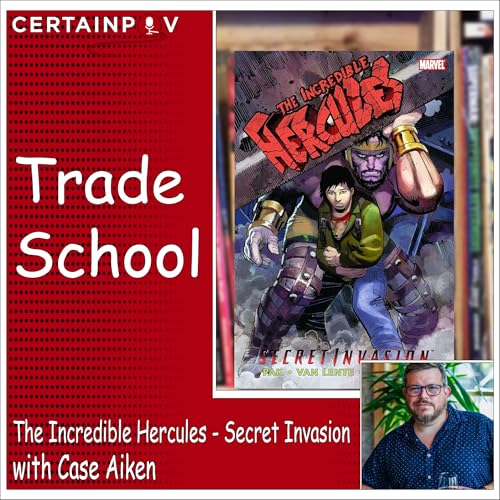
  • The Incredible Hercules - Secret Invasion with Case Aiken
    Mar 4 2026
    We're back with another episode of Trade School! This time, we're talking about The Incredible Hercules - Secret Invasion! Our host this week is Case Aiken! Support us on Patreon! https://patreon.com/CertainPOVMedia Edited by Case Aiken Scored by Bret Eagleston Certain Point Of View is a podcast network brining you all sorts of nerdy goodness! From Star Wars role playing, to Disney day dreaming, to video game love, we've got the show for you! Learn more on our website: https://www.certainpov.com Join us on Discord: https://discord.gg/wcHHer4 FOLLOW US: ▶ Instagram: @certainpovmedia Notes Incredible Hercules Trade Paperback Overview This section highlights the unique appeal and creative team behind the Incredible Hercules Secret Invasion trade paperback. Creative Team and Artistic Highlights (01:27) Written by Greg Pak and Fred Van Lente, with pencils by Rafa Sandoval and inks by Roger Bonet and Greg Adams. Colors by Marty Good, Denise Calero, and Raul Trevino; cover art by John Romita Jr., Klaus Johnson, and Dean White. The trade's front cover features Romita Jr.'s art, though the back cover's depiction of the Eternal God of the Skrulls fighting Hercules is notably praised. The trade paperback is straightforward with no special features but offers a strong, focused story. Series Context and Character Dynamics (02:30) The story picks up as Hercules takes over the Incredible Hulk series numbering at issue 116 to 120, following the World War Hulk event. Hercules teams up with Amadeus Cho, a young genius, forming a "knight and squire" dynamic that balances brute strength and intelligence. Their relationship blends humor with coming-of-age themes, especially highlighting Cho's adolescent feelings juxtaposed with Hercules's confident, womanizing persona. This pairing offers a fresh take reminiscent of classic superhero duos like Billy Batson and Captain Marvel. Secret Invasion Story Integration and Mythic Themes This section explains how the trade fits into the broader Secret Invasion crossover and explores its mythic and cosmic dimensions. Plot Setup and Key Mythological Interactions (04:44) The story begins with Hercules and Cho on the run from SHIELD, finding Athena, Hercules's sister, who summons a council of gods. A crossover with the Eternals occurs, including characters like Thena, Icarus, and Makari, linking to Neil Gaiman's Eternals run. The story explores the friendly rivalry between Hercules and his Eternal counterpart Gilgamesh, adding depth to the mythological layers. This sets the stage for the gods' involvement in the conflict, highlighting the crossover's depth beyond typical superhero battles. Religious War Framing of Secret Invasion (07:59) The invasion is framed as a religious war threatening Earth's faith and the power of its pantheons, not just a physical conflict. The gods of Earth's pantheons decide to send champions to fight the Skrulls' divine forces, linking cosmic and spiritual stakes. This framing elevates the narrative, making the conflict about belief and divine power rather than mere military might. The council's decision to send champions reflects a strategic response to the Skrulls' threat at a metaphysical level. God Champions and Cosmic Mythology This section details the selected champions and the cosmic mythos that underpin the story's conflict. Champion Selection and Powers (09:30) Ajak, an Eternal representing Aztec, Mayan, and Incan mythologies, is chosen for his god-like powers and role as a cultural hero. Snowbird from Alpha Flight is selected to represent the northern gods, showing a blend of superhero and divine traits. The God Eater Atum, an Egyptian pantheon figure and Marvel villain, adds a darker, more dangerous element to the team. A shape-shifting Japanese god is also included, emphasizing the story's global mythological scope and the prevalence of shapeshifters. Eternals' Powers and Roles (10:56) The Eternals possess a range of powers including super strength, flight, invulnerability, energy manipulation, illusions, and psionics. Each Eternal excels in different areas, with figures like Hyperion and Icarus showing strong physical and psychic abilities. Their ability to resurrect and reset mirrors mythological cycles like Ragnarok, enriching Marvel's cosmic mythology. This power set grounds their role as god-adjacent beings capable of handling divine conflicts. Skrull Pantheon and Mythic Conflict Resolution This section covers the unique Skrull pantheon, the nature of their divine war, and the climactic outcome. Skrull Divine Nature and Pantheon (15:30) The Skrulls are depicted as the Deviants of their race with a pantheon split between the God of their inner core (an Eternal) and the God of shape-shifting, representing their dual nature. Their history includes wiping out their own Eternals, leaving only one godlike figure central to their faith and...
    Más Menos
    22 m
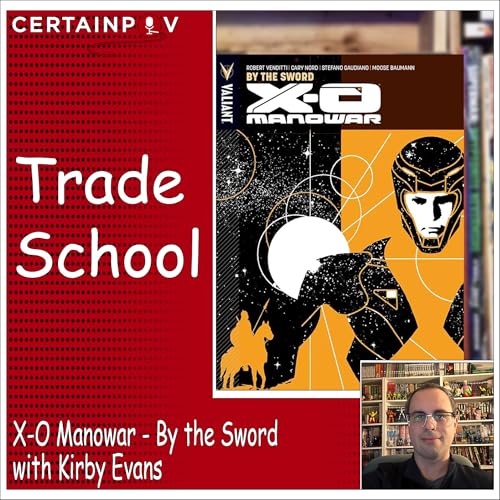
  • X-O Manowar Vol. 1 - By the Sword with Kirby Evans
    Feb 25 2026

    We're back with another episode of Trade School! This time, we're talking about X-O Manowar Vol. 1 - By the Sword! Our host this week is Kirby Evans!

    Support us on Patreon! https://patreon.com/CertainPOVMedia

    Edited by Case Aiken

    Scored by Bret Eagleston

    Certain Point Of View is a podcast network brining you all sorts of nerdy goodness! From Star Wars role playing, to Disney day dreaming, to video game love, we've got the show for you! Learn more on our website: https://www.certainpov.com

    Join us on Discord: https://discord.gg/wcHHer4

    FOLLOW US:

    ▶ Instagram: @certainpovmedia

    Outline
    • Introduction to XO Manowar (00:00)

      • Kirby Evans introduces the XO Manowar Volume 1, discussing its background.
      • The trade collects the first four issues from 2012, marking the third iteration of the Valiant universe.
      • The series established XO Manowar as the flagship character of Valiant, highlighting its historical context.
    • Plot Overview (00:20)

      • The story begins in 402 AD, featuring Eric of Dacia leading the Visigoths against the Roman Empire.
      • Eric's actions lead to his capture by the vine, who are abducting humans for their own purposes.
      • The plot interweaves themes of war, enslavement, and the quest for revenge.
    • Character Development and Themes (04:04)

      • Eric's character evolves as he becomes worthy of the Manowar armor, a pivotal moment in the story.
      • The narrative explores the complexities of the vine culture, including military and religious schisms regarding the armor.
      • Eric's journey reflects on themes of courage, loss, and the consequences of leadership.
    • Conclusion and Series Appeal (08:26)

      • The series is praised for its engaging storytelling and artwork, making it a strong introduction to the Valiant universe.
      • The trade effectively delivers character development while maintaining a fast-paced narrative.
      • Readers are encouraged to explore the series as a gateway to the broader Valiant narrative.
    Más Menos
    11 m