Episodios

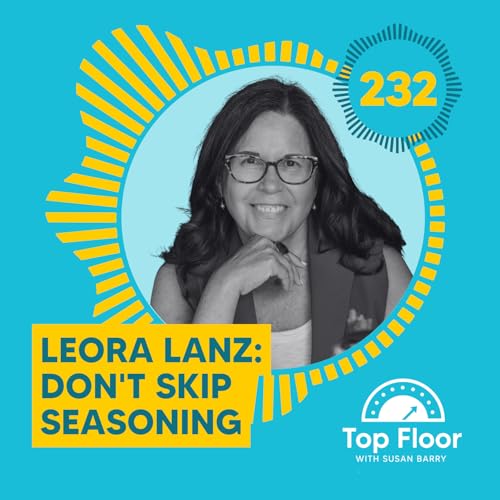
  • 232 | Don't Skip Seasoning
    Feb 24 2026

    Leora Lanz is an associate professor at Boston University's School of Hospitality Administration and a former global marketing leader who helped grow HVS from seven offices to forty worldwide. After decades in destination marketing, hotel operations, and consultancy, she turned her classroom casework into two books on developing a marketing mindset. Susan and Leora talk about critical thinking, conscious marketing, and career courage.

    What You'll Learn:
    • Why you need to "know enough to be dangerous" in digital marketing
    • What crisis communication in hotels teaches about compassion
    • Why today's marketing funnel feels more like a pinball machine
    • Why hospitality and marketing are fundamentally the same
    • How to shift from "you should" to "we will" with owners
    • When the ROI of a hospitality degree really kicks in
    • How set-jetting and streaming shows shape travel trends
    • Why wellness, sustainability, and community are marketing power plays
    • Why career reinvention requires courage and community


    ***

    Our Top Three Takeaways

    Marketing Is a Mindset, Not a Tactic

    Marketing isn't about flashy campaigns or one-hit wonders. It's about critical thinking, strategic planning, and starting with clear goals and KPIs. Everyone in hospitality (not just the marketing team) needs to think this way to build real, lasting impact.

    Shift from "You" to "We"

    Great marketing happens when teams act as true partners, not outside advisors. Saying "we" instead of "you" creates a sense of shared ownership and stronger alignment with stakeholders. That mindset builds trust, buy-in, and better results.

    Hospitality Is a Competitive Advantage

    Hospitality is more than an industry; it's a philosophy that can differentiate any business. Purpose-driven marketing rooted in wellness, sustainability, and community creates deeper, more meaningful connections. The future depends on honoring both emerging talent and seasoned voices while keeping that purpose front and center.


    Leora Lanz on LinkedIn
    https://www.linkedin.com/in/leorahalpernlanz/

    Buy the Books
    http://www.tinyurl.com/MarketingMindsetseries

    Cayuga Hospitality Consultants
    https://cayugahospitality.com/

    Hive Marketing
    https://www.hive-marketing.com/

    ***Ad Giveaway***
    Enter here! https://www.topfloorpodcast.com/win

    Más Menos
    33 m
  • 231 | Accounting for Taste
    Feb 17 2026

    Travis Burns is Executive Vice President of Business Development at Remington Hospitality, where he's helping scale the company's third-party management platform. A former aerospace professional turned hotelier, he walked into the Hyatt Regency Tulsa Downtown asking for any job, and built a career spanning sales, operations, and investment strategy. In this episode, he unpacks profit over prestige, luxury's lift, and gut-driven growth.

    • Why GOPPAR matters more than RevPAR
    • How to win the GOP war—even if you lose the STR report battle
    • What your business mix really costs you (and why it matters)
    • How to know when saying yes is a trap
    • The intuition advantage in a world drowning in data
    • Why being first isn't always best in hotel innovation
    • The real driver behind luxury's post-COVID surge
    • Why great luxury GMs still have to obsess over labor and cost control
    • Why new capital—not institutions—may drive 2026 transactions
    • The one change Travis would make to the industry overnight


    ***

    Our Top Three Takeaways

    Revenue Without Profit Is a Mirage
    One of the clearest themes in this conversation is Travis's insistence that top-line performance is meaningless without margin discipline. He pushes owners and operators to look beyond RevPAR and focus on GOPPAR, emphasizing that not all revenue is created equal once costs are accounted for. The real work, he argues, is understanding *how* revenue is generated and being willing to sacrifice headline wins in favor of long-term profitability.

    The K-Shaped Recovery Is Reshaping Hotel Strategy
    Travis offers a grounded explanation for why luxury and upper-upscale hotels continue to outperform other segments. It's not that affluent travelers are price-insensitive; it's that post-COVID travelers are taking fewer trips and assigning more value to each one. When travel becomes part of the story rather than just a place to sleep, guests are willing to pay more, as long as luxury remains distinctive and doesn't slide into sameness.

    Say Yes, but Know When and Why
    On careers and leadership, Travis reframes the familiar advice to "say yes" with an important caveat: every investment of time and effort should come with an exit strategy. Early-career hustle only works when it leads somewhere, whether that's growth, learning, or the next opportunity. Without a clear payoff, ambition turns into exploitation, and knowing the difference is a critical leadership skill.


    Travis Burns on LinkedIn
    https://www.linkedin.com/in/travis-burns/

    Remington Hospitality
    https://www.remingtonhospitality.com/

    Cayuga Hospitality Consultants
    https://cayugahospitality.com/

    Hive Marketing
    https://www.hive-marketing.com/

    ***Ad Giveaway***
    Enter here! https://www.topfloorpodcast.com/win


    Other Episodes You May Like:

    212: Hotel Meth Takedown with Debbie Feldman
    https://www.topfloorpodcast.com/episode/212

    181: Smoky Light Pole with Tommy Beyer
    https://www.topfloorpodcast.com/episode/181

    107: Trash Can Fire with Tracy Prigmore
    https://www.topfloorpodcast.com/episode/107

    Más Menos
    43 m
  • 230 | Hotels Are Political
    Feb 10 2026

    Susan Barry is the founder of Hive Marketing and the host of Top Floor, bringing hotel sales, marketing, and ownership-side perspectives to the mic. In this solo episode, she reintroduces herself to new listeners from Hotel Online and HFTP and zooms out on a timely industry controversy to ask a much bigger question about power, history, and responsibility in hospitality. This episode is short and sweet, much like Susan.

    How Susan went from English major to hotel exec to founder and podcaster

    Why "hotels should stay out of politics" is a myth

    How hotels shape tax, labor, and zoning policy

    Why hotels are natural hubs for political activity

    How history proves hotels become power centers in crises

    How hotels can be tools of refuge or control

    What the Minnesota ICE controversy really exposes

    How brand power works in an asset-light hotel model


    ***

    Our Top Three Takeaways

    1. Hotels are never "apolitical," even when they claim to be.
    The episode argues that hotels are inherently political because they operate at the intersection of real estate, labor, capital, and public visibility. From lobbying on taxes and visas to hosting political events and managing labor relations, hotels participate in politics constantly—whether or not they acknowledge it.

    2. History shows hotels repeatedly become power centers during moments of crisis.
    Across wars, genocides, and social movements, hotels have functioned as command centers, sanctuaries, negotiation hubs, and tools of control. Examples from World War II, the Rwandan genocide, and the U.S. Civil Rights Movement illustrate how hotel spaces and staff actions can enable resistance, protection, or oppression depending on who holds power.

    3. Modern brand–owner dynamics turn "neutral" decisions into political acts.
    In today's asset-light model, brands wield enormous influence through flags, loyalty systems, and distribution, while owners carry the financial risk. When a brand intervenes or withdraws, it is making an economic and political judgment that can instantly reshape a property, raising hard questions about authority, accountability, and local decision-making.

    Susan Barry on LinkedIn
    https://www.linkedin.com/in/susandbarry/

    Hive Marketing
    https://www.hive-marketing.com/

    Cayuga Hospitality Consultants
    https://cayugahospitality.com/

    Female Founders in Hospitality
    https://femalefoundersinhospitality.com/


    Other Episodes You May Like:

    99: Believers to Church
    https://www.topfloorpodcast.com/episode/99

    91: Pool Heat Miser
    https://www.topfloorpodcast.com/episode/91

    71: Public Restroom Couple
    https://www.topfloorpodcast.com/episode/71

    64: Roman Bird Murmuration
    https://www.topfloorpodcast.com/episode/64

    59: Cat Hair Pants
    https://www.topfloorpodcast.com/episode/59

    Más Menos
    17 m
  • 229 | Pig Coming Through
    Feb 3 2026

    Tracy Stuckrath is the founder of thrive! meetings & events, where she helps planners, venues, and chefs stop accidentally poisoning their guests (a low bar, but here we are). After being diagnosed with a food allergy and realizing she couldn't safely eat at her own events, Tracy built a mission around safer, more inclusive hospitality, and later launched the "Eating at a Meeting" podcast during COVID. Susan and Tracy talk about safety, systems, and signage.

    • Simple tools that actually make event planning smoother
    • How Tracy's career pivots happened without a "master plan"
    • The moment she realized the industry wasn't feeding people safely
    • Why the people who "get it" fastest usually have restrictions themselves
    • How kitchens and front-of-house accidentally play telephone with allergens
    • Why labeling food lowers liability instead of raising it
    • The top nine allergens that cause most reactions
    • How food allergies and celiac can count as disabilities under the ADA
    • Why smaller, more intentional menus may beat endless buffet chaos
    • What the future of event menus could look like: fewer surprises, clearer trust
    • The one phrase Tracy wants the industry to stop saying immediately


    ***

    Our Top Three Takeaways

    1. Inclusive food practices are a business decision, not just a courtesy.
    Treating food allergies and dietary restrictions seriously reduces risk, builds trust, and makes events more accessible and welcoming. When guests feel safe eating, they participate more fully and remember the experience for the right reasons, which directly impacts brand perception and loyalty.

    2. Most food-allergy failures aren't about ingredients — they're about communication breakdowns.
    Problems usually happen when information gets lost between sales, planners, kitchens, and front-of-house teams. Clear systems, standardized language, and consistent labeling matter more than heroic last-minute fixes. Inclusion fails when teams don't talk to each other.

    3. Smaller, more intentional menus outperform "abundance."
    The future of event food is fewer choices that are clearly labeled, thoughtfully designed, and easy to trust. Guests don't want endless options they can't safely eat. They want a handful of well-considered ones that reflect care, place, and purpose.

    Tracy Stuckrath on LinkedIn
    https://www.linkedin.com/in/tracystuckrath/

    thrive! meetings & events
    https://thrivemeetings.com/

    Other Episodes You May Like:

    151: Rolls Royce Chauffeur with Ali Krupnik
    https://www.topfloorpodcast.com/episode/151

    185: Squash Milk with Steve Fortunato
    https://www.topfloorpodcast.com/episode/185

    13: Canned Good Centerpieces with Jana Robinson
    https://www.topfloorpodcast.com/episode/13

    Más Menos
    35 m
  • 228 | Lights Out, Newport
    Jan 27 2026

    Christine Malfair is a lifelong hotelier turned independent-hotel marketing fixer, with a career spanning cruise ships, GM roles, and 15 years building Malfair Marketing as an early "remote fractional CMO." She helps independent hotels cut through AI noise and get found by guests and machines without losing their minds. Susan and Christine talk about clarity, consistency, and competitive courage.

    • Employee use of ChatGPT and real risks to proprietary hotel data
    • Guardrails for AI use inside hotel teams without banning innovation
    • Remote hotel leadership before "remote" was normal
    • Building a marketing function when no department exists
    • "AI-ready" as an ecosystem, not a shiny new tool
    • Why vague hotel language disappears in AI discovery
    • Team buy-in as the difference between tech adoption and rebellion
    • AI as an intermediary, not a channel
    • Why independent hotels can win without the biggest budgets
    • Standing tall in what guests already love you for

    ***

    Our Top Three Takeaways

    AI rewards clarity, not complexity

    Being "AI ready" isn't about adopting new tools or chasing the latest platform. It's about tightening what already exists. Hotels that are specific, consistent, and clear across their websites, listings, reviews, and social content will be easier for AI to understand and recommend. Generic language and inconsistencies create friction and invisibility.

    2. Simple systems outperform heroic effort

    Christine's experience, from cruise ships to strata hotels, reinforces the same truth. Well-designed systems reduce chaos and conflict, even in complex environments. The same applies to marketing and AI. Progress comes from manageable, repeatable steps, not massive overhauls or one-time pushes.

    3. Differentiation matters more than budget

    AI acts like a digital intermediary, deciding what gets surfaced and why. In that environment, sameness is a liability. The independent hotels that win won't be the ones with the most spend or the most content. They'll be the ones that are clear about who they are, what guests love about them, and how they stand apart.


    Christine Malfair on LinkedIn
    https://www.linkedin.com/in/christine-malfair/

    Malfair Marketing
    https://malfairmarketing.com/

    Other Episodes You May Like:

    69: Our First AI Guest with Josiah Mackenzie
    https://www.topfloorpodcast.com/episode/69

    127: Job Interview Subterfuge with Michael Goldrich
    https://www.topfloorpodcast.com/episode/127

    71: Public Restroom Couple with Susan Barry
    https://www.topfloorpodcast.com/episode/71

    Más Menos
    38 m
  • 227 | Next Up, Locusts
    Jan 20 2026

    Gary Brown is a former attorney and CPA who ditched billable hours for buildings, turning a brotherly townhouse-flipping side hustle into Furnished Quarters, one of the largest corporate housing providers in the U.S. He leads a service-first operation across major markets like New York, Boston/Cambridge, and the Bay Area, blending tech, design, and a very real "stuff breaks at 3am" mindset. Susan and Gary talk about service, standards, and survival stories.

    • Why corporate housing is hospitality first and real estate second
    • Service recovery that actually keeps clients calm when everything goes sideways
    • Move-in magic that prevents the "week one complaint festival"
    • Inspection systems that catch tiny problems before guests do
    • Communication rhythms that build trust when lights go out or floods happen
    • Setting expectations for big-city living without scaring people off
    • Relationship selling that lands major accounts and keeps the pipeline moving
    • Conference strategy that works pre-event, not just at the cocktail hour

    ***

    Our Top Three Takeaways

    1. Corporate housing succeeds or fails on service, not real estate.
    While the apartment itself is the barrier to entry, Gary is clear that it represents only a small fraction of what defines a great stay. The real differentiator is hospitality-level service: constant communication, fast problem resolution, and setting expectations when things inevitably go wrong. Corporate housing, in his view, should be run like a 24/7 hospitality operation, not a passive real estate business.

    2. The first day of a stay determines everything that follows.
    Move-in is the most critical moment in the guest experience. Furnished Quarters invests heavily in inspections, buffer days between stays, detailed arrival instructions, and proactive outreach after arrival. Many complaints can be avoided entirely by over-preparing for that first impression and by addressing small issues before they turn into frustration.

    3. Strong relationships and preparedness outperform tactics in sales and growth.
    Whether discussing conferences, entertainment clients, or long-term partnerships, Gary emphasizes that success comes from relationship selling and advance work. Deals are rarely made by chance. They are built through consistent presence, pre-scheduled meetings, local involvement, and long-term commitment to the market. This same mindset applies operationally when things go wrong: recovery and trust-building matter more than perfection.


    Gary Brown on LinkedIn
    https://www.linkedin.com/in/gary-brown-b324512/

    Furnished Quarters
    https://www.furnishedquarters.com

    Other Episodes You May Like:

    76: Liquid Closing Dinner with Derrick Barker
    https://www.topfloorpodcast.com/episode/76

    26: Responsible for the Weather with Robyn Joliat
    https://www.topfloorpodcast.com/episode/26

    70: Beach House Ghost with Emmanuel Guisset
    https://www.topfloorpodcast.com/episode/70

    Más Menos
    26 m
  • 226 | Phony on the Phone
    Jan 13 2026

    Stacy Garcia is a designer, entrepreneur, and trend forecaster known for bold patterns and a sharper-than-average crystal ball. She built a multimillion-dollar textile studio serving hospitality and residential design worldwide. Susan and Stacy talk about palette, pattern, and personalization.

    • The secret life of hotel lobby books
    • Why surface pattern design trains you to think bigger than walls
    • Analog printing's quiet comeback and why faster sometimes beats newer
    • How digital manufacturing unlocked murals, customization, and creative freedom
    • Why "home away from home" might be the wrong goal for hotels
    • How QVC teaches you to sell in 30 seconds or less
    • The real shift away from millennial gray toward warmth and richness
    • Why design fads age badly in hotels, and what to do instead
    • The future: opulent heritage, jewel tones, and warmth


    ***

    Our Top Three Takeaways

    1. Hospitality design should create fantasy, not mimic home

    Hotels succeed when they offer guests something they cannot or would not do at home. From the early days of themed Las Vegas hotels to today's boutique and luxury properties, the goal is escapism, inspiration, and emotional impact rather than comfort-driven familiarity. The "home away from home" mindset limits creativity and dilutes value, especially when guests are paying premium rates for a distinct experience.

    2. Design decisions should allow for evolution, not permanence

    Hospitality spaces live longer than most design trends. The strongest properties are designed with flexibility in mind, allowing certain elements to evolve over time without requiring a full renovation. By identifying areas that can be refreshed, remerchandised, or reinterpreted as guest expectations shift, hotels can stay current while protecting long-term investment and brand consistency.

    3. Color is the most powerful, cost-effective design lever

    Color is the first thing people register in a space and has a deep psychological impact. Hospitality is moving away from the long era of gray and blue toward warmer neutrals, earth tones, jewel tones, and heritage-inspired palettes. While the industry moves more slowly than residential, thoughtful use of color can create an immediate emotional impact without requiring a major capital investment.

    Stacy Garcia on LinkedIn
    https://www.linkedin.com/in/stacygarcia/

    Stacy Garcia Design Studio
    https://stacygarciainc.com/

    LebaTex
    https://www.lebatex.com/


    Other Episodes You May Like:

    https://www.topfloorpodcast.com/episode/27

    Más Menos
    45 m
  • 225 | Chocolate-Covered Laundry
    Jan 6 2026

    Kipp Lassetter is a former ER physician turned health-tech founder, hotel owner, and gas-station-barbecue legend who now runs RBN, a luxury real estate referral and rewards platform. He's on the show to unpack how he thinks about building and selling businesses, turning "boring" transactions into unforgettable experiences, and why the right real estate agent matters more than any points haul. Susan and Kipp talk about loyalty and rewards.

    • What really connects ER medicine, healthcare IT, hotels, and a gas-station-turned-destination barbecue joint

    • Why Kipp bought a "bad" gas station and the mindset he used to turn it into a must-visit moneymaker

    • A simple framework for deciding when to hold a business for cash flow versus when to sell and move on

    • How RBN quietly taps a standard real estate referral fee and turns it into "guilt-free" reward points for buyers and sellers

    • What RBN is learning about keeping rewards meaningful in an era of overcrowded lounges and points inflation

    • How AI will supercharge loyalty with hyper-personalized offers and smarter "gamification" of points for both brands and members

    ***

    Our Top Three Takeaways

    1. RBN turns real estate transactions into meaningful, high-value rewards.

    Kipp explains that RBN uses the agent referral fee to give buyers and sellers a massive amount of reward points—often enough for a safari, Japan trip, or other bucket-list travel. The model reframes home buying as a chance to earn "guilt-free" experiential rewards rather than just a stressful financial transaction.

    2. A great real estate agent matters more than any number of points.

    A core philosophy of RBN is that no reward can overcome a bad real estate experience. The company puts significant emphasis on vetting and selecting top-performing agents first; the points are "icing on the cake," not the main event.

    3. The future of loyalty is hyper-personalized, AI-driven experiences.

    Kipp predicts that AI will rapidly transform loyalty programs by tailoring offers to individual members—think curated experiences based on personal interests, bucket-list items, and dynamic point optimization. He also notes the challenge of welcoming new members without making elite status feel unattainable.

    Kipp Lassetter on LinkedIn
    https://www.linkedin.com/in/kipp-lassetter-md-1aa499b/

    RBN Rewards
    https://www.rbnrewards.com/

    Other Episodes You May Like:

    27: Fast Food Sushi with Lenny Moon
    https://www.topfloorpodcast.com/episode/27

    61: Rainy Day Payoff with Peter Van Dorn
    https://www.topfloorpodcast.com/episode/61

    16: Duke Cookie Face with Nick Shelton
    https://www.topfloorpodcast.com/episode/16

    Más Menos
    31 m