Episodios

  • This Week in the West: Jo Decker and the Importance of Rodeo Secretaries
    Mar 30 2026
    🤠This Week in the West 🎙️ Episode 74: Jo Decker and the Importance of Rodeo Secretaries 📢 Episode Summary: Jo Ramsey Decker stood at the center of rodeo’s evolution, bridging the gap between competitor and organizer at a time when the sport was still finding its footing. From her early days growing up on a Texas ranch to competing in rodeos as a child, Decker developed a deep connection to Western life. By the 1940s, she had earned national visibility as a “Ranch Sponsor Girl” at Madison Square Garden and built a successful competitive career, winning multiple world championships. Her marriage to rodeo cowboy Tater Decker marked the beginning of a lifelong partnership rooted in the rodeo world. While her accomplishments in the arena were significant, Decker’s lasting legacy came from her work behind the scenes. At a time when women’s rodeo lacked structure and consistency, she played a key role in supporting and promoting what would become the Women’s Professional Rodeo Association. As a rodeo secretary for 25 years, she became one of the most respected administrators in the sport, managing entries, payouts and logistics for major events. Her work with leading stock contractors and even entertainer Gene Autry demonstrated her wide influence, while her role in organizing the first National Finals Rodeo in 1959 helped shape rodeo’s premier championship event. Decker’s impact extended beyond rodeo operations into Western culture itself. In the 1950s, she launched a successful Western fashion line worn by celebrities like Rex Allen and even Princess Grace of Monaco, helping bring Western style to a broader audience. She later settled in Oklahoma, where she remained connected to the rodeo community until her death in 2010. Remembered as both a champion competitor and a pioneering organizer, Jo Decker’s career reflects the vital, often unseen work that helped professionalize rodeo and elevate its national profile. 🔍 What You’ll Learn: How Jo Decker helped organize the first National Finals Rodeo and shape it into a lasting championship eventThe critical role of a rodeo secretary and why it is essential to the success of rodeo competitionsHow Decker advanced women’s rodeo and expanded Western culture through both sport and fashion 👥 Behind the Scenes Host: Seth Spillman Producer: Chase Spivey Writer: Mike Koehler 🔗 Further research: Video of Jo Decker entering the arena at the 1959 NFR: https://www.youtube.com/watch?v=hvWETf4kQccJo Decker, Texas Rodeo Cowboy Hall of Fame: https://texasrodeocowboy.com/inductees/jo-decker/MVP of Rodeo: The Secretary - https://www.oklahoman.com/story/news/1992/08/16/mvp-of-rodeo-the-secretary/62485000007/ 📬 Connect With Us: 🌐 Website: www.thecowboy.org 📖 Read Our Blog: https://nationalcowboymuseum.org/blog/ 📩 Email: podcast@thecowboy.org 📲Facebook:https://www.facebook.com/ncwhm/ 📷Instagram: https://www.instagram.com/nationalcowboymuseum ❎X/Twitter: https://x.com/ncwhm 💼LinkedIn: https://www.linkedin.com/company/national-cowboy-&-western-heritage-museum 🗺️ Visit Us: The National Cowboy & Western Heritage Museum, 1700 NE 63rd Street, Oklahoma City, OK, 73111. See us on the map 🎟️: You can now buy tickets to The Cowboy online, go to https://nationalcowboymuseum.org/tickets/ 💡 Support Us:🏅Become A Member of the Museum: https://nationalcowboymuseum.org/support/memberships/ 🛒Shop at Persimmon Hill, our Museum store: https://persimmonhillstore.com/ 🎧 Listen & Subscribe: 🔹 Apple Podcasts:https://podcasts.apple.com/us/podcast/this-week-in-the-west/id1776228708 🔹 Spotify: https://open.spotify.com/show/2KYmd2BumVtQVH1ez1Cr2U 🔹YouTube: https://www.youtube.com/playlist?list=PLFoE2kU21JpX9T6W9NonXuD9UapS1TsmN 🔹Podbean: https://thisweekinthewest.podbean.com/ ⭐ If you enjoyed this episode, don’t forget to rate & review!
    Más Menos
    5 m
  • This Week in the West: John Arbuckle and Coffee's Importance in the West
    Mar 23 2026

    🤠This Week in the West 🎙️ Episode 73: John Arbuckle and Coffee's Importance in the West

    📢 Episode Summary: This episode of This Week in The West explores the surprising but essential role coffee played in shaping life on the American frontier, focusing on the legacy of John Arbuckle. At a time when coffee was difficult to preserve and inconsistent in quality, Arbuckle revolutionized the industry in 1868 with a glazing process that kept roasted beans fresh and shelf-stable. His innovation made coffee widely accessible, transforming it from a fragile commodity into a dependable staple for Americans across the country.

    The impact of Arbuckle’s coffee was especially profound in the American West, where cowboys relied on it as a daily necessity rather than a luxury. On cattle drives, coffee fueled long days, harsh conditions, and sleepless nights, becoming as essential as food itself. Arbuckle’s brand, Ariosa, became so dominant that many cowboys simply referred to coffee as “Arbuckle,” and its packaging and coupon system even took on economic value in frontier communities.

    Ultimately, the episode highlights how a single innovation helped sustain the physical and cultural life of the West. Coffee was more than a drink—it was a symbol of endurance, comfort, and routine on the frontier. Even as competition and industry changes led to Arbuckle’s decline, his influence remains embedded in the imagery and stories of the American West, from chuck wagons to campfires.

    🔍 What You’ll Learn:

    • How John Arbuckle’s innovation made coffee portable, reliable, and widely available in America
    • Why coffee became a critical survival tool for cowboys on cattle drives in the American West
    • How Arbuckle coffee shaped frontier culture, commerce, and even everyday language

    👥 Behind the Scenes Host: Seth Spillman Producer: Chase Spivey Writer: Mike Koehler

    🔗 Further research:

    • The current Arbuckle Coffee brand: https://arbucklecoffee.com/
    • The history of coffee on the Brooklyn waterfront: https://www.bkwaterfronthistory.org/story/where-coffee-was-king/
    • True West Magazine: Cowboy and Coffee: https://www.truewestmagazine.com/article/cowboy-coffee/

    📬 Connect With Us: 🌐 Website: www.thecowboy.org 📖 Read Our Blog: https://nationalcowboymuseum.org/blog/ 📩 Email: podcast@thecowboy.org 📲Facebook:https://www.facebook.com/ncwhm/ 📷Instagram: https://www.instagram.com/nationalcowboymuseum ❎X/Twitter: https://x.com/ncwhm 💼LinkedIn: https://www.linkedin.com/company/national-cowboy-&-western-heritage-museum

    🗺️ Visit Us: The National Cowboy & Western Heritage Museum, 1700 NE 63rd Street, Oklahoma City, OK, 73111. See us on the map

    🎟️: You can now buy tickets to The Cowboy online, go to https://nationalcowboymuseum.org/tickets/ 💡 Support Us:🏅Become A Member of the Museum: https://nationalcowboymuseum.org/support/memberships/

    🛒Shop at Persimmon Hill, our Museum store: https://persimmonhillstore.com/

    🎧 Listen & Subscribe: 🔹 Apple Podcasts:https://podcasts.apple.com/us/podcast/this-week-in-the-west/id1776228708 🔹 Spotify: https://open.spotify.com/show/2KYmd2BumVtQVH1ez1Cr2U 🔹YouTube: https://www.youtube.com/playlist?list=PLFoE2kU21JpX9T6W9NonXuD9UapS1TsmN 🔹Podbean: https://thisweekinthewest.podbean.com/

    ⭐ If you enjoyed this episode, don’t forget to rate & review!

    Más Menos
    7 m
  • This Week in the West: Charles Russell: Artist & Original Great Westerner
    Mar 16 2026
    🤠This Week in the West 🎙️ Episode 72: Charles Russell: Artist & Original Great Westerner 📢 Episode Summary: This week on This Week in The West, we remember Charles Marion Russell, one of the most important artists to ever capture the spirit of the American frontier. Born March 19, 1864, Russell left his comfortable home in St. Louis at just sixteen years old to pursue his dream of becoming a cowboy in Montana. Instead of following the respectable career paths expected of him, Russell chose the rough life of the open range—an experience that would later define his art. Before he became famous, Russell spent more than a decade working as a cowboy and night wrangler. During that time, he carefully observed the people, animals and cultures of the West. He lived among cowboys, learned from mountain men and spent time with Native communities, experiences that gave his later paintings an authenticity few artists could match. Russell’s artistic career began almost by accident during the devastating winter of 1886–87, when he sketched a starving steer in the snow with the caption Waiting for a Chinook. The small drawing circulated among ranchers and townspeople and brought Russell his first attention as an artist. By the early 1890s, he set aside cowboy life to focus on painting full-time. With the support of his wife Nancy, who became his tireless promoter and business manager, Russell’s work gained national and international recognition. Yet he remained rooted in Montana and committed to telling the stories of the West as he had lived them. Today, Russell’s paintings, drawings and sculptures remain some of the most powerful visual records of frontier life. 🔍 What You’ll Learn: How Charles Marion Russell’s real-life experience as a working cowboy shaped the authenticity of his Western art.The story behind Russell’s famous sketch Waiting for a Chinook and how it launched his career.How Russell and his wife Nancy helped preserve the stories, people and culture of the Old West through art. 👥 Behind the Scenes Host: Seth Spillman Producer: Chase Spivey Writer: Mike Koehler 🔗 Further research: The C.M. Russell Museum: https://cmrussell.org/The Charles M. Russell Center for the Study of Art of the American West at the University of Oklahoma: https://www.ou.edu/finearts/visual-arts/about/charles-m-russell-centerPBS Documentary “C.M. Russell and the American West:” https://www.montanapbs.org/programs/CMRussellAmericanWest/ 📬 Connect With Us: 🌐 Website: www.thecowboy.org 📖 Read Our Blog: https://nationalcowboymuseum.org/blog/ 📩 Email: podcast@thecowboy.org 📲Facebook:https://www.facebook.com/ncwhm/ 📷Instagram: https://www.instagram.com/nationalcowboymuseum ❎X/Twitter: https://x.com/ncwhm 💼LinkedIn: https://www.linkedin.com/company/national-cowboy-&-western-heritage-museum 🗺️ Visit Us: The National Cowboy & Western Heritage Museum, 1700 NE 63rd Street, Oklahoma City, OK, 73111. See us on the map 🎟️: You can now buy tickets to The Cowboy online, go to https://nationalcowboymuseum.org/tickets/ 💡 Support Us:🏅Become A Member of the Museum: https://nationalcowboymuseum.org/support/memberships/ 🛒Shop at Persimmon Hill, our Museum store: https://persimmonhillstore.com/ 🎧 Listen & Subscribe: 🔹 Apple Podcasts:https://podcasts.apple.com/us/podcast/this-week-in-the-west/id1776228708 🔹 Spotify: https://open.spotify.com/show/2KYmd2BumVtQVH1ez1Cr2U 🔹YouTube: https://www.youtube.com/playlist?list=PLFoE2kU21JpX9T6W9NonXuD9UapS1TsmN 🔹Podbean: https://thisweekinthewest.podbean.com/ ⭐ If you enjoyed this episode, don’t forget to rate & review!
    Más Menos
    6 m
  • This Week in the West: The Miller Brothers and the Rise of the 101 Ranch
    Mar 9 2026
    🤠This Week in the West 🎙️ Episode 71: The Miller Brothers and the Rise of the 101 Ranch 📢 Episode Summary: This week on This Week in The West, we remember Joe Miller Sr., one of the driving forces behind Oklahoma’s legendary 101 Ranch. Born March 12, 1868, Miller grew up in a cattle family that helped shape ranching in Indian Territory. After their father, Colonel George Washington Miller, established the 101 brand and built a vast ranching operation, Joe and his brothers inherited the growing enterprise. Under their leadership, the 101 Ranch expanded into a massive 110,000-acre operation near Ponca City, becoming one of the largest and most diversified farms and ranches in the United States. Joe Miller distinguished himself not only as a rancher but as a promoter who understood the public’s fascination with the American West. In 1907 he helped launch the 101 Ranch Real Wild West Show, which brought the spectacle of frontier life to audiences across the United States and around the world. The show featured cowboys, Native American performers from many tribes, and rising Western legends such as Bill Pickett, Will Rogers and Tom Mix. Through daring demonstrations of horsemanship and frontier skills, the show helped shape the public’s image of the cowboy and the West. At the same time, the ranch itself thrived as a hub of innovation, agriculture and oil development, helping launch what became the Marland Oil Company, later known as Conoco. Yet the Wild West show business proved volatile, and mounting costs, competition and economic challenges eventually caught up with the Millers. After Joe Miller’s death in 1927 and the onset of the Great Depression, the great 101 Ranch empire collapsed. Today, the legacy of the ranch survives in preserved historic sites, museum artifacts and the enduring myth of the American cowboy that the Millers helped bring to life. 🔍 What You’ll Learn: How Joe Miller Sr. helped transform the massive 101 Ranch near Ponca City into one of the largest and most diversified ranching operations in America.How the 101 Ranch Real Wild West Show introduced global audiences to the drama and skills of frontier life, featuring performers such as Bill Pickett, Will Rogers and Tom Mix.How the 101 Ranch helped shape the popular image of the American cowboy while also contributing to early oil development and the cultural mythology of the West. 👥 Behind the Scenes Host: Seth Spillman Producer: Chase Spivey Writer: Mike Koehler 🔗 Further research: The Encyclopedia of Oklahoma History on the 101 Ranch: https://www.okhistory.org/publications/enc/entry?entry=MI029101 Ranch episode of PBS’ “Back in Time”: https://www.pbs.org/video/back-time-101-ranch/Western Horseman Magazine article: https://westernhorseman.com/culture/the-101-ranch-empire-2/ 📬 Connect With Us: 🌐 Website: www.thecowboy.org 📖 Read Our Blog: https://nationalcowboymuseum.org/blog/ 📩 Email: podcast@thecowboy.org 📲Facebook:https://www.facebook.com/ncwhm/ 📷Instagram: https://www.instagram.com/nationalcowboymuseum ❎X/Twitter: https://x.com/ncwhm 💼LinkedIn: https://www.linkedin.com/company/national-cowboy-&-western-heritage-museum 🗺️ Visit Us: The National Cowboy & Western Heritage Museum, 1700 NE 63rd Street, Oklahoma City, OK, 73111. See us on the map 🎟️: You can now buy tickets to The Cowboy online, go to https://nationalcowboymuseum.org/tickets/ 💡 Support Us:🏅Become A Member of the Museum: https://nationalcowboymuseum.org/support/memberships/ 🛒Shop at Persimmon Hill, our Museum store: https://persimmonhillstore.com/ 🎧 Listen & Subscribe: 🔹 Apple Podcasts:https://podcasts.apple.com/us/podcast/this-week-in-the-west/id1776228708 🔹 Spotify: https://open.spotify.com/show/2KYmd2BumVtQVH1ez1Cr2U 🔹YouTube: https://www.youtube.com/playlist?list=PLFoE2kU21JpX9T6W9NonXuD9UapS1TsmN 🔹Podbean: https://thisweekinthewest.podbean.com/ ⭐ If you enjoyed this episode, don’t forget to rate & review!
    Más Menos
    6 m
  • This Week in the West: How Jesse Chisholm Talked His Way Into Western History
    Mar 2 2026
    🤠This Week in the West 🎙️ Episode 70: How Jesse Chisholm Talked His Way Into Western History 📢 Episode Summary: This week on This Week in The West, we remember Jesse Chisholm, the man whose name became permanently attached to one of the most famous cattle trails in American history. Yet Chisholm himself was not a cowboy or cattle baron. Born around 1805 to a Scottish father and a Cherokee mother, he grew up between cultures on the expanding American frontier. Fluent in numerous Native languages as well as Spanish and Plains sign language, Chisholm built his reputation as a trader, guide and interpreter who could move between tribal nations, settlers and government officials at a time when communication often meant the difference between peace and conflict. Throughout the 1820s and 1830s, Chisholm worked as a scout and guide across what is now Oklahoma, Kansas and Texas. He later established trading posts where commerce and diplomacy could take place peacefully between Native communities and newcomers. His language skills made him a trusted mediator in treaty negotiations and diplomatic missions, even interpreting for tribal delegations meeting with President James K. Polk. Leaders across the Southern Plains came to view Chisholm as a fair dealer and a reliable peacemaker. After the Civil War devastated Indian Territory, Chisholm reopened trade and improved a wagon route he had long traveled across the region. That road, built simply to move goods efficiently through the Plains, later became the famous Chisholm Trail when cattlemen used it to drive millions of Texas longhorns north to Kansas railheads. Though Chisholm never drove cattle and died in 1868 before the great cattle drives reached their peak, the trail bearing his name helped shape the economy, culture and enduring mythology of the American West. 🔍 What You’ll Learn: Why Jesse Chisholm’s ability to speak multiple Native languages made him one of the most important interpreters and mediators on the Southern Plains.How Chisholm’s trading posts and diplomatic work helped maintain peace between tribal nations, settlers and government officials during a turbulent era of frontier expansion.How a practical wagon route Chisholm improved after the Civil War became the famous Chisholm Trail, used by cattlemen to drive more than five million longhorns north to Kansas railheads. 👥 Behind the Scenes Host: Seth Spillman Producer: Chase Spivey Writer: Mike Koehler 🔗 Further research: Jesse Chisholm grave site: https://www.travelok.com/listings/view.profile/id.3935Chisholm Trail Heritage Center: https://onthechisholmtrail.com/who-was-jesse-chisholm/Wichita Eagle on the 100th Anniversary of the Trail: https://www.kansas.com/news/article1107374.html 📬 Connect With Us: 🌐 Website: www.thecowboy.org 📖 Read Our Blog: https://nationalcowboymuseum.org/blog/ 📩 Email: podcast@thecowboy.org 📲Facebook:https://www.facebook.com/ncwhm/ 📷Instagram: https://www.instagram.com/nationalcowboymuseum ❎X/Twitter: https://x.com/ncwhm 💼LinkedIn: https://www.linkedin.com/company/national-cowboy-&-western-heritage-museum 🗺️ Visit Us: The National Cowboy & Western Heritage Museum, 1700 NE 63rd Street, Oklahoma City, OK, 73111. See us on the map 🎟️: You can now buy tickets to The Cowboy online, go to https://nationalcowboymuseum.org/tickets/ 💡 Support Us:🏅Become A Member of the Museum: https://nationalcowboymuseum.org/support/memberships/ 🛒Shop at Persimmon Hill, our Museum store: https://persimmonhillstore.com/ 🎧 Listen & Subscribe: 🔹 Apple Podcasts:https://podcasts.apple.com/us/podcast/this-week-in-the-west/id1776228708 🔹 Spotify: https://open.spotify.com/show/2KYmd2BumVtQVH1ez1Cr2U 🔹YouTube: https://www.youtube.com/playlist?list=PLFoE2kU21JpX9T6W9NonXuD9UapS1TsmN 🔹Podbean: https://thisweekinthewest.podbean.com/ ⭐ If you enjoyed this episode, don’t forget to rate & review!
    Más Menos
    6 m
  • This Week in the West: Quanah Parker, Remarkable Native Leader
    Feb 23 2026
    🤠This Week in the West 🎙️ Episode 69: Quanah Parker, Remarkable Native Leader 📢 Episode Summary: This week on This Week in The West, we remember Quanah Parker, the famed Comanche leader, on the anniversary of his death on February 23, 1911. Born the son of Comanche war chief Peta Nocona and Cynthia Ann Parker—a white woman captured and raised among the Comanche—Quanah grew up fully immersed in Comanche life during a time when the power of the Plains tribes was rapidly being challenged by American expansion. As railroads spread westward and commercial hunters decimated the buffalo herds that sustained Plains cultures, Parker emerged as a war leader among the Kwahadi Comanche. He fought to defend his people’s homeland during the final years of open conflict between Plains tribes and the United States, including the famous 1874 attack at Adobe Walls that helped trigger the Red River War. When the buffalo were gone and survival on the open plains was no longer possible, Parker faced the difficult decision to surrender and lead his people onto the reservation at Fort Sill in 1875. Rather than fade into history, Parker adapted. Appointed principal chief of the Comanche Nation, he became a bridge between cultures—advocating for his people while navigating the new realities of reservation life. A successful rancher, political advocate and protector of Native traditions, Parker helped guide the Comanche through one of the most difficult transitions in their history. 🔍 What You’ll Learn: How Quanah Parker’s unique heritage shaped his role as a leader during the final years of Comanche resistance.The impact of buffalo destruction and westward expansion on the Plains tribes and the events that led to the Red River War.How Parker reinvented himself as a political advocate, rancher and cultural bridge while helping the Comanche adapt to reservation life. 👥 Behind the Scenes Host: Seth Spillman Producer: Chase Spivey Writer: Mike Koehler 🔗 Further research: Interview with author S.C. Gwynne: https://historynet.com/interview-with-author-s-c-gwynne/10 Facts You May Not Know About Quanah Parker, OldWest.org: https://www.oldwest.org/quanah-parker/Bio from the Oklahoma Historical Society: https://www.okhistory.org/publications/enc/entry?entry=PA014 📬 Connect With Us: 🌐 Website: www.thecowboy.org 📖 Read Our Blog: https://nationalcowboymuseum.org/blog/ 📩 Email: podcast@thecowboy.org 📲Facebook:https://www.facebook.com/ncwhm/ 📷Instagram: https://www.instagram.com/nationalcowboymuseum ❎X/Twitter: https://x.com/ncwhm 💼LinkedIn: https://www.linkedin.com/company/national-cowboy-&-western-heritage-museum 🗺️ Visit Us: The National Cowboy & Western Heritage Museum, 1700 NE 63rd Street, Oklahoma City, OK, 73111. See us on the map 🎟️: You can now buy tickets to The Cowboy online, go to https://nationalcowboymuseum.org/tickets/ 💡 Support Us:🏅Become A Member of the Museum: https://nationalcowboymuseum.org/support/memberships/ 🛒Shop at Persimmon Hill, our Museum store: https://persimmonhillstore.com/ 🎧 Listen & Subscribe: 🔹 Apple Podcasts:https://podcasts.apple.com/us/podcast/this-week-in-the-west/id1776228708 🔹 Spotify: https://open.spotify.com/show/2KYmd2BumVtQVH1ez1Cr2U 🔹YouTube: https://www.youtube.com/playlist?list=PLFoE2kU21JpX9T6W9NonXuD9UapS1TsmN 🔹Podbean: https://thisweekinthewest.podbean.com/ ⭐ If you enjoyed this episode, don’t forget to rate & review!
    Más Menos
    6 m
  • This Week in the West: Albert Bierstadt's Larger Than Life Artistic Journey
    Feb 16 2026

    🤠This Week in the West

    🎙️ Episode 68: Albert Bierstadt's Larger-Than-Life Artistic Journey

    📢 Episode Summary:

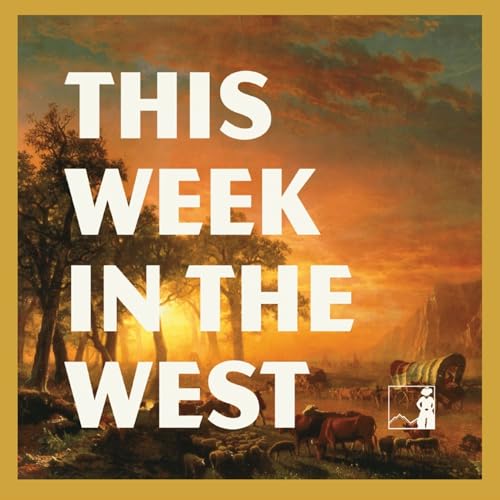
    This episode of This Week in The West explores the life and legacy of artist Albert Bierstadt through one of the National Cowboy & Western Heritage Museum’s most breathtaking works, Emigrants Crossing the Plains. Known for his massive, dramatic landscapes, Bierstadt didn’t simply document the American West — he transformed it into a vision of hope, grandeur, and destiny that captured the imagination of a nation eager for expansion and opportunity.

    From his immigrant beginnings in Massachusetts to his groundbreaking journeys west with government surveys, Bierstadt used sketches, photography, and bold artistic license to create scenes that felt larger than life. His famous wagon train paintings, inspired by real emigrants he encountered near Fort Kearny, blended reality with romantic storytelling, shaping how generations would envision the pioneer experience. At the height of his career, his paintings sold for astonishing sums and drew crowds eager to be transported into the West’s sublime beauty.

    But tastes eventually changed, personal tragedy struck, and Bierstadt’s once-celebrated style fell out of favor before being rediscovered decades later. Today, his work is recognized not just for its technical mastery but for its powerful role in shaping America’s myth and memory of the frontier — a legacy that still stops visitors in their tracks at The Cowboy.

    🔍 What You’ll Learn:

    • How Albert Bierstadt used photography, travel, and artistic embellishment to create the iconic Western landscapes Americans fell in love with

    • The real-life wagon train encounter that inspired Emigrants Crossing the Plains and how the painting blends history with imagination

    • Why Bierstadt’s career soared, collapsed, and ultimately experienced a major revival in the 20th century

    👥 Behind the Scenes

    Host: Seth Spillman

    Producer: Chase Spivey

    Writer: Mike Koehler

    🔗 Further research:

    • Albert Bierstadt and the American Land, a lecture by the Museum of Fine Arts, Boston: Watch on YouTube

    📬 Connect With Us:

    🌐 Website: www.thecowboy.org

    📖 Read Our Blog: https://nationalcowboymuseum.org/blog/

    📩 Email: podcast@thecowboy.org

    📲Facebook:https://www.facebook.com/ncwhm/

    📷Instagram: https://www.instagram.com/nationalcowboymuseum

    ❎X/Twitter: https://x.com/ncwhm

    💼LinkedIn: https://www.linkedin.com/company/national-cowboy-&-western-heritage-museum

    🗺️ Visit Us: The National Cowboy & Western Heritage Museum, 1700 NE 63rd Street, Oklahoma City, OK, 73111. See us on the map

    🎟️: You can now buy tickets to The Cowboy online, go to https://nationalcowboymuseum.org/tickets/

    💡 Support Us:🏅Become A Member of the Museum: https://nationalcowboymuseum.org/support/memberships/

    🛒Shop at Persimmon Hill, our Museum store: https://persimmonhillstore.com/

    🎧 Listen & Subscribe:

    🔹 Apple Podcasts:https://podcasts.apple.com/us/podcast/this-week-in-the-west/id1776228708

    🔹 Spotify: https://open.spotify.com/show/2KYmd2BumVtQVH1ez1Cr2U

    🔹YouTube: https://www.youtube.com/playlist?list=PLFoE2kU21JpX9T6W9NonXuD9UapS1TsmN

    🔹Podbean: https://thisweekinthewest.podbean.com/

    ⭐ If you enjoyed this episode, don’t forget to rate & review!

    Más Menos
    7 m
  • This Week in the West: Laura Ingalls Wilder, Little House Author’s Version of Pioneer Life
    Feb 9 2026

    🤠This Week in the West

    🎙️ Episode 67: Laura Ingalls Wilder, Little House Author’s Version of Pioneer Life

    📢 Episode Summary: This episode of This Week in The West explores the life and legacy of Laura Ingalls Wilder, whose Little House books shaped how generations of Americans imagine frontier life. Born in 1867, Wilder grew up in a constantly moving pioneer family that faced illegal settlement on Native land, brutal winters, crop failures, disease and near-constant financial instability. Far from a romantic adventure, her childhood was marked by hardship, early labor and survival on the margins of the American frontier.

    After marrying Almanzo Wilder and enduring years of personal loss and economic struggle, Laura eventually settled in Missouri, where she began writing seriously in her 60s, encouraged by her daughter, Rose Wilder Lane. Although her first autobiographical manuscript was rejected as too bleak, she reworked her memories into books for young readers, beginning with Little House in the Big Woods in 1932. The series became a cultural phenomenon, later adapted into the beloved TV show Little House on the Prairie.

    🔍 What You’ll Learn:

    • How Laura Ingalls Wilder’s real childhood hardships differed from the gentler tone of the Little House books.
    • The late-in-life writing journey that turned pioneer memories into one of America’s most influential book series.
    • Why Wilder’s legacy is both beloved and critically reexamined in modern times.

    👥 Behind the Scenes

    Host: Seth Spillman

    Producer: Chase Spivey

    Writer: Mike Koehler

    🔗 Further research:

    • Features, timeline and more from PBS, based on their American Masters documentary of Wilder: https://www.pbs.org/wnet/americanmasters/masters/laura-ingalls-wilder/
    • Laura Ingalls Wilder historic home: https://lauraingallswilderhome.com/
    • Laura Ingalls Wilder park and museum: https://www.lauraingallswilder.us/

    📬 Connect With Us

    🌐 Website: www.thecowboy.org

    📖 Read Our Blog: https://nationalcowboymuseum.org/blog/

    📩 Email: podcast@thecowboy.org

    📲Facebook:https://www.facebook.com/ncwhm/

    📷Instagram: https://www.instagram.com/nationalcowboymuseum

    ❎X/Twitter: https://x.com/ncwhm

    💼LinkedIn: https://www.linkedin.com/company/national-cowboy-&-western-heritage-museum

    🗺️ Visit Us: The National Cowboy & Western Heritage Museum, 1700 NE 63rd Street, Oklahoma City, OK, 73111. See us on the map

    🎟️: You can now buy tickets to The Cowboy online, go to https://nationalcowboymuseum.org/tickets/

    💡 Support Us:🏅Become A Member of the Museum: https://nationalcowboymuseum.org/support/memberships/

    🛒Shop at Persimmon Hill, our Museum store: https://persimmonhillstore.com/

    🎧 Listen & Subscribe:

    🔹 Apple Podcasts:https://podcasts.apple.com/us/podcast/this-week-in-the-west/id1776228708

    🔹 Spotify: https://open.spotify.com/show/2KYmd2BumVtQVH1ez1Cr2U

    🔹YouTube: https://www.youtube.com/playlist?list=PLFoE2kU21JpX9T6W9NonXuD9UapS1TsmN

    🔹Podbean: https://thisweekinthewest.podbean.com/

    ⭐ If you enjoyed this episode, don’t forget to rate & review!

    Más Menos
    6 m