The What And Who Of EDU Podcast Por Macmillan Learning arte de portada

The What And Who Of EDU

The What And Who Of EDU

De: Macmillan Learning
Escúchala gratis

Welcome to The What and Who of EDU. Join us as we talk with thought leaders, educators, and experts to explore the latest trends, innovations, and best practices shaping education today. Whether in the classroom or beyond, we equip educators with the tools and insights to support student learning anytime, anywhere.2025
Episodios
  • What Discipline is the Coolest? 10 Professors Explain Why Their Field Rules the School
    Feb 25 2026

    This episode is proof that every subject can be the "cool one" … if it's taught with purpose, passion, and the right demo (hello, exploding gummy bears). We asked 10 professors to explain what makes their field unforgettable. The result is a joy-filled look at classroom strategies, student engagement, and the surprising connections between psychology, economics, biology, chemistry, and more. Whether you're looking for teaching inspiration or just some subject-area pride, this one's for you.

    Brought to you by Macmillan Learning

    Episode Breakdown + Timestamps

    1:23 Chemistry Blows It Up, Then Breaks It Down

    3:32 Storytelling Is Our Superpower

    5:27 Psychology Is Everywhere (Yes, Even There)

    8:43 Math Makes You Prove What You Know

    10:35 Developmental Psychology Explains Your Roommate.

    12:22 Psychology is Immediately Relevant

    13: 57 Anatomy Lets You Look Under the Hood.

    15:38 Psychology Sticks to Everything.

    17:31 Economics is Essentially Dessert

    19:08 Economics Explains the World (and Your Paycheck).

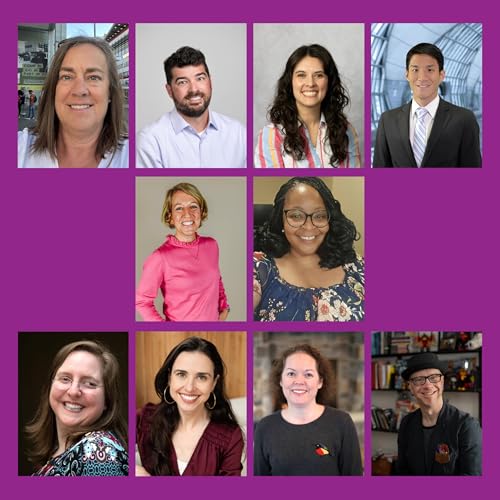
    Featured Educators

    Dr. Christin Monroe is an Educational Research Associate at the Center for Innovation in Teaching and Learning at the University of Illinois at Urbana-Champaign. She previously taught Chemistry at Landmark College with a focus on supporting neurodivergent learners through inclusive and innovative teaching practices.

    Jennifer Duncan is Associate Professor of English at Georgia State University's Perimeter College. Jennifer has been teaching English literature and composition for twenty-five years and specializing in online teaching for fifteen.

    Dr. Star Sinclair is an Assistant Professor of Psychology at Florida Gulf Coast University. For 18 years, she has taught general psychology, lifespan development, behavioral statistics, and research methods in psychology to students of all backgrounds and preparation levels.

    Dr. Dan Look is the Charles A. Dana Professor of Mathematics at St. Lawrence University. He's spent over 25 years trying to convince students that math is not only useful, but occasionally fun. He authored Math Cats: Scratching the Surface of Mathematics, an illustrated exploration of mathematical ideas through the lens of cats.

    Dr. Kendra Thomas is an Associate Professor of Psychology at Hope College. She has been teaching human development courses for 12 years. She is a mother of two and researches adolescents' perceptions of justice and how hope changes over time.

    Betsy Langness is the Psychology Department Head at Jefferson Community and Technical College, where she has worked for more than 20 years. She teaches general and developmental psychology courses in a virtual, asynchronous environment.

    Dr. Derek Harmon is an Associate Professor - Clinical in the Department of Biomedical Education and Anatomy at The Ohio State University College of Medicine. For over a decade, he has taught anatomy to students, medical residents, and practicing clinicians.

    Dr. Eric Chiang is currently a Professor-in-Residence in Economics at the University of Nevada, Las Vegas. He's the author of Economics: Principles for a Changing World (6th ed.), published by Macmillan Learning and is known for integrating technology into active learning environments.

    Dr. Erika Martinez is a Professor of Instruction at the University of South Florida, where she has taught economics for 14 years. She's passionate about making economics accessible and engaging for all students and also teaches at UNC-Kenan Flagler Business School's MBA@UNC online program and Santa Barbara City College.

    If this episode made you feel a little more pride in your discipline, or made you want to call your parents who still think you should have been a "real" doctor, follow the show, leave a rating, or share it with a colleague who insists their class is the coolest.

    You can reach us at TheWhatAndWhoOfEDU@macmillan.com

    Más Menos
    24 m
  • AI + Accessibility: Cognitive Load, Em-Dashes, and Other Hidden Barriers
    Feb 11 2026

    Can AI make learning more accessible … or is it just adding new barriers? In this debut episode of The What & Who of EDU's AI+ series, we sit down with Rachel Comerford, Senior Director of Accessibility at Macmillan Learning, to talk about what AI is getting wrong (and right) when it comes to accessibility.

    From the myth of the "fully accessible" AI tool to why Universal Design for Learning is more than a checklist, Rachel offers practical, honest, and human-centered advice for instructors navigating this new landscape. Whether you're AI-curious or still AI-cautious, this episode is packed with ways to use technology more intentionally, and with all learners in mind.

    Brought to you by Macmillan Learning

    Episode Breakdown + Timestamps

    1:20 Welcome to the AI+ Series: Meet our guest and kick off our first AI+ conversation.

    2:46 What Educators Can Get Wrong About AI and Accessibility: (Hint) It's not about screen readers alone.

    5:15 Vetting AI Without Being an Expert: The questions instructors can ask, even without deep technical knowledge.

    7:50 UDL as Mindset, Not Mandate: Why designing for flexibility supports every learner, not just some.

    10:50 Students Are Already Using AI. Are We Helping Them Use It Well? What instructors should know about student AI habits (and how to respond).

    014:28 AI vs traditional tools. What are the benefits and challenges for students?

    15:53 What to Fix About AI Tools. Why instructors should start small, and what to look out for.

    20:07 How to Start Small with Accessible AI. Low-risk, behind-the-scenes ways to test AI in your own practice.

    24:42 AI Isn't Perfect. So Now What? Rachel's candid take on the next wave of tools, code, and compliance.

    29:45 AI Won't Replace the Human Layer. Rachel's reminder that AI is a support, not a solution, and humans are still essential.

    31:54 What We Learned Today. Accessibility isn't a checkbox, it's a human experience.

    Featured Guest

    Rachel Comerford is the Senior Director of Accessibility Outreach and Communication at Macmillan Learning where she leads cross-functional efforts to ensure students of all abilities have access to their course materials. In 2020, BISG awarded Rachel the Industry Innovator award for her work helping Macmillan Learning to become the first Global Certified Accessible publisher by Benetech. Under her leadership, Macmillan Learning was recognized by WIPO's Accessible Book Consortium with the International Excellence award Award for Accessible Publishing for their work towards providing educational materials that any student can use. Rachel has over a decade of experience in the print and digital publishing world.

    Required Reading

    Title 2 Resource Page: https://www.macmillanlearning.com/college/us/our-story/accessibility/titleII

    Universal Design and Accessibility: https://www.section508.gov/develop/universal-design/

    Benetech Global Certified Accessible Program: https://bornaccessible.benetech.org/global-certified-accessible/

    Call to Action

    If this episode gave you a new way to think about AI, accessibility, or Universal Design for Learning, follow The What & Who of EDU, leave us a quick rating, or share it with a colleague who's navigating the same challenges.

    Got an idea for an AI+ topic or a question you want us to explore? Email us at TheWhatAndWhoOfEDU@macmillan.com, we love hearing from you.

    Más Menos
    34 m
  • 10 Engagement Myths That Make Teaching Harder (and What to Do Instead)
    Jan 28 2026
    Some teaching strategies feel right—until they don't. The What & Who of EDU is kicking off season 2 with a banger, breaking down the most common student engagement myths that sound like good advice but actually backfire in real classrooms. From "just make it fun" to "you can tell who's paying attention by looking," these well-meaning myths often make teaching harder, not better. Whether you're teaching online, in person, or somewhere in between, this episode offers practical teaching strategies to help you rethink classroom engagement and reconnect with the students in your room. Brought to you by Macmillan Learning. Student Engagement Myths Myth 1: Stricter Rules = More Engagement [01:15] Myth 2: Online Students Don't Want Connection [03:23] Myth 3: You Can Tell Who's Engaged Just by Looking [06:25] Myth 4: Engagement Means More Energy [08:03] Myth 5: You Need to Fix Disengagement Immediately [10:45] Myth 6: Good Teaching Means Powering Through [13:04] Myth 7: If the Content Is Good, They'll Care [15:59] Myth 8: Start with Content, Add Relevance Later [19:07] Myth 9: Engagement Lives at the Front of the Room [20:51] Myth 10: Engagement Only Happens in Class [24:19] Featured Educators (In order of appearance) Dr. Ryan Herzog is an Associate Professor of Economics, Program Coordinator, and Faculty Fellow at Gonzaga University, where he has been teaching for 16 years. His work focuses on macroeconomics, financial markets, and public policy. Betsy Langness is the Psychology Department Head at Jefferson Community and Technical College, where she has worked for more than 20 years. She teaches general and developmental psychology courses in a virtual, asynchronous environment. Dr. Christin Monroe is an Educational Research Associate at the Center for Innovation in Teaching and Learning at the University of Illinois at Urbana-Champaign. She previously taught Chemistry at Landmark College, with a focus on supporting neurodivergent learners through inclusive and innovative teaching practices. Dr. Jennifer Ripley Stueckle has spent the past 17 years as a Teaching Professor and Non-Majors Biology Program Director at West Virginia University. She has taught introductory biology, immunology and human physiology. She also created biology courses offered through dual enrollment at West Virginia high schools. Dr. Daniel M. Look is the Charles A. Dana Professor of Mathematics at St. Lawrence University. He's spent over 25 years trying to convince students that math is not only useful, but occasionally fun. He authored Math Cats: Scratching the Surface of Mathematics, an illustrated exploration of mathematical ideas through the lens of cats. Adriana Bryant is an English and Developmental English Instructor at Lone Star College–Kingwood in Texas. She teaches courses of different modalities, and strives to create an engaging environment that helps foster her students' growth and desire to learn. Dr. Kendra Thomas is an Associate Professor of Psychology at Hope College and co-author of The Developing Person Through the Life Span. She is a mother of two and partners with schools and community development organizations to apply developmental science to improve interventions. Dr. Eric Chiang is currently a Professor-in-Residence in Economics at the University of Nevada, Las Vegas. He's the author of Economics: Principles for a Changing World (6th ed.), published by Macmillan Learning and is known for integrating technology into active learning environments. Dr. Star Sinclair is an Assistant Professor of Psychology at Florida Gulf Coast University. For 18 years, she has taught general psychology, lifespan development, behavioral statistics, and research methods in psychology to students of all backgrounds and preparation levels. Jennifer Duncan is Associate Professor of English at Georgia State University's Perimeter College. Jennifer has been teaching English literature and composition for twenty-five years and specializing in online teaching for fifteen. Resources iClicker for Student Enagement: https://www.iclicker.com/ Economics: Principles for a Changing World (6th ed.) The Developing Person Through the Life Span: Join the Conversation If this episode gave you something useful, or just made you nod while grading, pass it along to a colleague or that one friend who still says "I'm staying ahead this semester." (We believe in you.) Send us an email with your engagement hacks at TheWhatAndWhoOfEDU@Macmillan.com.
    Más Menos
    28 m
Todavía no hay opiniones