The Strange Attractor Podcast Por Co-Labs Australia arte de portada

The Strange Attractor

The Strange Attractor

De: Co-Labs Australia
Escúchala gratis

Welcome to The Strange Attractor, an experimental podcast hosted by CoLabs Australia. We invite you to join us as we delve deep into the world of bio-based and bio-inspired design, exploring how transformative innovation and living systems thinking could help us catalyse the transition towards a more resilient and regenerative future for people and the planet. © 2026 CoLabs Australia Ciencia Ciencias Sociales Economía
Episodios
  • From Ocean Pests to Regenerative Products ft. Henry Cole from ROPA #19
    Mar 4 2026

    Send a text

    Kelp forests are disappearing into white rock deserts, and Henry Cole is wading straight into the problem—then bottling the solution. We bring you a frontline look at how invasive seaweed and exploding urchin populations can be harvested to restore reefs and transformed into premium skincare actives and agricultural inputs that people already want.

    Henry’s journey runs from deep-sea fishing and oil-and-gas diving to helping build Victoria’s first commercial seaweed farm. The science landed; the scaling dragged. Meanwhile, wakame kept spreading, and long-spine urchins carved out barren 'Moonscapes' across Victoria and Tasmania. That mismatch unlocked a practical pivot: remove what harms ecosystems now and convert it into high-value products that fund more removal. Think wakame-derived fucoidan and fucoxanthin for barrier support and collagen-friendly skincare; think water-soluble chitosan from urchin shells replacing harsh antifungals in farms, improving seed protection, and adding film-forming performance to hair care and sunscreens. After extraction, the remaining biomass flows into fertilisers and foliar sprays to rebuild soil health—no waste, just new value.

    We dive into shark gates and tuna ranching, government policy gaps, and why 'commercial capacity' is the missing link between plans and thriving reefs. Henry breaks down how authorisations, pro dive teams, vessels, and onshore processing create a true ocean-to-shelf pipeline, while partnerships with abalone divers, Surfers for Climate, and research groups steer work to where it counts. The vision is clear: within a decade, juvenile kelp returns, apex predators follow, and coastal towns gain new jobs in bioproduct manufacturing alongside healthier fisheries and tourism.

    This is a story of logistics and hope, engineering and ethics, and a business model built on collaborative advantage. If you’re curious about the bioeconomy, seaweed science, chitosan, and how consumer products can drive real restoration, you’ll find a roadmap you can act on. Subscribe, share with a friend who loves the ocean, and leave a review to help more people find conversations that turn problems into products.


    Keen to know more? Check out what Henry's up to here:

    • Website
    • Instagram
    • Henry's LinkedIn

    Still Curious? Check out what we're up to:

    • Instagram
    • LinkedIn
    • Facebook
    • Blog

    Or sign up for our newsletter to keep in the loop.

    This experimental and emergent podcast will continue adapting and evolving in response to our ever-changing environment and the community we support. If there are any topics you'd like us to cover, folks you'd like us to bring onto the show, or live events you feel would benefit the ecosystem, drop us a line.

    We're working on and supporting a range of community-led, impact-oriented initiatives spanning conservation, bioremediation, synthetic biology, biomaterials, and systems innovation.

    If you have an idea that has the potential to support the thriving of people and the planet, get in contact! We'd love to help you bring your bio-led idea to life.


    Más Menos
    1 h y 32 m
  • Rethinking Design, Systems & the Future of Materials with Sarah D'Sylva from Hyloh | #18
    Jan 27 2026

    Send us a text

    What if the issue isn’t the material itself, but the system wrapped around it?

    In this conversation, we jump straight into the uncomfortable truth that there are no sustainable materials – only better choices made in context. Joining us is designer and Halo co-founder Sarah de Silva, as we unpack how coatings, building codes, logistics, incentives and infrastructure can quickly turn a ‘green’ option into a risky one. We explore how designers and decision-makers can find their way back to integrity, through clear end-of-life thinking, transparency and honest trade-offs.

    We move beyond slogans and into what actually works. Think material passports that track what things are made of and where they’ve been. Think facade-as-a-service and take-back models that plan for recovery from day one. Think internal marketplaces that keep fit-out and retail materials circulating rather than sending them to landfill. We dig into why paper-versus-plastic isn’t a morality tale, when mono-material PET can outperform fibre, and why local infrastructure often decides the real-world outcome.

    Place matters, and Australia has a rare opportunity right now. We talk bioregional manufacturing, smarter import standards, and pairing Indigenous knowledge with processing close to feedstocks. From fast-growing kelp to hemp, we highlight materials with outsized potential when paired with circular systems, and get real about what actually drives change within organisations: risk, talent and resilience.

    If you’re working in circular design, packaging, architecture or supply chains, this conversation offers a grounded path from theory to practice. Give it a listen, share it with someone who writes specs, and tell us the one barrier you’d love to see removed next.

    Keen to see more about Hyloh?

    • Website
    • Materials Encyclopaedia Book
    • Sarah's LinkedIn

    Still Curious? Check out what we're up to:

    • Instagram
    • LinkedIn
    • Facebook
    • Blog

    Or sign up for our newsletter to keep in the loop.

    This experimental and emergent podcast will continue adapting and evolving in response to our ever-changing environment and the community we support. If there are any topics you'd like us to cover, folks you'd like us to bring onto the show, or live events you feel would benefit the ecosystem, drop us a line at hello@colabs.com.au.

    We're working on and supporting a range of community-led, impact-oriented initiatives spanning conservation, bioremediation, synthetic biology, biomaterials, and systems innovation.

    If you have an idea that has the potential to support the thriving of people and the planet, get in contact! We'd love to help you bring your bio-led idea to life.

    Otherwise, join our online community of innovators and change-makers via this link.


    Más Menos
    1 h y 28 m
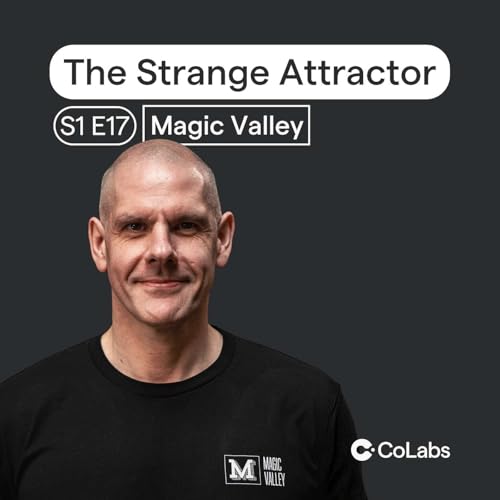
  • From Lab Bench To Dinner Plate: Funding, Regulation, And The Future Of Cultivated Meat In Australia with Paul Bevan | #17
    Nov 28 2025

    Send a text

    What does a $10k cultivated meat dumpling taste like?

    Pretty great.

    But honestly, that’s not the point.

    The real story is how fast that price is free-falling, and what that unlocks for real food on real plates. In this episode, we sit down with Magic Valley CEO Paul Bevan to get past the headlines and into the gritty, resilient work of building a cultivated meat company in Australia.

    We kick off with culture, because tech is easy compared to humans. Paul shares why hiring for outcomes over optics is essential, and how the best interns don’t wait for job descriptions; they earn them by solving obvious problems early.

    From there, we dig into the power of storytelling and marketing, especially when you don’t have a product yet. In emerging categories, education is the product. Media isn’t vanity, it’s scaffolding. It is how you build trust with investors, regulators and supply chain partners.

    Then we talk money. Mission-aligned angels, smaller VCs who understand timelines, matched grants like the Industry Growth Program, and making the most of Australia’s R&D Tax Incentive. We touch on why crowdfunding works best when you already have a crowd, and why disciplined runway beats hype every time.

    And the plot twist? The economics are finally shifting. Food-grade suppliers are undercutting pharma, bioreactors once costing millions are dropping into six-figure territory, and culture media is falling fast with a credible path to one dollar a litre. Add FSANZ’s dedicated cellular agriculture pathway, and the route to viable products looks far more concrete than the doom-scrolling suggests.

    If you’re into cultivated meat, future-fit food systems or the art of founder survival in tough markets (with integrity, clarity and a dash of cheek), this episode is for you.

    Hit subscribe, share with a friend who geeks out on food tech, and drop us your biggest question.

    Keen to hear more about Magic Valley?

    • Website
    • LinkedIn
    • Instagram
    • Youtube

    Still Curious? Check out what we're up to:

    • Instagram
    • LinkedIn
    • Facebook
    • Blog

    Or sign up for our newsletter to keep in the loop.

    This experimental and emergent podcast will continue adapting and evolving in response to our ever-changing environment and the community we support. If there are any topics you'd like us to cover, folks you'd like us to bring onto the show, or live events you feel would benefit the ecosystem, drop us a line at hello@colabs.com.au.

    We're working on and supporting a range of community-led, impact-oriented initiatives spanning conservation, bioremediation, synthetic biology, biomaterials, and systems innovation.

    If you have an idea that has the potential to support the thriving of people and the planet, get in contact! We'd love to help you bring your bio-led idea to life.

    Otherwise, join our online community of innovators and change-makers via this link.


    Más Menos
    1 h y 17 m
Todavía no hay opiniones