Episodios

  • Damdami Taksal After Bhindranwale (ਭਿੰਡਰਾਂਵਾਲੇ ਤੋਂ ਬਾਅਦ) (English)
    Apr 4 2026

    What really happened to Damdami Taksal after Operation Bluestar? In this episode we explore the startling revelations made by Giani Ram Singh Bhindranwale, delivered just nine months ago, exposing how Indian state agencies systematically infiltrated Damdami Taksal through Baba Thakur Singh's family, Taksali associates, and family members of Shahid Singhs, dismantling the institution from within after 1984.

    But to understand the collapse, we must first understand what was built. We trace the history of Damdami Taksal from the inside, examining how Giani Kartar Singh and Sant Jarnail Singh Bhindranwale deliberately broke from the Nirmala-Hinduistic prachar of Gurbachan Singh's era and embarked on a series of subtle but dynamic reforms aimed at resurrecting the Sikh supremacy of the ancient Khalsa. These were not cosmetic changes. They were a fundamental reclaiming of Gurmat sovereignty.

    We then examine how Ram Singh was tasked with expanding these reforms at Mehta Chowk and how that mission was ultimately ended by his ouster at the hands of Harnam Singh Dhumma and the Akali Dal, completing the very takeover that state agencies had set in motion decades earlier.

    This is the story of an institution built to defend the Khalsa and how it was broken from within.

    Más Menos
    48 m
  • Five Thieves (Friends Not Foes~With Mangal Singh Nihang) (Punjabi)
    Mar 29 2026

    In this episode, Mangal Singh Nihang explores how British colonial rule reshaped Sikh society by breaking collective unity and fostering hyper-individualism. He explains how this shift moved Sikhs away from a warrior-based, community-driven identity toward a more individualised and passive form of spirituality.

    The discussion focuses on the misunderstanding of the Five Vices (Panj Vikar) in Sikhi. Rather than being forces to eliminate, traditional Sikh thought emphasizes controlling and directing these human impulses with discipline. Mangal Singh argues that as external pressures and state control reduced the need for self-reliance and resistance, Sikhs gradually lost the practical framework that once allowed them to channel these forces effectively.

    Drawing on history and Sikh philosophy, this conversation challenges modern interpretations and asks whether key aspects of Sikh identity have been diluted over time.

    Más Menos
    1 h y 4 m
  • The Akali Who Defied Kings (Akali Phula Singh: When Character Talked) (Punjabi)
    Mar 21 2026

    In this episode, we examine the legacy of the legendary Akali Phula Singh and what true Sikh leadership looks like. Known for his uncompromising discipline and fearless accountability, Akali Phula Singh held even the most powerful rulers to the highest Khalsa standards. We contrast this with the state of modern Nihangs and Sikh leaders today, questioning where that same courage and integrity has gone. This episode challenges listeners to reflect on leadership, Panthic responsibility, and the cost of compromise in Sikhi.

    Más Menos
    57 m
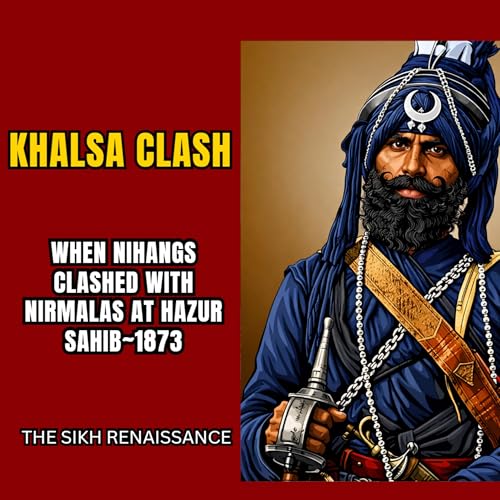
  • Khalsa Clash (When Nihangs Clashed With Nirmalas At Hazur Sahib~1873) (English)
    Mar 16 2026

    In this episode, we examine the 1873 clash at Takht Sri Hazur Sahib between the Nihang and the Nirmala.

    The confrontation arose over the observance of the Five Ks and competing claims about religious authority at the shrine. The Nihangs and Hazuri Akalis challenged the Nirmalas’ assertion that their tradition was ancient and integral to Sikh practice, arguing instead that Khalsa discipline must remain central.

    As tensions escalated, the dispute turned into a physical clash, reflecting broader struggles over Sikh identity, Khalsa tradition, and control of Sikh institutions in the nineteenth century. This episode explores the background, the conflict itself, and what it reveals about debates within the Sikh Panth during this period.

    Más Menos
    36 m
  • ਅਸਲ ਦੁਸ਼ਮਣ (The Plot Against Sikhs: 1984, Khalistan & The Untold Truth) (Punjabi)
    Mar 8 2026

    In this Punjabi episode, we break down the infamous "Four Stages of Ideological Subversion" as described by KGB defector Yuri Bezmenov and analyze how this exact playbook was used against the Sikh community. From the 1970s onward, foreign intelligence agencies and hostile actors didn't need weapons. They used information warfare to weaken the community from within.

    We explore each of the four stages, including Demoralization, Destabilization, Crisis, and Normalization. We connect them to real events in Sikh history, the distortion of the Punjabi language, the targeting of youth, and the propaganda spread through media and education. This episode explains how psychological operations and disinformation were used to divide Sikhs, create internal conflict, and ultimately turn the community against itself.

    Tune in to understand how the battle for the Sikh narrative was fought not on the battlefield, but through the minds of the people. A must listen for anyone interested in Sikh history, media manipulation, and the truth behind the chaos.


    Más Menos
    1 h y 11 m
  • ਐਕਸ-ਖ਼ਾਲਿਸਤਾਨੀ ਦੇ ਝੂਠ (Fact Or Fiction? The Lies Of 'Ex-Khalistani' Sangha) (Punjabi)
    Mar 2 2026

    In this episode, we critically examine and debunk key claims made by Ex-Khalistani Sangha, Giani Buta Singh, Harnek Singh Neki, and other commentators shaping public narratives around Khalistan and Sikh history. Drawing on Gurmat, primary historical sources, and documented evidence, we address what we argue are factual inaccuracies, omissions, and misinterpretations. This is a focused, source-driven discussion aimed at restoring historical clarity.


    Más Menos
    57 m
  • ਸਿੱਖ ਫ਼ੌਜੀ (The Sikh Regiment Crisis: Why Punjabi Youth Avoid The Army After 1984) (Punjabi)
    Feb 22 2026

    This episode argues that the decline of Sikh participation in the Indian Army after 1984 was not accidental but the result of state discrimination, betrayal, and institutional mistrust both pre-and-post-84.

    Following the 1984 Sikh genocide and Operation Blue Star, Sikh soldiers and officers faced surveillance, sidelining, and humiliation despite generations of unmatched military service.

    The episode examines how even highly decorated Sikh commanders such as Brigadier Pritam Singh, Lt. Gen. Harbaksh Singh, Lt. Gen. Bikram Singh, Maj. Gen. Shabeg Singh, and Major Baldev Singh Ghuman were mistreated, marginalised, or erased once they no longer fit the state narrative.

    Through historical evidence and lived reality, this episode explains why many Punjabi Sikh youth consciously withdrew from military service and why the rupture between Sikh faujis and the Indian state remains unresolved.

    Más Menos
    47 m
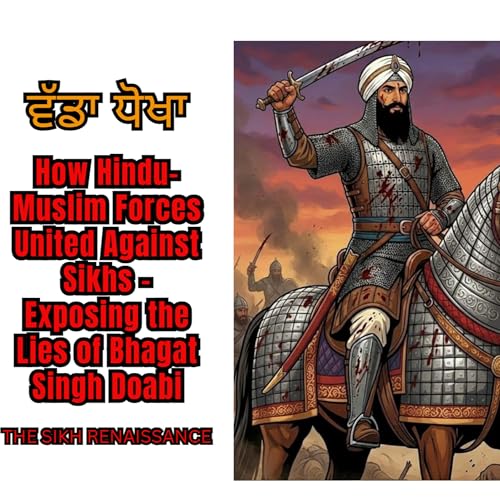
  • ਵੱਡਾ ਧੋਖਾ (How Hindu-Muslim Forces United Against Sikhs-Exposing The Lies Of Bhagat Singh Doabi) (Punjabi)
    Feb 8 2026

    In this episode, we examine the Wadda Ghalughara (1762) using primary historical accounts to uncover a reality often omitted from mainstream narratives.

    During one of the most devastating genocidal episodes in Sikh history, Hindu and Muslim power structures, mercenary forces, and local collaborators aligned against the Sikhs, enabling Ahmad Shah Abdali’s campaign of mass violence.

    This episode directly addresses the modern political claim that Sikhs should align with Hindutva, responding to the assertions of Bhagat Singh Doabi.

    Through historical evidence drawn from Persian chronicles, Sikh sources, and regional records, the discussion demonstrates how religious proximity did not shield Sikhs from persecution and how survival depended on resistance rather than ideological assimilation.

    Key topics explored include:

    • How Hindu and Muslim forces coordinated against Sikhs during the Wadda Ghalughara

    • The role of local elites, informants, and auxiliary troops

    • Why Sikh persecution cannot be reduced to a Muslim-only conflict

    • How history is selectively reframed to advance contemporary political agendas

    • Why Sikh sovereignty, not political alignment, ensured community survival

    This episode is essential listening for those interested in Sikh history, Wadda Ghalughara, Ahmad Shah Abdali, Hindutva debates, Mughal-era violence, and the politicization of historical memory.

    History does not change to suit ideology. It records what happened.

    Más Menos
    1 h y 5 m