The Science of Motherhood Podcast Por Dr Renee White arte de portada

The Science of Motherhood

The Science of Motherhood

De: Dr Renee White
Escúchala gratis

Knowledge is power and we are all about empowering the mothers of the world! In each episode we will unravel and interpret the latest research and evidence-based practices for pregnancy, postpartum and motherhood.© 2023 The Science of Motherhood Crianza y Familias Higiene y Vida Saludable Relaciones
Episodios
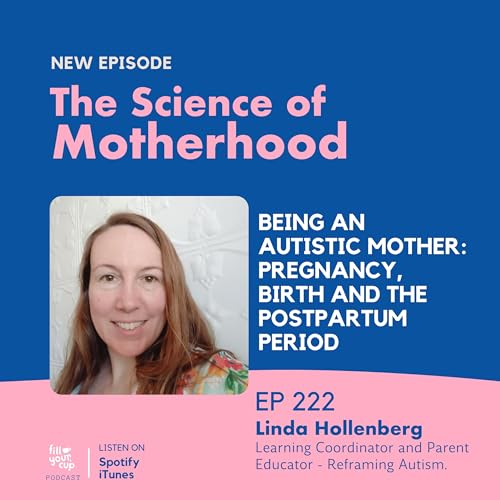
  • Ep 222. Being an Autistic Mother: Pregnancy, Birth and the Postpartum Period
    Apr 13 2026

    Nobody tells you that the struggles so many neurodivergent women experience during pregnancy, birth, and early motherhood might be connected to how their brain is wired. Because so often, nobody knows. Not the healthcare providers, and not the mothers themselves.

    That missing language doesn't just delay a diagnosis. It delays understanding, support, and the ability to make sense of your own experience.

    In this episode of The Science of Motherhood, Dr Renee White chats with Linda Hollenberg, Autistic mother, research advisor, and learning coordinator and parent educator for Reframing Autism, to explore what pregnancy, birth, and early motherhood can look like through a neurodivergent lens. Together they unpack what it means to move through those seasons without the framework to name what you're experiencing, and what changes when you finally have it.

    This is Part 2 of The Science of Motherhood's three-part autism series. If you haven't listened to Part 1 with Dr Abbey Love yet, it's a great place to start.

    You'll hear about:

    • Why sensory sensitivity made HG uniquely devastating for Linda
    • How autistic shutdown during labour affects self-advocacy
    • What continuity of care actually means when you're neurodivergent
    • Why executive functioning challenges are often invisible in postpartum
    • How normalising neediness builds community rather than dependence

    Understanding your own experience is one of the most grounding things you can do. This conversation is a step toward that, whether you have a diagnosis or not.

    If this episode resonated with you, share it with someone who might finally find the words for something they've been carrying. And subscribe so you don't miss an episode of The Science of Motherhood.

    Resources & Links

    📲 Connect with Renee on Instagram: @fillyourcup_

    🌐 Learn more about Dr Renee White and explore Fill Your Cup Doula services

    🍪 Treat yourself with our Chocolate + Goji lactation cookies

    🔗 Explore the Aspect New Parents Hub: Autistic Pregnancy and Parenthood Hub

    🔗 Connect with Aspect on Instagram: @aspect_aus

    This episode is proudly supported by Fill Your Cup, Australia's first doula village, with doulas available across Melbourne, Geelong, Sydney, Newcastle, Brisbane, Gold Coast, Hobart and Perth.

    Disclaimer The information on this podcast presented by Fill Your Cup is not a substitute for independent professional advice. Nothing contained in this episode is intended to be used as medical advice and it is not intended to be used to diagnose, treat, cure or prevent any disease, nor should it be used for therapeutic purposes or as a substitute for your own health professional's advice.

    Más Menos
    1 h y 10 m
  • Ep 221. How the Maternity System Is Failing Autistic Women and What Needs to Change
    Apr 6 2026

    Most women who are autistic don't find out until they're sitting in a room watching their child get diagnosed. And then everything clicks.

    And yet most of them navigated pregnancy and early parenthood without any evidence-based support specific to their experience, often without even knowing why things felt so much harder.

    In this episode of The Science of Motherhood, Dr Renee White sits down with Dr Abbey Love, Educational Psychologist and Research Fellow at Autism Spectrum Australia, to explore the lived experiences of autistic parents through the perinatal period and the research that led to the creation of the Aspect New Parents Hub. Together they unpack what the evidence actually shows about pregnancy, sensory experience, healthcare barriers and what genuine support can look like.

    The hub was built on Australian research co-produced with autistic parents themselves, and what they found has real implications for every neurodivergent woman navigating this season.

    This is Part 1 of The Science of Motherhood's three-part autism series, stay tuned for Parts 2 and 3 coming soon.

    You'll hear about:

    • Why sensory experiences intensify during pregnancy for neurodivergent women
    • How autistic parents shaped the research behind the Aspect hub
    • What healthcare providers say gets in the way of delivering good care
    • Why continuity of care matters so much for neurodivergent families
    • How a birth plan can become a communication and advocacy tool

    You don't need a diagnosis to find something useful in this conversation. What Dr Abbey Love and her team found is that neurodivergent parents bring enormous strength and competence to this season, and the gap isn't in them, it's in the support around them.

    If this episode resonated, share it with someone who might need to hear it. And subscribe so you don't miss the next episode of The Science of Motherhood.

    Resources & Links

    📲 Connect with Renee on Instagram: @fillyourcup_

    🌐 Learn more about Dr Renee White and explore Fill Your Cup Doula services

    🍪 Treat yourself with our Chocolate + Goji lactation cookies

    About Dr Abbey Love and Aspect

    🔗 Explore the Aspect New Parents Hub: Autistic Pregnancy and Parenthood Hub

    🔗 Learn more about Dr Abbey Love and the Aspect research team: Aspect Research Team

    🔗 Connect with Aspect on Instagram: @aspect_aus

    This episode is proudly supported by Fill Your Cup, Australia's first doula village, with doulas available across Melbourne, Geelong, Sydney, Newcastle, Brisbane, Gold Coast, Hobart and Perth.

    Disclaimer The information on this podcast presented by Fill Your Cup is not a substitute for independent professional advice. Nothing contained in this episode is intended to be used as medical advice and it is not intended to be used to diagnose, treat, cure or prevent any disease, nor should it be used for therapeutic purposes or as a substitute for your own health professional's advice.

    Más Menos
    51 m
  • Ep 220. Why Is My Hair Falling Out? The Science Behind Postpartum Hair Loss
    Mar 30 2026

    You survived birth, the sleepless nights and the newborn haze. And then somewhere around three or four months in, you reach up to wash your hair and pull your hand away covered in it.

    It's alarming, and for most of us, nobody warned us it was coming.

    This episode is for every mum who has stood over the shower drain wondering if something is seriously wrong. It isn't. But understanding the biology behind what's happening makes it so much easier to move through.

    This is part of The Science Behind series, where Dr Renee White takes your real questions and unpacks the science in a way that actually makes sense in real life.

    You'll hear about:

    • Why pregnancy hormones cause your hair to stop shedding normally
    • What telogen effluvium is and why it hits at three to four months
    • Why you're not losing follicles, just catching up on stored hair
    • Which nutrient deficiencies can compound postpartum hair loss
    • When your hair is likely to return to its pre-pregnancy density

    Your body isn't falling apart. It's recalibrating. The shedding you're experiencing is a sign of how extraordinary your hormonal landscape was during pregnancy, and your body is simply finding its way back.

    Resources & Links

    📲 Connect with Renee on Instagram: @fillyourcup_

    🌐 Learn more about Dr Renee White and explore Fill Your Cup Doula services

    🍪 Treat yourself with our Chocolate + Goji lactation cookies

    This episode is proudly supported by Fill Your Cup, Australia's first doula village, with doulas available across Melbourne, Geelong, Sydney, Newcastle, Brisbane, Gold Coast, Hobart and Perth.

    If this episode helped, share it with a mum friend who's standing over the shower drain wondering what on earth is happening. And don’t forget to subscribe so you never miss an episode of The Science of Motherhood.

    Disclaimer: The information on this podcast presented by Fill Your Cup is not a substitute for independent professional advice. Nothing contained in this episode is intended to be used as medical advice and it is not intended to be used to diagnose, treat, cure or prevent any disease, nor should it be used for therapeutic purposes or as a substitute for your own health professional's advice.

    Más Menos
    11 m
Todavía no hay opiniones