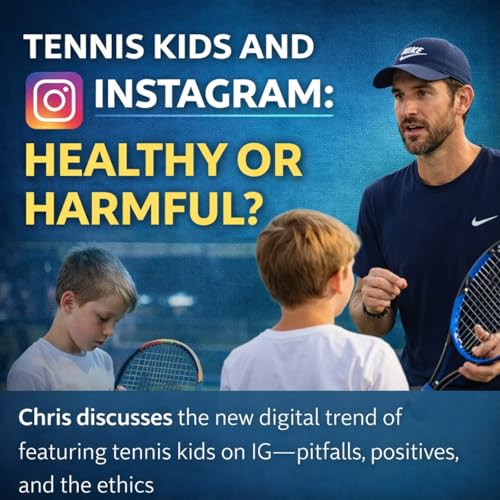
The Prodigy Maker Tennis Show Podcast Por Chris Lewit arte de portada

The Prodigy Maker Tennis Show

The Prodigy Maker Tennis Show

De: Chris Lewit
Escúchala gratis

OFERTA POR TIEMPO LIMITADO | Obtén 3 meses por US$0.99 al mes

$14.95/mes despues- se aplican términos.

🎾 The Prodigy Maker Tennis Show (PMTS) 🎙️


*All shows are available in video format at the Chris Lewit Youtube Channel: https://www.youtube.com/@ChrisLewit


Hosted by renowned American coach Chris Lewit, The Prodigy Maker Tennis Show explores the dynamic intersection of elite junior tennis development, cutting-edge sport science and technology, fitness, health, and human performance.


Chris is widely regarded as one of the top coaches in the United States, having developed numerous No. 1-ranked juniors nationally. He is also the acclaimed author of the tennis classics The Secrets of Spanish Tennis and Winning Pretty. With a background in literature and religion at Cornell, Harvard, and Columbia, and now pursuing a PhD in kinesiology and biomechanics, Chris brings a rare combination of intellectual depth and practical coaching expertise to every conversation.


Each episode uncovers the latest research, training innovations, and coaching philosophies that shape the next generation of champions. Listeners gain insights into biomechanics, skill acquisition, fitness, psychology, injury prevention, recovery science, and long-term athlete development — all framed through the lens of Chris’s unique journey as a scholar, writer, and elite coach. While rooted in the world of tennis, The Prodigy Maker Tennis Show goes beyond the court to explore the science, technology, fitness, health, and human performance principles that apply to all sports


Whether you are a coach, parent, or player, PMTS invites you to discover how science, art, and coaching craft converge to create champions with purpose — both on and off the court.

Hosted on Acast. See acast.com/privacy for more information.

All rights reserved
Higiene y Vida Saludable Tenis
Episodios
  • Should Talented Kids Under 10 Train with Yellow Balls?
    Jan 6 2026


    Rather than accepting the Red–Orange–Green pathway as a one-size-fits-all solution, this episode challenges current assumptions and argues that young talents should have appropriate opportunities to train with yellow balls, alongside scaled equipment, when developmentally ready.


    🎾 Key themes in this episode include:

    • Why the Red, Orange, and Green Ball system can limit long-term potential if applied rigidly

    • The difference between recreational participation and high-performance development

    • Why some young players need earlier exposure to yellow balls for timing, spacing, and skill acquisition

    • How over-protecting young players can delay technical and athletic growth

    • A more flexible, individualized approach to junior development


    This episode is especially valuable for parents of talented young players, coaches working in high-performance pathways, and anyone interested in the long-term development of elite junior tennis players.


    This is a golden oldie from the archive, but the discussion remains highly relevant today as junior tennis continues to debate the best developmental models for young athletes.


    📌 Prodigy Maker Tennis Show – Episode 110

    Hosted by Chris Lewit

    0:00 Introduction and show update

    1:00 Topic overview: Red, Orange, Green, and U10 tennis

    2:20 Why this is a controversial issue in junior development

    3:40 Injury prevention myth with low compression balls

    5:30 Tournament mandates and parent frustration

    7:30 Racket size vs ball type for young players

    9:00 Power development concerns with soft balls

    11:00 Why some juniors struggle to develop pace

    13:00 U10 vs U6: Rethinking the age model

    15:00 Can young kids handle a full court?

    17:00 Movement, footwork, and athletic development

    19:00 Benefits of Red/Orange/Green for grassroots tennis

    21:00 Why ROG is not ideal for high performance players

    23:00 Coaching vs equipment in technique development

    25:00 Tactical development myths

    27:00 Teaching movement instead of slowing the ball

    29:00 Can talented kids play yellow ball early?

    31:00 Problems with holding players back too long

    33:00 Tournament progression rules explained

    35:00 Why parents want choice, not mandates

    37:00 Evidence vs opinion in junior tennis systems

    39:00 Marketing, misinformation, and pressure on parents

    41:00 Why tennis development is both a sprint and a marathon

    44:00 Consequences of delayed development

    46:00 Can elite players survive ROG systems?

    48:00 Where junior tennis should go next

    50:00 The culture of debate and dissent in tennis

    52:00 Final thoughts for parents and coaches

    🎾 The Prodigy Maker Tennis Show (PMTS) explores the intersection of junior tennis development, cutting-edge sport science, fitness, health, and human performance. Hosted by world-renowned coach Chris Lewit — author of The Secrets of Spanish Tennis and Winning Pretty, and developer of numerous No. 1 juniors in the U.S. — PMTS brings together coaching wisdom, research, and technology to shape the future of tennis and human performance.

    👉 Subscribe and listen on

    https://podcasts.apple.com/us/podcast/the-prodigy-maker-tennis-show/id1456148452

    https://open.spotify.com/show/3Wu0PXf9IXneu0ogrzujZN

    https://www.youtube.com/playlist?list=PLR2QscfBfEs9dtttR6XNhduNlWYmZIfy-

    🌐 https://shows.acast.com/the-prodigy-maker-tennis-show/about

    📖 Books: The Secrets of Spanish Tennis | Winning Pretty

    Hosted on Acast. See acast.com/privacy for more information.

    Más Menos
    59 m
  • What Most Tennis Parents Get Wrong About Junior Tournaments
    Dec 31 2025
    🎾 Classic From the Archive | Episode 109: Junior Tennis Tournaments, Pathways & Predicting PotentialThis is a classic archive episode (Episode 109) where Chris breaks down one of the most confusing—and important—topics in junior tennis: tournaments, development pathways, and how to realistically evaluate future potential.Over the years, Chris has received countless questions from parents and coaches about how many tournaments kids should play, when to move up levels, how much to train, and how to navigate the maze of junior tennis systems. In this episode, he pulls everything together in one deep, honest conversation.Chris explains the different tournament options for prodigies and non-prodigies at every stage of junior development—from 5 years old through the teenage years—and discusses what actually matters versus what is often just noise.In this episode, Chris covers: • Why most true prodigies don’t do group classes at young ages • Why elite juniors often bypass Red, Orange, and Green ball programs • The importance of building world-class technique early • The heavy-handed tournament mandates in junior tennis • The typical ranking and tournament pathway of Division 1 college players • Junior age and ranking trends that accurately predict D3, D1, pro, or Slam-level potential • The difference between being dominant in your own age group vs. 2–3 age groups up • How much top sectional juniors really practice and compete • Tournament volume and training hours for Top 100 nationally ranked juniors • USTA National Circuit vs. ITF Junior World Tour—which makes more sense and when • Using UTR, Little Mo, and Junior Tennis Tour to bypass U10 mandates • Skipping USTA tournaments under age 10—smart or risky? • Whether UTR actually matters in long-term development • How Chris evaluates junior pathways and measuring sticks for future successThere’s no crystal ball—but as Chris explains, the trends are there to see if you know what to look for.📌 Episode 109 is a must-watch for parents, coaches, and players looking for clarity, realism, and long-term perspective on junior tennis development.0:00 Intro: Classic episode on tournament planning 0:26 Episode focus: Junior tournament progression (ages 5–18) 1:14 Breaking junior ages down (5–10, 10–18) 2:32 Young prodigies: training volume & early development 3:44 Why prodigies avoid group classes early 5:17 Why Red/Orange/Green programs slow development 7:05 When groups can work (motor talent vs. reps needed) 9:08 Building world-class technique early (creating the “gap”) 10:52 Prodigy markers: winning multiple age divisions up 14:09 Non-prodigy kids: realistic training approach & enjoyment 16:48 Why most clubs mis-handle early coaching 19:47 USTA under-10 mandates & frustration 21:20 Push through Orange/Green fast (get to Yellow ball) 22:50 Example: age rules that block talented kids 24:44 Bypassing USTA: UTR, Little Mo, other circuits 26:36 Little Mo explained + why it matters 29:38 Best options for ages 5–10: what to prioritize 32:21 Over 10: USTA levels, nationals, points system 36:53 ITF Junior World Tour: grades & junior slams pathway 39:32 Starting the pro path: Futures / ITF World Tour 41:14 USTA vs ITF: which route makes sense (money/travel/training) 45:05 Ranking “signals”: D1 vs pro vs slam-level potential 48:40 Non-prodigy pathway: sectional → national ranking targets 53:02 What rankings typically predict: D1 vs D3 vs club tennis 56:03 How many tournaments per month (and why too many hurts) 1:00:46 Training hours per week: elite vs non-elite 1:02:36 Is D1 hard to reach? (recruiting reality) 1:03:23 Wrap-up + invite for follow-up questions🎾 The Prodigy Maker Tennis Show (PMTS) explores the intersection of junior tennis development, cutting-edge sport science, fitness, health, and human performance. Hosted by world-renowned coach Chris Lewit — author of The Secrets of Spanish Tennis and Winning Pretty, and developer of numerous No. 1 juniors in the U.S. — PMTS brings together coaching wisdom, research, and technology to shape the future of tennis and human performance.👉 Subscribe and listen onhttps://podcasts.apple.com/us/podcast/the-prodigy-maker-tennis-show/id1456148452https://open.spotify.com/show/3Wu0PXf9IXneu0ogrzujZNhttps://www.youtube.com/playlist?list=PLR2QscfBfEs9dtttR6XNhduNlWYmZIfy-🌐 https://shows.acast.com/the-prodigy-maker-tennis-show/about📖 Books: The Secrets of Spanish Tennis | Winning Pretty Hosted on Acast. See acast.com/privacy for more information.
    Más Menos
    1 h y 5 m
  • The Elastic Forehand of the Modern Game
    Dec 22 2025

    The Elastic Forehand of the Modern Game


    🎾 Live Coaching Podcast Prodigy Maker

    Tennis Show — Episode 108 (LIVE)


    This is a live coaching podcast and tennis show focused on the elastic forehand of the modern game. We break down how today’s players create effortless power through acceleration, lag, and whip, and—most importantly—how to teach and develop these skills in players of all levels.


    Join us live to ask your questions and learn directly from one of the best tennis coaches in the country. This is an interactive show designed for coaches, players, and serious tennis fans who want a deeper understanding of modern technique and performance.


    📍 Live from the Chris Lewit Tennis Academy

    🗓 Every Sunday evening

    ⏰ 6:00–7:00 PM start time depending on when Chris finishes practice!


    Tune in live, join the chat, and be part of the conversation and our YouTube community. YouTube.com/ChrisLewit to join!

    🎾 The Prodigy Maker Tennis Show (PMTS) explores the intersection of junior tennis development, cutting-edge sport science, fitness, health, and human performance. Hosted by world-renowned coach Chris Lewit — author of The Secrets of Spanish Tennis and Winning Pretty, and developer of numerous No. 1 juniors in the U.S. — PMTS brings together coaching wisdom, research, and technology to shape the future of tennis and human performance.

    👉 Subscribe and listen on

    https://podcasts.apple.com/us/podcast/the-prodigy-maker-tennis-show/id1456148452

    https://open.spotify.com/show/3Wu0PXf9IXneu0ogrzujZN

    https://www.youtube.com/playlist?list=PLR2QscfBfEs9dtttR6XNhduNlWYmZIfy-

    🌐 https://shows.acast.com/the-prodigy-maker-tennis-show/about

    📖 Books: The Secrets of Spanish Tennis | Winning Pretty

    Hosted on Acast. See acast.com/privacy for more information.

    Más Menos
    41 m
Todavía no hay opiniones