The Pilates Lounge Podcast Por Katie Crane arte de portada

The Pilates Lounge

The Pilates Lounge

De: Katie Crane
Escúchala gratis

Welcome to the Pilates & Movement Journey, a show tailored for Pilates Professionals, movement educators, and enthusiasts. Immerse yourself in transformative content that connects mind, body, and spirit. Explore holistic wellness, gain expert insights, and foster a vibrant community. Ignite your passion for Pilates with engaging discussions, practical tips, and a focus on overall well-being. Join us on this journey to elevate your spirit and embrace a healthier, more mindful lifestyle. https://www.thepilatesprofessional.com.au/2024 Actividad Física, Dietas y Nutrición Desarrollo Personal Ejercicio y Actividad Física Higiene y Vida Saludable Éxito Personal
Episodios
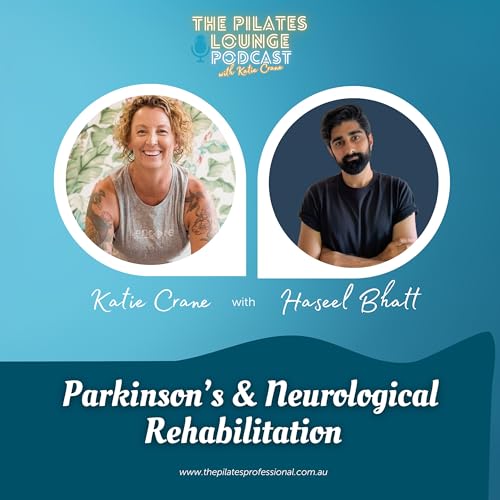
  • Parkinson's & Neurological Rehabilitation Haseel Bhatt
    Apr 5 2026
    On The Pilates Lounge Podcast, Katie Crane sits down with neurological physiotherapist and clinical researcher Haseel Bhatt for a powerful conversation about Parkinson's disease, neurological rehabilitation, and the critical role movement professionals can play in supporting people living with neurological conditions. Haseel is the founder of Neurology Rehab, a dedicated physiotherapy clinic focused on helping people living with Parkinson's and other movement disorders improve mobility, independence, and quality of life through evidence-informed rehabilitation. He is also an Adjunct Lecturer at the University of Toronto, a published researcher, and a passionate educator helping clinicians translate neurological research into practical movement strategies. Together, Katie and Haseel explore what Parkinson's actually is, how it affects the brain and body, and why movement professionals — including Pilates teachers — play a far more important role in neurological care than many realize. The conversation also highlights a major shift in the Parkinson's field: where exercise was once considered optional, it is now widely recognized as one of the most powerful tools for maintaining function, mobility, and independence. This episode provides both clarity and practical insights for movement professionals working with neurological conditions. Because people living with Parkinson's are not fragile. They are capable of movement, adaptation, and progress — when supported with the right strategies. We Explore What Parkinson's disease actually is and how dopamine loss affects movementThe four cardinal symptoms of Parkinson's: tremor, rigidity, slowed movement, and postural instabilityWhy anxiety, fatigue, and other non-motor symptoms play a major role in the conditionThe phenomenon of freezing of gait — when the brain temporarily "loses" the ability to stepWhy simple visual cues like lines on the floor can help bypass faulty movement signals in the brainHow large-amplitude movement training can recalibrate movement patternsWhy exercise and physiotherapy are now considered essential treatmentsThe difference between symptom management and disease progressionWhy movement professionals must tailor exercise based on each individual's symptom pattern This Episode Is For Pilates teachers working with clients living with Parkinson'sMovement professionals curious about neurological rehabilitationStudio owners seeing more clients with complex health conditionsPhysiotherapists and trainers wanting to better understand Parkinson's movement patternsAnyone interested in the evolving relationship between exercise, neuroscience, and rehabilitation A Moment That Landed "If you've met one person with Parkinson's… you've met one person with Parkinson's." One of the most important themes in this episode is that Parkinson's is highly individual. Two people may share the same diagnosis — but their symptoms, progression, and daily challenges can look completely different. That's why Haseel emphasizes the importance of what he calls a "fingerprint assessment." Movement professionals must look beyond the diagnosis itself and instead understand: How symptoms present in that individualHow those symptoms affect daily lifeWhat movement strategies will best support function and independence The goal is not simply exercise. The goal is helping people live well with Parkinson's. Key Takeaway for Movement Professionals If you work with clients living with Parkinson's: Movement matters. But precision matters even more. Haseel outlines a framework for supporting clients with neurological conditions: Awareness – understanding how much someone is actually movingAssessment – identifying each person's unique symptom patternPrecision rehabilitation – targeting exercises to specific movement challengesEnvironment – creating supportive systems and routinesSelf-management – empowering the person to take an active role in their care For movement professionals, this means your role goes far beyond teaching exercises. You become part of a team helping someone maintain mobility, confidence, and independence. Connect with Haseel Bhatt Haseel Bhatt is a neurological physiotherapist, clinical researcher, and founder of Neurology Rehab, a clinic focused on improving access to specialized rehabilitation for people living with Parkinson's and other movement disorders. Through his clinical work, teaching, and educational programs, he helps clinicians and movement professionals translate neuroscience into practical rehabilitation strategies. 🌐 Website https://neurologyrehab.com 📸 Instagram https://www.instagram.com/parkinsonsphysiotherapy 📘 Facebook https://www.facebook.com/people/Neurology-Rehab/61566930015525/ About The Pilates Lounge The Pilates Lounge Podcast is where intelligent movement meets real-world practice. Hosted by Katie Crane, the podcast explores the deeper layers of Pilates — from neurological conditions and chronic ...
    Más Menos
    49 m
  • Fibromyalgia, Pain & the Nervous System with Rob Nash
    Mar 29 2026
    On The Pilates Lounge Podcast, Katie Crane sits down with integrative exercise physiologist and chronic pain recovery coach Rob Nash for a deeply thoughtful conversation about fibromyalgia, chronic pain, and the misunderstood role the nervous system plays in persistent pain conditions. Rob brings over a decade of experience working with people living with chronic fatigue syndrome, fibromyalgia, dysautonomia, and other complex chronic conditions. His approach sits at the intersection of movement therapy, neuroscience, and compassionate coaching — helping people rebuild capacity without triggering the flare-ups that so often derail recovery. Together, Katie and Rob explore the evolving science of pain, the limitations of purely biomedical models, and why people living with fibromyalgia are so often dismissed, misunderstood, or given advice that unintentionally makes things worse. This episode brings clarity to one of the most confusing topics in modern healthcare. Because fibromyalgia is not imagined. It is a nervous system condition that requires intelligence, patience, and respect for the body's protective mechanisms. We Explore: What fibromyalgia actually is — and why it's often misunderstood medicallyThe difference between fibromyalgia and localized chronic painHow trauma, prolonged stress, and nervous system overload can influence pain patternsThe role of nociceptors (danger receptors) and how the brain interprets pain signalsWhy pain isn't always a reflection of tissue damageThe concept of sensitisation — when the nervous system becomes overprotectiveWhy exercise can sometimes flare fibromyalgia symptomsThe "exercise trap" movement professionals must avoid with chronic pain clientsWhy starting with very low-load, low-repetition movement can be the most effective approach This Episode Is For: Pilates teachers working with clients experiencing fibromyalgia or chronic painMovement professionals wanting a more nervous-system informed approach to exerciseStudio owners designing safe environments for sensitive nervous systemsHealth professionals curious about integrative pain carePeople living with fibromyalgia who want to better understand their body A Moment That Landed: "Pain is ultimately about protection. The brain is trying to tell you something isn't safe — even if that signal isn't accurate anymore." One of the most powerful ideas in this conversation is that pain can become habitual. Not because someone is imagining it. But because the nervous system has learned to associate certain movements, situations, or environments with danger. Breaking that cycle requires patience, education, and new experiences of safety. Sometimes the first goal is not strength or fitness. Sometimes the goal is simply moving without triggering a flare-up. Key Takeaway for Movement Professionals If you work with clients living with fibromyalgia: Less is often more. Rob emphasises that the goal of movement is not always progression. Sometimes the success of a session is simply this: The person moved. They felt safe. And they did not flare up afterward. That alone can begin rebuilding trust between the body and the nervous system. Connect with Rob Nash Rob Nash is an Integrative Exercise Physiologist and Chronic Pain & Fatigue Recovery Coach with over 12 years' experience supporting people living with chronic pain, fatigue and dysautonomic conditions. His work combines education, pacing strategies, nervous system awareness, and individualized guidance to help people rebuild capacity without repeated crashes. 🌐 Website: https://healthrive.com.au 📸 Instagram: https://www.instagram.com/_healthrive Rob works entirely via telehealth and supports clients across Australia. Continue the Conversation in The Pilates Muse If this conversation sparked something for you — professionally or personally — explore The Pilates Muse, where Katie shares deeper reflections on movement, pain, teaching philosophy, and the evolution of Pilates as a therapeutic practice. ➡️ https://www.thepilatesprofessional.com.au/the-pilates-muse-publication 🎥 Prefer to watch? Episodes of The Pilates Lounge Podcast are also available on YouTube. About The Pilates Lounge The Pilates Lounge Podcast is where intelligent movement meets real-world practice. Hosted by Katie Crane, the podcast explores the deeper layers of Pilates — from chronic pain and nervous system regulation to business leadership, teaching philosophy, and the evolving role of movement professionals in modern healthcare. Each episode supports Pilates educators to think deeper, teach smarter, and serve their communities with integrity.
    Más Menos
    1 h y 9 m
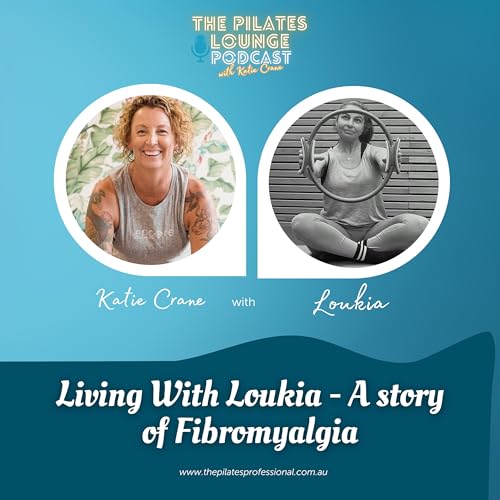
  • Living With Loukia - A story of Fibromyalgia
    Mar 22 2026

    On The Pilates Lounge Podcast, Katie Crane sits down with the founder of Live Young Pilates for a grounded, intelligent conversation about what it really means to "live young."

    Not cosmetically.

    Not performatively.

    But structurally, neurologically, and philosophically.

    This episode explores longevity through the lens of Pilates — not as a trend, not as choreography, but as a lifelong practice that builds adaptability, resilience, and agency.

    Together, we unpack how intelligent movement supports strength across decades, why midlife is a recalibration rather than a decline, and how the industry often confuses intensity with effectiveness.

    This conversation is a reminder:

    Living young is about maintaining options in your body — not chasing exhaustion.

    We Explore:
    • What "living young" actually means beyond aesthetics or anti-ageing narratives
    • The difference between Pilates as exercise versus Pilates as practice
    • Why joint integrity, fascia health, breath, and proprioception determine how we age
    • The responsibility Pilates professionals carry when working with women 40+
    • How hormonal shifts change the way we should approach load and recovery
    • Why small-group and thoughtful programming create deeper embodiment
    • The nervous system's role in strength, coordination, and sustainable progress
    • Why chasing the burn is rarely the goal in intelligent Pilates
    • The long-game philosophy of building capacity without overwhelming the system
    This Episode Is For:
    • Pilates teachers who want to teach for longevity, not trends
    • Studio owners positioning Pilates beyond fitness culture
    • Women navigating perimenopause, menopause, and midlife transitions
    • Movement professionals refining their philosophy around load and adaptation
    • Anyone who wants strength without burnout
    A Moment That Landed:

    "Youthfulness isn't about how hard you train — it's about how well your body adapts."

    This episode reinforces an essential truth:

    Pilates done properly is not about performance. It's about preservation, progression, and intelligent self-awareness.

    Living young isn't about trying to look 25.

    It's about moving well at 55.

    And 65.

    And 85.

    For Pilates professionals, this conversation is an invitation to zoom out — to look beyond class formats and social media narratives and ask:

    Are we building bodies that will last?

    👉 Your Next Step:

    Take this into your teaching practice:

    ➡️ Audit how you program for women over 40

    ➡️ Reflect on whether your cues support autonomy or dependency

    ➡️ Consider how breath, pacing, and recovery are integrated — not just load

    ➡️ Revisit your philosophy: is your teaching built for decades, or just for today?

    Connect with Loukia

    To learn more about Loukia's work, philosophy, and offerings:

    🌐 https://www.liveyoungpilates.com

    This is a valuable resource for teachers and clients wanting a longevity-focused, intelligent approach to Pilates.

    Continue the Conversation in The Pilates Muse

    If you're craving deeper reflections, intelligent conversation, and writing that challenges how we think about Pilates, longevity, and professional integrity:

    ✨ Explore The Pilates Muse — a publication for Pilates teachers who want to think beyond cues and exercises

    ➡️ https://www.thepilatesprofessional.com.au/the-pilates-muse-publication

    🎥 Prefer to watch?

    Episodes of The Pilates Lounge are also available on YouTube.

    This is where philosophy meets practice.

    About The Pilates Lounge

    The Pilates Lounge Podcast is where intelligent movement meets real-world practice. Hosted by Katie Crane, each episode supports Pilates teachers and movement professionals to think deeper, teach smarter, and build sustainable careers grounded in integrity, autonomy, and whole-person health.

    Más Menos
    50 m
Todavía no hay opiniones