The Nine Year Odyssey Podcast Por  arte de portada

The Nine Year Odyssey

The Nine Year Odyssey

Escúchala gratis

Ver detalles del espectáculo
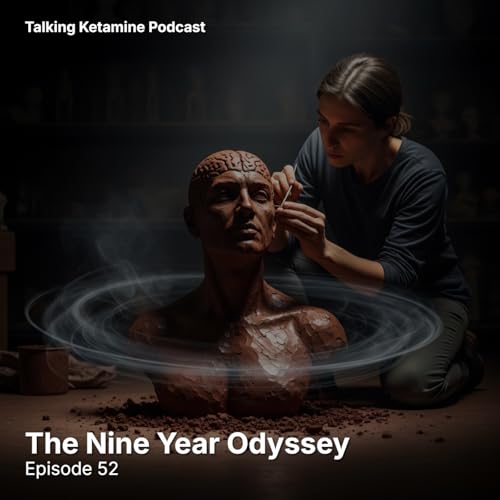
For the podcast's one-year anniversary, we zoom out from single studies to examine a comprehensive masterpiece: the doctoral thesis of Jolien K.E. Veraart, representing nine years of research (2016–2026) at the University of Groningen. This document moves beyond the initial hype of "does it work?" to the mature, difficult questions of long-term maintenance and safety. We unpack the critical concept of auto-induction—the discovery that the liver eventually "learns" to metabolize ketamine so efficiently that stable doses stop working, creating a bioavailability trap that looks like relapse but is actually just enzymatic efficiency. The episode also tackles the "nightmare" of oral dosing, where absorption is so variable that it makes consistent treatment a roll of the dice. Finally, we discuss the philosophical shift in Veraart’s work: moving away from the "trip" as the cure and toward a model where ketamine simply "softens the clay" of the brain. This places the responsibility back on set and setting not just as a safety measure, but as the tool that sculpts the neuroplastic brain into a healthier shape. Reference: Veraart, J. K. E. (2026). Ketamine for depression: Moving from research to clinical practice [Doctoral thesis, University of Groningen]. https://doi.org/10.33612/diss.1484805904
Todavía no hay opiniones