The Newcomers Podcast Podcast Por Dozie Anyaegbunam | Exploring the Canadian Immigrant Experience arte de portada

The Newcomers Podcast

The Newcomers Podcast

De: Dozie Anyaegbunam | Exploring the Canadian Immigrant Experience
Escúchala gratis

Immigration journey stories and immigration experiences explored through interviews with immigrants and stakeholders involved in the immigration process. We chat about everything from raising kids in a new culture, cultural adaptation, integration, identity, and everything in-between.

thenewcomerspod.comDozie Anyaegbunam | Exploring the Canadian Immigrant Experience
Ciencias Sociales Escritos y Comentarios sobre Viajes
Episodios
  • E150: David Campbell understands why our immigration policy isn't working for Atlantic Canada
    Mar 26 2026

    In the 150th episode (whew), I am speaking with David Campbell, formerly Chief Economist with the New Brunswick Jobs Board Secretariat and President of Jupia Consultants Inc, an industry research and economic development consulting firm.


    The big question for me as I was planning this episode was if population growth could be a bottleneck or an economic tool, and what that meant for Canada's productivity and Atlantic Canada.


    The question I think we ended up answering was if one immigration policy can work for a country with wildly different demographic realities.


    We also talk about a lot of other interesting things, such as:

    • How international students contribute $12,000 to $15,000 in indirect taxes per year
    • Why firms facing labour shortages in Atlantic Canada moved to Brampton instead of investing in automation
    • What a provincial approach to immigration targets would look like in practice
    • How immigrants tend to be more entrepreneurial than average, and how that's helped the startup community in Atlantic Canada

    ----------

    Dozie's Notes

    A few things that struck me as I listened through this week's conversation:

    1. The gap between what different regions need is enormous, and our immigration policy seems to treat them as the same. In Peel County, Ontario, there are 169 births for every 100 deaths. In Queens County, New Brunswick, there are 41. The recently released Public Policy Forum publication authored by David adds another dimension to the conversation, which is: by 2035, 175 communities across Atlantic Canada will have at least a third of their population over 65, up from 12 in 2011. A national immigration policy that applies the same cuts everywhere ignores the fact that some of these communities are literally running out of people while others are congested.
    2. When you bring in 1.5 million students but only have space to grant permanent residency to a fraction of them, you've built a system that manufactures disappointment. The people caught in that gap made life decisions based on what they were told. Now many of them, including people David says are in career jobs, are being sent home because their work permits aren't being renewed.
    3. The yearning for a 1950s world, as David puts it, is a yearning for something that never existed. Even in New Brunswick's history, Catholics and Protestants fought like cats and dogs. There was never a time when everyone shared the same background and culture. David says Canada works because you don't have to agree with your neighbor's religion or views, you just have to tolerate that they can hold different ones. When people push for restricting immigration to return to some imagined cultural homogeneity, they're chasing a past that was always fictional. And they're willing to sacrifice the economic and demographic future of their communities to get there.


    Official Links

    ✅ Connect with David Campbell on LinkedIn

    ✅ Check out his Substack; It's the Economy, Stupid

    ✅ Read the March 2026 Public Policy Forum publication on solving Atlantic Canada's growing labour force challenge


    One Ask

    If you found this story helpful, please consider sharing it with one immigrant you know.


    Más Menos
    1 h y 11 m
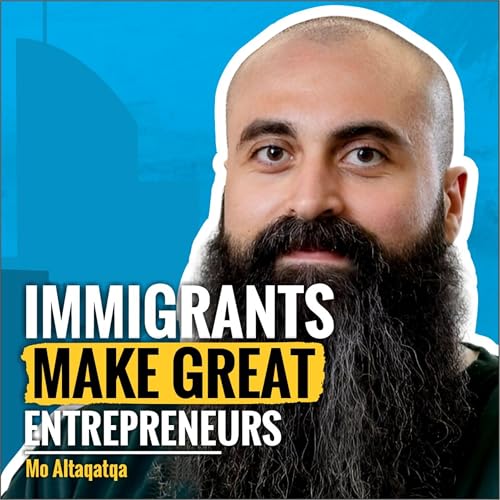
  • E149: Mo Altaqatqa on the skill that separates the newcomer entrepreneurs who win from those who don't
    Mar 19 2026

    In today's episode, I'm speaking to Mo Altaqatqa, Senior Business Development Manager at Futurpreneur.


    Mo grew up in Jordan, left in 2011, lived in Saudi Arabia, Dubai, and Ukraine before moving to Canada. He's been working with entrepreneurs for over a decade, starting in banking, then running his own fundraising business working with startups, and now supporting young entrepreneurs through Futurpreneur.


    I kinda already sensed this, but the point Mo makes about how the immigration process itself is preparation for building a business is such a great one. Because mahn, if you get through all the paperwork, the financial planning, the risk, and the uncertainty, I don't see why you can't go ahead and build a business.


    But there are other things that separates those who launch from those who stall.


    Mo and I chat about that difference, we also talk about:

    • How to tailor a business idea from home for the Canadian market
    • What 15 years away from home teaches you about adaptability and identity
    • How Futurpreneur's newcomer initiative bridges the credit score gap
    • Why Mo spent months saying no to jobs in Canada

    ----------

    Dozie's Notes

    A few things that struck me as I listened through this week's conversation:

    1. A lot of newcomer entrepreneurs who fail do so because they don't understand their customer. You bring a product from home and you assume people here will want it the same way. But the customer here is different because their habits and tastes are different. As Mo says, when a customer says no, they're not rejecting your identity. They're telling you the product needs to meet them where they are.
    2. Values-based job searching as an immigrant takes a kind of nerve that most people can't afford. Mo spent six or seven months without a steady income, saying no to jobs that didn't align with what he wanted to do. That wait was expensive but it's also what landed him at Futurpreneur, where his values matched the mission. Not everyone can afford to wait. But for those who can, Mo's story is proof that the wait can pay off. The wrong job at the right time is still the wrong job.

    Official Links

    ✅ Connect with Mo Altaqatqa on LinkedIn


    One Ask

    If you found this story helpful, please consider sharing it with one immigrant you know.


    Más Menos
    43 m
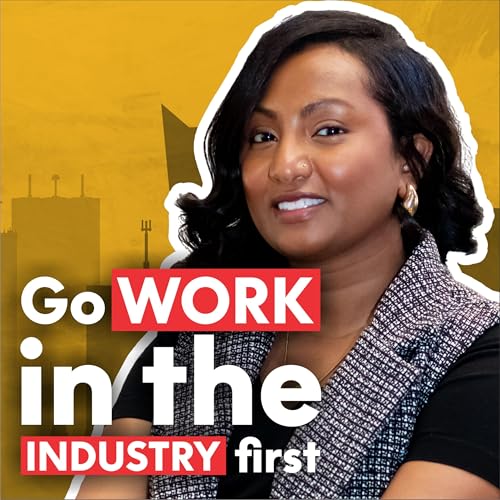
  • E148: Bontu Galataa on the biggest mistake loads of newcomer entrepreneurs make
    Mar 12 2026

    In today's episode, I am chatting with Bontu Galataa, an entrepreneurship ecosystem strategist and Founder of Sayyoo Consulting, a social impact business consultancy.


    Bontu has met and still meets newcomer entrepreneurs at every stage; from folks who just landed and are looking to run with an idea to those who have been on the grind for a few years and are looking to figure out why the business can't seem to grow beyond their little circle of friends.


    And the common thread is these people mostly skip the research phase. They assume that business works the way back home with some little changes. They don't spend time understanding all the million nuances that could put you in trouble or crater your business.


    Bontu and I chat about how to solve that, we also talk about:

    • How personal credit determines your business lending options till a certain stage
    • Why banks can't help with everything
    • The fantasy of being your own boss
    • Why crowdfunding, pitch competitions, and micro-grants might be better starting points than bank loans
    • When you should take your first loan

    ----------

    Dozie's Notes

    A few things that struck me as I listened through this week's conversation:

    1. The best market research sometimes is a job. Getting a job in the industry you're hoping to launch a business in means you have a front-row seat to everything. You'll learn the regulations, find the gaps, and even build the relationships that could lead to your first clients or your first mentors.
    2. Starting a business as a newcomer can be hard. Not to be a downer here but people (myself included) often fantasize about how starting our own business can mean some form of freedom. But you get in and discover that if you can't fund the business, the business won't fund itself. Capital is scarce. Grants for for startups are hard to come by. Lending requires personal credit you might not have yet. So you end up running the business on top of a survival job, funding it from your nine-to-five, and testing your product on weekends. Know this and plan for it.
    3. Immigrants sometimes come from economies that have solved problems the Canadian market hasn't even identified yet. The challenge is knowing how to position that expertise in a market that doesn't know it needs it yet. Bontu thinks one way to do that in Canada is to pair that knowledge with local understanding. And execute fast.
    4. Network outside your community. It's natural to stay within your diaspora community when you arrive. But if you want to build a business that reaches beyond that community, you need relationships outside of it. Especially because in Canada, your network is a big part of far you go.

    -----------

    Official Links

    ✅ Connect with Bontu Galataa on LinkedIn


    One Ask

    If you found this story helpful, please consider sharing it with one immigrant you know.

    Más Menos
    46 m
Todavía no hay opiniones