Episodios

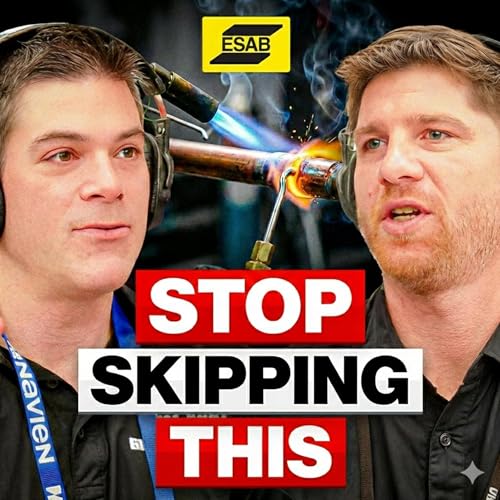
  • Why HVAC Technicians Can’t Afford to Skip Steps Anymore | Jay Henderek, ESAB
    Feb 24 2026

    HVAC systems are changing. The margin for error is shrinking.

    Host Andrew Brown sits down with Jay Henderek, Sales Director at ESAB, to examine why process discipline in the Skilled Trades matters more today than it did even a decade ago. As HVAC industry trends push systems to become smaller, more complex, and increasingly influenced by A2L refrigerant legislation, shortcuts that once caused minor issues can now create serious safety risks.

    Jay explains why nitrogen purging for brazing is no longer a “best practice” but a baseline requirement. What some technicians still treat as optional directly impacts contamination control, joint integrity, and long-term system performance. Under modern refrigerant standards, HVAC technician safety is tied to every step of preparation and execution.

    The conversation also explores contractor tool buying research and why disciplined professionals evaluate tools with the same care they apply to installation. In today’s environment, preparation separates respected contractors from reactive ones.

    From HVAC to Plumbing, Electrical, and the broader Construction trades, this episode reinforces a clear reality: as systems evolve, standards must rise with them.

    IN THIS EPISODE

    (00:00) – Why Skipping Steps Carries Greater Risk Today: How modern HVAC industry trends increase system complexity and raise the stakes for HVAC technician safety.

    (02:45) – Nitrogen Purging for Brazing: Protecting Joint Integrity - Why nitrogen purging for brazing prevents contamination and failure in sealed systems.

    (04:40) – A2L Refrigerant Legislation and Flammability Considerations: How A2L refrigerant legislation shifts risk profiles and demands tighter execution standards.

    (08:25) – Contractor Tool Buying Research: Discipline Before the Purchase: Why professional contractors evaluate tools deliberately instead of chasing features or price alone.

    (12:05) – Long-Term Strength vs. Quick Fixes: Why proper brazing preparation outperforms temporary patches in durability and safety.

    (16:45) – Reinforcing Standards Across the Skilled Trades: How manufacturers, educators, and contractors share responsibility in raising industry standards.

    Key Takeaways
    1. Modern HVAC systems demand greater discipline because tighter tolerances and evolving refrigerant standards reduce the margin for error.
    2. Nitrogen purging for brazing protects system integrity by preventing oxidation and contamination inside sealed lines.
    3. A2L refrigerant legislation increases flammability considerations, making preparation and procedural adherence essential for HVAC technician safety.
    4. Contractor tool buying research reflects professionalism. The best contractors approach purchases with evaluation, peer insight, and long-term thinking.
    5. In the Skilled Trades, standards do not stay static. As technology evolves, responsibility must evolve with it.

    About the Guest

    Jay Henderek is Sales Director at ESAB, a global manufacturer of welding, brazing, and cutting technologies. Through brands such as TurboTorch, ESAB supports HVAC technicians, plumbers, electricians, millwrights, and contractors working in demanding field conditions.

    Jay focuses on advancing HVAC technician safety, reinforcing nitrogen purging for brazing standards, and helping contractors navigate HVAC industry trends and A2L refrigerant legislation through disciplined processes and education.

    Keywords

    HVAC Industry Trends, Nitrogen Purging for Brazing, A2L Refrigerant Legislation, HVAC...

    Más Menos
    19 m
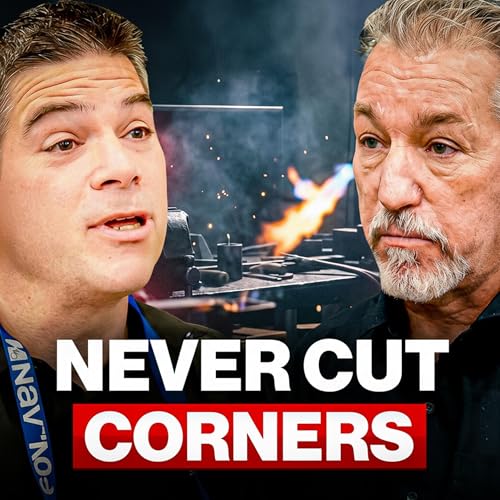
  • Why the Best Tradesmen Never Cut Corners with John Henderson of ESAB
    Feb 17 2026

    Brazing best practices, nitrogen purge brazing, and air fuel vs oxy fuel system decisions all reveal the same principle: the best tradesmen never cut corners.

    Host Andrew Brown sits down with John Henderson, Sales Director of Gas Equipment at ESAB, live from AHR Expo to examine why disciplined fundamentals—not speed—separate respected contractors from those constantly fixing preventable mistakes.

    John explains why nitrogen purge brazing is often skipped on job sites and why experienced tradesmen refuse to treat it as optional. What may look like a small time-saver can introduce internal oxidation, long-term system damage, and costly callbacks. The conversation also explores how choosing between an air fuel vs oxy fuel system requires understanding heat demands, portability, and application—not default habits.

    Beyond equipment and technique, Andrew and John discuss how skilled trades training and mentorship instill the discipline that defines craftsmanship. From HVAC technicians to plumbers, electricians, and construction professionals, this episode reinforces a simple truth: reputation is built on standards upheld when no one is watching.

    IN THIS EPISODE

    (00:00) – Why the Best Tradesmen Refuse to Cut Corners

    (02:18) – Job Site Shortcuts: Where Contractors Sacrifice Time or Standards

    (07:47) – Air Fuel vs Oxy Fuel System: Choosing Tools That Match the Work

    (09:05) – Nitrogen Purge Brazing: Why Fundamentals Protect System Integrity

    (11:08) – Skilled Trades Training and Mentorship: How Standards Are Passed Down

    (15:13) – Tool Durability and Maintenance: Real-World Demands vs Demo Conditions

    Key Takeaways

    The best tradesmen protect their reputation by upholding fundamentals, even when shortcuts seem faster.

    Nitrogen purge brazing prevents internal oxidation and protects long-term system performance.

    Tool selection—including air fuel vs oxy fuel systems—should be based on job requirements, not convenience.

    Short-term speed often creates long-term rework, callbacks, and lost trust.

    Skilled trades training and mentorship reinforce the standards that define true craftsmanship.

    About the Guest

    John Henderson is Sales Director of Gas Equipment at ESAB and a 40-year veteran of the Trades Industry. He works closely with contractors across HVAC, plumbing, and construction sectors, focusing on safety, performance, and tool durability under real-world job site conditions.

    John is committed to strengthening skilled trades training and mentorship rooted in fundamentals. His work centers on helping contractors build durable reputations through disciplined technique and sound equipment decisions.

    Keywords

    Brazing Best Practices, Nitrogen Purge Brazing, Air Fuel vs Oxy Fuel System, Skilled Trades Training and Mentorship, Contractor Tool Durability and Maintenance, Skilled Trades, Trades Industry, Construction, HVAC, Electricians, Plumbers, Millwrights, Carpentry, Tradespeople, Trades Careers, Andrew Brown, John Henderson, ESAB, Toolfetch, Skilled Trades Advisory Council, Craftsmanship, Contractor Efficiency, Standards, Mentorship, Problem-Solving, Industry Experts

    RESOURCE LINKS

    LinkedIn Profile: https://www.linkedin.com/in/john-henderson-12943611/

    ESAB Website: https://esab.com/us/nam_en/

    SUPPORT THE SHOW

    If you’re getting value from these conversations and want to help keep the mics on, consider supporting the show here → https://andrewbrowntrades.kit.com/products/toolbox

    Every contribution helps us continue bringing experience-backed insights from the trades—focused on standards, discipline, and real-world performance.

    Más Menos
    22 m
  • Why Some People Succeed in the Trades — And Others Don’t
    Feb 4 2026

    Skilled trades careers offer another path. Tony Bertolino explains plumbing apprenticeships, on-the-job training, and why apprenticeships aren’t “less than” college.

    Host Andrew Brown sits down with fourth-generation plumber, contractor, apprenticeship instructor, and business owner Tony Bertolino to break down how trades careers actually develop, from plumbing apprenticeship programs and on-the-job training to the shift from technician to owner.

    Recorded during live apprenticeship competitions, Tony shares what sets top apprentices apart: mindset, self-discipline, and pride in doing the work well. The conversation explores why classroom learning has limits, how hands-on repetition builds real mastery, and why trades education works best when theory and field experience reinforce each other.

    Tony also addresses common misconceptions about plumbing, explaining its role in public health and why the work is often undervalued precisely because it’s done so well. For those considering entrepreneurship, he offers a reality check on ownership—covering responsibility, risk, mentorship, and the importance of community.

    Whether you’re exploring an apprenticeship, alternative education, or ownership in the trades, this episode offers grounded perspective from someone who’s lived every stage.

    IN THIS EPISODE

    (00:01) – Skilled Trades Careers Today: Pride in the work and why demand keeps rising

    (05:12) – Plumbing Apprenticeship Programs: What textbooks teach—and what they can’t

    (11:40) – On-the-Job Training in the Trades: Why hands-on repetition builds mastery

    (18:55) – Trades Entrepreneurship: Why ownership isn’t “overnight success”

    (26:30) – Mentorship, PHCC, and community: Why business owners shouldn’t operate alone

    (34:10) – Alternative Education Pathways: Why apprenticeships aren’t better or worse than college—just different

    Key Takeaways
    1. Skilled trades careers are built through pride, responsibility, and consistent effort—not shortcuts.
    2. Plumbing apprenticeship programs work best when classroom theory is paired with real on-the-job training.
    3. Hands-on repetition and tool confidence are difficult to teach without field experience.
    4. Plumbing protects public health through safe water and sanitation, even though the work is often invisible.
    5. Trades entrepreneurship brings freedom, but also nonstop responsibility and financial complexity.
    6. Mentorship and professional community reduce isolation and help owners make better decisions under pressure.
    7. Failure is part of learning in the trades, and progress depends on how people respond to mistakes.

    About the Guest

    Tony Bertolino is a fourth-generation plumber, contractor, apprenticeship instructor, and co-owner of Bertolino Plumbing and Heating. He also serves as a national VP within the Plumbing-Heating-Cooling Contractors Association (PHCC), where he supports workforce development, mentorship, and modern apprenticeship education.

    Tony focuses on strengthening the trades through real-world training, honest conversations about ownership, and long-term investment in people.

    Keywords

    Skilled Trades Careers, Plumbing Apprenticeship...

    Más Menos
    32 m
  • What Actually Separates the Best Plumbers (Character Over Skill)
    Jan 27 2026

    Before skill, before technology, trades careers are built on responsibility and showing up.

    Andrew Brown and Dan Callies, President of Oak Creek Plumbing, break down what actually sustains blue-collar careers: character, mentorship, and earned respect.

    Andrew and Dan explore how plumbing apprenticeships develop more than technical skill, why hire for character, train for skill remains a durable leadership principle, and what it really takes to grow from apprentice to journeyman to business owner. Drawing from decades in the field and in leadership, Dan explains how accountability, attitude, and consistency shape long-term success in the trades.

    The conversation also examines the AI impact on skilled trades, not as a threat to craftsmanship, but as a tool to support efficiency, diagnostics, training, and operations. Dan shares how Oak Creek Plumbing uses technology to digitize routine processes while preserving the human judgment required for hands-on problem-solving.

    Whether you’re considering skilled trades careers, currently in a plumbing apprenticeship, leading blue collar teams, or trying to understand how AI fits into construction and contracting, this episode delivers experience-backed insight from someone who has built both people and businesses in the trades.

    IN THIS EPISODE

    (00:00) – Skilled Trades Careers Today: Why the trades remain the backbone of the economy

    (06:10) – Hire for Character, Train for Skill: What leaders actually look for on job sites

    (14:45) – Plumbing Apprenticeships Explained: Earning while learning and building mastery

    (24:30) – The AI Impact on Skilled Trades: Digitize what you can, humanize what you must

    (35:50) – Blue Collar Careers vs College Debt: Time, patience, and long-term payoff

    (49:20) – Advice for Young People Entering Skilled Trades Careers Today

    Key Takeaways
    1. Skilled trades careers are built through consistency, responsibility, and showing up, before skill ever takes over.
    2. A plumbing apprenticeship develops technical ability, discipline, and leadership over time.
    3. Hiring for character and training for skill creates stronger tradespeople and healthier companies.
    4. The AI impact on skilled trades improves efficiency and training but cannot replace hands-on judgment or craftsmanship.

    About the Guest

    Dan Callies is the President of Oak Creek Plumbing and a second-generation plumber with decades of experience in the field and in leadership. He has worked through every stage of the trade, from apprenticeship to ownership, and remains deeply involved in mentorship, workforce development, and industry advocacy.

    Dan is a strong proponent of apprenticeship training, union education, and responsible technology adoption. He believes the future of blue collar work depends on character, accountability, and leaders willing to invest in people over time.

    Keywords

    Skilled Trades Careers, Plumbing Apprenticeship, Hire for Character Train for Skill, Blue Collar Leadership, AI Impact on Skilled Trades, Skilled Trades, Trades Industry, Trades Careers, Tradespeople, Contractors, Construction, Craftsmanship, Problem-solving, Plumbers, Electricians, HVAC, Carpentry, Millwrights, Andrew Brown, Dan Callies, Oak Creek Plumbing, Toolfetch, Skilled Trades Advisory Council

    RESOURCE LINKS

    Linkedin: https://www.linkedin.com/in/daniel-callies-6a641613/

    Website:...

    Más Menos
    27 m
  • Why Welding Is Losing Young Talent (And How to Fix It)
    Jan 20 2026

    Welding careers, welding apprenticeship programs, and the welding skills gap—Arc Junkies host Jason Becker breaks down what today’s welders need to know.

    Host Andrew Brown sits down with Jason Becker, Marine veteran, longtime welder, educator, and host of the Arc Junkies podcast, to explore the real-world journey from hands-on welding work to industry-wide storytelling and advocacy.

    This episode unpacks how years of hands-on welding experience shaped Jason’s voice as an industry advocate and podcast host—learning welding through repetition, hard work, and decades in the trade and how he went on to hosting his own podcast where he’s spent 450+ episodes amplifying honest conversations about welding careers, workforce development, and the growing welding skills gap.

    Together, Andrew and Jason break down what today’s welders need to know about welding apprenticeship programs, trade school for welding, mentorship, pay progression, and why the trades struggle to attract and retain the next generation. The conversation also highlights how platforms like the Arc Junkies podcast help reshape how young people view welding and the broader Skilled Trades.

    Whether you’re considering a career in welding, already working under the hood, or interested in how storytelling can influence the Trades Industry, this episode delivers grounded, experience-backed insight.

    IN THIS EPISODE
    1. (00:01) – From Under the Hood: Jason Becker’s welding origin story
    2. (07:45) – Military welding, ironwork, and decades in the field
    3. (16:10) – To the Mic: Taking over the Arc Junkies podcast
    4. (27:30) – Welding Apprenticeship Programs vs Trade School for Welding
    5. (40:50) – The Welding Skills Gap: pay, perception, and mentorship failures
    6. (55:40) – Why storytelling matters for the future of welding careers

    Key Takeaways
    1. Welding careers are built through time under the hood—real skill takes repetition, patience, and mentorship.
    2. Welding apprenticeship programs and trade school for welding both play critical roles, depending on career goals and access.
    3. The welding skills gap is driven as much by culture, pay stagnation, and weak mentorship as by labor shortages.
    4. Moving from the shop floor to platforms like the Arc Junkies podcast shows how tradespeople can lead industry advocacy and education.

    About the Guest

    Jason Becker is a Marine veteran, professional welder, educator, and host of the Arc Junkies podcast. With decades of experience in welding, construction, and workforce training, Jason has become a trusted voice in conversations around welding careers, skills development, and the future of the Skilled Trades. His work bridges hands-on craftsmanship with industry-wide storytelling and advocacy.

    Keywords

    Welding Careers, Welding Apprenticeship Programs, Welding Skills Gap, Trade School for Welding, Arc Junkies Podcast, Skilled Trades, Trades Industry, Trades Careers, Tradespeople, Contractors, Industry Experts, Skilled Trades Advisory Council, Construction, Carpentry, HVAC, Electricians, Plumbers, Millwrights,...

    Más Menos
    52 m
  • You’re Not Who We Want Out Here: A Woman’s Reality in the Skilled Trades
    Jan 13 2026

    The first thing a superintendent said to Valerie Butler on a jobsite was: ‘You’re not who we want out here.’”

    Host Andrew Brown sits down with Valerie Butler, a plumbing apprentice at P.I.P.E. Incorporated, to explore how to build a successful plumbing career path in today’s skilled trades industry. Valerie shares her journey from the Marine Corps to a hands-on plumbing apprenticeship, offering real insight into military to trades career transitions, job site realities, and the value of skilled trades mentorship.

    This episode takes an honest look at what it’s like being one of the first women in a company’s apprenticeship program, how plumbers actually get started without industry connections, and why the trades offer long-term opportunity without college debt. If you’re exploring women in the skilled trades, considering a plumbing apprenticeship, or looking for a proven plumbing career path, this conversation delivers practical guidance from someone living it.

    IN THIS EPISODE
    1. (00:01) – From Military to Trades Career: How Valerie transitioned from the Marine Corps into a plumbing apprenticeship
    2. (07:58) – Plumbing Apprenticeship 101: How to get hired, what first-year plumbers actually do
    3. (15:40) – Women in the Skilled Trades: Navigating job sites, skepticism, and earning respect
    4. (26:22) – Skilled Trades Mentorship: Why the right foreman changes everything
    5. (35:55) – Plumbing Career Path & Pay Progression: Apprentice wages vs journeyman income
    6. (47:30) – Advice for Gen Z & Career Changers: How to test trades careers without long-term risk

    Key Takeaways
    1. A plumbing apprenticeship provides paid education and long-term career security without student loan debt.
    2. Women in the skilled trades are reshaping construction culture through planning, leadership, and problem-solving.
    3. Military to trades career transitions offer a strong advantage, especially in discipline, confidence, and adaptability.
    4. Skilled trades mentorship accelerates learning, builds confidence, and shortens the path to mastery.

    About the Guest

    Valerie Butler is a plumbing apprentice at P.I.P.E. Incorporated and a passionate advocate for women in the skilled trades. After leaving the Marine Corps due to injury, Valerie pursued a plumbing apprenticeship, proving that a military to trades career can lead to stability, growth, and fulfillment.

    As one of the first women apprentices in her company, Valerie actively supports skilled trades mentorship, participates in career fairs, and uses LinkedIn to help more women explore sustainable plumbing career paths in the trades industry.

    Keywords

    Women in the Skilled Trades, Plumbing Apprenticeship, Military to Trades Career, Skilled Trades Mentorship, Plumbing Career Path, Skilled Trades, Trades Industry, Andrew Brown, Valerie Butler, P.I.P.E. Incorporated, Toolfetch, Plumbers, Electricians, HVAC, Carpentry, Millwrights, Construction, Trades Careers, Tradespeople, Craftsmanship, Problem-solving,...

    Más Menos
    28 m
  • How to Build a Career in Aircraft Maintenance (FAA Certified, In-Demand)
    Jan 6 2026

    Aircraft maintenance is the backbone of aviation safety. Andrew Brown and Jason Pfaff break down the aircraft maintenance technician shortage, FAA A&P certification, and aviation careers.

    Host Andrew Brown sits down with Jason Pfaff, CEO of the Aviation Institute of Maintenance, to explore the unseen world of aircraft maintenance and why the growing aircraft maintenance technician shortage is becoming a serious issue across the aviation industry.

    They unpack what goes into keeping planes airworthy, why FAA A&P certification is one of the most rigorous credentials in the skilled trades, and how aviation maintenance school serves Gen Z, career changers, and hands-on problem solvers alike. The conversation also maps the long-term aviation mechanic career path, including pay progression, mobility, and opportunities beyond commercial airlines.

    This episode is essential listening for anyone curious about Skilled Trades, the Trades Industry, or high-impact careers built on craftsmanship, precision, and responsibility.

    IN THIS EPISODE
    1. (00:00) – Aircraft Maintenance Explained: What the public doesn’t see behind every flight
    2. (01:27) – The Aircraft Maintenance Technician Shortage: Why aviation is facing a workforce gap
    3. (08:17) – FAA A&P Certification: Why aviation mechanics are held to a higher standard
    4. (13:40) – Aviation Maintenance School: Program length, structure, and return on investment
    5. (18:56) – Career Placement & Mobility: Airlines, MROs, space, and advanced aerospace roles
    6. (26:05) – The Aviation Mechanic Career Path: Earnings, leadership tracks, and long-term growth

    Key Takeaways
    1. Aircraft maintenance is a highly coordinated, safety-critical system that most passengers never notice—until something goes wrong.
    2. The aircraft maintenance technician shortage is structural, driven by retirements, reduced trade pipelines, and rising travel demand.
    3. FAA A&P certification provides standardized credibility, portability, and strong employer demand across aviation and aerospace.
    4. An aviation maintenance school pathway offers a high-ROI skilled trade with a scalable aviation mechanic career path.

    About the Guest

    Jason Pfaff is the CEO of the Aviation Institute of Maintenance, one of the nation’s largest aviation training organizations. He leads initiatives focused on workforce development, FAA-aligned education, and career placement across commercial aviation, MROs, and aerospace employers. Jason is a vocal advocate for Trades Careers, education access, and strengthening the skilled trades pipeline nationwide.

    Keywords

    Aircraft Maintenance, Aircraft Maintenance Technician Shortage, FAA A&P Certification, Aviation Maintenance School, Aviation Mechanic Career Path, Skilled Trades, Trades Industry, Trades Careers, Tradespeople, Craftsmanship, Problem-solving, Creativity, Advocacy, Education, Skilled Trades Advisory Council, Andrew Brown, Jason Pfaff, Aviation Institute of Maintenance, Carpentry, HVAC, Electricians, Plumbers, Millwrights, Construction, Contractors,...

    Más Menos
    44 m
  • Welding Workforce Shortage: How to Get Into the Welding Trade & Where Welding Jobs Are Headed
    Dec 30 2025

    Host Andrew Brown tackles the growing welding workforce shortage and explains why it’s one of the most urgent challenges facing the construction and skilled trades industries today. As experienced tradespeople retire and fewer young workers enter the pipeline, the future of welding jobs in the U.S. hangs in the balance.

    Andrew breaks down how to get into the welding trade, why traditional advice is failing Gen Z, and what’s missing from today’s education system. He explores skilled trades careers for Gen Z, highlighting how craftsmanship, problem-solving, and creativity are being overlooked in favor of outdated college-only narratives.

    The episode also compares welder apprenticeship vs trade school, showing contractors, parents, and young workers how to evaluate real career pathways not marketing promises. Along the way, Andrew ties welding to the broader ecosystem of carpentry, HVAC, electricians, plumbers, millwrights, and the entire trades industry, calling for stronger advocacy and leadership from industry experts, contractors, and organizations like the Skilled Trades Advisory Council.

    IN THIS EPISODE
    1. (00:00) Why This Episode Matters: The Welding Workforce Shortage & AWS Summit Context
    2. (02:19) 9/11, the Trades, and Why This Mission Became Personal
    3. (05:13) From IT to Trades Advocacy: Building Toolfetch and Telling Trade Stories
    4. (07:28) Why Gen Z Isn’t Entering the Trades: Shop Class, Guidance Counselors, and Perception
    5. (09:47) Trade School vs Reality: Barriers to Entry and Early-Career Frustration
    6. (11:49) How to Get Into the Welding Trade: Standing Out, Follow-Up, and Personal Branding
    7. (14:17) The Future of Welding Jobs in the U.S. and Why AI Won’t Replace the Trades
    8. (16:44) Final Advice: Earning Your Stripes, Staying Patient, and Building a Career

    KEY TAKEAWAYS
    1. The welding workforce shortage is a long-term structural problem driven by retirements, broken education pipelines, and poor messaging.
    2. The future of welding jobs in the U.S. remains strong, stable, and essential to construction, infrastructure, and manufacturing.
    3. Choosing between welder apprenticeship vs trade school depends on mentorship, employer commitment, and real job placement—not tuition price alone.
    4. Skilled trades careers for Gen Z must be reframed around purpose, creativity, problem-solving, and long-term opportunity.

    KEYWORDS:

    Welding workforce shortage, How to get into the welding trade, Skilled trades careers for Gen Z, Welder apprenticeship vs trade school, Future of welding jobs in the U.S., Carpentry, HVAC, Electricians, Plumbers, Millwrights, Construction, Craftsmanship, Problem-solving, Creativity, Tradespeople, Advocacy, Trades Careers, Industry Experts, Contractors, Education, Skilled Trades Advisory Council

    ABOUT THE HOST

    Andrew Brown is the host of The Lost Art of the Skilled Trades podcast and the founder of Trades Media. He works with industry leaders, educators, and employers to close the...

    Más Menos
    18 m