Episodios

  • How do we get out of this mess?
    Apr 8 2026

    The Madness of Power and Prophecy: A Chat with Denver Riggleman

    Buckle up, folks! Today’s episode is a wild ride through the chaos that’s unraveling in U.S. politics and global diplomacy, with the ever-brave Denver Riggleman—former Congressman, Air Force vet, NSA contractor, and fearless truth-teller. Prepare for some truth bombs about the insanity, the threats, and the grift that’s turning this country into a giant episode of “How Did We Get Here?”


    Riggleman drops truth bombs, connecting the dots between prophecy, power, and national security, all while lamenting the state of American leadership; Joel asks the hard questions and teases out a path back to sanity—maybe, just maybe, saving the damn country.


    Main Topics Covered:

    • The bizarre and dangerous world of Christian nationalism and prophecy that is fueling political decisions
    • The potential and peril of military actions against Iran
    • The influence of greed, grift, and the military-industrial complex on U.S. foreign policy
    • The decline of trust in American institutions and the urgent need for courageous leadership

    Connect with Denver Riggleman:

    • X / Twitter
    • Substack
    • The Breach Media (YouTube)

    Hold onto your hats, folks. It’s a wild ride—truth, grift, and the fate of democracy all tangled up in one bold conversation. Would we dare to fix it? Denver says, “Full stop, fire everyone, and rebuild from zero.” Sounds about right. Tune in, laugh, cry, and maybe get inspired to demand real leadership again.

    The Hot Dish is brought to you by the One Country Project. To learn more, visit OneCountryProject.org, or find us on Substack (Onecountryproject.substack.com), and on YouTube, Bluesky, and Facebook (@onecountryproject).

    • (00:00) - Introduction to the Conversation
    • (01:48) - The Insanity of Current Politics
    • (06:02) - The State of the Republican Party
    • (10:16) - Trump's Mental State and Threats
    • (12:00) - Iran: An Imminent Threat?
    • (14:41) - The Price of War and Accountability
    • (17:53) - The Future of American Politics
    • (21:41) - A Call for Leadership and Change
    Más Menos
    28 m
  • Justin Wolfers on the Cost of War
    Apr 1 2026

    Justin Wolfers returns to the Hot Dish to unpack the economic and political impacts of the Iran war with Heidi and Joel. This episode offers a clear-eyed view of how markets, government decisions, and public sentiment intertwine during times of crisis.


    Justin explains the historic lows in consumer sentiment and approval ratings for political leaders, and addresses the real economic costs of the war, including market declines and wealth destruction. He also addresses:

    • How the increased costs of energy and input supplies are impacting rural farmers and urban consumers (10:57)
    • The political implications of leadership styles, democracy, and the "king" mentality in the White House (3:07, 5:01)
    • The demonstration of market correction and its long-term significance, emphasizing the importance of resistance to overconfidence (14:02)
    • The critical role of fiscal policy, debt, and deficits, with insights from Reagan, Clinton, Obama, and Trump eras (36:32)
    • The human toll of war, including displacement and emotional trauma, versus the cold numbers of market losses (27:15, 34:27)
    • How public perception and demonization affect policy, especially in the context of gas prices and military engagement (24:45, 28:19)
    • The importance of connecting economic policy to human stories and moral considerations (33:13)

    Resources & Links:

    Justin Wolfers - University of Michigan


    Connect with Justin Wolfers:

    • Twitter
    • Bluesky

    The Hot Dish is brought to you by the One Country Project. To learn more, visit OneCountryProject.org, or find us on Substack (Onecountryproject.substack.com), and on YouTube, Bluesky, and Facebook (@onecountryproject).

    • (00:00) - Introduction
    • (01:24) - Consumer Sentiment and Presidential Approval
    • (05:32) - The Impact of War on the Economy
    • (10:33) - Rural Economy and Input Costs
    • (13:24) - Market Corrections and War Effects
    • (17:19) - Economic Implications of Wealth Loss
    • (18:43) - The Cost of Conflict: Economic Impacts on Households
    • (21:45) - Understanding Wealth Disparities: Who Really Loses?
    • (24:36) - Market Reactions: Short-Term Pain vs. Long-Term Gains
    • (27:15) - Empathy in Economics: The Human Cost of War
    • (30:53) - The Disconnect: Military Engagement and Public Perception
    • (35:43) - Debt and Responsibility: A Political Perspective
    Más Menos
    47 m
  • Faith Communities to the Rescue
    Mar 25 2026

    In this episode, Heidi and Joel delve into the pivotal roles religion and community resilience play in rural America, featuring insightful conversations with Reverend Jane Field of Maine and Iowa Secretary of Agriculture hopeful, Chris Jones. Both guests emphasize the importance of faith-based activism, ecological sustainability, and the urgent need for structural reform in rural systems.

    Insights:

    • Reverend Jane Field discusses the current state of Christian unity amid rising white Christian nationalism, emphasizing ecumenical cooperation and social justice priorities.
    • She highlights the importance of faith communities' involvement in resisting ICE policies and supporting immigrant and marginalized populations in Maine.
    • Reverend Field advocates for reimagining the role of organized religion as a force for justice and compassion, especially amid declining church attendance.
    • She underscores the diversity within rural communities, including Indigenous peoples, and the importance of non-churchgoers engaging in faith-inspired service.
    • Chris Jones shares his environmental platform, focusing on water quality issues in Iowa, particularly nitrate contamination linked to agriculture.
    • Jones stresses the need for crop diversification, pasture grazing, and systemic reforms in farming practices to address environmental and health crises.
    • He discusses the political landscape, emphasizing bipartisan support for water reforms and the connection between ecological sustainability and rural economic vitality.
    • Both guests reflect on the transformative power of faith and community mobilization in addressing social and environmental challenges.

    Reverend Jane Field:

    • Maine Council of Churches - Website

    Chris Jones:

    • The Swine Republic by Chris Jones
    • Chris Jones for Iowa
    • Riverraccoon Substack

    Final Takeaway:

    This episode reminds us that faith, social justice, and environmental sustainability are intertwined forces capable of transforming rural communities. Whether through ecumenical unity or systemic policy changes in agriculture, dedicated leaders are reimagining a future rooted in compassion, resilience, and justice.

    The Hot Dish is brought to you by the One Country Project. To learn more, visit OneCountryProject.org, or find us on Substack (Onecountryproject.substack.com), and on YouTube, Bluesky, and Facebook (@onecountryproject).

    • (00:00) - The intersection of faith, politics, and community in rural America
    • (03:50) - Unity among diverse religious denominations and the departure of Catholic members over LGBTQ justice issues
    • (11:42) - Faith leaders' pivotal role in Maine's ICE resistance efforts
    • (22:36) - The toll on detainees and the tragic ICE deportations
    • (30:04) - Chris Jones on addressing Iowa's nitrate water contamination crisis
    • (36:17) - How to transition farmers toward diverse, resilient crop rotations with public support
    • (41:24) - Electing non-traditional candidates like Chris Jones for systemic change
    Más Menos
    44 m
  • Tom Nichols on Trump's Iran War and Disastrous Foreign Policy
    Mar 18 2026

    In this episode of The Hot Dish, Heidi and Joel talk to Tom Nichols, staff writer at The Atlantic and professor emeritus of national-security affairs at the U.S. Naval War College, about the complexities of the U.S. military actions in Iran, the geopolitical fallout, and the state of American politics amid ongoing conflicts.

    Nichols brings a sharp, clear-eyed perspective on military strategy, foreign alliances, and domestic political implications. This conversation offers valuable insights into how these military decisions were made, their global consequences, and the internal political ripples they stir.

    Key moments in this episode:

    • Tom Nichols explains the current state of military operations in Iran and evaluates their strategic effectiveness.
    • He discusses the contradictions in Donald Trump’s foreign policy, including our strained alliances and his unpredictable decision-making.
    • Tom and Joel discuss the internal U.S. political landscape, especially the disillusionment settling in among MAGA supporters.
    • Tom explains how decades of U.S. foreign policy regarding the influence of foreign powers, such as China and Russia, in Iran and the Middle East have changed overnight.

    Resources & Links:

    • Tom Nichols at The Atlantic
    • Books by Tom Nichols
    • Tom Nichols on Bluesky


    The Hot Dish is brought to you by the One Country Project. To learn more, visit OneCountryProject.org, or find us on Substack (Onecountryproject.substack.com), and on YouTube, Bluesky, and Facebook (@onecountryproject).


    • (00:00) - Introduction to the Discussion on Iran
    • (01:12) - Operational Success vs. Strategic Goals
    • (06:12) - The Political Fallout and Internal Conflicts
    • (11:14) - The Role of Allies and International Relations
    • (16:10) - Implications for Ukraine and Global Strategy
    • (21:00) - The Future of Iran and Potential Ground Troops
    • (25:33) - The Power Dynamics of Military Strategy
    • (26:14) - Regime Change and Its Implications
    • (28:35) - The Silence of MAGA Supporters
    • (33:00) - The Exhaustion of the MAGA Movement
    • (36:56) - Concerns Over Election Integrity
    • (39:53) - Trump's Approach to Governance and Elections
    • (44:08) - Closing
    Más Menos
    45 m
  • Beth Macy: Journalist, Author, Fighter for the Working Class
    Mar 11 2026

    In this episode, Beth Macy joins Heidi and Joel to discuss her compelling journey from journalist to political candidate. She explores how her books illuminate the struggles of rural communities facing economic and social upheaval, and how storytelling can serve as a catalyst for political change. Beth shares her insights on reconnecting with voters across political divides, the importance of local narratives, and her vision for representing rural America in Congress.

    Key topics covered:

    • Beth Macy’s background as a journalist and author of Factory Man, Dopesick, and Paper Girl
    • The impact of globalization, NAFTA, and foreign trade policies on rural jobs and communities
    • How the opioid crisis and big tech regulation highlight broader societal failures
    • The personal stories that catalyzed her decision to run for Congress
    • Strategies for bridging political divides through shared values and empathy
    • The challenges and opportunities of campaigning in Virginia’s Sixth District
    • The influence of media, misinformation, and the decline of local journalism
    • The role of the farm bill, small farms, and rural economic policies
    • Beth’s approach to reconnecting with her family across political lines
    • Her vision for policy solutions that serve everyday Americans

    Resources & Links:

    • Factory Man by Beth Macy
    • Dopesick by Beth Macy
    • Paper Girl by Beth Macy
    • Beth Macy’s official website - bethmacyforcongress.com

    The Hot Dish is brought to you by the One Country Project. To learn more, visit OneCountryProject.org, or find us on Substack (Onecountryproject.substack.com), and on YouTube, Bluesky, and Facebook (@onecountryproject).

    • (00:00) - Introduction to Beth Macy and Her Journey
    • (01:09) - Beth Macy's Background and Early Career
    • (02:06) - The Impact of NAFTA and Globalization
    • (03:54) - The Opioid Crisis and Its Effects on Rural America
    • (05:04) - Transitioning from Journalist to Politician
    • (06:26) - Personal Reflections and Family Dynamics
    • (10:26) - Facing Criticism and Challenges in Politics
    • (13:24) - Understanding Political Identity and Values
    • (16:50) - The Role of Media in Political Discourse
    • (19:44) - Rebuilding Family Relationships Across Political Lines
    • (27:08) - The Sixth District: Challenges and Opportunities
    • (30:59) - Campaign Strategies and Community Engagement
    • (33:29) - Introduction to the Book Club and Audience Engagement
    • (35:25) - Heidi & Joel: The Challenges Facing Small Family Farms
    • (38:35) - The Future of Hemp and Alternative Crops
    • (41:49) - The Current State of U.S. Foreign Policy
    • (44:29) - The Role of Israel in U.S. Politics
    • (47:29) - Conclusion and Future Discussions
    Más Menos
    50 m
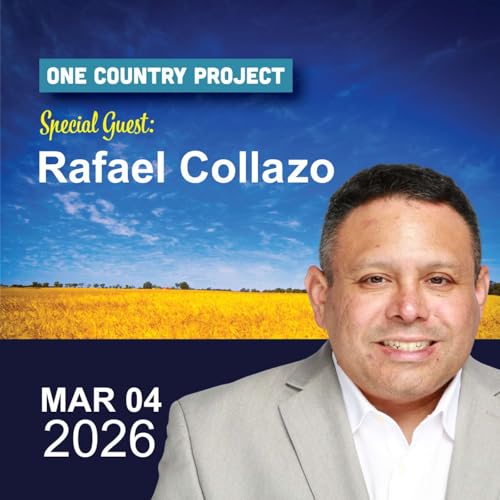
  • Could Latinos Decide the Midterms?
    Mar 4 2026
    This episode dives into the power of storytelling, community engagement, and strategic outreach across rural and Latino communities. Joel discusses the One Country Project Book Club with Megan DesCamps before diving into the evolving political landscape affecting Latino voters with Rafael Collazo.Megan introduces the One Country Project's Blue Plate Special Book Club, a new platform that fosters conversations through curated books highlighting the rural experience, aiming to build community and shared understanding. She stresses the importance of storytelling in connecting communities. Learn more at https://onecountryproject.substack.com.Rafael Collazo, executive director of UnidosUS ActionFund, discusses Latino voter behavior, noting the recent shifts in issues influencing their votes. He notes that the Latino community is increasingly motivated by issues like economic stability, respect, and faith, which parties can leverage to engage these voters more authentically.He also discusses the impact of cultural symbols like Bad Bunny and the representation of Latinos in media, sports, and politics, demonstrating the growing influence and visibility of Latino culture on the national stage.Finally, he presents strategies for Democrats (and other parties) to demonstrate genuine leadership, address community concerns, and elevate Latino voices in political discourse.Main topics covered:The launch and vision of the One Country Project Book Club to foster rural community engagementHow books serve as a bridge to understanding rural America and amplify underrepresented voicesThe evolving political influence of Latino voters and their importance as a swing electorateThe impact of immigration policies, social issues, and faith on Latino political attitudesStrategies for Democrats to authentically connect with Latino voters and elevate Latino leadershipKey insights:The Blue Plate Special Book Club is designed to connect readers around rural issues through curated literature, encouraging community discussion and shared perspectives.Books like Paper Girl by Beth Macy deepen understanding of rural struggles, highlighting how storytelling fosters empathy and policy engagement.Latino voters are increasingly dissatisfied with current policies, viewing the election process through a lens of economic and social security, rather than party loyalty alone.Disinformation, immigration enforcement actions, and questions about faith and family significantly influence Latino political perspectives.Despite political differences, the Latino community’s strength lies in family, faith, and shared cultural values—elements Democrats must authentically acknowledge and incorporate into their strategies.The growing prominence of Latino leaders and culturally resonant messaging offers opportunities to reshape political engagement and representation.Resources & Links:Unidos US Action Fund — Central organization working on Latino civic engagementThe Collazo Show podcast — Rafael Collazo’s podcast on Latinx issues and politicsPaper Girl by Beth Macy — Memoir exploring rural America and community identityFinal notes:This episode underscores the importance of storytelling, faith, and community in shaping political identities. Democrats and advocates need to listen actively to Latino voices, respecting family and faith while addressing economic and social concerns authentically. As both rural communities and Latino voters seek recognition and respect, bridging these worlds offers a path to greater unity and understanding. The Hot Dish is brought to you by the One Country Project. To learn more, visit OneCountryProject.org, or find us on Substack (Onecountryproject.substack.com), and on YouTube, Bluesky, and Facebook (@onecountryproject). (00:00) - - Introduction to the episode and guests (00:33) - - Megan DesCamps discusses launching the One Country Project Book Club (01:16) - - The importance of rural literature and community connection (02:30) - - Challenges and opportunities in rural engagement through reading (03:37) - - Goals and success measures for the Book Club (06:22) - - First book pick: Paper Girl by Beth Macy (08:25) - - Rafael Collazo discusses Latino electoral dynamics (09:17) - - Latino swing voters and changing political attitudes (10:52) - - Discontent with administration and economic frustrations among Latinos (11:49) - - The emotional impact of immigration enforcement on Latino communities (18:00) - - Family and intergenerational influences in Latino political decisions (21:03) - - Faith's role in Latino community and political messaging (25:21) - - The importance of cultural representation and community recognition (31:09) - - Strategies for Democrats to authentically connect with Latino voters (33:13) - - Resources and how to follow Rafael Collazo’s work
    Más Menos
    35 m
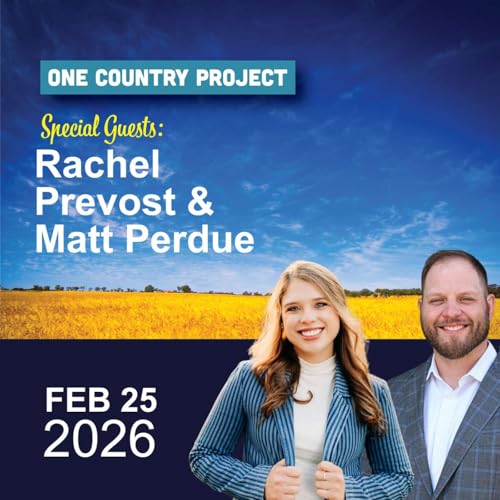
  • What the Tariff Ruling Means for Farmers
    Feb 25 2026

    In this episode, Heidi Heitkamp hosts a lively discussion with Rachel Prevost, Executive Director of the Montana Farmers Union, and Matt Perdue, President of the North Dakota Farmers Union. They explore critical topics impacting American agriculture today, including trade policies, farm bill dynamics, land consolidation, and the resilience of rural communities. Their insights highlight both challenges and opportunities for the next generation of farmers and ranchers.


    Key topics covered:

    • The Supreme Court's decision to roll back tariffs and its impact on farmers
    • Uncertainty surrounding trade relationships, especially with China and Mexico
    • The importance of reforms in the farm bill to support family farms and local food systems
    • The growing consolidation of farmland and its implications for future farm succession
    • The need to reconnect consumers with the origin of their food through mandatory country-of-origin labeling (M-COOL)
    • Rural healthcare, infrastructure, and quality of life as vital components of sustainable agriculture
    • The significance of value-added production and new markets for U.S. agricultural products
    • Challenges faced by young and beginning farmers, including economic opportunities and community support
    • The importance of domestic demand growth and renewable fuels in shaping a resilient farm economy
    • The role of advocacy and policy in securing a future where rural communities thrive

    Resources & Links:

    • Montana Farmers Union
    • North Dakota Farmers Union
    • Heidi’s take on the U.S. Supreme Court Ruling on Tariffs
    • A Farm Bill Worth Fighting For

    Connect with our guests:

    • Rachel Prevost
    • Matt Perdue

    The Hot Dish is brought to you by the One Country Project. To learn more, visit OneCountryProject.org, or find us on Substack (Onecountryproject.substack.com), and on YouTube, Bluesky, and Facebook (@onecountryproject).

    • (00:00) - Introduction to Agricultural Challenges
    • (03:07) - Supreme Court Ruling on Tariffs
    • (06:07) - Impact of Tariffs on Farmers
    • (09:04) - Farm Bill Discussions and Concerns
    • (12:03) - Consolidation in Agriculture
    • (14:57) - Healthcare Access for Farmers
    • (17:34) - Trade Agreements and Country of Origin Labeling
    • (20:31) - Future of Young Farmers
    • (23:40) - Closing Thoughts and Future Outlook
    Más Menos
    39 m
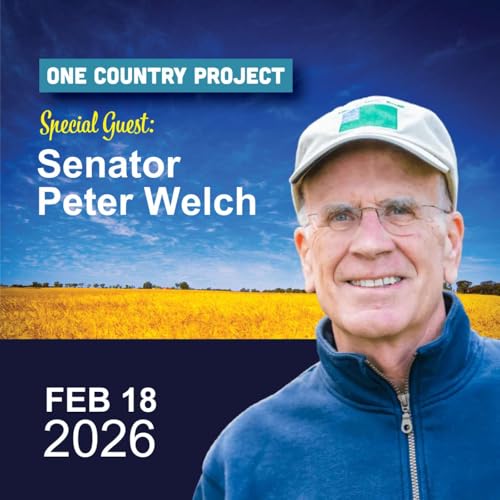
  • Rural Resistance
    Feb 18 2026

    Hold onto your hats — this episode is a wake-up call, a rallying cry for the soul of rural America. Senator Peter Welch of Vermont spills the truth bombs on agriculture, healthcare, trade, and the values that bind us all — forces that are threatened but must be fought for with passion, integrity, and boldness. If you're tired of the noise, ready for real solutions, and crave authentic voices, this episode is for you.

    In this episode:

    • The real fights behind the farm bill and why it’s more than just policy — it’s about survival and dignity.
    • How tariffs, trade wars, and market loss hurt farmers and rural communities — beyond political talking points.
    • The erosion of core rural values like community, self-reliance, and tolerance — and why they matter to everyone.
    • The crisis in rural healthcare and what it reveals about government failures.
    • The dangerous politicization of justice, border enforcement, and immigration — and the urgent need for oversight and accountability.
    • Practical solutions to fix broken systems — healthcare, labor, trade — rooted in respect and bipartisan action.
    • A call to approach rural folks not as victims or subjects but as neighbors, allies, and innovators.

    Resources & Links:

    • Farm Bill Insights
    • The impact of tariffs on farmers
    • Healthcare in Rural America

    Connect with Senator Welch:

    • Senator Welch's official website
    • Senator Welch on Bluesky


    • (00:00) - Introduction to The Hot Dish
    • (01:40) - The Farm Bill Debate
    • (06:44) - Challenges Facing Rural America
    • (12:30) - Healthcare in Rural Communities
    • (19:19) - The Impact of Immigration Policies
    • (24:15) - The Role of the Judiciary
    • (32:06) - Conclusion and Reflections on Rural Values
    • (39:45) - Mailbag + outro
    Más Menos
    47 m