Episodios

  • The Great Conundrum: The Ceylon Press History of Sri Lanka 1
    Dec 14 2025
    It took a refugee from Nazi Germany, with an interest in economics and Buddhism, to note the singular connection between two of the most apparent characteristics that distinguish Sri Lanka. “Small,” remarked E. F. Schumacher in his eponymous book in 1973, “is beautiful.” It was economics, rather than Sri Lanka, that Schumacher had in mind, but, as with all seismic observations, his simple statement lent a formative new way to understand previously inexpressible truths. Sri Lanka is both small and beautiful. So small, in fact, that it could fit into India 50 times, into Britain almost 4 times, or even into Peru nearly 20 times, its nearest neighbour, Tamil Nadu, could accommodate it twice over, with land to spare. Head a little further north, and 10 times as many people crowd into nearby Pakistan, or six more into Bangladesh. Schumacher’s only other book, published on his deathbed in 1977, “A Guide for the Perplexed”, is a study of how humans live in the world – but it could easily have lent its title to a mandatory guidebook for issue to every person who passes through Bandaranaike Airport, citizen or guest, VIP or economic migrant. For little about the island is straightforward, despite or because of its size and beauty. Confronting it for the first time is like encountering Rubik’s Cube for the first time, that infamous multi-coloured rotating brick toy whose coloured ends seem so easy to organise into blocks. The outcome, though satisfying and apparently almost effortless, remains virtually impossible to achieve. Just below the surface of almost everything on the island, and simmering with delight, richness, chaos, or just plain thwarting befuddlement, lies the complexity of what is quite possibly the most byzantine and bewitching country in the world. The more you see, the more you wonder. Why? Why, for example, make a simple presidential election quote so convoluted and full of enough own-goal traps to risk making the spoiled votes equal to the good ones? The 2024 presidential election brought almost 40 candidates forward for a preferential-style vote so complex that the Election Commission had to issue a 200-word note on how to correctly mark the ballot paper. But perhaps this is to worry unnecessarily, for the country’s political system has, as horse riders might note, plenty of form. By 1978, when the current constitution was adopted, it had already enjoyed three earlier ones, roughly one every 16 years. Now regulated by this, its second constitution since independence, Sri Lanka possesses a governing document of such elastic resilience that it has undergone an average of one significant amendment every second year and has still survived. Such political robustness is nothing less than what should be expected of an island whose circuitous history meanders through over 2,500 recorded years to take in at least 12 former capital cities, as many, if not more, kingdoms, and 300 recorded kings, some half of whom were estimated to have murdered the other half. Conundrums, reversals and the sudden appearance of polar partisan opposites have riotously followed almost every step of that wild journey. The kings eventually made way for the world’s first elected female head of a modern state when, in July 1960, Sirimavo Bandaranaike was elected Prime Minister. Yet in 2018, a new President reimposed a four-decade-long ban on women buying alcohol. Given that barely 6% of the country’s supreme law-making body, its parliament, is filled with female MPs, this institutional sexism is understandable – but to fully explain it, one needs to look little further than the fact that just under a fifth of all MPs have just one A-level to their credit. But there’s much more to the rule of law than exams. Should parliament depress you, look to the country’s Supreme Court, a focused and resilient body that has thwarted attempted coups and power grabs through the decades. “Do I contradict myself?” asked the American poet, Walt Whitman. “Very well then, I contradict myself, (I am large, I contain multitudes.). And so too does Sri Lanka. Despite Nobel Prize-winning scientists, Booker Prize-winning writers, and architects who have profoundly reshaped how people live across the tropical world, its best universities barely scrape into the top 1,000 worldwide, with a pedagogy that deliberately fails almost half its students. Honest domestic consumers eager to pay their electricity bill must first correctly guess which of 8 categories they fit into before they can pay up, proof, if ever it was needed, that here at least there is little pleasure to be had in being a consumer. Used car prices have more than doubled in the past few years, and at any given time, eggs, onions, rice, milk powder, or even turmeric have entered an Alice-in-Wonderland world, priced well out of reach of ordinary people. Yet still the kiribath is made. ...
    Más Menos
    22 m
  • The Island That Floated Away: The Ceylon Press History of Sri Lanka 2
    Dec 14 2025
    Rusty, derelict, and irresistibly optically challenged, the old Talaimannar Lighthouse is a gratifyingly improbable key to unlocking the start of Sri Lanka’s recorded history. It presents an even more unlikely clue to explain the profound differences the island shows compared to the rest of the world. Heraclitus, the weeping philosopher, with his fondness for the paradoxical, noted that “the hidden harmony is better than the obvious.” Indeed, the well-concealed harmony of this much mistreated lighthouse offers as good a set of clues as a historian is ever likely to find anywhere else on the island. Despite its unmistakable presence and purpose, there is little truly obvious about a lighthouse such as this that no longer works. One of a necklace of lighthouses built to help ships avoid disaster, the old Talaimannar Lighthouse marks the start of Adam’s Bridge at its Sri Lankan end. Erected sometime after 1850, it rises, with hearty inelegance, like a cooking pot on stilts, “a black skeleton steel tower 113 feet in height,” noted one observer in 1931, one of the last to witness how its once burning fire blazed a red warning to those few ships incautious enough to risk sailing nearby. Twenty-three other lighthouses dot the country’s coastline, fourteen still active. Most are early twentieth century constructions, solid Edwardian, or First World War structures built with such consummate skill as to survive with resolute determination into the present day, despite monsoons, tsunamis, and decades of pounding surf, alleviated by minimal maintenance and the gathering indifference of most citizens, more agreeably distracted by the greater celebrity of architecture offering penthouses in downtown Colombo or glittering air conditioned shopping malls in previously blameless ancient towns. A few, like Beruwala Lighthouse, Kovilan Point Lighthouse or the Little and the Great Basses Reef Lighthouses, off the coast at Yala, are accessible only by sea. Two of the oldest, dating back to 1863, stand guard over the deep-water harbour at Trincomalee: Foul Point Lighthouse and Round Island Lighthouse, with a third, the 1857 Old Colombo Lighthouse, left peering with myopic despondency through a muddle of unremarkable modern buildings towards an ocean now almost invisible. Others, like Sangaman Kanda Point Lighthouse, have been so shattered by nature as to be reduced to mere stumps. The tallest and still active – at 49 metres - is at Dondra Head on the southern tip of the island, an edifice improbably constructed from rocks imported from Scotland and Cornwall. The most famous is the 1939 lighthouse at Galle. However, the 1928 Batticaloa Lighthouse, the dizzily patterned one at Hambantota or Oluvil Lighthouse - the only one to date from after Independence - might all offer winning challenges to that accolade. Pause briefly for but the merest hint of thought, and it is, of course, no great surprise that so small a nation should boast so great a range and number of lighthouses. Like lonely exclamation marks finally given a voice of their own, these lofty beacons beat out a ghostly metronomic refrain that states, with unmissable clarity, the first and most profound reason why Sri Lanka is as it is. This is an island. That is what those lonely lighthouses declaim. An island, capacious, yes; nevertheless, a single island; a piece of land unattached to anything else or a mere part of a string of other infant islands that make up an archipelago. And that fact – more than any other – has determined the country’s character; for “islands,” as Richard Dawkins remarked, “are natural workshops of evolution.” Of course, from Barbados to Singapore, there are many other island nations. Cuba may be twice Sri Lanka’s land mass, but its population is half, a disproportionality shared by Iceland, Ireland, and New Zealand. Madagascar and Taiwan have populations similar to Sri Lanka’s, but are either much larger or much smaller in land area. Only Japan and the UK are island nations that far outstrip Sri Lanka in landmass and population. This may seem to be immaterially semantic – but a closer inspection shows just how deep the differences go, and, in so doing, make up the character of an island like no other. But of all its many peers, Talaimannar, much battered in the civil war and now finding a modest following amongst kitesurfers, remains the country’s most significant beacon, for it is precisely here where Sri Lanka, in appearing to touch India, runs out into the sea and disappears. From the Indian side, its infrequent visitors are mildly surprised to learn that the lighthouse is not part of the Indian mainland. Or, if not geographically, then at least politically or culturally. Or environmentally. Or perhaps linguistically. But it is not. It is none of those things. In fact, the closer you look, the greater the differences. However much help the Old Talaimannar Lighthouse was ...
    Más Menos
    22 m
  • Voyaging to Wonderland: The Ceylon Press History of Sri Lanka 3
    Dec 14 2025
    Adam’s Bridge was a bridge crying out for repair, even before the great storm of 1480 shattered it forever. Unpredictable and uneven, sailing had long been the better option. But for Sri Lanka’s first settlers – who had still to master boats – a short walk from India was all it took. And walking was what they did: Palaeolithic and later Mesolithic migrants from the Indian mainland who strolled across, their effortless trek belying the extreme complexity that, hundreds of years later, would colour Sri Lanka’s relationship with India – from war, intermarriage, Buddhism itself, to the borrowing of kings and armies. Since Jurassic times, some 200 million years ago, Sri Lanka had, as part of India, broken off from the great Gondwana supercontinent that had formed 100 million years earlier in the Triassic era. Adam’s Bridge became the sole point of access to the far south, but by 7,500 BCE, it was almost impassable. As successive mini-ice ages wavered one way and then another and sea levels rose or fell over the years, the bridge was laid bare at least 17 times. Until then, this roughly 100-kilometre-wide, 50-kilometre-long finger of land had been so effective a crossing that it even bore rivers across it, explaining the similarities between the island’s freshwater fish and those of India. And not just fish. Plants, animals, all flocked over, whilst they still could. Some were doomed to become extinct in their new home: the Sri Lankan Lion, and possibly an ancient variant of cheetah too; the unique Sri Lankan hippopotamus; two dissimilar subspecies of Rhinoceros: Sinhaleyus and Kagavena; and the bison-like Ceylon Gaur, the last recorded one living a miserable and solitary existence in the zoo of the Kandyan King, Rajasinghe II. And with them all came unknown numbers of prehistoric men and women, sauntering south in search of a better life – an ambition not that dissimilar to that of the many tourists who decant into Colombo’s Bandaranaike airport today. Beguiling hints of these earliest inhabitants are still only just emerging. Excavations conducted in 1984 by Prof. S. Krishnarajah near Point Pedro, northeast of Jaffna, revealed Stone Age tools and axes dating to between 500,000 and 1.6 million years ago. As the fossil record demonstrates, the land they inhabited was ecologically richer and more dramatic than it is today, teeming with wildlife still found in Sri Lanka. Hundreds of millennia later, one of their Stone Age descendants left behind the most anatomically perfect modern human remains yet uncovered on the island. Balangoda Man, as he was to be named, was found in the hills south of Horton Plains inland from Matara, a short walk from the birthplace of Sirimavo Bandaranaike, the “weeping widow” who ran independent Sri Lanka with steely determination for almost 20 years. His complete 30,000-year-old skeleton is bewitchingly life-like. Probing his remains, scientists have concluded that Balangoda Man and his heirs were eager consumers of raw meat, from snails and snakes to elephants. And artistic, too, as evidenced by the ornamental fish bones, seashell beads, and pendants left behind. Across the island, similar finds are being uncovered, pointing to a sparse but widespread population of hunter-gatherers living in caves – such as Batadomba and Aliga. The tools and weapons found in these caves, made of quartz crystal and flint, are well ahead of such technological developments in Europe, which date from around 10,000 BCE, compared to 29,000 BCE in Sri Lanka. The island’s Stone Age hunter-gatherers made the transition to a more settled lifestyle well ahead of time. By at least 17,000-15,000 BCE, Sri Lanka’s original hunter-gatherers had taken to growing oats and barley on what is now Horton Plains, thousands of years before it even began in that fulcrum of early global civilisation - Mesopotamia. Astonishingly, their direct descendants, the Veddas, are still alive today, making up less than 1% of the island’s total population, an aboriginal community with strong animist beliefs that has, against all odds, retained a distinctive identity. Leaner, and darker than modern Sri Lankans, their original religion - cherishing demons, and deities - was associated with the dead and the certainty that the spirits of relatives killed can cause good or bad outcomes. Their language, unique to them, is now almost – but not quite - extinct. Their DNA almost exactly matches that of Balangoda Man. Barely a couple of competent arrow shots away from where Balangoda Man lay down and died is Kiripokunahela, a flat-topped rocky hill. The spot, at first sight apparently wholly unremarkable, presents to the adventurous traveller (for to get to the site requires a willingness to hike far in hot sun whilst constantly checking a compass), what is quite possibly the island’s first and most eminent art gallery. Hidden in a shallow cave, the most minimalist of ...
    Más Menos
    20 m
  • The Island That Cultivated Philosophy: The Ceylon Press History of Sri Lanka 4
    Dec 14 2025
    Sri Lanka’s first recorded monarch founded a dynasty that would last over 600 years. Expelled from either Bengal or Gujarat (scholars argue, as scholars do) by his father, Prince Vijaya, the founding father of an eponymous royal family, arrived on the island in 543 BCE, his landing kicking off recorded Singhala history, despite the first 100 years being anything but plain sailing. Occasional bouts of regicide, lassitude, rebellion and navel gazing aside, the dynasty was as textbook perfect as it could reasonably be expected to be, and Prince Vijaya’s thirty-six successors did all that was necessary to embed, improve, and make dominant the tiny state they had first instituted in the northwest of the land. Not one to sit upon their laurels, and with a flair for marketing well ahead of their time, the Vijayans relaunched their realm barely a quarter of the way through their term, branding it as the kingdom of Anduraupura. They ruled it, according to the later Stone Book or Galpota Inscription, as human divinities, with an almost-but-not-quite-divine authority, the result of personal merit earned through their unusual, holistically philosophical approach to life and governance. Their capital city would become one of the planet’s longest continuously inhabited cities, enriched by cutting-edge industry, resources, structures, administrators, soldiers and all the other many disciplines critical to a prosperous ancient kingdom. Expanding with elastic ease, their kingdom soon grew far beyond the Rajarata, or traditional royal lands, to encompass most, if not all, of the island. To the east and south lay Ruhunurata, or Ruhana, a linked but junior principality founded around 200 BCE by Prince Mahanaga, brother to Devanampiya Tissa, the 7th or 8th monarch of the dynasty, and great-great-great-great-great nephew of Prince Vijaya himself. To the west lay the third, much smaller principality of Mayarata, another linked family fiefdom, said to have been founded in the fourth century BCE by Prince Vijaya’s nephew, Panduwasdev, the dynasty’s third monarch. Like light bulbs experiencing the almost reassuringly familiar power cuts and surges of the current Ceylon Electricity Board, a state company forever preoccupied by internal disputes, both principalities rose, fell and rose again, depending on quite how strong the Anduraupuran king was at any one time. All this was, of course, good wholesome leadership – but it was hardly groundbreaking. Seen from the perspective of the Shang, Hittites, Achaemenids, Ptolemaics, the Punts, Medians, Seleucids, Mauryas, and numerous other successful ancient dynasties, there was little to differentiate the Vijayans from the usual preoccupations with sound, hereditary hegemonic rule. It was only halfway through the span of the Vijayan rule that, in welcoming to the island, Mahinda, the Buddhist son of the Indian Emperor Ashoka, they did something that changed everything. In this, their simple act of hospitality, they were to remodel their kingdom to be so profoundly different to any other, anywhere, as to endow it with an authority and energy so inimitable that, even today, it is protected and characterised by that misty encounter of 247 BCE. Not only did the Vijayans welcome the young royal missionary, but they took him, with fervent haste, into their hearts, and with him, his evangelising philosophy of Buddhism. Like all Buddhists, Mahinda did not acknowledge a supreme god, and, despite later shorthand references to Buddhism as a religion, it is more appropriately described as a philosophy. In welcoming Mahinda, the Vijayans crossed the line from standard overlords to philosopher monarchs governed by a formidable moral code and a preoccupation with achieving a state of transcendent bliss and well-being. If being an island was the first and foremost explanation for why Sri Lanka became Sri Lanka, Buddhism is, of course, its second explanation. And a much more impressive one too, for it was a deliberate act – one that no less comprehensively than geography was to profoundly colour the country as if it had been dyed in Tyrian purple itself, that ancient and legendary dye, reserved by threat of death, for the clothes of the Roman emperors or the sails of Queen Cleopatra’s royal barge. Of course, not every king or subsequent island ruler made the moral imperatives of Buddhism their magnetic north. However, most tried to, and all were ultimately judged against its teachings as they are still today, by ordinary citizens in towns and villages across the land. For however ordinary Sri Lankans are, they are also unexpectedly religiously minded. Religion today, to the astonishment of many observers, is holding its own. Right across the world, experts and pollsters have had to rethink their view of what would befall religion as countries modernised. Atheists, agnostics and all who are religiously unaffiliated account for a ...
    Más Menos
    21 m
  • Dancing on Knives: The Ceylon Press History of Sri Lanka 5
    Dec 14 2025
    “If I want a crown,” remarked Peachey, hero of Kipling’s Man Who Would Be King, and unexpected alter ego of Prince Vijiya, Sri Lanka’s first monarch, “I must go and hunt it for myself.” If Peachey’s motivation was glory and riches, plain and straightforward, Vijaya’s was about raw survival, dodging assassinations and evading parental disapproval. If that is the case, the chronicles are to be believed. And in this, Sri Lanka is exceedingly fortunate, for it has not one but three great chronicles, claiming, between them, the title of the world’s oldest and longest historical narrative. Although these turbulent chronicles muddle up man, god, and magic with morality, history, and myth, they also lay a wraithlike trail of events and people through what would otherwise be a historical vacuum dotted with random, unattributable artefacts. Prince Vijaya’s existence is known only through the first two chronicles - The Dipavaṃsa Chronicle (compiled around the third to fourth centuries CE) and The Mahavaṃsa, The Great Chronicle, an epic poem written by a Buddhist monk in the fifth century CE in the ancient Pali script. These stupefying works, which put most soap operas and not a few Sci-Fi films to shame, open with Prince Vijaya’s arrival from Sinhapura, a legendary lost state in eastern India, and end in 302 CE. At this point, they hand the task of storytelling onto the third and last book, The Culavamsa or Lesser Chronicle, which covers events to 1825, an otherwise blameless year the world over, with little more of note than it being the date of the first performance of Rossini's Barber of Seville. But if love and eternal fidelity are rarely the subject of the three chronicles, gold, betrayal, and secrecy often are – though historians naturally debate the factual accuracy of the stories, in which the doings of men and kings take a poor second place to those of monks and Lord Buddha. Even when the focus shifts from the divine to the secular, it is abundantly clear that, as with the most tenacious tales, history is inevitably written by the winners. Although verified archaeological evidence is still less, documentary evidence for Prince Vijaya remains tantalizingly absent; he remains, from every perspective, the great winner, the shaved head fugitive with a penchant for what The Mahavamsa calls “evil conduct and … intolerable deeds,” every bit the rebranded hero. Expelled by his appalled father, thrust onto a ship with seven hundred dependent followers and ordered to stay away on pain of death, Prince Vijaya has, through the centuries, still managed to take centre stage as Sri Lanka’s paterfamilias. Centuries later, over a shared arak and soda, and, courtesy of reincarnation, it is more than likely that the reformed villain would tell you that he finds his righteous reputation puzzling. After all, he never set out to be a hero, still less founder of a nation; and quite possibly not even a king, claiming, in his own lifetime, the much more modest title of Prince. Survival, a bit of fun, respect, of course, obedient followers, amenable wives, good food and the space to be his own boss was probably as much as he aspired to. Indeed, so careless was he of his greater future that he almost destroyed his own fledgling dynasty just as it was starting, a nasty proclivity that was to recur just two generations later when his descendants tried to wipe themselves out. Twice, in under two hundred years, the Vijayans, the dynasty that was to make Sri Lanka the world’s only Singhala nation, came perilously close to obliterating it. It was the sort of carelessness typical of rulers bereft of the value of hindsight, operating like sword dancers twirling on the tops of lofty stupas, and utterly reckless with their unfathomable dynastic destiny. It is said that Prince Vijaya snuck into the country through the secretive Puttalam Lagoon. If so, he enjoyed the value of surprise for the shortest of times. The Mahavamsa, whose respect for divinity of any sort is beyond reproach, has Lord Buddha task an acquiescent Hindu god with protecting the prince and reassuring him that the island he has alighted upon is pretty much empty. “There are no men here, and here no dangers will arise,” claims the god, helpfully disguised as a wandering ascetic. If one is to found a future nation, this sort of starting point is enormously helpful. Thousands of years later, so little is known about the fundamental social and political structures that existed on the island at this time that this myth of a largely empty island merely waiting for a noble race to occupy it is more than validated by ignorance. But lines are there to be read through, and The Mahavamsa wears the cognitive dissonance of its gilded lines with confident ease. Almost from the start, they imply, the prince and his followers found themselves fighting for survival, dominance, and land. The many conflicting ...
    Más Menos
    22 m
  • Heaven on Earth: The Ceylon Press History of Sri Lanka 6
    Dec 14 2025
    In the previous 100 years, Sri Lanka’s little Vijayan kingdom twice risked absolute oblivion, courtesy of its carefree kings. But twice too, in the following 170 years, the self-same state would step up and prosper beyond all expectations, thanks to two other kings, both innate masters of nation-building. For Pandu Kabhaya and his grandson, Devanampiya Tissa, were to set the mark way beyond what any other island leader might later hope to achieve and, in the rarified world of royal hustings, emerge as the nation’s two greatest monarchs by a country mile, Like the prize ride in a fairground big dipper, that such a double-double whammy should even have happened is about as rare as throwing a dozen sixes in Monte Carlo. But little else should be expected of the Vijayans, the luckiest of all the dynasties, for whom every cloud had not one, but several, silver and gold linings. “The teeth of the dog that barks at the lucky man,” avowed a somewhat orthodontist-oriented Singhala folk saying, “will fall out”. If true, then over the reigns of Pandu Kabhaya (437 - 367 BCE ) and Devanampiya Tissa (307 - 267 BCE), the island’s dogs would have been on a strict milk-and-roti diet to manage their missing molars better. Over this period, the tiny Vijayan state was radically expanded, endowed with a magnificent capital city (Anuradhapura), distinct laws, civil and administrative infrastructure, investments in agriculture and water harvesting, increased trade, and a new language – the earliest inscriptions in Sinhalese date from close to this period. And, most critically of all, a new religion – Buddhism. The subtle and profound chemistry between these manifold factors was to combine to create, like the rarest of new life in a petri dish, not just the world’s only Singhala state, but one that would still be flourishing, despite all manner of catastrophes encountered along the way, today. Pandu Kabhaya’s (improbably long) 70-year reign (437 to 367 BCE ) would have come as a blessed relief to family and subjects alike after so much earlier dynastic squabbling. Having outsmarted, outmanoeuvred, foiled, defeated, imprisoned, and killed nearly all his troublesome uncles, he took up his place as victorious head of the fledgling Vijayan dynasty and set in train the real beginnings of the Anuradhapura Kingdom when he made his home in the future capital and, in Louis XIV-style, began building. By then, the site of Anuradhapura was already over 200 years old and covered more than 20 acres. Pandu Kabhaya took it to still greater heights for what followed was, to paraphrase Deborah Kerr and Carey Grant many centuries later, "the nearest thing to heaven". In all areas of enterprise - from farming and engineering to administration and construction, his rule harnessed the best available expertise to build a capital with the hugest of hearts, and through it, dominate an entire island. In the style of the much later and far away William the Conqueror and Doomsday Book, this king too commissioned a massive survey to take full stock of his domain, all the better to tax and manage it, plan investments, patronage, defence and yet further ascendancy. A later medieval record from just one location – Kurunegala – states that the king formed 1,000 new villages in the area, and that his grandson later dispatched pedigree Indian buffaloes to graze there. Even allowing for the exaggeration of breathless flunkies, even knocking one zero off the total, it still amounts to colossal development. Some thirty men were appointed in this area alone to be at the king’s specific executive command, overseen by one Alakeswara Mudiyanse, a man whose name alone has survived these many hundreds of years. From Anuradhapura right across the Rajarata – the King’s country – and quite probably beyond, the royal writ ran. It encompassed old settlements and new ones, exacting political and social domination that would have placed the kingdom at the apogee of the other competing island societies that co-existed with it, for a time at least, especially to the east and south. In what was most probably something of a first for the Vijayan state, Pandu Kabhaya’s rule respected his Vedda allies, the Yakkhas, Cittaraja and Kalavela, clans of the island’s earliest original inhabitants. They had, after all, most likely been keen and critical allies in his fight against his many uncles. Now was the time for a reward. The Mahavamsa records his beneficial diligence: “He settled the Yakkha Kalavela on the east side of the city, the Yakkha Cittaraja at the lower end of the Abhayatank…and on festival-days he sat with Cittaraja beside him on a seat of equal height, and having gods and men to dance before him, the king took his pleasure, in joyous and merry wise.” Few areas of urban development escaped his planners’ eyes and The Mahavamsa elaborates that “he laid out four suburbs as well as the ...
    Más Menos
    23 m
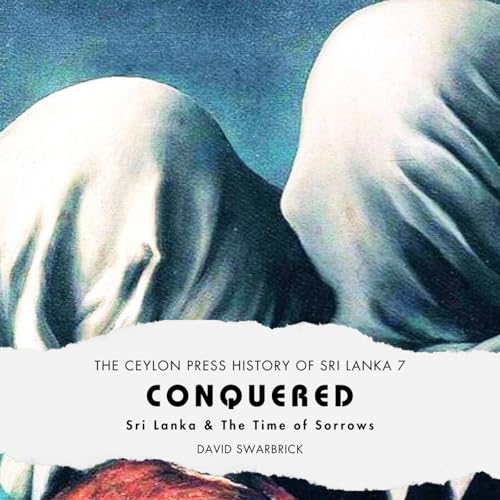
  • Conquered: The Ceylon Press History of Sri Lanka 7
    Dec 14 2025
    Good advice is often nearer to hand than even the most foolish leader can imagine. Or be minded to seek. One hundred and fifty years earlier, and six thousand six hundred and one kilometres away, Thucydides, whose work, The Peloponnesian War, set such standards for history as to anticipate every conceivable future military and political ploy, had the perfect solution in mind to fend off the catastrophe that befall Sri Lanka on the death of their visionary king, Devanampiya Tissa in 267 BCE – or 207 BCE, depending on whether you accept the tempered chronology of such scholars as the impossibly talented Wilhelm Geiger. That such advice could have been given or received is not as far-fetched as it first seems. The Mahavamsa refers to visits by what they call ‘yona’ to Sri Lanka in the fourth to third centuries BCE, ‘yona’ being the word the Persians used for their archenemy, the Greeks. Other chroniclers note how Pandu Kabhaya established a special quarter of his dazzling new city, Anuradhapura, for foreign merchants, including, it is suspected, the Yona Greeks, sometime after 437 BCE. Just across the Palk Straits, in India’s current Bihar province, Megasthenes, the Greek Ambassador to the Maurya court around 290 BCE, was busy mixing with, amongst others, those very same Anuradhapuran Greeks who came to badger and barter with the Mauryas. Historian as he was himself, he was also the sort of bookish man who may have had a few spare scrolls of Thucydides’ main works to lend to the governing literati of the time, including the Sri Lankan kings and their associates. But if there ever had been a loaning of scrolls, it seems that Devanampiya Tissa’s successors failed to read them. Indeed, they missed Thucydides’ most famous thoughts about the three “gravest failings,” namely “want of sense, of courage, or of vigilance”. For it was the want of all three, especially the last of these attributes, which was to tip the Vijayan kingdom not once but twice into such long and shocking periods of surrender that for well over half the intervening century it was a kingdom under occupation; its great city of Anuradhapura recast with a Tamil polish; and its plaintiff kings killed or exiled. Back in 267 BCE, as Devanampiya Tissa moved into what all would have hoped to have been Pari-Nirvana (the post-nirvana state of total release), this was far from what anyone would have thought even remotely possible. The great kingdom was utterly solid, surely? Unbreakable. Resilient. Or was it? For glum historians inclined to search for the deepest runes and trumpet them loudly, Devanampiya Tissa’s death was actually the start of a bleak three-hundred-year promenade that would lead to the dynasty’s inevitable collapse, a journey that would also fatally embed the country with an ongoing appetite for incipient disaster, regardless as to which dynasty, president, or occupying invader was calling the shots. Over this sorrowful period, through the reigns of almost 30 kings, Sri Lanka was to enjoy just three short periods of peace; interspersed with three Tamil invasions and occupations; several decades of continuous regicide; and a concluding civil war in which the Vijayans turned their spears dhunnas (bows), muguras (clubs), adayatiyas (javelins), kaduwas (swords) and kunthas (spears) upon one another until there was no credible heir left standing, merely an preposterous and fleeting lookalike monarch, until he too was murdered by a group of nobles for whom enough was quite enough. No one saw the turmoil that lay ahead. That such chaos should await did not seem even wildly probable as Devanampiya Tissa’s brother, Uththiya, succeeded to the throne. He was to be followed by two more brothers, Mahasiwa and Surathissa, all three of them, according to The Mahavamsa, ever on the side of neatness, to rule for respectably lengthy periods of ten years apiece. Whether they died in their beds or were murdered by their successors over these thirty years is a guessing game for clowns. The Mahavamsa maintains a prim muzzle on the matter. Indeed, the period was suspiciously uneventful; unnervingly calm even. All seemed fine with the state – and yet something, somewhere, was going fatally wrong. “What goes up,” said Isaac Newton, “must come down.” At best, it is probable that nothing happened, merely a governing indolence that spread like rising damp or unseen termites. Perhaps all three brothers were so distracted by the promise of enlightenment as they got to grips with the new religion their brother had introduced, that they forgot about all other aspects of good governance. Of vigilance, there was none; and over time, the kingdom’s defences and its ability to dominate and control its own destiny became fatally compromised as events were to show later. For Uttiya, his role must at times have seemed more chief mourner than king as first one and then another all-consuming ...
    Más Menos
    22 m
  • Merry-Go-Round: The Ceylon Press History of Sri Lanka 8
    Dec 14 2025
    If ever there was a king who was entitled to get very cross indeed, it was Dutugemunu, one of the island’s standout sovereigns. Known, not unjustifiably as “The Great,” Dutugemunu was to rescue his car crash of a dynasty, only to watch it (albeit from the life thereafter) speed off the proverbial royal road yet again, and with such casual ingratitude as to make common cause with Mark Twain - “if you pick up a starving dog and make him prosperous he will not bite you. This is the principal difference between a dog and man”. In the hundred years preceding Dutugemunu's ascension to the throne, the dynasty had been dethroned twice. In the following hundred years they were to do it once more, this time with much greater injury to the state. Stability is rarely the embodiment of absolute monarchies, and Sri Lanka suffered more than most from almost institutionalised political volatility, as if, just below the surface of the realm, with the constant rumbling and tremors of a gathering earthquake, yet another government eruption was making itself ready. Instability haunted most of the dozen or so kings who succeeded Dutugemunu. Five were rogue invaders from Tamil India; at least two were fated to be murdered by their scheming successors; and most of the rest reigned as if having signed up for a farce. Only Dutugemunu and his later nephew, Valagamba, the Comeback King, were to move the kingdom progressively onwards. For the rest, it was as if a life-changing ennui had floated into the palace throne room, a debilitating cloud that left every monarch much like Phil and Ralph in “Groundhog Day: Phil: "What would you do if you were stuck in one place and every day was the same and nothing that you did mattered?" Ralph: "That about sums it up for me." Had he had any presentiment of what was to come, it is probable that even Dutugemunu, so famously proactive as to make a Long-life Battery appear idle, would have chucked in his chips and moved on. But thankfully, no plot-spoiling deity, soothsayer, or psychic was to interrupt his indomitable spirit, and for a glorious moment, it seemed as if the Vijayan good times had returned. The lucky dynasty was back in business. Although history has been reluctant to tell us Dutugemunu's height, he was probably short, for if ever a leader existed with the Napoleon Syndrome, it was this man, whose nature, evident from the many myths and tales of his childhood, was naturally geared to dominate and control. “Growing duly, Gamani came to sixteen years, vigorous, renowned, intelligent and a hero in majesty and might,” reported The Mahavamsa, with an almost palpable sense of relief and thanksgiving. Dutugemunu's path to the ruler of Lanka was far from straightforward, coming as he did from a lesser twig of the Vijayan family tree. Despite these disadvantages, Dutugemunu famously navigated an obstacle course of family hurdles intended to arrest his monarchical ambitions. He even made a point of conquering the many mini-Tamil fiefdoms that had sprung up around and possibly within the Rajarata during Ellara's reign – a far from straightforward task as the four-month siege of Vijitanagara illustrated. Here, having to calm his panicking elephants amid incessant Tamil attacks using “red-hot iron and molten pitch,” it was evident that the campaign was no walkover, but one that required planning and determination to ensure victory. But the triumph was ultimately his. Power was consolidated, and his final victory over Ellara in 161 BCE left him ruling nearly the whole of the island, more territory by far than even that of the great king, Pandu Kabhaya. And as if to confirm the return of Vijayan order, the construction of more buildings commenced. Anuradhapura expanded exponentially, with its infrastructure, utilities, and water resources so upgraded as to ensure it would flourish for centuries to come, the longest-surviving capital city of the Indian subcontinent. Still more spectacular was the building of many more of what would become its most venerated celebrity structures. A large monastery, the Maricavatti, was erected, together with a nine-story chapter house for monks, with a bright copper-tiled roof; and most famous of all, what is today called the Ruwanweliseya, the Great Stupa, which housed Buddha’s begging bowl. The building programme was not restricted to the capital alone – eighty-nine other temples are said to have been constructed, along with hospitals and smaller tanks, in different parts of the kingdom. The kingdom was return to order – precisely the kind of order that Megasthenes, the Greek historian based in India had noted just a hundred years earlier, relishing, with a commercial leer, the kingdom’s “palm-groves, where the trees are planted with wonderful regularity all in a row, in the way we see the keepers of pleasure parks plant out shady trees in the choicest spots;” and how the island was ...
    Más Menos
    21 m
adbl_web_global_use_to_activate_DT_webcro_1694_expandible_banner_T1