Episodios

  • Data Changes Cancer Care, Human Connection Defines It
    Apr 6 2026

    A patient walks into a hospital with scans already done. And yet, they’re asked to repeat everything.

    Not because the system is inefficient, but because the data doesn’t mean the same thing everywhere.

    In this episode, we explore AI and data in cancer care with Dr. Caroline Chung, and why context is the missing piece in turning data into meaningful decisions.

    Caroline is Chief Data and Analytics Officer at MD Anderson and Chair of Women in Cancer. She sits at the intersection of clinical care, data science, and leadership, and brings a rare perspective on how these worlds actually come together.

    We talk about why the same scan can lead to different conclusions, how AI can create false confidence if context is missing, and why many promising innovations fail to scale. She shares how her team approaches data differently, focusing on “fit for purpose” rather than perfection, and why defining the problem matters more than the technology itself.

    She also shares a moment early in her career that reshaped how she sees her role, not just as someone who treats disease, but as someone who walks alongside patients and families through their journey.

    This is a conversation about progress in cancer care, but also about what we risk losing if we move too fast without intention.

    Bio of Caroline Chung, MD, MSc:

    Dr. Chung is Vice President and Chief Data & Analytics Officer at MD Anderson Cancer Center, where she also serves as Co-Director of the Institute for Data Science in Oncology and holds a tenured professorship in Radiation Oncology and Diagnostic Imaging. A practicing clinician specializing in CNS malignancies, she leads a computational imaging lab pioneering quantitative approaches including digital twins to tumor detection, treatment characterization, and personalized cancer care.

    What distinguishes Dr. Chung as a trailblazer is her rare ability to translate firsthand clinical challenges into transformative enterprise-wide and global AI strategy. She has architected and championed institutional, national, and international frameworks that bring precision medicine from concept to clinical reality, leveraging data science, AI, and quantitative imaging to measurably improve patient outcomes at scale.

    Her global thought leadership spans the most influential bodies shaping the future of medical AI. She is co-president of the Quantitative Medical Imaging Coalition (QMIC), co-chairs the Quantitative Imaging for Assessment of Response in Oncology Committee of the International Commission on Radiation Units and Measurements (ICRU), and co-chairs the American Society of Clinical Oncology (ASCO) AI Community of Practice. She served on the National Academies of Sciences, Engineering, and Medicine committee on Digital Twins, and as a member of the NIH Advisory Committee to the Director Working Group on AI.

    Dr. Chung exemplifies the convergence of scientific rigor, visionary leadership, and enterprise impact--making her a defining voice in the responsible and transformative deployment of data science and AI in oncology.

    Music Credit:

    "Upbeat Corporate" by Music For Creators is licensed under CC BY (Creative Commons Attribution) via freemusicarchive.org.

    Más Menos
    13 m
  • When Venture Capital Serves a Mission
    Mar 22 2026

    Cardiovascular disease remains the leading cause of death in the United States, yet innovation in this space faces unique scientific, economic, and structural challenges.

    In this episode of Bold Minds, Christine Winoto speaks with Lisa Suennen, Managing Partner of the American Heart Association Venture Fund, about what it really takes to move healthcare innovation from research to real world impact.

    Lisa explains why the American Heart Association launched multiple venture funds, including a cardiac device fund, a social impact fund, a women’s health focused fund, and a venture studio, and how each addresses gaps that traditional venture capital often overlooks. She shares candid insights on why healthcare incentives remain misaligned, how venture capital can unintentionally make healthcare worse, and why many funded innovations fail to meaningfully improve patient and clinician experience.

    The conversation also explores Lisa’s work as a writer and educator at UC Berkeley Haas School of Business, what she continues to repeat to founders and MBA students year after year, and why planning a career matters less than choosing the right people and learning environment.

    This episode is a grounded look at mission driven venture capital, the realities of building healthcare companies, and what gives experienced investors hope in a system that often feels overwhelming.

    Lisa Suennen's bio:

    Lisa Suennen, Managing Partner with AHA Ventures for the American Heart Association, has spent over 35 years in healthcare and technology as venture capitalist, entrepreneur, operating executive, and strategy consultant. She has worked broadly across healthcare and life sciences, and especially where these sectors converge with technology.

    Lisa is currently Managing Partner of American Heart Association Ventures, a multi-fund platform investing in companies across the full spectrum of healthcare and social determinants of health. She has also held General Partner roles at several venture funds, including Manatt Ventures, Psilos Group and GE Ventures, where she led the healthcare venture fund and sat on the overall GE Ventures Investment Committee. Lisa has also held executive-level operating roles at Canary Medical, Merit Behavioral Care and Manatt, Phelps & Phillips. Lisa was Co-founder and CEO of CSweetener, a company focused on matching mentors with rising healthcare leaders (sold to HLTH Foundation). She chairs the Scientific Advisory Board of the NASA -funded Translational Research Institute for Space Health and the International Investment Committee of the Australian & Victorian government-funded ANDHealth Digital Health Fund, and serves on the advisory boards of several emerging companies. Lisa is a Fellow of the Aspen Institute’s Health Innovators Fellowship and on faculty at the UC Berkeley Haas School of Business where she teaches the annual class on healthcare innovation and investment. Lisa writes the Venture Valkyrie blog and is an internationally recognized author and speaker.

    Music Credit:

    "Upbeat Corporate" by Music For Creators is licensed under CC BY (Creative Commons Attribution) via freemusicarchive.org.

    Más Menos
    39 m
  • Emotional Wellbeing Is a Leadership Strategy
    Mar 7 2026

    Why do so many workplace wellbeing efforts fall flat, even when companies offer great benefits? In this conversation, Ian Shea explains why real wellbeing starts with culture, leadership, and the ability to create psychological safety at work.

    Ian Shea, Founder and CEO of I Am Human, talk about how his path from investment banking and tech leadership to emotional wellbeing advisory shaped the work he does today. After a painful startup failure forced him to confront his own emotional health, Ian built a company that helps organizations create stronger, healthier cultures.

    We discuss why benefits alone are not enough, how vulnerability from leaders builds trust, why founders need support in managing uncertainty, and how simple employee driven ideas like a PTO buddy system can create real behavior change.

    This episode is especially valuable for founders, executives, investors, and anyone thinking seriously about culture, resilience, and performance.

    Ian Shea's bio:

    Ian Shea has over 30 years of experience building businesses as a leader and an entrepreneur.

    He is the Founder & CEO of I M Human, a Wellbeing Strategic Advisory Firm partnering with organisations to design, develop and enhance World Class Wellbeing Strategies.

    Prior to I M Human, Ian founded Maestro Market, a marketplace for experts. Before that, Ian ran ReplayTV, a successful brand of DVR systems which he sold to DirecTV.

    Ian earned an MBA from Columbia University & UC Berkeley’s HAAS School of Business, where he taught entrepreneurship upon graduation. Ian earned a BS in Economics from Cornell University.

    Ian is the author of the Wellbeing ChroniclesTM, a newsletter covering the mental, emotional and spiritual wellbeing space, and a frequent speaker on topics related to building a culture of emotional wellbeing.

    Music Credit:

    "Upbeat Corporate" by Music For Creators is licensed under CC BY (Creative Commons Attribution) via freemusicarchive.org.

    Más Menos
    41 m
  • The Myths, The Science, The Fix: Women and Heart Care
    Feb 23 2026

    Women’s heart health equity is not a slogan. It is the difference between dismissal and diagnosis, between outdated myths and modern care.

    In this episode, Dr. Sharonne Hayes of Mayo Clinic explains how cardiology bias and research inclusion shape outcomes, why heart failure with preserved ejection fraction awareness and first response protocols save lives, and where AI and less invasive valve procedures are changing the care journey.

    You will hear how a Title IX moment in Dr. Hayes’s youth foreshadowed a career of advocacy; why early trials missed women; what we now know about heart failure with preserved ejection fraction and microvascular dysfunction; the cautionary tale of QT-prolonging drugs like Seldane; and how WomenHeart’s trained “champions” turn lived experience into community education. We discuss practical language patients can use in the ER, what first responders should avoid saying at the door, and why funding mandates must match the real cost of inclusive research. Dr. Hayes closes with a pragmatic optimism about AI-enhanced ECGs in primary care and a future where the right patients reach specialty care faster.

    Bio:

    Sharonne N. Hayes, M.D., is a cardiologist and Professor of Cardiovascular Medicine. She has over 25 years of experience in treating complex heart and blood vessel conditions in the Women's Heart Clinic, Pericardial Diseases Clinic and general consultative cardiovascular medicine in both the hospital and outpatient settings.

    Her clinical and research focus areas include:

    • Sex- and gender-based cardiology and caring for a wide variety of cardiovascular conditions that occur primarily and/or differently in women spanning prevention, diagnosis and treatments across women's lifespan.
    • Spontaneous coronary artery dissection (SCAD) and associated conditions such as fibromuscular dysplasia (FMD). Dr. Hayes is an international expert on and a lead researcher for the Mayo Clinic SCAD Research Program.
    • Diseases of the pericardium, such as inflammatory pericarditis and pericardial constriction.
    • Achieving health equity among diverse populations, including women, racial and ethnic minorities, sexual minorities, and others who experience health disparities.
    • Increasing participation by underrepresented populations in medical research, especially women, racial and ethnic minorities and sexual minorities.
    • Determining the utility and optimal role of social media in clinical practice, research and health education.

    In addition to her clinical and research activities, Dr. Hayes:

    • Serves as Vice Chair, Academic Affairs and Faculty Development, for the Department of Cardiovascular Medicine.
    • Is a nationally recognized educator and speaker on diversity, health equity, women's health and cardiovascular issues and is frequently called upon by the media for her expertise.
    • Has developed programs to enhance the professional and personal development and mentorship of women and minority physicians in order to promote a more diverse workforce at Mayo and in the field of medicine.
    • Is an advocate for safe, equitable, and dignified healthcare workplaces that promote high-quality patient care and has developed programs to assess and mitigate unconscious bias in healthcare.

    Music Credit:

    "Upbeat Corporate" by Music For Creators is licensed under CC BY (Creative Commons Attribution) via freemusicarchive.org.

    Más Menos
    41 m
  • Why Healthcare Lost the Benefit of the Doubt
    Feb 9 2026

    Restoring trust in healthcare starts with clear, human communication. In this episode, Ross K. Goldberg, Founder and President of Kevin/Ross Public Relations, shares five decades of lessons from hospital boards, health plans, and health systems on how to make care feel navigable and trustworthy. We dig into why trust can take years to build and minutes to lose, how expectations and marketing influence perception, and what Kaiser Permanente did right to evolve its brand and experience. We also talk about aligning business and consumer needs in life sciences, the squeeze on primary care, and how allied professionals can expand access.

    Specific moments you’ll hear: the four pillars Ross uses to define trust, a case example of Lyme disease testing and B2B vs consumer messaging, a practical script clinicians can use with well-read patients, and why celebrating everyday heroes in healthcare matters as much as publishing outcomes.

    Ross Goldberg Bio:

    Ross K. Goldberg brings nearly five decades in healthcare public relations and marketing communications, the last half of which as Founder and President of Kevin/Ross Public Relations. During his career Ross has represented hospitals, health systems, health plans, medical groups, healthcare trade associations and myriad of healthcare ventures in both the for-profit and nonprofit space. He is past chairman of the board of trustees of Los Robles Hospital and Medical Center in Southern California and a founding executive board member of the Society for Healthcare Strategy and Market Development of the American Hospital Association. A frequent writer and speaker on topics about which he is passionate (most notably “Restoring Public Trust in Healthcare”), Ross holds a Bachelor of Arts degree in journalism and a Master’s degree in communications. He is the author of the books I Only Know What I Know, Food on the Table and Twelve Stories.

    Music Credit:

    "Upbeat Corporate" by Music For Creators is licensed under CC BY (Creative Commons Attribution) via freemusicarchive.org.

    Más Menos
    49 m
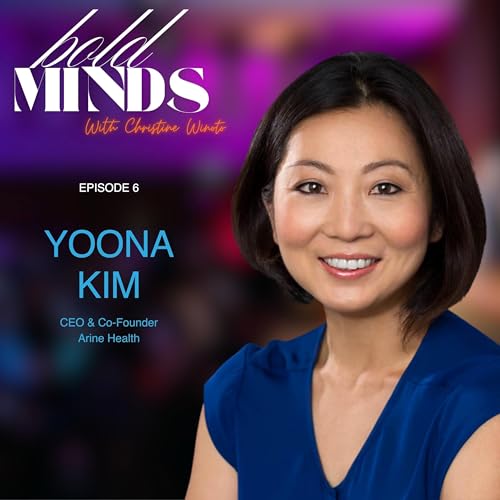
  • From Pharmacist to System Disruptor
    Feb 2 2026

    Medication mismanagement is one of the largest hidden crises in healthcare. It leads to billions in wasted spending and avoidable hospitalizations every year. In this episode, we speak with Yoona Kim, PharmD, PhD, co-founder and CEO of Arine, a company using AI-driven medication intelligence in healthcare to ensure patients get the right therapies at the right time.

    Yoona shares her founder journey. From being inspired by her parents’ work in public health and entrepreneurship, to building a scalable technology that reduces hospitalizations and improves quality ratings for health plans, she reflects on perseverance through early setbacks, lessons learned from her father’s resilience, and why aligning teams around patient outcomes has been central to Arine’s growth.

    In our conversation, we cover the role of AI in reducing waste and bias in prescribing, the challenges of uniting payers, providers, and patients around a single solution, and how meditation and executive coaching help Yoona lead through uncertainty.

    If you’re curious about how improving patient outcomes with technology is shaping the future of healthcare, this conversation is not to be missed.

    Bio:

    Yoona Kim, PharmD, PhD, is the CEO and co-founder of Arine, a next-generation medication intelligence company with a mission to solve medication mismanagement across the health care continuum. Arine’s proprietary platform pulls insights from a complex ecosystem of clinical, socioeconomic, and behavioral data to optimize patient outcomes and deliver value-based care. The technology uses predictive analytics to target care to at-risk members, develops artificial intelligence (AI)-driven personalized care plans for each patient, and uses machine learning to continuously optimize members’ medication therapy. Arine overcomes the limits of traditional, manually driven medication management approaches by making the practice scalable and allowing time-strapped health care providers to deliver care to large populations and with a far greater impact. Arine’s clients have achieved the highest quality ratings and have reduced hospital admissions by 40%.

    Arine’s AI-driven technology platform is powering successful interventions that navigate complexities discussed in this article. For example, Arine’s platform identified a 67-year-old Latinx male in Medicare Advantage with diabetes and an elevated hemoglobin A1C at high risk for hyperglycemic crisis. He had a history of medication nonadherence and canceling appointments and expressed difficulty affording a branded diabetes medication. Arine’s platform identified a generic option, along with several other recommendations, to optimize the member’s array of medications for other comorbidities. The platform also flagged a pattern of underutilization of care, indicated by an absence of a primary care visit within the last year and connected the member to an appointment. These measures were supplemented by auto-generated Spanish-language educational materials on the importance of medications and lifestyle changes for diabetes management. Ultimately, the member was very receptive to the recommendations and started taking his medications more regularly.

    Prior to Arine, Yoona has held various roles at digital health, pharma, and consulting companies. She holds a bachelor’s degree from Stanford University; a PharmD with an emphasis in health policy and management from the University of California, San Francisco; and a PhD in health economics and outcomes from the University of Texas at Austin.

    Music Credit:

    "Upbeat Corporate" by Music For Creators is licensed under CC BY (Creative Commons Attribution) via freemusicarchive.org.

    Más Menos
    39 m
  • Myopia Is Not Destiny
    Jan 26 2026

    Myopia control is changing how we care for kids’ eyes. In this episode, Dr. Maria Liu, Professor of Clinical Optometry at UC Berkeley and founder of the Myopia Control Clinic, explains evidence-based myopia control strategies, including orthokeratology for pediatric myopia, and why early exams and outdoor time matter. We discuss what parents can do now, how high myopia raises risks for retinal problems and glaucoma, and how clinic workflows and data can personalize care. Specific topics include candidate selection for ortho-k, safety and follow-up, why some adults still progress in graduate school, and how controlling myopia earlier expands options for refractive surgery later.

    Bio:

    Dr. Maria Liu is a Professor of Clinical Optometry at UC Berkeley. She holds the Pamela P. Fong Faculty Chair in Optometry & Health Care. The emphasis of her research and clinical expertise is the investigation and utilization of novel contact-lens designs and pharmaceuticals in myopia control. She is the founder of the Myopia Control Clinic, the first of its kind in a teaching clinic; it now serves as a model for optometry schools across the country. Originally from Beijing, Liu practiced as an ophthalmologist in China before relocating to the US in 2000. She obtained her MBA prior to her OD training at Pacific University, College of Optometry. She also completed an MPH and a PhD at UC Berkeley.

    Music Credit:

    "Upbeat Corporate" by Music For Creators is licensed under CC BY (Creative Commons Attribution) via freemusicarchive.org.

    Más Menos
    44 m
  • The Quiet Power Behind Responsible AI
    Jan 19 2026

    What does it really take to implement AI in healthcare—at scale, and responsibly? Dr. Daniel Yang, Vice President of AI and Emerging Technologies at Kaiser Permanente, joins us to share his firsthand experience leading the nation’s largest clinical deployment of generative AI tools like ambient scribes.

    In this episode, Dr. Yang explains how Kaiser’s phased rollout combined clinician feedback, quality assurance, and real-time audits to build confidence and reduce burnout. He reflects on the cultural evolution among physicians—from fear of replacement to enthusiasm for tools that make them “better doctors and better moms.” We explore trust milestones, physician workflows, diagnostic decision support, and the impact of AI on clinical education.

    This is a rare look into how a complex health system navigates the real-world challenges of trustworthy AI. Listen in for an insightful conversation with Dr. Yang.

    Music Credit:

    "Upbeat Corporate" by Music For Creators is licensed under CC BY (Creative Commons Attribution) via freemusicarchive.org.

    Más Menos
    42 m