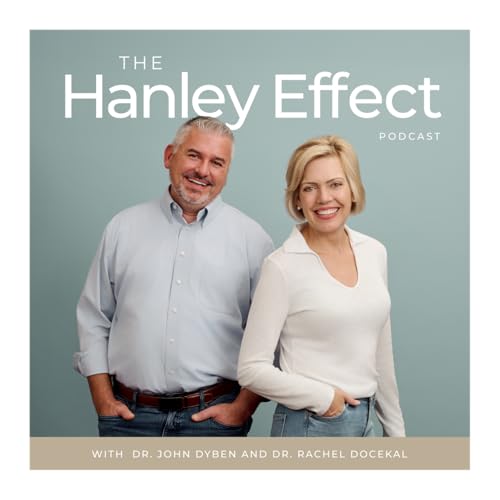
The Hanley Effect Podcast - Addiction and Mental Health Podcast Por Hanley Foundation arte de portada

The Hanley Effect Podcast - Addiction and Mental Health

The Hanley Effect Podcast - Addiction and Mental Health

De: Hanley Foundation
Escúchala gratis

The Hanley Effect is a weekly addiction recovery and mental health podcast hosted by Dr. John Dyben, Chief Clinical Officer at Hanley Center, and Dr. Rachel Docekal, CEO of the Hanley Foundation, the podcast explores the science, stories, and systems shaping substance use disorder, mental health, and trauma care today.

Through in-depth, compassionate conversations, The Hanley Effect brings together leading experts in addiction medicine, behavioral health, neuroscience, psychology, education, public policy, and recovery advocacy, along with individuals and families with lived experience. Episodes dive into evidence-based treatment, trauma-informed care, co-occurring disorders, adolescent mental health, overdose prevention, stigma, shame, and the realities of long-term recovery.

Dr. Dyben and Dr. Docekal offer a unique dual perspective, combining clinical expertise and nonprofit leadership, to unpack what quality addiction treatment looks like, why prevention and early intervention matter, and how families and communities can respond more effectively to substance use and mental health challenges. Listeners gain practical tools, expert insight, and a clearer understanding of the evolving landscape of addiction and mental health.

The podcast also highlights powerful stories of resilience, post-traumatic growth, and recovery, reminding listeners that healing is possible and help is available. Whether you are a behavioral health professional, first responder, educator, policymaker, parent, person in recovery, or someone seeking reliable information about addiction and mental health, The Hanley Effect delivers education that empowers and conversations that change lives.

Produced by the Hanley Foundation, a nonprofit organization committed to saving lives through prevention, treatment, education, and advocacy, The Hanley Effect exists to change minds, reduce stigma, and build healthier, more informed communities through honest, evidence-based dialogue.

All rights reserved.
Higiene y Vida Saludable Psicología Psicología y Salud Mental
Episodios
  • From NFL Front Office to Crisis Text Line: Megha Parekh on Trauma, Anxiety, and Leading With Empathy at Work
    Mar 4 2026

    What does it look like when a high-performing organization treats mental health as health—not a side conversation? In this episode of The Hanley Effect, Dr. John Dyben and Dr. Rachel Docekal sit down with Megha Parekh, Executive Vice President and Chief Legal Officer of the Jacksonville Jaguars, for a powerful conversation about crisis readiness, trauma recovery, and leading with empathy in high-stakes environments.

    Megha shares how volunteering with Crisis Text Line transformed the way she shows up at work and in life, replacing the “fix it” reflex with active listening, grounded presence, and one essential question: “What would be most helpful to you?” She also opens up about surviving a home burglary and battery, how trauma reshaped her sense of safety, and the real, practical “toolbox” that helped her move through anxiety and regain stability.

    Together, the conversation explores what workplaces can do when employees face suicidality, addiction, domestic violence, eating disorders, isolation, and overwhelming stress—and why compassion and business judgment aren’t opposites. They’re a leadership advantage.

    Episode Highlights

    • Mental health in the workplace: Why training matters before a crisis happens and how it supports performance and trust
    • Crisis Text Line training: What Megha learned (the hard way) and how it changed her approach to leadership and support
    • The key question that helps: Why “What would be most helpful to you?” can be more effective than advice
    • Addiction and recovery at work: A real story of helping an employee get to rehab and what recovery can make possible afterward
    • Trauma recovery is personal: Megha’s experience surviving a violent home invasion and how trauma can show up as anxiety, hypervigilance, and disrupted routines
    • Healthy coping without shame: From comfort TV to repeat playlists, why regulation tools don’t need to “look normal” to work
    • Redefining success: “The effort belongs to me, but the results do not” how to support someone without trying to control the outcome
    • Meaning after loss: How losing a friend to heroin addiction helped shape Megha’s commitment to prevention, support, and honest conversations

    About Megha Parekh

    Megha Parekh is the Executive Vice President and Chief Legal Officer of the Jacksonville Jaguars. She oversees major legal and business initiatives including compliance, risk management, government relations, technology, security, employee development, and stadium and real estate projects. A Harvard undergraduate and law graduate, Megha is also a dedicated volunteer with Crisis Text Line, supports community initiatives including Habitat for Humanity, and advocates for survivors of trauma and greater access to mental health resources.

    To learn more about Hanley Foundation programs, visit hanleyfoundation.org or call 844-502-4673.

    Más Menos
    37 m
  • Somatic Trauma Therapy Explained: Why Insight Isn’t Enough to Heal Complex Trauma, With Dr. Trisha Wolfe
    Feb 25 2026

    In this solo-hosted episode of The Hanley Effect, Dr. John Dyben sits down with trauma therapist and researcher Dr. Trisha Wolfe, Ph.D., LPCC, SEP, NARM for a clear, science-grounded conversation about complex trauma, developmental trauma, and why so many people feel stuck even after years of insight-based therapy.

    Dr. Wolfe specializes in working with high-achieving perfectionists, people pleasers, and chronic overthinkers, the ones who can explain their patterns perfectly (“I know why I do this…”) but still can’t create lasting change. In this episode, she explains why that’s not a personal failure. It’s biology.

    Together, they unpack what trauma really is (and what it isn’t), why trauma is often shaped by perception and nervous system context, and how somatic therapy helps by including the body’s language, sensations, impulses, and survival responses, alongside thoughts and emotions. If you’ve ever wondered why logic doesn’t shut off anxiety, why reassurance doesn’t stop panic, or why “trying harder” only makes you more exhausted, this episode offers a practical roadmap: nervous-system-friendly change, one small experiment at a time.

    What You’ll Learn in This Episode

    • What “trauma” actually means and why the “everything is trauma vs. nothing is trauma” debate misses the point
    • The difference between single-incident trauma and complex/developmental trauma
    • Why two people can experience the same event, yet only one develops a lasting trauma response
    • What somatic means in therapy (in plain language) and how body sensations can guide healing
    • How the body sends messages to the brain, and why focusing only on thoughts can miss major clues
    • Why people can have deep insight but still feel stuck: insight doesn’t automatically change the nervous system
    • How survival strategies like intellectualizing, over functioning, shutdown, and people pleasing start as protection, not character flaws
    • A powerful reframe: self-sabotage is often self-protection that can be updated
    • What families can do to support healing: connection without pressure, with boundaries

    Episode Highlights

    • Trauma is about perception and impact: It’s not only what happened, it’s how the nervous system experienced it and what lasting impairment remains.
    • Somatic therapy basics: Thoughts and emotions matter, but body sensations are a third “doorway” into healing.
    • Your brain can “hide” things: The nervous system keeps survival learning behind the curtain, so the body may reveal what words can’t.
    • Why reassurance doesn’t work on panic: “It’s safe” is language; the body responds to sensations and threat templates.
    • The path forward: Change happens through small, nervous-system-friendly experiments that build new neural pathways over time.
    • For families: Validation, presence, and connection without pressure can create the safety where healing becomes possible.

    To learn more about Dr. Wolfe visit: https://www.cbustherapy.com/

    To learn more about Hanley Foundation programs, visit hanleyfoundation.org or call 844-502-4673.

    Más Menos
    33 m
  • Why No One Brings a Casserole: Stigma, Shame, and Family Mental Health Support - with Dr. Michelle Sherman
    Feb 18 2026

    In this episode of The Hanley Effect, Dr. John Dyben and Dr. Rachel Docekal sit down with renowned family psychologist Dr. Michelle Sherman, a clinical psychologist with more than 30 years of experience supporting families navigating addiction, mental illness, trauma, and PTSD. Named the American Psychological Association’s Family Psychologist of the Year (2022), Dr. Sherman shares both her professional expertise and personal lived experience as a family member impacted by mental illness, addiction, and loss.

    Together, they explore what families in crisis often feel but rarely say out loud: confusion, helplessness, worry, stigma, shame, and isolation, and why the healthcare system has historically missed a critical piece of the recovery puzzle: supporting the family system and, especially, the children.

    Dr. Sherman also highlights her long-standing collaboration with her mother, writing practical, workbook-style resources that help adults and teens feel less alone and more equipped to face the realities of living with a loved one’s mental illness or trauma history. The conversation closes with a powerful call to action: making it the norm, not the exception, to ask about a patient’s children and connect families with resources.

    Episode Highlights

    • Why family work matters: How addiction and mental illness ripple through the entire family—and why treatment must address more than the identified patient.
    • The “waiting room” wake-up call: What Dr. Sherman saw in VA hospital waiting rooms that sparked decades of family-focused programming and advocacy.
    • The emotions families carry: Loneliness, fear, anger, grief, stigma, shame, and “Why won’t they just stop?”—and why these reactions are so common.
    • The “casserole” difference: Why communities often show up for physical illness—but fall silent when the crisis is mental illness, addiction, or psychiatric hospitalization.
    • Supporting kids impacted by addiction: Dr. Dyben and Dr. Docekal share how Hanley Center’s Children’s Family Program helps kids ages 7–12 understand addiction in developmentally appropriate ways—and learn it’s not their fault.
    • Honesty without fear: How to talk to kids about family history, genetics, and risk in ways that empower rather than scare them.
    • A gap in teen resources: Dr. Sherman explains why teens living with a parent’s mental illness or trauma are often “invisible” in the U.S. system—and what other countries are doing differently.
    • Research + real-world impact: How even a small grant can launch meaningful change and why measurement and program evaluation matter in behavioral healthcare.

    Resources Mentioned

    Dr. Sherman’s website includes free family resources, handouts, activities, and more: seedsofhopebooks.com

    Featured books discussed:

    Loving Someone with a Mental Illness or History of Trauma: Skills, Hope, and Strength for Your Journey I’m Not Alone: A Teen’s Guide to Living with a Parent Who Has a Mental Illness or History of Trauma

    To learn more about Hanley’s Children's program, visit hanleyfoundation.org

    Más Menos
    34 m
Todavía no hay opiniones