Episodios

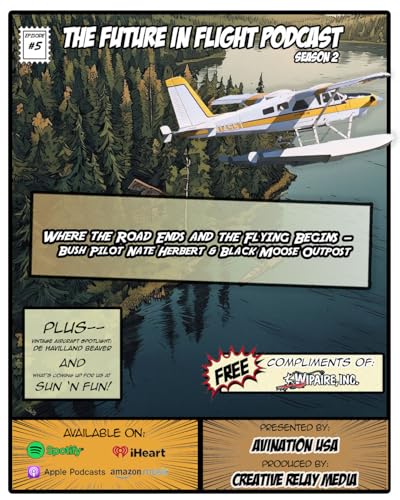
  • Where the Road Ends and the Flying Begins — Bush Pilot Nate Herbert & Black Moose Outposts
    Apr 14 2026
    Episode Summary Shawn sits down with Nate Herbert, bush pilot and founder of Black Moose Outposts, a fly-in wilderness fishing and hunting operation based out of Red Lake, Ontario — the furthest northwest you can drive in the province. What started as a napkin sketch during COVID has grown into twelve camps and a fleet of nine aircraft, including de Havilland Beavers, Blackhawk Caravans, and a Pilatus PC-6 Porter on floats. Nate takes us inside what real bush flying looks like — from navigating months of wildfire smoke to landing on unmarked lakes with dark water and no weather radar. He shares how his dad lit the aviation fire in him (even though he spent most of his childhood getting airsick), what it takes to hire and train bush pilots, and why he believes bush flying is one of the most future-proof careers in aviation. Along the way, we get a look at Black Moose's fire suppression missions supporting Northern communities, the differences between flying a Beaver, a Caravan, and a PC-6 in the backcountry, and what it's like to hand the controls of a floatplane over to a 70-year-old guest living out a lifelong dream. Key Points Nate's Path into Aviation Nate grew up in Red Lake, Ontario — a town with deep bush flying roots going back to the gold rush era of the 1930s when its airport was the second busiest in the world behind Chicago. His dad was a pilot, and flying was simply transportation. Nate actually hated flying as a kid — chronic airsickness kept him miserable on every flight. The turning point came at age 15 when he overheard his parents say the family airplane would go to his cousin if he didn't get his license. He got it at 18 and never looked back. Red Lake and the Bush Red Lake sits at the end of the road in northwest Ontario — people in Toronto can drive to Florida faster than they can drive there. Everything north of Red Lake is accessible only by winter ice roads or aircraft. It's a place where aviation isn't a hobby — it's how you get to town, get to school, and get home. Black Moose Outposts Born out of a COVID-era conversation between friends about dream jobs, Black Moose was supposed to be two camps and one airplane. It's now twelve camps and nine aircraft. The operation runs May through October, with 90% of business being fly-in fishing trips. Offerings range from fully self-guided wilderness drop-offs with zero contact for a week, all the way up to high-end guided packages with private chefs and 24/7 hosts. Newer camps feature full indoor plumbing, individual room climate control, and family-friendly accommodations. The Fleet Two Cessna 185s (one commercial with boat STC, one private)Two de Havilland Beavers (piston, original radials — one with STOL kit, one military surplus)One Blackhawk Caravan on Wipline 8750 floatsOne Cessna Caravan EX with Yukon prop on Wipline 8750 floatsOne Pilatus PC-6 Porter on Wipline 6100 floats Bush Flying Realities No live weather, no radar, no controlled airspace beyond a five-mile zone around Red Lake. Pilots have to read weather visually and navigate by instinct and experience. Smoke from wildfires was the worst veteran pilots had ever seen last season — not days, but months of reduced visibility. Nate's safety philosophy: smoke can be pushed carefully, but cloud and fog will kill you. Fire Suppression Flying Black Moose supports wildfire response across Northern Ontario — evacuations, gear supply runs, initial attack crew transport, and fire mapping at 50–100 feet above the trees. Last season, Nate's team flew the initial firefighting crews into a Northern community that had no water bomber support — the fire burned right to the edge of the sprinkler line his crews helped set up. Advice for Aspiring Bush Pilots Nate values work ethic over flight hours. Backgrounds in bush firefighting, welding, farming, or any demanding hands-on work carry more weight than a logbook full of hours. Float time helps get through the door, but Nate says he can teach the flying — he can't teach someone to work hard. The Future of Bush Flying Nate sees bush flying as one of the most secure aviation careers. Northern communities will always need air access, adventure tourism continues to grow, and the hands-on, unpredictable nature of the work makes it resistant to automation. Fun Questions — Quick Hits In-flight snack: Small cans of tuna, Costco applesauce, Icon elk and bison jerky, and a Red BullDream aircraft: F-16 or a Corsair (he's already flying his dream bush plane — the PC-6)Flying companion: His dad — the one who lit the fireDream trip: Flying a Cub or PC-6 through Iceland Links Black Moose Outposts website: blackmooseoutposts.comNate Herbert on Instagram: @nateherbertWipaire (Wipline Floats): wipaire.comAviNation: https://www.avinationusa.com/
    Más Menos
    43 m
  • SUN 'n FUN and Global Aviation w/Kirk Fryar of Sarasota Avionics
    Apr 9 2026
    🎧 Episode Summary

    Get ready for takeoff with Kirk Fryar, head of Sarasota Avionics and Maintenance, as he takes us behind the scenes of one of aviation's biggest events - SUN ‘n FUN! In this high-energy episode, Kirk shares what it's like to bring 30 team members to Florida's premier aviation showcase, complete with golf cart convoys and epic booth setups. From sponsoring aerobatic legends like Patty Wagstaff and Skip Stewart to showcasing cutting-edge avionics in a beautifully restored 1965 Piper with a full G3X system, Sarasota Avionics goes all-out to make SUN ‘n FUN unforgettable.

    This conversation takes an incredible turn as Kirk opens up about his global aviation adventures - from installing avionics in Bangladesh to working with the Cyprus Air Force in Greece, and building relationships across Brazil's massive aviation community. Whether you're curious about the future of aviation under new MOSAIC rules, want to know what survival gear every pilot should carry, or just love hearing about aviation culture around the world, this episode delivers non-stop excitement. Plus, get the inside scoop on where to find Kirk's team at SUN ‘n FUN, including a special autograph session with aerobatic pilot Melissa Burns!

    ✨ Key Points
    • 🛩️ Sarasota Avionics brings 30+ team members to SUN ‘n FUN with elaborate booth setups in Hangar C
    • 🌟 They sponsor top aerobatic performers including Patty Wagstaff, Skip Stewart, and Ghost Rider airshows
    • 🌍 Kirk's team travels globally for installations - from Bangladesh flight academies to Greek helicopter services
    • 🔧 New Mosaic rules could revolutionize older aircraft upgrades with modern G3X systems and autopilots
    • 🍺 Don't miss the new "Swamp" food court in Hangar E - plus Melissa Burns autograph session Thursday!

    🕒 Chapter Timestamps

    0:00 — 2:30 | SUN ‘n FUN Prep - 30 People, One Mission

    2:30 — 8:00 | Patty Wagstaff Stories and Aerobatic Sponsorships

    8:00 — 15:00 | Mosaic Rules and Aircraft Upgrade Opportunities

    15:00 — 22:00 | The Evolution of Avionics Technology

    22:00 — 28:00 | Going Global - International Aviation Adventures

    28:00 — 35:00 | Bangladesh to Greece - Working Worldwide

    35:00 — 42:00 | Brazil's Amazing Aviation Culture

    42:00 — 47:00 | Survival Gear and Backcountry Flying Tips

    47:00 — 49:00 | Where to Find Sarasota Avionics at SUN ‘n FUN

    🔗 Links & Resources

    Sarasota Avionics: www.sarasotaavionics.com

    Sarasota Avionics IG: https://www.instagram.com/sarasotaavionics/

    AviNation USA: https://www.avinationusa.com/

    SUN ‘n FUN: https://flysnf.org/

    SUN ‘n FUN STOL Basecamp Facebook: https://www.facebook.com/STOLBasecamp

    Patty Wagstaff Aviation School: https://pattywagstaff.com/school/

    Melissa Burns autograph session: Thursday at Hangar C (time TBD)

    New Swamp Food Court: Hangar E at SUN ‘n FUN

    Más Menos
    36 m
  • Where the Road Ends and the Flying Begins — Bush Pilot Nate Herbert & Black Moose Outpost
    Apr 7 2026
    🎧 Episode Summary

    Ever heard the sound of a de Havilland Beaver buzzing over water at dawn? For most of us, that's pure adventure movie material. But for Nate Herbert, growing up in Red Lake, Ontario—once the world's second-busiest airport during the 1930s gold rush—that was just another Tuesday morning. In this incredible episode, we dive into the wild world of bush flying with one of Canada's most authentic aviation voices, exploring how a kid who used to hate flying (seriously, he'd puke off the floats) became the pilot behind Black Moose Outpost's fleet of nine aircraft serving 12 remote wilderness camps.

    From emergency wildfire response to luxury fly-out fishing adventures, Nate's story proves that the most authentic paths in aviation often start with the most unexpected motivations. His advice for aspiring bush pilots? Forget the romance—focus on character, hard work, and the reality that in bush flying, no two landings are ever the same.

    Plus, we explore the legendary de Havilland Beaver in our Vintage Aircraft Spotlight and preview our upcoming SUN 'n FUN coverage that's going to be absolutely epic.

    ✨ Key Points
    • 🛩️ Bush flying isn't about romance—it's about problem-solving, character, and landing on lakes that change every single day
    • 🔥 Wildfire season transforms luxury outfitters into emergency responders, flying into smoke with half-mile visibility
    • ✈️ The Pilatus PC6 Porter is Nate's pick for most capable bush plane—able to land in 150-200 foot gaps between obstacles
    • 🎯 Getting hired as a bush pilot? Flight hours help, but employers want to see hard work experience like welding, farming, or firefighting
    • 🤖 AI can't automate adventure—bush flying careers are among the most future-proof in aviation

    🕒 Chapter Timestamps

    0:00 — 1:18 | The Sound of Adventure: Growing Up in Red Lake

    1:18 — 2:12 | From Hating Flying to Protecting Family Legacy

    2:12 — 3:26 | When Aviation Becomes Your Social Life

    3:26 — 4:40 | Pandemic Dreams to 12 Camps and 9 Aircraft

    4:40 — 6:45 | The Reality of Float Plane Operations

    6:45 — 8:08 | Fire Season: When Adventure Gets Serious

    8:08 — 9:03 | What It Takes to Fly in the Bush

    9:03 — 16:35 | Vintage Aircraft Spotlight: The de Havilland Beaver

    16:35 — 19:47 | SUN 'n FUN Preview: Field Coverage and Live Broadcasting

    🔗 Links & Resources
    • Black Moose Outpost: https://blackmooseoutposts.com/
    • Nate Herbert on Instagram: @nateherbert
    • Wipaire: https://wipaire.com/
    • SUN ‘n FUN: https://flysnf.org/
    • Sun 'n Fun Radio: LiveATC.net and AM 1510
    • Creative Relay Media: https://creativerelaymedia.com/
    • Full Throttle Airshows: https://fullthrottleairshows.com/
    • AviNation USA: https://www.avinationusa.com/
    • Hilo Social Media: https://www.hilosocialmedia.com/

    Más Menos
    22 m
  • Sport Pilot 2.0 & How to Get Into Aviation Industry Sales
    Mar 31 2026
    🎧 Episode Summary What happens when a single rule change unlocks an entirely new generation of aircraft—and new opportunities for people who dream of flying? In this episode, host Shawn Staerker explores one of the most important developments in modern general aviation: MOSAIC, often called Sport Pilot 2.0. You’ll learn how this long-awaited FAA modernization could allow aircraft to fly faster, carry more passengers, and cost less to operate—while opening the door for more people to enter aviation without a traditional medical certificate. But the conversation doesn’t stop on the flight line. Shawn also introduces listeners to aviation entrepreneur Tom Lelyo, who took an unexpected path from youth ministry to selling private jets—and built a thriving career in aviation sales along the way. His story reveals a powerful truth: you don’t have to be a pilot or mechanic to succeed in aviation. And in our monthly history segment, we travel through the remarkable milestones of March—from the first successful parachute jump from an airplane to the invention of liquid-fueled rockets, the birth of Top Gun, and the daring solo flight around the world by Steve Fossett. This episode is about innovation, opportunity, and the many different doors into aviation—some technical, some entrepreneurial, and some still waiting to be discovered. Thank you to our long-time show supporters—TL Sport Aircraft, builders of modern, efficient aircraft designed to expand access to flight training and recreational aviation. Explore their lineup and see the future of light aviation up close at the upcoming SUN 'n FUN Aerospace Expo 2026. ✨ Key Points Understanding MOSAIC (Sport Pilot 2.0) Introduced to modernize the Light Sport Aircraft category first created in 2004.Removes the long-standing 1,320-pound weight limit for many aircraft.Shifts focus from weight limits to stall speed as the key safety metric.Allows up to four seats in qualifying aircraft.Opens the door to turbine engines, retractable gear, and more advanced avionics.Designed to make aircraft more capable while maintaining strong safety standards. How MOSAIC Could Change Flight Training Modern aircraft can carry more payload, including students and examiners.Lower fuel burn and maintenance costs may reduce the cost of flight training.New aircraft technology increases student interest and engagement.Flight schools may gain access to more efficient and capable training aircraft.Expands pathways into aviation for younger and cost-conscious students. Spotlight: Modern Light Aircraft Innovation Composite construction and glass cockpits are becoming standard in training aircraft.New engines offer higher performance with improved fuel efficiency.Aircraft design is shifting toward capability, safety, and operational flexibility.Manufacturers are preparing new aircraft models ahead of finalized regulations. Aviation Careers Beyond the Cockpit Aviation sales is a growing career path within the industry.Private jets can be accessible to business owners and professionals—not just billionaires.Success in aviation sales depends on persistence, communication, and relationship-building.Creating educational content can help build trust and professional credibility.Mentorship and community play a critical role in career growth. This Month in Aviation History (March) 1912: First successful parachute jump from a powered aircraft in the United States.1926: Robert Goddard launches the world’s first liquid-fueled rocket.1949: First nonstop flight around the world by the B-50 Lucky Lady II.1969: First flight of the Concorde supersonic passenger jet.1969: Establishment of the U.S. Navy Fighter Weapons School—Top Gun.2001: The Russian space station Mir completes its final descent.2005: Steve Fossett becomes the first person to fly solo nonstop around the world. 🕒 Chapter Timestamps 0:00 – 1:54 | Introduction: The future of aviation and the promise of MOSAIC 1:55 – 3:43 | The origins of Light Sport Aircraft and early limitations 3:44 – 5:35 | What changes under Sport Pilot 2.0 5:36 – 8:59 | How MOSAIC could reshape flight training and aircraft design 9:00 – 10:44 | Why this rule change matters for the future of aviation 10:45 – 12:07 | Career Spotlight: From youth pastor to jet sales professional 12:08 – 15:54 | Building a career in aviation sales and entrepreneurship 15:55 – 18:59 | This Month in Aviation History: Rockets, Concorde, and Top Gun 19:00 – 22:25 | Space stations, unique airlines, and record-setting flights 22:26 – End | Closing reflections: The sky still has room for dreamers Links TL Sport Aircraft: https://tlsportaircraft.com/ AVSales Talent: https://avsalestalent.com/ AviNation USA: https://www.avinationusa.com/ Creative Relay Media: https://creativerelaymedia.com/ SUN ’n FUN Aerospace Expo: https://flysnf.org/
    Más Menos
    25 m
  • Sport Pilot 2.0 Explained: How MOSAIC Could Transform Light Sport Aviation
    Mar 24 2026
    🎧 Episode Summary Sport Pilot 2.0 explained: What if one rule change could reshape the future of affordable aviation? In this episode of The Future in Flight Podcast, host Shawn Staerker sits down with Trey Murdaugh of TL Sport Aircraft to break down one of the most talked-about developments in general aviation today: MOSAIC, widely referred to as Sport Pilot 2.0. This conversation offers a clear, practical look at Sport Pilot 2.0 explained—what it means, why it matters, and how it could dramatically expand aircraft capability while making flying more accessible. From increased aircraft performance and turbine options to expanded flight training opportunities and lower operating costs, this episode highlights why manufacturers, flight schools, and pilots alike are watching these regulatory changes closely. You’ll also get an inside look at TL Sport Aircraft’s evolving lineup—from efficient trainers to high-performance sport aircraft—and what attendees can expect to see at the upcoming SUN 'n FUN Aerospace Expo 2026. This episode is about innovation, accessibility, and the exciting future of grassroots aviation—and provides a timely look at Sport Pilot 2.0 explained for pilots, students, and aviation enthusiasts alike. ✨ Key Points Sport Pilot 2.0 Explained: What is MOSAIC? An evolution of the Light Sport Aircraft (LSA) category introduced in the mid-2000s.Designed to expand aircraft capability while maintaining strong safety standards.Removes many previous limitations, allowing for more advanced aircraft design.Focus shifts from strict weight limits to stall speed as the primary performance metric. Major Changes Under Sport Pilot 2.0 Up to four seats instead of two.No fixed maximum aircraft weight.Higher stall speed limits (up to ~61 knots).Retractable landing gear and constant-speed propellers allowed.Potential for turbine and multi-engine aircraft in the category.Greater flexibility for manufacturers to build stronger, more capable aircraft. Impact on Flight Training and Accessibility Aircraft can carry more payload, including instructors, examiners, and full fuel.Lower acquisition and operating costs compared to traditional training aircraft.Reduced maintenance downtime with modern engines and systems.Increased student interest due to newer technology and performance.Potential to make flight training more affordable and scalable. Why Sport Pilot 2.0 Matters for Affordable Aviation Expands opportunities for recreational pilots and aging aviators.Encourages innovation among manufacturers.Improves aircraft safety through stronger designs.Creates new pathways for entry into aviation careers.Supports the growth of grassroots aviation communities. Spotlight: TL Sport Aircraft Lineup Sirius — A stable, high-wing aircraft ideal for training environments.Stream — A tandem, retractable-gear aircraft designed for performance and efficiency.Sparker — A side-by-side sport aircraft capable of high speeds and advanced handling.Sirius Backcountry — A rugged taildragger built for STOL and off-airport operations.New engine options, including turbocharged and turbine configurations, expand mission capability. What to Watch at SUN ’n FUN 2026 Expanded TL Sport Aircraft product lineup on display.Demonstrations of the new Sirius Backcountry aircraft.Sponsorship of the STOL Invitational event.Opportunities to see next-generation light aircraft technology up close. 🕒 Chapter Timestamps 0:00 – 0:31 | Introduction: Affordable aviation and the promise of Sport Pilot 2.0 0:32 – 2:35 | Sport Pilot 2.0 explained: Understanding MOSAIC 2:36 – 5:51 | The history of Sport Pilot and why change was needed 5:52 – 9:28 | Safety, performance, and the future of aircraft design 9:29 – 11:33 | Regulatory uncertainty and industry preparation 11:34 – 13:56 | Key Sport Pilot 2.0 changes explained 13:57 – 17:51 | Training benefits and cost advantages for flight schools 17:52 – 18:18 | Why the aviation community is excited 18:19 – 22:11 | Inside TL Sport Aircraft: Models, performance, and innovation 22:12 – 22:55 | Where to learn more about the aircraft lineup 22:56 – End | Preview: SUN ’n FUN 2026 and the future of light sport aviation 🔗 Links TL Sport Aircraft: https://tlsportaircraft.com/ SUN ’n FUN Aerospace Expo: https://flysnf.org/ AviNation USA: https://www.avinationusa.com/ Creative Relay Media: https://creativerelaymedia.com/
    Más Menos
    26 m
  • Full Throttle U: Inside California Aeronautical University's Flight Team
    Mar 19 2026
    🎧 Episode Summary

    This episode takes you on an incredible journey through aviation excellence and history.

    We kick things off rolling down the runway with California Aeronautical University's competitive flight team—a squad that’s climbed from 20th place at nationals in 2022 to seriously eyeing a top-10 finish. Along the way, they take to the skies cross-country in “Little Red,” a 1965 Cessna 150, competing in NIFA events while building a culture rooted in safety, discipline, and sportsmanship. That commitment has earned them four consecutive Red Baron Team Sportsmanship Awards.

    Then, host Shawn Staerker is joined by his daughter Ellie for a powerful Women’s History Month segment celebrating the trailblazers who helped build aviation from the ground up. From Raymonde de Laroche—the first woman to earn a pilot’s license in 1910—to the legendary Night Witches of World War II, and modern pioneers like Lucy Young, still flying at 71, this conversation makes one thing clear: aviation has always belonged to those bold enough to pursue it.

    We wrap things up with a destination spotlight on Everglades Air Park, where presidential history meets short-field flying and Cuban sandwiches—and where every landing adds another story to the logbook.

    ✨ Key Takeaways
    • ✈️ From Underdogs to Contenders CAU’s flight team has transformed from a 20th-place program into a top-10 contender through grit and teamwork.
    • 🏆 Character Counts Four straight Red Baron Team Sportsmanship Awards highlight that how you fly matters just as much as how well you fly.
    • 👩‍✈️ Women in Aviation—From Day One Since 1910, women have played a central role in aviation’s growth—not as footnotes, but as pioneers.
    • 🌙 The Night Witches Soviet pilots flew daring nighttime bombing missions in WWII—cutting engines mid-flight to silently glide over enemy targets.
    • 🐊 Destination: Everglades Air Park A 2,400-foot runway, rich history, and unforgettable food make this a must-visit for adventurous pilots.
    🕒 Chapter Timestamps
    • 0:00 — 1:27 | Introduction to CAU Flight Team’s Journey
    • 1:27 — 2:44 | Understanding NIFA Competition Structure
    • 2:44 — 4:30 | Student Commitment & “Little Red” the Cessna 150
    • 4:30 — 7:13 | Cross-Country Adventures & Lightspeed Aviation Partnership
    • 7:13 — 9:35 | Awards, Safety Culture & Future Goals
    • 9:35 — 11:11 | Transition to Women’s History Month Segment
    • 11:11 — 19:28 | Women Who Built Aviation (featuring Ellie Staerker)
    • 19:28 — End | Future in Flight Destinations: Everglades Air Park
    🔗 Links & Resources
    • California Aeronautical University Flight Team
    • Lightspeed Aviation
    • The 99s (Women Pilots Organization)
    • Women in Aviation International
    • Everglades Air Park (X01) — Everglades City, Florida
    • NIFA (National Intercollegiate Flying Association)
    • AviNation USA

    Más Menos
    30 m
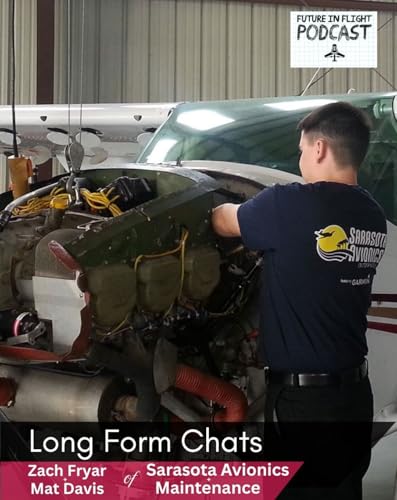
  • Behind the Panel: A Conversation w/Sarasota Avionics & Maintenance
    Mar 17 2026
    🎧 Episode Summary

    From a tiny corner of a Venice hangar to multiple locations across Florida, Sarasota Avionics has built something truly special in the aviation world.

    In this episode, we sit down with Zach Fryar and Mat Davis—two key team members—who share the incredible journey of how three guys fixing radios grew into one of aviation’s most beloved avionics companies. Their secret? Treating customers and employees like family while delivering cutting-edge technology upgrades.

    Zach and Mat take us behind the scenes of modern avionics installations—from full glass panel upgrades to becoming a Cirrus Service Center. They discuss the ongoing challenge of finding skilled technicians, share their thoughts on the future of aviation technology (spoiler: they’re not ready for pilotless planes), and explain why treating your iPad like backup equipment is always a smart move.

    Plus, we explore career opportunities in avionics and get the inside scoop on their famous Sun ’n Fun parties that draw crowds from across the aviation community.

    ✨ Key Points
    • 🛠️ Humble beginnings: Started with three guys in one-third of a hangar fixing radios—now operating multiple locations across Florida

    • 👨‍👩‍👧‍👦 Family-first culture: Employees and customers are treated like family, complete with birthday parties and holiday invitations

    • 🎯 Shift to glass panels: Upgrades dominate as pilots move away from six-pack instruments due to parts availability

    • ✈️ Cirrus Service Center: Achieved through a rigorous certification process and specialized training

    • 🔮 Future of aviation: More automation is coming—but human pilots remain essential for dynamic situations

    🕒 Chapter Timestamps
    • 0:00 — 2:18 | From Three Guys to Aviation Empire: The Sarasota Avionics Origin Story

    • 2:18 — 4:25 | Building Family Culture: Keeping the Small Shop Feel

    • 4:25 — 8:29 | Finding Great Techs: The Challenge of Aviation Talent

    • 8:29 — 11:14 | Career Transition: From Automotive to Avionics

    • 11:14 — 15:02 | Consultation Process: Understanding Customer Needs

    • 15:02 — 18:13 | Cirrus Service Center: The Path to Certification

    • 18:13 — 20:13 | Future of Aviation: Will Pilots Become Obsolete?

    • 20:13 — 24:59 | Avionics Upgrade Process: From Consultation to Delivery

    • 24:59 — 28:00 | Industry Trends: Glass Panels & iPad Integration

    • 28:00 — 32:12 | Sun ’n Fun & Customer Connections

    • 32:12 — 35:19 | Career Advice for Future Avionics Techs

    • 35:19 — 38:54 | Rapid Fire Fun: Snacks, Dream Aircraft & Flying with Legends

    🔗 Links & Resources
    • Sarasota Avionics Website – https://sarasotaavionics.com/

    • SUN 'n FUN Aerospace Expo – https://flysnf.org/

    • AviNation – https://www.avinationusa.com/

    Más Menos
    28 m
  • The Automation Revolution: Why Avionics Techs Run the Future
    Mar 10 2026
    🎧 Episode Summary

    Ever wonder what makes those glass screens in airplane cockpits actually work? This episode takes you inside the world of avionics with Zach Fryar from Sarasota Avionics and lead technician Mat Davis. From a humble corner of a Venice, Florida hangar with three guys and broken radios, Sarasota Avionics has grown into one of the Southeast's most respected shops. But this isn't just a business success story—it's about the people who make modern aviation possible and why avionics might be the perfect career path for tech-savvy young people.

    We also go behind the scenes with Jacob Peed, Editor-in-Chief of AviNation USA Magazine, as they gear up for Sun and Fun 2026. Plus, in our Vintage Aircraft Spotlight, we explore the massive Convair B-36 Peacemaker—a 10-engine beast that could fly around the world without stopping and helped define the Cold War era. Whether you're curious about cutting-edge cockpit technology or aviation history, this episode shows how the past, present, and future of flight all connect.

    ✨ Key Points
    • 🔧 Modern avionics is more than just screens—it's integrated systems that require skilled techs who are part engineer, part detective
    • 💼 Avionics careers are future-proof with aging workforce and increasing technology complexity creating huge opportunities
    • 📱 If you can use an iPhone, you can probably master modern glass cockpit systems like Garmin's GTN and G1000
    • 📰 Aviation USA Magazine connects aviation stories from contributors aged 8 to 78, proving everyone has a story worth telling
    • ✈️ The B-36 Peacemaker had a 230-foot wingspan, 10 engines, and could carry nuclear weapons—but never dropped a bomb in combat

    🕒 Chapter Timestamps

    0:00 — 1:21 | Introduction: From Corner Hangar to Aviation Empire

    1:21 — 2:25 | The Culture That Builds Craftspeople

    2:25 — 4:52 | What Avionics Actually Is: Systems Thinking

    4:52 — 7:07 | The Glass Revolution and Garmin's Dominance

    7:07 — 9:29 | Career Paths: Why Avionics Needs You

    9:29 — 11:56 | The Future of Automation vs. Human Pilots

    12:00 — 19:21 | Aviation USA Magazine and Sun and Fun Preview

    19:21 — 25:42 | Vintage Spotlight: The Convair B-36 Peacemaker

    🔗 Links & Resources
    • Sarasota Avionics: sarasotaavionics.com
    • AviNation USA Magazine: avinationusa.com
    • Sun and Fun Fly-In: flysnf.org
    • National Museum of the US Air Force (B-36 location): nationalmuseum.af.mil
    Más Menos
    29 m