Episodios

  • FFP91: The High School to College Transition: What No One Tells Baseball Players
    Apr 14 2026

    ⏱️ TIMESTAMPS

    00:00 – Introduction

    01:15 – How Dan and Trevor met — high school teammates to business partners

    03:30 – How Backside Groundballs Media started during COVID

    06:00 – Their experience as college coaches and why they left

    09:00 – Transitioning from coaching to media

    12:00 – What they've learned traveling to college programs

    18:30 – The analytics vs. old-school baseball debate

    22:30 – Why compete and baseball IQ are coming back

    26:00 – Leadership lessons from the best college coaches

    30:00 – What great programs are actually teaching

    36:30 – The biggest challenges freshmen face on campus

    40:00 – The weight room, durability, and the physical demands of college baseball

    42:00 – Adjusting to college life — freedom, stress, and identity

    46:00 – Coach-player communication and how players can advocate for themselves

    51:00 – The "de-recruiting" effect and managing expectations

    54:00 – The transfer portal — what it's doing well and what it's costing players

    59:00 – Do freshmen have unrealistic expectations about playing time?

    01:03:00 – What it actually takes to have a chance at professional baseball

    01:10:00 – Final takeaways: being tough and vulnerable, and leading with humility

    🧠 SHOW NOTES

    In Episode 91, I sit down with Dan Galati and Trevor Powers — former college coaches and co-founders of Backside Groundballs Media — to talk about what the high school-to-college transition in baseball actually looks like for the players living it.

    Dan and Trevor have done something unique. They've traveled to college programs across the country, sat in film sessions, watched practices, and had real conversations with the coaches building these programs from the inside. What they've seen has shaped how they think about player development — and what they believe young athletes are missing.

    We discuss:

    Why compete and baseball IQ have become the great differentiators at the college level.

    What the best college coaches are actually teaching — and how they build culture.

    The biggest physical and mental challenges freshmen face when they arrive on campus.

    Why the transition from "recruited athlete" to "one of the guys" is harder than players expect.

    How the transfer portal is changing the landscape — and what it might be costing players developmentally.

    What it truly takes to have a shot at playing beyond college.

    Dan and Trevor also share what they've taken away from conversations with some of the top coaches in college baseball — including a lesson from Penn State's Mike Gambino that Dan says changed how he thinks about what it means to be both tough and vulnerable at the same time.

    If you've ever wondered what separates the players who thrive at the college level from the ones who struggle — or how young athletes can put themselves in the best position to succeed — this episode gives you a clear, honest, and experienced perspective.

    🤝 CONNECT WITH DAN GALATI & TREVOR POWERS

    🌐 Backside Groundballs Media: https://backsidegbmedia.beehiiv.com/

    📷 Instagram: @backsidegroundballsmedia

    X: @BacksideGB

    🤝 CONNECT WITH MICHAEL HUBER

    ⚾ Spring Training for the Mind

    👉 https://tinyurl.com/HuberSpringTraining

    📩 Free mental performance insights for athletes, parents, and coaches:
    👉 https://michaelvhuber.com/newsletter

    🌐 Website:
    👉 https://www.michaelvhuber.com

    📷 Instagram:

    @michaelvhuber

    Más Menos
    1 h y 17 m
  • FFP90: What do college baseball coaches actually look for?
    Mar 31 2026

    ⏱️ TIMESTAMPS

    00:00 – Introduction
    01:15 – Bryan’s background and coaching journey
    03:30 – What it takes to climb the coaching ladder
    06:00 – What coaches actually look for when recruiting
    09:00 – Why behavior and body language matter
    12:00 – Recruiting as a two-way street
    15:30 – How athletes can show genuine interest
    18:30 – Division I vs Division III: understanding fit
    22:30 – Playing time, academics, and lifestyle differences
    26:00 – What makes a great recruiter
    29:30 – What coaches expect from athletes in the recruiting process
    33:00 – The transition from high school to college baseball
    36:30 – Why the game “speeds up” at the next level
    39:30 – Physical and mental demands of college baseball
    42:00 – Time management, routines, and habits
    45:00 – Communication between coaches and players
    48:00 – Building trust and team culture
    51:00 – The evolving role of coaching
    54:00 – Bryan’s experience with burnout and growth
    57:30 – The role of parents in the recruiting process
    1:00:00 – The #1 piece of advice for high school players

    🧠 SHOW NOTES

    In Episode 90, I sit down with Bryan Torresani, Head Baseball Coach at DeSales University, to discuss what college coaches are really looking for in recruits — and how players can better prepare for the next level.

    For many athletes, the recruiting process feels like a constant evaluation. Players often focus on statistics, velocity, and exposure, trying to prove they belong at a certain level.

    But Bryan explains that what separates players often comes down to something much simpler — and harder to measure.

    How they respond to failure.
    How they carry themselves on the field.
    And how they handle the daily demands of development.

    We discuss:

    • Why coaches pay close attention to behavior and body language
    • How recruiting is a two-way street — and why communication matters
    • The differences between Division I and Division III baseball
    • What freshmen struggle with most when they arrive on campus
    • Why time management, routines, and habits are critical for success
    • How coaching has evolved to become more relationship-driven

    Bryan also shares practical advice for players preparing for college baseball, including the importance of strength training, building routines, and taking ownership of the recruiting process.

    If you’ve ever wondered what truly stands out to college coaches — or how players can position themselves for success beyond high school — this episode provides a clear and honest perspective.

    🤝 CONNECT WITH BRYAN TORRESANI

    🌐 DeSales Baseball:
    👉 https://athletics.desales.edu/sports/baseball

    📷 Instagram:
    @btorr12

    📷 X:
    @torr_b12

    🤝 CONNECT WITH MICHAEL HUBER

    ⚾ Spring Training for the Mind

    👉 https://tinyurl.com/HuberSpringTraining

    📩 Free mental performance insights for athletes, parents, and coaches:
    👉 https://michaelvhuber.com/newsletter

    🌐 Website:
    👉 https://www.michaelvhuber.com

    📷 Instagram:

    @michaelvhuber

    Más Menos
    55 m
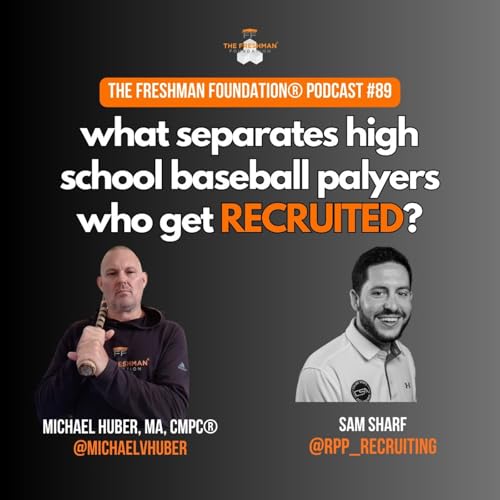
  • FFP89: What Separates High School Baseball Players Who Get Recruited?
    Mar 17 2026

    ⏱️ TIMESTAMPS

    00:00 – Introduction
    01:00 – What high school players should focus on during the season
    03:45 – Why competing and helping your team win matters most
    07:30 – What to do if you’re not getting the role you expected
    11:15 – Why the high school season prepares players for summer recruiting
    15:20 – Learning to compete instead of analyzing outcomes
    19:30 – The challenge of staying patient early in the season
    23:45 – Why players should communicate with their coaches
    27:30 – Varsity vs JV: how to think about game reps
    31:40 – What college coaches are actually watching in games
    36:00 – Why tools and metrics aren’t enough
    40:15 – The importance of body language and competing on every pitch
    44:30 – In-season development: strength training, reps, and routines
    48:00 – Time management and building habits for college baseball
    51:00 – Sam’s advice for every high school player: build your process

    🧠 SHOW NOTES

    In Episode 89, I sit down with Sam Sharf of RPP Recruiting to discuss what high school baseball players should really focus on during the season.

    For many athletes, the spring season feels like a constant evaluation. Players worry about statistics, playing time, and whether college coaches are watching.

    But Sam explains that the high school season plays a different role in the recruiting process.

    Instead of chasing exposure or obsessing over results, players should focus on competing, developing a consistent process, and helping their team win games.

    We discuss:

    • Why players should embrace their role — even if it’s not what they expected
    • How the high school season prepares athletes for summer recruiting
    • Why college coaches look closely at competitiveness and body language
    • The difference between tools, metrics, and game performance
    • Why developing strong habits now prepares players for college baseball

    Sam also shares practical advice on in-season development, including strength training, getting extra reps, and managing time effectively during the season.

    If you’ve ever wondered how much the high school season actually impacts recruiting — or how players can make the most of their opportunities — this episode provides a clear roadmap.

    🤝 CONNECT WITH SAM SHARF

    🌐 Website:

    👉 https://rocklandpeakperformance.com/

    📷 Instagram:

    @RPP_Recruiting

    @RPP_Baseball

    @sharfsam_

    🤝 CONNECT WITH MICHAEL HUBER

    ⚾ Spring Training for the Mind

    👉 https://tinyurl.com/HuberSpringTraining

    📩 Free mental performance insights for athletes, parents, and coaches:
    👉 https://michaelvhuber.com/newsletter

    🌐 Website:
    👉 https://www.michaelvhuber.com

    📷 Instagram:

    @michaelvhuber

    🤝 CONNECT WITH MICHAEL HUBER

    ⚾ Spring Training for the Mind

    👉 https://tinyurl.com/HuberSpringTraining

    📩 Free mental performance insights for athletes, parents, and coaches:
    👉 https://michaelvhuber.com/newsletter

    🌐 Website:
    👉 https://www.michaelvhuber.com

    📷 Instagram:

    @michaelvhuber

    Más Menos
    54 m
  • FFP88: Are pitchers chasing the wrong thing?
    Mar 3 2026

    ⏱️ TIMESTAMPS

    00:00 – Introduction
    02:15 – “The job of a pitcher is to get outs”
    06:30 – Velocity vs command: what actually matters
    10:45 – The turning point in Scott’s professional career
    15:30 – Why chasing feelings leads to inconsistency
    19:40 – Building a repeatable cue under pressure
    24:10 – ADHD, anxiety, and self-awareness on the mound
    29:20 – Why pitchers need hobbies outside of baseball
    33:45 – The case for multi-sport development
    39:30 – Travel ball culture and burnout
    44:50 – When should athletes specialize?
    48:30 – Why football might be the ideal second sport
    53:00 – Scott’s advice for every young pitcher: build your process

    🧠 SHOW NOTES

    In Episode 89, I sit down with Scott Shuman, Head Pitching Coach at RPP Baseball, to explore a simple but powerful message for pitchers:

    Don’t chase feelings. Build your process.

    Scott shares how his early success as a hard-throwing prospect eventually exposed a gap in his development — he had velocity, but he didn’t yet have a plan.

    That changed when he learned to simplify his approach, attach cues to feelings, and build a repeatable mental process he could rely on when pressure increased.

    We discuss:

    • Why analytics without command can be misleading
    • How pitchers can build self-awareness under stress
    • Why bullpen success doesn’t always translate to games
    • The mental cost of year-round baseball
    • Why hobbies and multi-sport play support long-term growth

    If you’ve ever watched a pitcher spiral after one bad inning — or wondered why confidence feels fragile in big moments — this episode will give you a practical framework for building something more stable than emotion.

    🤝 CONNECT WITH SCOTT SHUMAN

    @RPP_Baseball

    @ShumanPerformance

    💬 CONNECT WITH MICHAEL HUBER

    ⚾ Spring Training for the Mind

    A free mental preparation guide for baseball families who want to build confidence before the pressure shows up.
    👉 https://tinyurl.com/HuberSpringTraining

    📩 Free mental performance insights for athletes, parents, and coaches:
    👉 https://michaelvhuber.com/newsletter

    🌐 Website:
    👉 https://www.michaelvhuber.com

    🤝 CONNECT WITH MICHAEL HUBER

    ⚾ Spring Training for the Mind

    👉 https://tinyurl.com/HuberSpringTraining

    📩 Free mental performance insights for athletes, parents, and coaches:
    👉 https://michaelvhuber.com/newsletter

    🌐 Website:
    👉 https://www.michaelvhuber.com

    📷 Instagram:

    @michaelvhuber

    Más Menos
    51 m
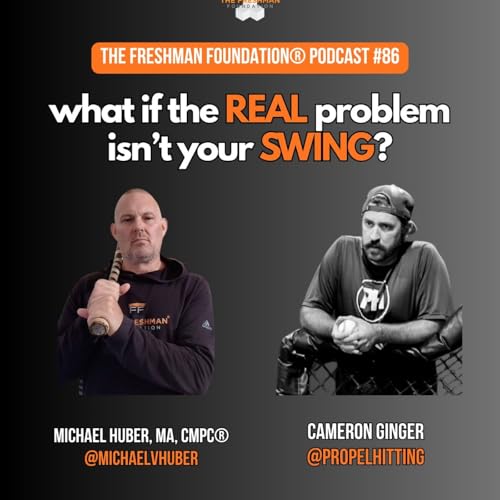
  • FFP87: What If the REAL Problem Isn't Your Swing?
    Jan 25 2026

    ⏱️ TIMESTAMPS

    00:00 – Introduction
    01:00 – The intersection of mechanics and mindset
    06:00 – Why chasing fixes leads to short-term change
    10:00 – Finding the “core” instead of treating surface problems
    14:00 – The “watermelon patch” approach to sustainable growth
    18:00 – How honesty builds trust between coach and athlete
    23:00 – Cam’s story: from failure to freedom
    31:00 – Why coaches can only take players as deep as they’ve gone
    36:00 – Building bridges between mechanics, neuroscience, and belief
    42:00 – The role of parents in creating a healthy environment
    50:00 – What true confidence and self-belief look like
    56:00 – Why doubt can actually fuel growth
    1:03:00 – How bravery transforms performance — and life

    🧠 SHOW NOTES

    In Episode 87, I sat down with Cameron Ginger, a hitting instructor and founder of Mental Meets Mechanics, to explore how true performance change starts from the inside out.

    Cam explains why most athletes and coaches focus on the wrong layer of the system — chasing surface-level fixes instead of addressing the deeper beliefs that drive behavior. We explore the difference between thinking different and thinking differently, what happens when the brain’s survival system hijacks performance, and how patience, honesty, and trust create lasting change.

    He also shares personal stories about hitting rock bottom, rebuilding his identity, and learning how to help athletes do the same — not through force or mechanics alone, but through compassion and self-awareness.

    If you’ve ever wondered how mental and mechanical skills truly meet, this episode will give you a blueprint for developing confidence that lasts far beyond the cage.

    🤝 CONNECT WITH CAMERON GINGER
    Instagram: @propelhitting

    Website: https://www.propelhitting.co/

    🤝 CONNECT WITH MICHAEL HUBER
    Email: michael@ftbcoaching.com

    Website: https://www.michaelvhuber.com
    Newsletter: https://michaelvhuber.com/newsletter

    Instagram: https://www.instagram.com/michaelvhuber/

    🤝 CONNECT WITH MICHAEL HUBER

    ⚾ Spring Training for the Mind

    👉 https://tinyurl.com/HuberSpringTraining

    📩 Free mental performance insights for athletes, parents, and coaches:
    👉 https://michaelvhuber.com/newsletter

    🌐 Website:
    👉 https://www.michaelvhuber.com

    📷 Instagram:

    @michaelvhuber

    Más Menos
    1 h y 13 m
  • FFP 86: What Happens When Young Athletes Stop Fighting Their Insecurities?
    Oct 21 2025

    Free mental performance tips for young athletes, parents, and coaches:
    👉 https://michaelvhuber.com/newsletter

    Work with me:
    👉https://calendly.com/michaelvhuber/mike-huber-15-minute-meeting-clone

    ⏱️ TIMESTAMPS

    00:00 – Introduction
    02:00 – Why insecurity is part of every athlete’s experience
    06:00 – How coaches and parents unknowingly reinforce doubt
    10:00 – The problem with “just relax” and other empty advice
    14:00 – Why bravery matters more than fearlessness
    18:00 – The “3 B’s”: body, breath, and brain as anchors under pressure
    22:30 – How Callum’s tennis journey shaped his work with athletes
    27:00 – Preparing for failure: why athletes need to expect adversity
    31:00 – The role of acceptance in emotional control and performance
    36:00 – Why environment and culture fuel insecurity
    40:30 – What “Liquid Sports Psychology” really means
    44:30 – Callum’s advice for every young athlete: “You’re not alone.”

    🧠 SHOW NOTES

    In Episode 86, I sit down with Callum Gowling, founder of Liquid Sports Psychology in the U.K., to explore why confidence doesn’t come from fighting insecurity — it comes from accepting it.

    We discuss the false promise of “mental toughness,” why advice like “just relax” can do more harm than good, and how athletes can learn to manage their body, breath, and brain when pressure hits.

    Callum also shares how his own tennis career and personal insecurities shaped his mission to normalize the emotional side of sport — reminding athletes, coaches, and parents that everyone feels fear and doubt.

    If you’ve ever wondered how acceptance can actually enhance performance, this episode will challenge how you think about confidence.

    🤝 CONNECT WITH CALLUM GOWLING

    Instagram: @liquidsportspsychology
    Website: (Add when available)

    💬 CONNECT WITH MICHAEL HUBER

    Website: https://www.michaelvhuber.com
    Newsletter: https://michaelvhuber.com/newsletter
    HS to College Transition Preparation: https://michaelvhuber.com/course
    Instagram: https://www.instagram.com/michaelvhuber
    X: https://x.com/mhubercmpc
    YouTube: https://www.youtube.com/@thefreshmanfoundation

    🤝 CONNECT WITH MICHAEL HUBER

    ⚾ Spring Training for the Mind

    👉 https://tinyurl.com/HuberSpringTraining

    📩 Free mental performance insights for athletes, parents, and coaches:
    👉 https://michaelvhuber.com/newsletter

    🌐 Website:
    👉 https://www.michaelvhuber.com

    📷 Instagram:

    @michaelvhuber

    Más Menos
    49 m
  • Is Your Mental Game the Key to Being QB1?
    Sep 9 2025

    Free mental performance tips for young athletes, parents, and coaches: https://michaelvhuber.com/newsletter

    Work with me: https://calendly.com/michaelvhuber/mike-huber-15-minute-meeting-clone

    TIMESTAMPS:

    00:00 – Introduction

    02:00 – Why body language is a quarterback’s hidden weapon

    05:30 – Leadership lessons: how QBs can rally teammates after mistakes

    08:45 – Visualization and preparation: mental reps that build real confidence

    13:25 – The progression of quarterback training from youth football to high school

    19:45 – Why understanding a coach’s expectations is just as important as physical talent

    22:30 – Good misses vs. bad misses: decision-making under pressure

    24:45 – Situational awareness: training quarterbacks to handle adversity

    28:00 – Coaching very young quarterbacks and planting long-term mental skills

    34:15 – The difference between playing quarterback and being a quarterback

    40:00 – Evaluating potential: honesty with athletes and parents about the QB journey

    42:30 – Lessons from Brock Purdy, Drew Brees, and quarterbacks who maximize intangibles

    47:15 – Helping athletes identify strengths and reduce weaknesses

    53:00 – Greg’s biggest piece of advice for parents of young quarterbacks

    SHOW NOTES:

    We explore the mental side of quarterback development, including:

    • Why body language and emotional control matter as much as throwing mechanics.
    • How quarterbacks can lead teammates through adversity and build trust in the huddle.
    • The role of visualization, preparation, and mental rehearsal in developing confidence.
    • Why some quarterbacks with average physical tools — like Drew Brees and Brock Purdy — thrive because of their mindset, decision-making, and resilience.
    • How parents and coaches can best support young quarterbacks as they grow from youth football into high school and beyond.

    CONNECT WITH GREG HOLCOMB

    Website: https://www.nxtlevelatx.com/\

    Instagram: https://www.instagram.com/nxtlevelatx

    X: https://x.com/QBCoachHolc

    CONNECT WITH GREG HOLCOMB

    Website: https://michaelvhuber.com

    Newsletter: https://michaelvhuber.com/newsletter

    HS to College Transition Preparation: https://michaelvhuber.com/course

    Instagram: https://www.instagram.com/michaelvhuber

    X: https://x.com/mhubercmpc

    YouTube: https://www.youtube.com/@thefreshmanfoundation

    🤝 CONNECT WITH MICHAEL HUBER

    ⚾ Spring Training for the Mind

    👉 https://tinyurl.com/HuberSpringTraining

    📩 Free mental performance insights for athletes, parents, and coaches:
    👉 https://michaelvhuber.com/newsletter

    🌐 Website:
    👉 https://www.michaelvhuber.com

    📷 Instagram:

    @michaelvhuber

    Más Menos
    57 m
  • FFP84: How Can ADHD Be a Superpower for Young Athletes?
    Aug 19 2025

    Free mental performance tips for young athletes, parents, and coaches: https://michaelvhuber.com/newsletter

    Work with me: https://calendly.com/michaelvhuber/mike-huber-15-minute-meeting-clone

    Chapters

    00:00 – Introduction

    01:45 – Biggest challenges ADHD athletes face: time management, organization, working memory, hyperfocus/hypofocus, and motivation

    05:38 – Rejection Sensitivity Dysphoria (RSD) and its impact on performance and relationships

    10:50 – Turning mistakes into problem-solving opportunities

    12:29 – Corie’s personal experience as an ADHD athlete and how coaching styles impacted her

    16:09 – Coaching athletes to be “coach-proof”

    18:58 – Goal-setting strategies for ADHD athletes and the importance of “falter plans”

    23:54 – Building motivation through novelty, interest, urgency, and challenge

    28:53 – Leveraging visual learning and verbal processing effectively in coaching sessions

    34:26 – ADHD as a superpower: hyperfocus, resilience, and strengths-based coaching

    35:22 – The role of mindfulness and self-compassion in performance and life

    45:43 – Emotional regulation as a core ADHD challenge and strategies to improve it

    51:27 – Harnessing emotional intensity for better performance

    56:48 – Key takeaway for parents of ADHD athletes

    🔗 Connect with Corie Wightlin:

    Website: https://wightlincoachingservices.com/

    Instagram: https://www.instagram.com/wightlincoachingservices/

    🔗 Connect with Michael Huber:

    Website: https://michaelvhuber.com

    Newsletter: https://michaelvhuber.com/newsletter

    HS to College Transition Preparation: https://michaelvhuber.com/course

    Instagram: https://www.instagram.com/michaelvhuber

    🤝 CONNECT WITH MICHAEL HUBER

    ⚾ Spring Training for the Mind

    👉 https://tinyurl.com/HuberSpringTraining

    📩 Free mental performance insights for athletes, parents, and coaches:
    👉 https://michaelvhuber.com/newsletter

    🌐 Website:
    👉 https://www.michaelvhuber.com

    📷 Instagram:

    @michaelvhuber

    Más Menos
    1 h y 1 m