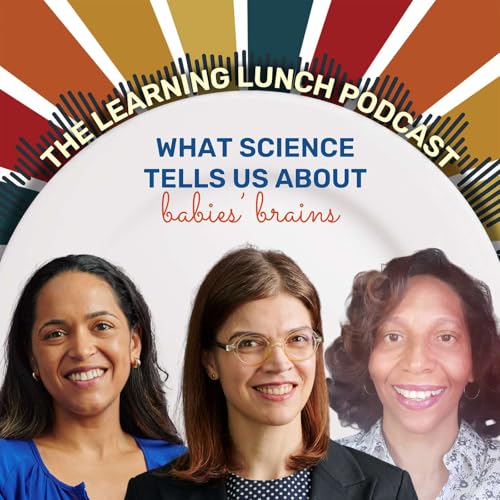
The DGMT Learning Lunch Podcast Por The DG Murray Trust arte de portada

The DGMT Learning Lunch

The DGMT Learning Lunch

De: The DG Murray Trust
Escúchala gratis

The Learning Lunch is an opportunity for NPO teams to be exposed to new ideas, discover what others are learning, and reflect on what that means for their implementation and strategy. Visit www.dgmt.co.za/resources/learning-lunch for the full experience and to access the podcasts and instructions for a ±30-minute group reflection.

© 2026 The DGMT Learning Lunch
Economía Gestión Gestión y Liderazgo
Episodios
  • The Learning Lunch - Stopping violence before it starts
    Apr 14 2026

    Gender-based violence is a national disaster in South Africa, reflecting the scale and urgency of the problem that has social, public health and economic costs.

    Preventing violence before it happens is a critical part of building safer communities in the long run. This means investing in the social conditions that shape behaviour, relationships and how boys and men understand power, respect and masculinity.

    From early childhood socialisation to positive role modelling, programmes that challenge harmful gender norms and promote healthy forms of masculinity can address the risk factors that drive men’s perpetration of violence.

    South Africa has committed around R21 billion over the medium term to implement the National Strategic Plan on Gender-based Violence and Femicide, including measures to strengthen women’s economic empowerment.

    In this podcast, we explore what it would take to strengthen South Africa’s focus on violence prevention, why community-based interventions matter and how investing in boys’ development can help build safer societies. We talk to Kgahliso Mangoale, Project Lead for GBV Initiatives at DGMT and Kolping Mbumba, Director of Operations at Heroes Academy.

    Visit www.dgmt.co.za/stopping-violence-before-it-starts to read more and access the takeaway instructions.

    The Learning Lunch podcast features three types of episodes: Deep Dives; Nourish & Flourish; and Best Bites.

    Each podcast/learning lunch session is structured as follows:
    The Main Meal - A ±30-minute podcast
    The Takeaways - Instructions for a ±30-minute group reflection based on what you listened to.

    To learn more about the work that we do, go to www.dgmt.co.za

    Más Menos
    31 m
  • The Learning Lunch - What science tells us about babies’ brains
    Apr 14 2026

    https://dgmt.co.za/what-science-tells-us-about-babies-brains/The first 1 000 days of life — from conception to age two — is a once-in-a-lifetime window to shape physical growth, brain development, health and the foundations of future learning. During this time, nutritious food for mothers, optimal infant feeding practices, access to healthcare, income support for pregnant women living in poverty, and responsive caregiving all work together to build the foundations for a child’s life.

    Brain development begins in the womb. During pregnancy, a baby’s brain grows at an astonishing pace — producing around 250 thousand new nerve cells every minute. By the time a baby is born, their brain has about 100 billion neurons, connected through neural pathways. These early connections lay the foundation for how children learn, behave and make sense of the world.

    But a baby’s development is shaped not only by biology — their social world matters too. From the moment they are born, the people and environments around them begin to influence how their brain develops. In the first months of life, the brain’s sensory pathways for vision and hearing develop rapidly, followed closely by the circuits that support language. These connections are strengthened through everyday interactions between babies and their caregivers known as “serve and return”. When a baby coos, babbles, smiles or reaches out, and a caregiver responds positively, this back-and-forth builds the brain’s architecture and supports early learning, attachment and development.

    In this podcast, we talk about why the first 1000 days matter, with particular focus on the role of adequate nutrition and responsive caregiving. For NGOs working with caregivers, understanding this window of opportunity is essential — as is understanding what government, civil society and households can do to help young children thrive. Our guests from the Hold My Hand Accelerator are Liezel Engelbrecht, Nutrition Lead, and Mikhaila Steenkamp, Language and Learning Lead, along with Dr Chantell Witten, Health Systems Strengthening Director at Ilifa Labantwana.

    Visit www.dgmt.co.za/what-science-tells-us-about-babies-brains to read more and access the takeaway instructions.

    The Learning Lunch podcast features three types of episodes: Deep Dives; Nourish & Flourish; and Best Bites.

    Each podcast/learning lunch session is structured as follows:
    The Main Meal - A ±30-minute podcast
    The Takeaways - Instructions for a ±30-minute group reflection based on what you listened to.

    To learn more about the work that we do, go to www.dgmt.co.za

    Más Menos
    31 m
  • The Learning Lunch - Reimagining our future
    Apr 14 2026

    What would it take for every child in South Africa to grow up with enough food, love, safety and brain power to reach their full potential? A new national strategy aims to make that vision a reality. The National Strategy to Accelerate Action for Children (NSAAC) approved by Cabinet in December 2025, sets out the country’s top 10 priorities for improving the lives of children and teenagers. It identifies gaps in services and highlights interventions that could speed up progress. While government will lead implementation, the strategy makes clear that real progress will require a whole-of-society effort, that is championed through a national campaign known as Hold My Hand. There is a role for all of us: communities, faith-based organisations, business, trade unions and civil society.

    Civil society organisations are already active across the country, often stepping in where services are thin or absent. Through nutrition programmes, support for early learning, afterschool programmes and more, they are helping children and teens every day. With the NSAAC approved, the question is how these efforts can connect with and strengthen implementation of the strategy.

    In this podcast, we talk about the role of civil society in turning a national commitment into tangible change. We ask Mesuli Kama, Mobilisation Lead for the Hold My Hand Accelerator for Children and Teens, how NGOs can contribute to the NSAAC’s priorities.

    Visit www.dgmt.co.za/reimagining-our-future to read more and access the takeaway instructions.

    The Learning Lunch podcast features three types of episodes: Deep Dives; Nourish & Flourish; and Best Bites.

    Each podcast/learning lunch session is structured as follows:
    The Main Meal - A ±30-minute podcast
    The Takeaways - Instructions for a ±30-minute group reflection based on what you listened to.

    To learn more about the work that we do, go to www.dgmt.co.za

    Más Menos
    26 m
Todavía no hay opiniones