The Climate Question Podcast Por BBC World Service arte de portada

The Climate Question

The buy box is not available to display at this moment. We apologize for the inconvenience
To purchase this book, please visit this page again later. For help with any other issue, please call our 24/7 customer service

Why we find it so hard to save our own planet, and how we might change that.

(C) BBC 2026
Ciencia
Episodios
  • Can better buses fix city pollution?
    Mar 22 2026

    Transport is one of the fastest-growing sources of greenhouse gas emissions, and in cities around the world it is also one of the biggest daily frustrations. Congestion, pollution and long journeys to work affect millions of people every day.

    In this episode of The Climate Question, Jordan Dunbar explores how cities can move large numbers of people more quickly, cheaply and with fewer emissions. With most urban journeys still dominated by private cars, the challenge is how to shift people towards more efficient forms of transport.

    He speaks to Dario Hidalgo, a transport expert based in Bogotá, where a system known as Bus Rapid Transit has helped transform how millions of people travel. By giving buses dedicated lanes, larger vehicles and faster boarding systems, cities can move more people using fewer vehicles, cutting both congestion and emissions. Variations of the model are now being used in cities around the world.

    Jordan also hears from Sarah Kaufman, Director of the NYU Rudin Center for Transportation in New York, about why similar systems can be harder to implement in dense cities, and how measures like congestion charging are helping to reduce traffic and fund improvements to public transport.

    While electric cars are often seen as part of the solution, both experts say reducing the number of cars on the road altogether is key. From buses to bikes, they explore how cities might redesign transport systems to be cleaner, faster and more efficient.

    Guests: Dario Hidalgo – Professor of Transport and Logistics, Pontificia Universidad Javeriana, Bogotá Sarah Kaufman – Director, NYU Rudin Center for Transportation, New York

    Got a question or comment? email us at theclimatequestion@bbc.com

    Production team: Grace Braddock, Diane Richardson, Nik Sindle Sound Engineer: Tom Brignell and Mike Regaard Production Coordinator: Brenda Brown Editor: Melanie Stewart-Smith

    Image: Guillermo Legaria/AFP via Getty Images

    Más Menos
    26 m
  • Q&A: Beavers, solar panels in the Sahara and nuclear waste
    Mar 15 2026

    The Climate Question panel answer your queries. Do beavers protect the planet? Should we put solar panels in deserts? And why does the world need to upgrade its electricity grids?

    Host Graihagh Jackson puts your head-scratchers to Justin Rowlatt, BBC climate editor; Akshat Rathi, senior climate reporter for Bloomberg News and host of Bloomberg's Zero podcast; and Caroline Steel, presenter of BBC CrowdScience.

    Got a question for the next listeners' show? You can email us at theclimatequestion@bbc.com or leave a WhatsApp message at + 44 8000 321 721

    Production team: Diane Richardson and Grace Braddock Sound Mix: Tom Brignell and Johnny Hall Production Coordinator: Brenda Brown Editor: Simon Watts

    Picture Credit: A beaver. Arterra/Universal Images Group via Getty Images

    Más Menos
    26 m
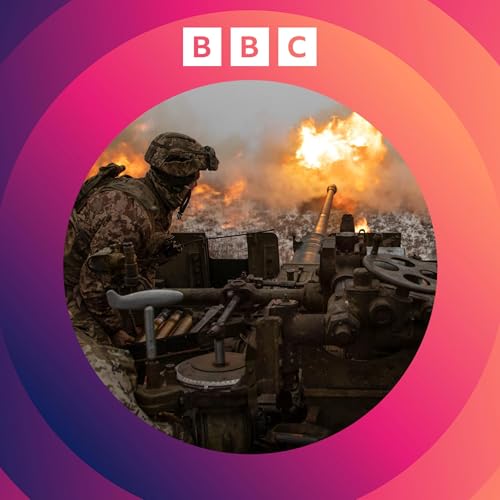
  • What's the climate cost of war?
    Mar 8 2026

    War leaves a visible trail of destruction: lives and families devastated, homes and communities reduced to rubble.

    But there is also a climate cost of armed conflict, and it’s an issue that Climate Question listeners have been asking about. So in this show, Host Graihagh Jackson chats to two leading experts about the carbon footprint of battle itself - the jets, the bombs, the supply lines - and the impact of maintaining armies and bases during peacetime. They discuss Gaza and Ukraine, as well as the current US-Israel war with Iran.

    Graihagh also finds out if there any ways for the military to reduce their emissions and whether they see climate change as a strategic threat.

    GUESTS: Neta Crawford, Professor of International Relations, University of St Andrews. Dr. Benjamin Neimark, Associate Professor at Queen Mary, University of London

    Got a question or comment? email us at theclimatequestion@bbc.com

    Producers: Diane Richardson, Grace Braddock Sound Engineer: Tom Brignell and Philip Bull Production Coordinator: Brenda Brown Editor: Simon Watts

    Más Menos
    24 m
Todavía no hay opiniones