The Business of Fashion Podcast Podcast Por The Business of Fashion arte de portada

The Business of Fashion Podcast

The Business of Fashion Podcast

De: The Business of Fashion
Escúchala gratis

The Business of Fashion has gained a global following as an essential daily resource for fashion creatives, executives and entrepreneurs in over 200 countries. It is frequently described as “indispensable,” “required reading” and “an addiction.”

Hosted on Acast. See acast.com/privacy for more information.

Copyright 2020 All rights reserved.
Arte Diseño y Artes Decorativas Economía
Episodios
  • The Sneaker of the Year 2025
    Dec 17 2025

    Choosing “sneaker of the year” has rarely been this contentious. In 2025 the debate has splintered opinion between incumbent players like Nike and contenders from Vans, Converse and New Balance as consumers test the field.

    Whilst Nike’s shadow looms and expands with new silhouettes, real-world volume is being driven by ‘regular’ pairs like ASICS’ black-and-silver GEL-1130.

    In this episode of The Debrief, BoF’s Sheena Butler-Young and Brian Baskin sit down with Mike Sykes to unpack the data, the storytelling and what this year signals for 2026.


    Key Insights:

    • In a widening market, this year’s debate has splintered opinions. Unlike typical years with “two to three shoes,” 2025 felt like “it’s five, it’s six, it’s seven, it’s eight,” says Sykes. He frames it as consumers testing “Nike versus the field,” with many deciding, “I’m actually gonna try the field for once,” which explains why we have seen credible contenders from Vans, Converse, New Balance and more.


    • At the same time, reports of Nike’s demise are overdone. “Nike has always – and, in my opinion, probably will always – be the industry standard. The company is just too big at this point; it makes too much money. Even when it fails, it’s still a notch above its competition,” says Sykes. The real question now is which Nike silhouettes win attention. A few years ago it was largely Jordan 1s, 3s and Dunks, however now styles like Infinite Archives 17, Awake’s Jordan 5, and Nigel Sylvester’s Jordan 4 are all taking space.


    • Hype is increasingly powered by storytelling that feels personal rather than driven by pure scarcity. Nigel Sylvester’s Jordan 4 showed how “over the top” yet authentic activations made fans attach to Nigel beyond the sneaker. “He’s riding his bike, kissing babies, shaking hands,” says Sykes. It’s “absolutely marketing” but designed to connect on emotion.


    • On sneaker resale marketplace StockX, beneath the headline-grabbing premiums, Asics is moving serious volume with everyday pairs. As Mike notes, “the black and silver Asics Gel-1130 is just a common shoe that you could probably just go to your Foot Locker and buy,” yet he sees “people just buying the shoe up.” Set against hype, the GEL-1130 shows how “regular everyday shoes that look cool” can dominate real-world sales even when they’re absent from sneaker-of-the-year shortlists.


    Additional Resources:

    • The Sneakers That Mattered Most in 2025
    • The Kicks You Wear: The Collab of the Year With Bimma Williams
    • The Kicks You Wear: The Death of Sneakers Is Overstated

    Hosted on Acast. See acast.com/privacy for more information.

    Más Menos
    28 m
  • Riz Ahmed on the Radical Power of Storytelling
    Dec 12 2025

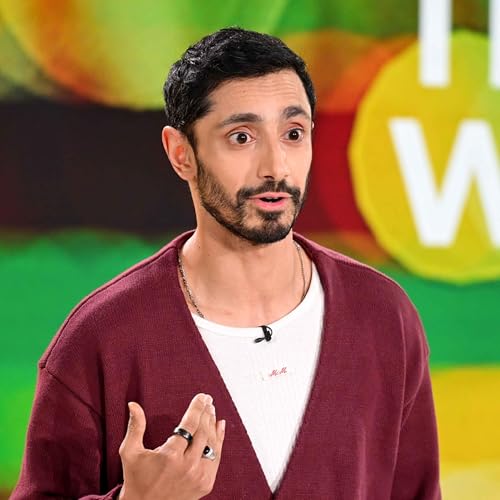
    To close the first session of this year’s BoF VOICES on The Wider World, we wanted a voice that could cut through the noise and offer a clear, powerful call to action for human unity at a time when everything feels like it's breaking down. Few artists are better positioned to do that than Riz Ahmed.

    An Oscar and Emmy-winning actor, producer and musician, Riz has built a career at the intersection of culture, politics and humanity — from Sound of Metal to The Night Of, and through music and activism that challenge how stories are told, and who gets to tell them.


    Drawing on his upcoming adaptation of Hamlet, set in contemporary London, he argues that one of the most famous speeches in history — “to be or not to be” — has been misunderstood, de-radicalised and stripped of its original power. For Riz, Hamlet is not about despair or inaction. It’s about resistance, moral reckoning, and the fear that stops us from standing up when injustice feels overwhelming.

    This is a talk about grief, complicity and courage. About why stories endure. And about what it means to take responsibility — even when the cost feels high.


    Key Insights:


    • Ahead of the theatrical release of the Ahmed-produced 2025 film “Hamlet” — its first cinematic adaptation starring a person of colour — the actor argues that the play’s famous soliloquy is not about suicide, but rather about summoning the courage to defy injustice. “‘To be or not to be’ is about resistance. The most famous lines ever written by a human being have been defanged, deradicalised. It’s about fighting back against oppression,” he says..


    • The monologue, he argues, illustrates the importance of storytelling during a time when dominant cultural narratives attempt to divide people and to emphasise the illusion of in-groups and out-groups. “In the same way that we need to rediscover the radical truth of this speech, I believe we need to rediscover the radical purpose and truth at the heart of storytelling,” he says. “Storytelling has been lost to content and distraction and entertainment, but at its heart when it works best, it is reminding us of a very profound and very radical spiritual truth, which is that we are one.”


    • Ahmed concludes that what people gain in achieving their purpose as storytellers — to believe in their shared humanity — is invaluable, despite the personal losses that may be incurred by doing so. “Honestly the things that we are afraid of, the things that we stand to lose were never really ours. We will lose them, but what we stand to gain when we step into our purpose is something so profound,” he says.“What does it mean to rediscover our radical purpose as storytellers, insisting on our oneness in a time when people might try and divide us?”


    Additional Resources:

    • The BoF Podcast: Riz Ahmed on a Watershed Moment for the Fashion Industry
    • BoF VOICES 2025: Finding Connection in Turbulent Times


    Hosted on Acast. See acast.com/privacy for more information.

    Más Menos
    17 m
  • What Happens When Women Lead
    Dec 10 2025

    Collectively, Clare Waight Keller and Maria Cornejo have over two decades of experience in the fashion industry. Waight Keller’s impressive career includes roles at Givenchy, Chloé and Gucci — and today, she serves as creative director at Uniqlo. Cornejo’s New York–based label, founded nearly three decades ago, counts Michelle Obama and Christy Turlington Burns among its most devoted fans.


    From deeply entrenched gender biases to the fear of returning to work after giving birth, women face a number of systemic barriers to reaching senior leadership positions in the fashion industry, insiders say. Today, some women designers have found success launching their own labels — and when they do land leadership roles at major houses, often make it a priority to create opportunities for other women, which remain few and far between.


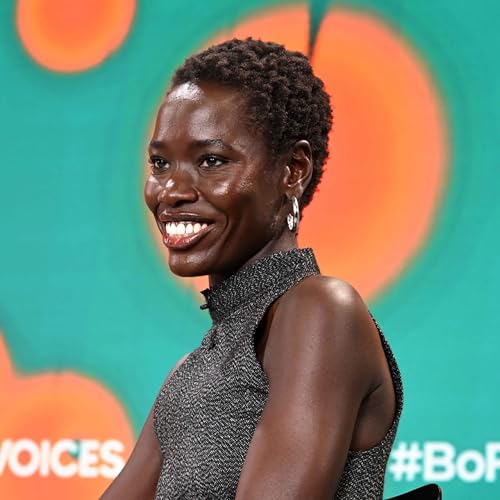
    At the VOICES 10th anniversary, Waight Keller and Cornejo speak with senior correspondent Sheena Butler-Young about what it’s like to work in an industry where women are the muses and chief customers, but the top commercial and creative roles are dominated by men.


    Key Insights:


    • Clare Waight Keller says that the inequalities between men and women in fashion are driven in part by the narrative that “men are often seen as the implementers of big change, and women of stability, and so with stability we’re often also cornered into a commercial sense of aesthetic.” Both Waight Keller and Cornejo push back against this notion, saying that women aren’t less creative but simply more considerate of how real women want to dress.


    • Maria Cornejo feels that “there’s a big disconnect in fashion… from what's instagrammable and what is actual reality … all the women I know who have independent businesses… we’re making clothes that women wear.”


    • Both designers say they have encountered inequities as women in fashion, prompting Waight Keller to intentionally assemble an all-women team at Uniqlo. “Women add so much richness into the conversation of clothing, we offer a completely different perspective which is equally powerful and equally relevant,” she says.


    Additional Resources:

    • BoF VOICES 2025: Finding Connection in Turbulent Times
    • Clare Waight Keller | BoF 500
    • Maria Cornejo | BoF 500


    Hosted on Acast. See acast.com/privacy for more information.

    Más Menos
    17 m
Todas las estrellas
Más relevante
I have been an avid follower of BOF ever since I discovered it on YouTube. I am so happy I found it here. I am just sad that some older episodes have been deleted as I was following the podcast episode by episode starting from the beginning and it will be great to have those episodes uploaded back.

Very Educative

Se ha producido un error. Vuelve a intentarlo dentro de unos minutos.