The Border Chronicle Podcast Por The Border Chronicle arte de portada

The Border Chronicle

The Border Chronicle

De: The Border Chronicle
Escúchala gratis

The Border Chronicle podcast is hosted by Melissa del Bosque and Todd Miller. Based in Tucson, Arizona, longtime journalists Melissa and Todd speak with fascinating fronterizos, community leaders, activists, artists and more at the U.S.-Mexico border.The Border Chronicle Ciencia Política Política y Gobierno
Episodios
  • What’s Wrong with Mexico’s Right Wing? A Conversation with Alex González Ormerod
    Apr 16 2026

    When Alex González Ormerod, editor of the Mexico Political Economist, started researching his book about the Mexican right wing, he found an odd pattern: many of his interviewees didn’t identify as part of the Right. They called themselves liberals. But “liberal” was also the term used by Andrés Manuel López Obrador, then the country’s left-wing president, to describe himself. For González Ormerod, it was a problem that Mexico’s democracy didn’t encompass the full political spectrum. He went on to title his 2025 book La derecha no existe (pero ahí está): Guía para entender su fracaso y su futuro en México [The Right doesn’t exist (but it’s there): A guide for understanding its failure and its future in Mexico]. The book is in part a history of the Mexican Right’s failures, and in part an argument for why a recovery of the Right would benefit the country’s democracy. He contends that this is important even for those who consider themselves staunchly on the Left. In this podcast, Caroline Tracey speaks with Alex about the history of the PAN party, including its odd and sometimes unhappy marriage of Catholics and businessmen, and about his arguments concerning the future of democracy in Mexico.

    Más Menos
    1 h y 4 m
  • Running through Borders: A Podcast with Amy Juan
    Apr 9 2026

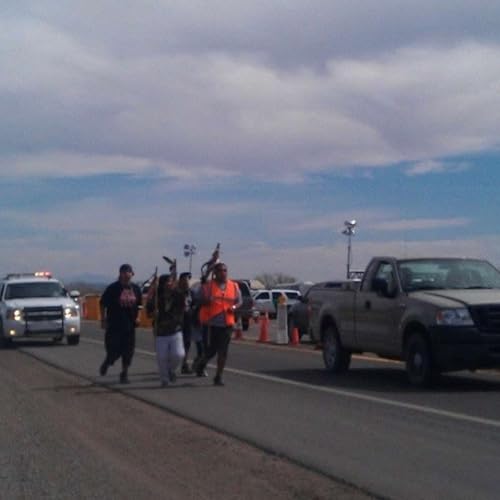
    Resistance can take many forms. One of them, as Amy Juan of the Tohono O’odham explains here, is for people to come together to run in unity, prayer, and witness across traditional O’odham land, crisscrossing the U.S.-Mexico border. The annual Unity Run has taken place since 1995 with the purpose of “reinstating the tradition of running and carrying prayers,” which “unites us in respectful observance of preserving and healing our history, language, and culture,” according to the Native American Advancement Foundation.

    Amy serves as the administrative manager of the San Xavier Co-op Farm. She was the first guest we interviewed on the Border Chronicle podcast, in September 2021. We also had an in-depth conversation with her after the Border Patrol’s killing of Tohono O’odham member Raymond Mattia. Conversations with Amy are always rich with insight and perspective, and this one is no exception.

    Amy says that the Unity Run, which took place in March, offers a good example of O’odham resilience:

    The way that we’re able to adapt to different things good or bad, when it comes to our responsibilities in carrying out these traditions and these ceremonies and different things, and making sure it continues because there are worries from our elders that we’re going far away from who we are. But when there are things like this, and we see there are little kids speaking the language, there are people still telling the stories, there are people who know the history. Those things are all important because they give us the strength we need to resist the border.

    This resistance may be directed, as Amy explains, against the possible construction of a physical border wall on the Nation. But its lessons can also be carried to any part of the country where the Border Patrol and ICE are operating.

    Más Menos
    1 h y 19 m
  • Telling the Stories of Urban Change in the Borderlands
    Mar 5 2026

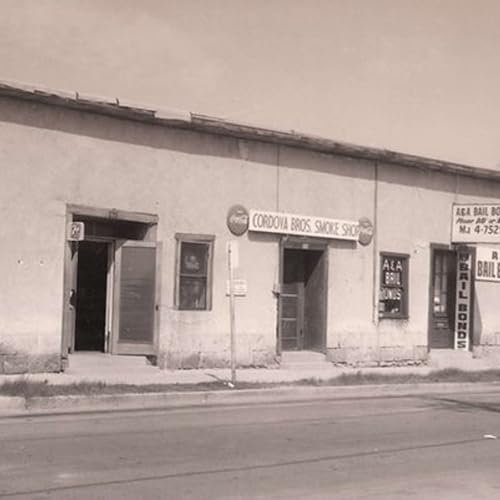
    For Lydia Otero, researching the history of the Southwest is personal and political. Growing up in Tucson, Arizona, their family frequented a place they called La Calle that was bustling with shops and pedestrians. The family did not own a car, so they walked there.


    Soon, the construction of I-10 through the city divided them from La Calle. Then, while Otero was living in Los Angeles working as an electrician and becoming active in LGBT+ organizing, La Calle was torn down as part of Tucson’s urban renewal initiative.


    Otero decided to become the person to tell these stories. They returned to Tucson to pursue a PhD in history at the University of Arizona, where they later worked as a professor of Mexican American studies. They are the author of four books, including: "La Calle, a history of urban renewal in Tucson"; "In the Shadow of the Freeway and L.A. Interchanges", both memoirs; and the new "Storied Property: María Cordova’s Casa", which tells the story of one woman’s resistance to urban renewal and her efforts to save what Otero calls “the most important house in Tucson.”


    For this episode of the Border Chronicle Podcast, reporter and editor Caroline Tracey is joined by Otero to discuss their life and work.

    This episode is a must-listen for anyone familiar with Tucson, Arizona and anyone interested in doing their own place-based historical research and memoir writing.

    Más Menos
    53 m
Todavía no hay opiniones