Episodios

  • The Rundown 3/3/26: Upfront Summit Recap, AI Layoffs, Private Credit, and the AI Safety Debate
    Mar 3 2026

    In this episode of Tank Talks, Matt Cohen and John Ruffolo unpack the most pressing trends shaking up the innovation economy, from AI-driven layoffs to the ongoing turbulence in the private credit market. The conversation kicks off with insights from the Upfront Summit 2026, where AI dominated the spotlight. As venture firms scramble to stay ahead of the curve, Matt and John delve into how AI is reshaping industries, shifting investment priorities, and creating new tensions on the global stage. They tackle everything from the overhiring that fueled AI layoffs at Block to the growing concerns about AI’s role in disrupting traditional markets.

    Whether you’re an investor, a business leader, or someone navigating the AI landscape, this episode is packed with the insights you need to understand where the tech economy is heading, and how to prepare for what’s next.

    AI Takes Over: The New Normal for Venture Capital (01:11)

    The Upfront Summit’s emphasis on AI models and technology is explored, with Matt and John analyzing how this disruption will affect traditional business models and market structures.

    U.S. Dominance in Tech: A Global View (06:02)

    John critiques the assumption that the U.S. should control the global tech agenda, discussing how rising global mistrust of American standards is reshaping the international tech scene.

    AI and Layoffs: Block’s Controversial Move (08:45)

    The conversation shifts to Block’s controversial use of AI as a justification for mass layoffs. Matt and John question whether AI is truly to blame or if this is a convenient excuse for deeper structural issues.

    Private Credit Risks Exposed (11:03)

    John unpacks the growing concerns around private credit markets, examining how mispricing risk and opaque debt structures could lead to a wider financial crisis.

    Private Credit’s Role in Tech Growth: At What Cost? (15:27)

    John explains how private credit is being used by growth-stage tech companies to bridge the financing gap, but warns that rising credit costs and tightening liquidity could stifle innovation.

    AI and Tech Sovereignty: Who Should Control the Future? (17:44)

    As governments and large tech players clash over AI models, Matt and John discuss the broader implications for tech sovereignty and the power struggle between countries, corporations, and consumers.

    The Great AI Safety Debate: What Happens When Governments Take Sides? (19:00)

    John and Matt wrap up the episode by discussing the U.S. government’s aggressive stance against certain AI models, questioning whether this marks the beginning of a deeper clash between tech companies and governments over control of emerging technologies.

    Connect with John Ruffolo on LinkedIn: https://ca.linkedin.com/in/joruffolo

    Connect with Matt Cohen on LinkedIn: https://ca.linkedin.com/in/matt-cohen1

    Visit the Ripple Ventures website: https://www.rippleventures.com/


    This is a public episode. If you would like to discuss this with other subscribers or get access to bonus episodes, visit tanktalks.substack.com
    Más Menos
    23 m
  • Xanadu's Historic SPAC Merger: What it Means for the Future of Quantum Computing with Christian Weedbrook of Xanadu and Bill Fradin of Crane Harbor Acquisition Corp
    Feb 26 2026
    In this episode of Tank Talks, Matt Cohen sits down with Christian Weedbrook, founder and CEO of Xanadu, and Bill Fradin, CEO of Crane Harbor Acquisition Corp., to explore the historic SPAC merger that is bringing Xanadu to the public markets. With a focus on photonic quantum computing, Xanadu has rapidly advanced in the quantum tech space, positioning itself as a leader in both hardware and software innovation.The merger, which values Xanadu at $3 billion, will not only help accelerate the company’s growth but also raise significant capital, enabling it to expand its groundbreaking quantum computing solutions. Christian and Bill dive into why they chose the SPAC route, the strategic value behind their merger, and what sets Xanadu apart in the competitive quantum ecosystem.In addition, the episode takes a deep dive into Xanadu’s PennyLane software, which is already making waves in academia and the broader quantum community, and explores how the public market debut will position the company for future commercialization and innovation. Whether you’re an investor looking to understand quantum tech’s potential or someone interested in cutting-edge science, this episode is a must-listen.Introduction to Xanadu’s Quantum Computing Vision (01:23)Christian Weedbrook gives a quick overview of Xanadu’s mission to build useful quantum computers with their photonic modality using lidar photons. Learn how they’re positioning themselves in both hardware and software through their PennyLane software stack.Xanadu’s Decision to Go Public (04:09)Christian explains why going public was always part of Xanadu’s strategy and how the company transitioned from private funding rounds to a SPAC merger, raising $275 million in just four weeks.Why Choose a SPAC (10:02)Christian and Bill discuss the advantages of a SPAC over traditional IPOs, particularly for deep-tech companies like Xanadu, where the usual metrics for IPOs aren’t always applicable.The Power of PennyLane (14:43)Christian highlights the growing adoption of PennyLane, Xanadu’s quantum software, which is already being used across 150 universities worldwide and growing. Learn how going public will further accelerate its adoption.Strategic Partnerships and the Path to Commercialization (16:20)Bill shares insights on how going public will help Xanadu expand its industry partnerships, including major players like Volkswagen and Rolls-Royce, and how these collaborations could lead to breakthroughs in areas like electric vehicle batteries and pharmaceuticals.Energy Efficiency and the Future of Quantum Computing (24:39)Christian explains how quantum computing can drastically reduce energy consumption in computing, using Xanadu’s Borealis quantum computer as an example. This new approach promises significant energy savings, especially in industries like AI, drug discovery, and material design.Xanadu’s Road Ahead in the Public Market (27:27)Christian reflects on the monumental journey Xanadu has been on, comparing it to the early days of the internet and digital computing. He also discusses how this milestone will change the company’s trajectory and impact the quantum computing ecosystem.About Christian WeedbrookChristian Weedbrook is the founder and CEO of Xanadu, a leading quantum computing company based in Toronto. With a passion for quantum technology, Christian has spearheaded the development of Xanadu’s groundbreaking photonic-based quantum computers. His leadership has positioned Xanadu as one of the pioneers in quantum computing, not only through its hardware advancements but also with the development of its PennyLane software platform. Christian’s vision is to build quantum computers that are both useful and accessible to people around the world, and he is committed to driving forward the next era of quantum technology.Connect with Christian Weedbrook on LinkedIn: https://www.linkedin.com/in/christianweedbrook/Visit the Xanadu website: https://www.xanadu.ai/About Bill FradinBill Fradin is the CEO of Crane Harbor Acquisition Corp., a SPAC focused on identifying and merging with innovative companies in the tech sector. With over 20 years of experience in the financial industry, Bill has been at the forefront of numerous successful SPAC transactions, specializing in high-growth, disruptive technology companies. His leadership has been integral to bringing Crane Harbor to the public markets, and he has built a strong reputation for identifying companies with significant long-term potential. Bill’s experience in both private and public markets has made him a trusted partner for visionary companies like Xanadu, helping them navigate the complexities of the SPAC process and positioning them for success in the public arena.Connect with Bill Fradin on LinkedIn: https://www.linkedin.com/in/bill-fradin-83196b3/Visit the Crane Harbor Acquisition Corp website: https://www.craneharboracquisition.com/Connect with Matt Cohen on LinkedIn: https://...
    Más Menos
    29 m
  • The Rundown 2/23/26: Canada’s Defence Industrial Strategy, LLMs in SaaS, and the Shift in Tech Investments
    Feb 23 2026

    In this episode of Tank Talks, Matt Cohen and John Ruffolo dive into Canada’s bold new defence industrial strategy, backed by $6.6 billion to reduce U.S. dependency and prioritize domestic tech suppliers. They discuss the challenges of defining a “Canadian” company and whether the strategy has the right balance of government procurement and private sector support to succeed. The conversation also explores how AI, quantum, and other emerging technologies fit into Canada’s national defence vision and what it means for the future of innovation.

    The episode also tackles the disruption facing vertical SaaS industries from large language models (LLMs) and AI. Are these technologies a threat to traditional SaaS business models, or do they create new opportunities for growth? Matt and John share their insights on navigating the evolving tech landscape, including the implications for investors and companies, and explore the recent leadership change at Telus and what it could mean for Canada’s tech ecosystem.

    Tune in to hear how these seismic shifts will impact tech, investment, and business strategies in the coming years.

    Canada’s New Defence Industrial Strategy (00:34)

    Prime Minister Mark Carney’s announcement of Canada’s first-ever defence industrial strategy (DIS) aims to reduce the country’s dependency on U.S. suppliers. Matt and John break down the key components of the new strategy, its emphasis on domestic procurement, and the challenges in defining what constitutes a “Canadian” company.

    Sovereignty and Economic Policy (02:00)

    John Ruffolo sheds light on how the integration of national security, economic policy, and procurement is essential for a sovereign tech strategy. They discuss how Canada can avoid the pitfalls of previous initiatives like the Supercluster strategy by ensuring that small businesses can grow into global players.

    Canadian Government as a Catalyst for Tech Startups (05:02)

    Matt and John explore the role government-backed procurement and industrial strategy play in supporting Canadian startups, especially in AI, quantum computing, and clean energy. Will these policies level the playing field for domestic companies competing against their U.S. counterparts?

    Investment Strategies in Dual-Use Technologies (07:34)

    With dual-use technologies taking center stage, John discusses the investment opportunities in AI, photonics, quantum space, and more. What challenges do investors face when funding Canadian companies, and how can government support help them scale internationally?

    The Changing Face of Vertical SaaS (10:24)

    The discussion shifts to the evolution of vertical SaaS as AI-native companies begin to challenge longstanding industry moats. John and Matt debate whether large language models (LLMs) are eroding the traditional SaaS model and what it means for investors.

    Evaluating SaaS Companies in the Age of LLMs (13:29)

    As the market for SaaS companies evolves, Matt and John explore the risks of overvaluing growth at the expense of unit economics and profitability. They share tips for evaluating SaaS companies and distinguishing between real opportunities and the false positives that emerge during market shifts.

    The Future of Telus and Leadership Transition (21:23)

    The episode concludes with a fascinating discussion about Telus’ leadership transition, as Victor Dodig takes over from Darren Entwistle. John and Matt analyze what this shift means for Telus’ future strategy, especially in the context of the changing telecom landscape and the growing importance of data and communications in space.

    Connect with John Ruffolo on LinkedIn: https://ca.linkedin.com/in/joruffolo

    Connect with Matt Cohen on LinkedIn: https://ca.linkedin.com/in/matt-cohen1

    Visit the Ripple Ventures website: https://www.rippleventures.com/


    This is a public episode. If you would like to discuss this with other subscribers or get access to bonus episodes, visit tanktalks.substack.com
    Más Menos
    28 m
  • How Tokenized Gold is Revolutionizing Wealth Preservation with Peter Grosskopf of Argo Digital Gold
    Feb 19 2026

    Why is gold suddenly back in the spotlight?

    In this episode of Tank Talks, Matt Cohen sits down with Peter Grosskopf, a seasoned veteran in the precious metals and investment management world. Peter has seen it all. He helped scale Sprott from $5 billion to over $20 billion in assets under management, and now, he’s co-founded Argo Digital Gold, a platform pioneering the tokenization of physical gold.

    Peter breaks down how gold is reasserting itself as the ultimate hedge against today’s inflation, debt crises, and financial uncertainties. From the global financial crisis to the latest trends in digital gold, they explore how gold remains the bedrock of wealth preservation and why even the tech-driven world is waking up to its importance. Plus, hear why Peter believes tokenization is the key to democratizing access to gold for everyday investors.

    Peter shares his wealth of knowledge on the role of gold in modern portfolios, how blockchain is transforming the way we interact with real assets, and why long-term patience with gold has paid off for investors. Get ready for a deep dive into gold’s resurgence and what it means for the future of investment.

    The Role of Gold as a Defensive Hedge (02:03)

    Why gold acts as a key insurance asset in uncertain times and how it has performed during global financial crises. Peter explains why gold often takes a short-term dip but then explodes as a long-term haven.

    Scaling Sprott to $20 Billion (03:06)

    Peter discusses the pivotal moment that drove the growth of Sprott, focusing on the creation of physically-backed ETFs that gained the trust of investors globally. Learn how this became a game-changer for the company’s success.

    Real Assets and Family Office Strategies (09:14)

    A discussion on how real assets like gold and silver have become crucial in the portfolios of family offices, foundations, and institutional investors. Peter explains how real assets help hedge against inflation and government-controlled currencies.

    Gold’s Role in Today’s Macro Environment (12:09)

    How gold is perceived by investors in a high-debt, inflationary world. Peter shares his thoughts on why governments are turning to gold and how this is affecting the gold market globally.

    Tokenization of Gold and the Future of Blockchain (25:02)

    Peter outlines his involvement in tokenizing physical gold and the benefits it brings to the retail and institutional markets. We explore how blockchain is disrupting traditional gold storage and trading, creating 24/7 access with lower fees.

    The Gold vs. Bitcoin Debate (32:29)

    In a world where both gold and Bitcoin are being digitized, Peter shares his thoughts on how they can complement each other and why gold remains the more stable choice for wealth preservation.

    Gold in the Future of Investment (35:01)

    What’s next for the precious metals market as governments try to navigate their debt crises and central banks keep a close eye on gold? Peter discusses the future of gold in both physical and digital forms.

    About Peter Grosskopf

    Peter Grosskopf is a renowned leader in the precious metals space, having served as the CEO of Sprott, where he played a pivotal role in scaling the firm’s assets under management from $5 billion to over $20 billion. He is also the Co-Founder of Argo Digital Gold, a platform at the forefront of tokenizing physical gold. With extensive experience in both the resource banking and asset management sectors, Peter has advised family offices and institutional clients on real asset strategies. As a director of Agnico Eagle Mines and the World Gold Council, he brings deep insight into gold’s macroeconomic role and its function as a defensive hedge in volatile times.

    Visit the Argo Digital Gold website: https://www.argovault.com/

    Connect with Matt Cohen on LinkedIn: https://ca.linkedin.com/in/matt-cohen1

    Visit the Ripple Ventures website: https://www.rippleventures.com/


    This is a public episode. If you would like to discuss this with other subscribers or get access to bonus episodes, visit tanktalks.substack.com
    Más Menos
    43 m
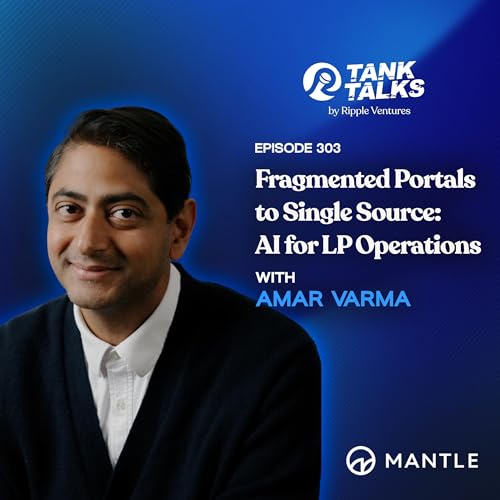
  • Fragmented Portals to Single Source: AI for LP Operations with Amar Varma of Mantle
    Feb 12 2026
    In this episode of Tank Talks, Matt Cohen sits down with Amar Varma, CEO and Co-Founder of Mantle, a revolutionary platform designed to transform the private investing landscape. As a serial entrepreneur with experience as both a General Partner (GP) and Limited Partner (LP), Amar offers a rare, dual perspective on the world of investment. His background spans multiple industries, including mobile, connected vehicles, and now private market infrastructure, where he is tackling one of the most persistent pain points: the fragmented, manual world of LP operations.Amar dives deep into how Mantle is positioned at the intersection of chaos and clarity, automating the heavy lifting to help investors make better decisions without drowning in documents. From global scaling and customer obsession to the parallels between today’s AI transformation and past tech waves like mobile, this conversation covers a lot of ground. Whether you’re an investor, allocator, or founder, there’s something for everyone in this episode.Amar Varma’s Early Influences and Entrepreneurial Spirit (00:02:15)Amar shares his journey from growing up in Ottawa to becoming a serial entrepreneur. He talks about his first exposure to tech industries and how a global perspective shaped his career. The experience of being raised in a government and tech hub like Ottawa gave him early access to innovation and a deep curiosity about the world.The Power of Perseverance and Growth Mindset (00:06:16)Growing up with an immigrant background, Amar reflects on the importance of perseverance and a growth mindset in overcoming struggles. His belief in the value of individual and team struggles is evident in his journey as a founder, investor, and parent.The Shift from Founder to Investor (00:13:50)Amar explains the transition from being a founder to taking a break and exploring the world of investing. His time working as an LP and angel investor gave him insights into the challenges faced by investors, especially when trying to scale operations without sufficient data or structure. This led to his founding of Mantle, which solves many of these problems.The Birth of Mantle: Revolutionizing LP Operations (00:25:40)Mantle is designed to automate and streamline the process of managing private market investments. Amar breaks down how Mantle’s software works to track investments, capital calls, K-1s, and investor reports. He discusses the challenges of managing unstructured data and how AI-powered features have allowed Mantle to offer LPs and family offices a more seamless experience.The Power Law of Venture Capital (00:15:49)In the world of venture capital, Amar talks about the concept of the power law, how a few investments end up driving the majority of returns. He also discusses the importance of knowing when something is truly working in early-stage investments and how understanding this can lead to better investment decisions.Family Offices and LP Tech Stacks (00:29:00)Amar explains how Mantle is helping family offices and LPs with managing their investments, especially when dealing with the unstructured documents that are common in private markets. He shares how Mantle is creating a single source of truth for private assets, helping LPs track their investments across multiple funds, and how AI is helping improve efficiency in this space.AI-Driven Insights and Workflows (00:32:01)AI plays a major role in Mantle’s value proposition, helping automate workflows, track financial data, and ensure accuracy across private market investments. Amar dives into the layers of AI that are stitched into Mantle’s platform to help LPs and family offices gain more insight into their portfolios.The Future of Private Market Investments (00:40:00)Amar discusses the ongoing evolution of private market investments and the role technology, particularly AI, will play in shaping the future of LP operations. He also reflects on how private market infrastructure is moving towards a more standardized and efficient process, making data more accessible and reliable.About Amar VarmaAmar Varma is the CEO and Co-Founder of Mantle, a private market infrastructure platform designed to streamline the operations of LPs and family offices. With a background spanning semiconductor design, mobile technology, connected vehicles, and AI, Amar has built multiple successful startups. As an investor and founder, he has gained invaluable insights into the challenges of scaling and managing private market investments.Connect with Amar Varma on LinkedIn: https://www.linkedin.com/in/amar-varma-8041b9/?originalSubdomain=caVisit the Mantle website: https://withmantle.com/Connect with Matt Cohen on LinkedIn: https://ca.linkedin.com/in/matt-cohen1Visit the Ripple Ventures website: https://www.rippleventures.com/ This is a public episode. If you would like to discuss this with other subscribers or get access to bonus episodes, visit tanktalks.substack.com
    Más Menos
    51 m
  • The Rundown 2/6/26: Canada’s AI Strategy Goes LLM-Powered, YC’s Canada U-Turn, SpaceX–xAI Shock Deal
    Feb 6 2026

    In this episode of Tank Talks, Matt Cohen and John Ruffolo rip through a stacked rundown of tech, venture capital, and geopolitical “sovereignty” theater. They open with Europe’s accelerating shift away from Microsoft Office and big U.S. platforms toward open-source alternatives, then jump straight into a breaking change from Y Combinator CEO Garry Tan: Canada is back on the list of accepted incorporations, reversing a move that sparked serious backlash about Canadian startup brain drain and U.S.-domicile pressure.

    From there, they dissect Elon Musk’s headline-grabbing SpaceX–xAI all-stock merger and why it looks way better for xAI holders than SpaceX shareholders ahead of a rumored SpaceX IPO window. The episode also digs into Canada’s national AI consultation (and the government openly using multiple LLM providers like Cohere and OpenAI to process submissions), the EU’s push for digital sovereignty (and the risks of swapping to “free” tools), and the brutal reality of AI-driven search gutting legacy media traffic, with the Washington Post laying off a third of its newsroom. The big throughline: information is cheap now, execution and trust are expensive, and countries (and companies) that don’t adapt are about to get cooked.

    Y Combinator Reverses Course: Canada Back on the List (00:43)

    YC CEO Garry Tan adds Canada back to YC’s list of accepted incorporation jurisdictions after removing it, triggering a wave of criticism. Matt and John break down what changed, why the original rationale (Canadian winners re-domiciling to the U.S.) was a flawed signal, and why the real issue is still Canadian capital formation and follow-on funding strength.

    SpaceX Buys xAI: A $1.25T Story Swap Before an IPO? (02:34)

    Matt tees up the shocker: SpaceX acquires xAI in an all-stock deal valuing xAI at $250B and SpaceX at $1T, creating a combined $1.25T entity. They discuss xAI’s massive burn versus SpaceX’s improving cash profile (driven by Starlink) and why this kind of move raises eyebrows heading into an IPO narrative.

    Second-Order Effects: When a Cash-Burning AI Company Merges Into Space Infrastructure (07:35)

    They debate whether this becomes a template for other pre-IPO restructures or stays a one-off “Elon special.” John says a Starlink-style consolidation would make strategic sense; folding in xAI doesn’t feel like a choke-point win.

    Canada’s AI Strategy Consultation: Government Using LLMs in the Workflow (09:10)

    Canada’s ISED publishes a high-level summary of its AI consultation and explicitly notes using multiple LLMs and pipelines (including Cohere and OpenAI) to process massive public input. Matt frames this as a meaningful “government actually doing something” moment, even if the public is still anxious about jobs and privacy.

    Europe’s Digital Sovereignty Push: Dropping Teams/Zoom for Open Source? (12:40)

    They react to reports of governments moving away from Teams/Zoom and Microsoft tooling in the name of sovereignty. Matt calls the open-source swap risky from a security and operational standpoint; John says the bigger signal is global: sovereignty is now a first-order priority, and Canada can’t pretend this wave isn’t coming.

    Washington Post Layoffs: AI Search Is Eating the Referral Economy (16:48)

    Matt highlights the Washington Post’s reported search traffic collapse and layoffs impacting a third of the newsroom. John calls journalism an obvious early disruption target: LLMs compress content production costs, and the old newsroom pyramid doesn’t match the new economics.

    The Survival Play: Media Becomes a Live Events Business (19:26)

    They land on the counter-move: stop fighting the trend and monetize what still works: brand, access, community, and in-person experiences. If content becomes commoditized, relationships and trust become the product.

    Connect with John Ruffolo on LinkedIn: https://ca.linkedin.com/in/joruffolo

    Connect with Matt Cohen on LinkedIn: https://ca.linkedin.com/in/matt-cohen1

    Visit the Ripple Ventures website: https://www.rippleventures.com/


    This is a public episode. If you would like to discuss this with other subscribers or get access to bonus episodes, visit tanktalks.substack.com
    Más Menos
    21 m
  • The Blueprint for a Canadian Rocket Supply Chain with Hugh Kolias of Canada Rocket Company
    Feb 3 2026
    In this episode of Tank Talks, Matt Cohen sits down with Hugh Kolias, Co-Founder and CEO of Canada Rocket Company, right as the company exits stealth with a $6.2M all-Canadian seed round backed by Ripple Ventures, BDC, Garage Capital, and others. Hugh breaks down the real mission: give Canada sovereign, medium-lift launch capability, so we’re not dependent on foreign nations to put critical satellites into orbit, while still building a business that can win globally.They get into the “hard part” behind the headline: pulling top-tier aerospace talent back home (including veterans from SpaceX), choosing a propulsion strategy that stays competitive by the time the rocket actually reaches orbit, and building a Canadian supply chain without over-verticalizing too early. If you care about dual-use tech, defense tailwinds, or what it actually takes to go from “deck” to “orbit,” this one’s a blueprint.From Calgary to PropTech Exit to Rockets (02:13)* Hugh’s path: mechanical engineering, a detour into finance, then building and selling a PropTech SaaS business.* Why deep tech finally felt “doable” in Canada: shifting market appetite + policy momentum.Repatriating Talent and Building a Team That Can Actually Ship (07:01)* How Hugh discovered just how many Canadians were already working across elite aerospace teams.* The pitch that works: Canada’s stability + genuinely hard problems + a rare “clean sheet” chance.The SpaceX Co-Founder Moment (09:38)* How Hugh recruited his co-founder David, a former SpaceX engineer who helped optimize Falcon 9.* Why “paper to orbit” is the kind of challenge that pulls experienced builders in fast.The Medium-Lift Strategy and Why Small Launch Fell Off (12:20)* CRC’s focus: ~6,000 kg to LEO (the market gap between small launch and heavy lift).* The key market shift: satellites didn’t keep shrinking once launch costs dropped, so demand moved upmass.Methalox, Reusability, and Not Building a Rocket That’s Obsolete on Arrival (15:51)* Why CRC is betting on Methalox vs Kerolox: reusability economics and less refurbishment burden.* Their cycle choice: keep it simpler early (open-cycle gas gen) and iterate toward more advanced designs later.Supply Chain, Partnerships, and Making It Actually Canadian (19:23)* Why CRC prioritizes partnerships early instead of trying to vertically integrate everything on day one.* Designing to match Canada’s industrial strengths (ex: metals/welding realities vs composites constraints).Government Tailwinds: Defense, Sovereignty, and Capital Unlock (23:47)* How rising defense focus and sovereign launch priorities change the startup math for deep tech.* The bigger point: the “space multiplier” effect and why governments care (jobs, manufacturing, spillovers).Timeline to Orbit and the Hiring Wave (34:01)* Benchmarks Hugh cites: ~4 years and ~$160M (inflation-adjusted) to reach orbit for top performers.* Scale expectations: ~150 people for light lift to orbit, then 500–1,000 for medium lift + manufacturing.About Hugh KoliasCo-Founder and CEO, Canada Rocket CompanyHugh Kolias is a Canadian founder who previously built and sold a PropTech SaaS company before returning to his original obsession: space. Now he’s leading CRC’s mission to build a globally competitive, Canadian sovereign launch capability, while repatriating elite aerospace talent and aligning rocket design with real-world economics, policy tailwinds, and Canada’s industrial base.Connect with Hugh Kolias on LinkedIn: https://www.linkedin.com/in/hugh-kolias-71a402b0/?originalSubdomain=caVisit the Canada Rocket Company website: https://www.canadarocketcompany.com/Connect with Matt Cohen on LinkedIn: https://ca.linkedin.com/in/matt-cohen1Visit the Ripple Ventures website: https://www.rippleventures.com/ This is a public episode. If you would like to discuss this with other subscribers or get access to bonus episodes, visit tanktalks.substack.com
    Más Menos
    41 m
  • The Rundown 1/29/26: Garry Tan's Controversial Move: Y Combinator's New Rules for Canadian Companies
    Jan 29 2026

    In this episode of Tank Talks, Matt Cohen and John Ruffolo unpack the ripple effects of Y Combinator’s decision to exclude Canadian startups from their investment portfolio unless they’re incorporated in the U.S. or other tax-friendly jurisdictions. This move has sent shockwaves through the Canadian tech ecosystem, and Matt and John break down exactly why this matters for founders and investors alike.

    The conversation explores the myth of U.S. incorporation being the golden ticket for capital-raising and the rise of a narrative that Canadian entrepreneurs must leave their home country to achieve success. Matt and John challenge this narrative head-on, providing deep insights into why Canadian tech companies can still thrive domestically and refuting the data that YC used to justify their decision.

    Y Combinator Shakes Up Canadian Startups (01:09)

    YC has revised its investment criteria to exclude Canadian companies unless they’re incorporated in the U.S. or certain tax havens. The duo debates the implications of this shift and how it impacts Canadian founders who are now questioning their incorporation choices.

    The False Narrative of U.S. Incorporation (03:09)

    John breaks down the myth that U.S.-incorporated companies raise more capital than their Canadian counterparts, calling out misleading data points used by YC’s Garry Tan to justify the shift. The conversation digs into why this narrative is misleading and what Canadian entrepreneurs can do to counter it.

    Why YC’s Data Doesn’t Tell the Full Story (05:35)

    John explains how some of Canada’s most successful tech companies didn’t follow the YC path and still thrived, refuting the idea that incorporation in the U.S. is always the best move for Canadian startups.

    The Ripple Effect on Early-Stage Founders (06:25)

    The discussion turns to the younger generation of founders who now believe they must incorporate in the U.S. to succeed, potentially setting them up for unnecessary challenges.

    The Shift from PE to VC: Innovator’s Dilemma (14:07)

    Matt and John shift gears to discuss private equity’s struggle with legacy enterprise software companies in the wake of AI disruption. They explore how PE firms are transforming into venture funds to keep up with market changes, creating a new kind of investment landscape.

    The AI Crisis for Private Equity (15:10)

    As AI-native startups disrupt traditional software models, private equity firms face extended hold periods on their investments. Matt and John explore how firms like Thoma Bravo are adjusting their strategies to deal with these changes.

    CGI Partners with OpenAI: The Changing Consulting Landscape (18:54)

    The episode wraps up with a discussion on CGI’s new global alliance with OpenAI. This partnership marks a major shift in the IT consulting world, with CGI aiming to integrate AI at scale. Matt and John speculate on the future of AI in enterprise consulting and what this means for legacy players like CGI.

    Connect with John Ruffolo on LinkedIn: https://ca.linkedin.com/in/joruffolo

    Connect with Matt Cohen on LinkedIn: https://ca.linkedin.com/in/matt-cohen1

    Visit the Ripple Ventures website: https://www.rippleventures.com/


    This is a public episode. If you would like to discuss this with other subscribers or get access to bonus episodes, visit tanktalks.substack.com
    Más Menos
    21 m