Episodios

  • "We think they'll kill someone" indigenous resistance in Oaxaca, Mexico, with Anjan Sundaram, The Stringer Foundation
    Apr 12 2026

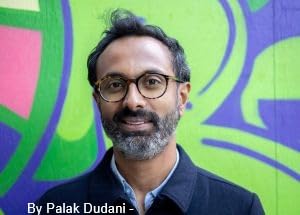
    Indigenous peoples around the world are under threat, especially from massive development projects engineered by governments and corporations, which promise to destroy the lands, forests and waters on which those peoples depend. In an article that appeared in a recent issue of The New York Review of Books, “We Think They'll Kill Someone” journalist Anjan Sundaram reported on one such project in the Southern Mexico Oaxacan town of San Blas Atempa, where a new factory will wipe out a communally owned forest.

    Join host Ronnie Lipschutz for a conversation with Sundaram. He is an Indian author, war reporter, academic, television presenter and founder of The Stringer Foundation. He is the author of three memoirs of journalism, Stringer, Bad News and Breakup. His forthcoming book, Double Exposure: Two Reporters in the Climate War, is scheduled for publication this coming fall.

    Más Menos
    45 m
  • Transformative Climate Communities in California With Nancy Faulstitch and Eloy Ortiz, Regeneración Pajaro Valley
    Mar 29 2026

    The State of California has created a program called “Transformative Climate Communities,” focused on making low-income, urban areas more resilient, efficient and responsive to housing, energy and climate challenges. What does this mean on the ground? Join host Ronnie Lipschutz for a conversation with Nancy Faulstitch, Executive Director and Eloy Ortiz, Special Projects Manager at Regeneración Pajaro Valley which, along with Monterey County, received a TCC planning grant in 2021. They have been leaders in this effort and will talk about the planning process and what happens next. Regeneración is a Pajaro Valley non-profit that builds bridges between residents and climate practitioners in local cities, counties, and at the state level.

    Más Menos
    52 m
  • The Past and Future of Sustainable Communities with Peter Calthorpe, Architect & Urban Designer
    Mar 15 2026

    The world’s cities are big and getting bigger. By 2050, 80% of the world’s people will live in cities. Can cities be made sustainable? Who is thinking about this? Join host Ronnie Lipschutz for a conversation with Peter Calthorpe, architect and urban designer with HDR, a global company specializing in architecture, engineering, environmental and construction services. Over the past 45 years, Calthorpe has been a primary advocate for sustainable communities, the New Urbanism and transit-oriented development. His most recent publications are "Ending Global Sprawl: Urban Standards for Sustainable and Resilient Development" for the World Bank and “Grand Boulevards and the AB2011 Revolution: Reinventing the Strip to Solve California’s Housing Crisis.”

    Más Menos
    54 m
  • Biologists Unite! The Rise and Fall of Ecosystem Services with Professor Daniel Suarez, Middlebury College
    Mar 1 2026

    Over the past several decades, there has been a concerted effort by biologists, economists and others to put a value on nature’s services: what would it cost, for example, to provide clean water the way nature does? Oxygen, photosynthesis, soil? Early estimates were around $30 trillion per year; arguably, today they are much higher, over $100 trillion. But getting from hypothetical calculations to actual incorporation into real work policy and development projects is no easy task. Join host Ronnie Lipschutz for a conversation with Daniel Chiu Suarez, Assistant Professor of Environmental Studies at Middlebury College in Vermont. He has just published Biologists Unite! The Rise and Fall of Ecosystem Services, an account of why three decades of academic, activist and policy efforts have failed to incorporate ecosystems services into global economic accounting and action.

    Más Menos
    53 m
  • The Water Remembers—My Indigenous Family’s Fight to Save a River and a Way of Life with Amy Bowers Cordalis Ridges to Riffles Indigenous Conservation Group
    Feb 15 2026

    The removal of four dams from the Klamath River in Northern California is rapidly becoming one of the great recent success stories in conservation and restoration. The riverbank habitat is returning to its former condition and salmon have been spotted swimming upriver past the sites where the dams once blocked their passage. Along with this comes the restoration of the indigenous peoples’ way of life, heavily dependent on those fish. Join Host Ronnie for an update on the Klamath in a conversation with Amy Bowers Cordalis, who has just published The Water Remembers—My Indigenous Family’s Fight to Save a River and a Way of Life. She is a mother, fisherwoman, attorney, executive director of Ridges to Riffles, and member of the Yurok Nation and its former general counsel.

    (Photo by Brontë Wittpenn, San Francisco Chronicle)
    Más Menos
    55 m
  • Secret Sounds of Ponds and Other Animal Music with Professor David Rothenberg, NJ Institute of Technology
    Feb 1 2026

    Who knew that ponds make music? To the eye and ears, they seem silent and tranquil—except at night when, maybe, choruses of frogs serenade listeners. But ponds are much noisier than that: you have to be very quiet and have the right equipment to really hear what’s going on. And there is a lot going on: both the critters and the plants speak out. Indeed, nature is full of sounds, many of them musical and, quite possible, the forerunners of human music.

    Join host Ronnie Lipschutz for a conversation with Dr. David Rothenberg, scholar, author, musician and composer and Distinguished Professor of Philosophy and Music at the New Jersey Institute of Technology whose focus is on animal sounds as music. We talk about his most recent book, Secret Sounds of Ponds, for which Rothenberg tossed a microphone into ponds and heard “an entirely new world, a realm of the unexpected and stirring rhythms and tones of some of the smallest and loudest creatures on Earth.”

    Más Menos
    1 h y 1 m
  • Plutonium Pit Production--The Risks and Costs of US Plans to Build New Nuclear Weapons with Dr. Dylan K. Spaulding of the Union of Concerned Scientists
    Jan 18 2026

    Nuclear weapons have been with us for 80 years. There are fewer today than was the case at the height of the Cold War, but there are more countries with nukes than ever before. Some heads of state have been, of late, threatening to use them. If you’ve seen Kathryn Bigelow’s recent film, “House of Dynamite,” you’ll know that human psychology is the linchpin on which the entire system of nuclear deterrence rests: would the President (or Premier or whatever) exchange their capitals for others? Trade Washington, DC for Moscow or Beijing?

    There is reason to be concerned about this question: The United States is planning a $1.7 trillion overhaul of its entire nuclear arsenal, designing new warheads and investing in new bombers, missiles, and submarines to carry them, all in the name of “modernization.” It’s not that the current generations of platforms and warheads won’t work; it’s more that Admirals, Generals and Presidents don’t trust devices put into operation when they were very young and that there is a lot of money and prestige in having the latest generation of gadgets and lording that over the competing services. Oh, and new weapons are “manlier” than the old ones.

    Join host Ronnie Lipschutz for a conversation with Dr. Dylan K. Spaulding a senior scientist in the Global Security Program of the Union of Concerned Scientists. His work focuses on technical issues related to nuclear stockpile stewardship and policies that can reduce the threat posed by nuclear weapons. He recently authored a UCS report entitled “Plutonium Pit Production--The Risks and Costs of US Plans to Build New Nuclear Weapons.” Its focus is on the stuff that makes warheads go “boom” but along the way, Spaulding covers a lot of other ground and the report is a good primer on nuclear weapons.

    Más Menos
    54 m
  • The Living Green Myth: The Promise and Limits of Lifestyle Environmentalism with Dr. Michael Maniates
    Jan 4 2026

    Many listeners are probably familiar with the tags found in hotel bathrooms that read: “Save Our Planet,” followed by instructions about reusing and replacing towels, and concluding “Thank you for helping us converse the Earth’s vital resources.” Reusing towels might help conserve the hotel’s financial resources but does that make any difference for the Planet? Such “lifestyle environmentalism” is widespread, providing a sense of doing something in a world in which collective action is so difficult. In two weeks, join host Ronnie Lipschutz for a conversation with Dr. Michael Maniates, for a conversation about his new book, The Living-Green Myth: The Promise and Limits of Lifestyle Environmentalism. Maniates dismisses the notion that individual actions can make a significant impact on the state of the planet. But if not that, what are we to do?

    Más Menos
    52 m