Storied: San Francisco Podcast Por Storied: San Francisco arte de portada

Storied: San Francisco

Storied: San Francisco

De: Storied: San Francisco
Escúchala gratis

A weekly podcast about the artists, activists, and small businesses that make San Francisco so special.Copyright 2026 Storied: San Francisco Biografías y Memorias Ciencias Sociales
Episodios
  • Kiri the Japanese Fire Truck, Part 2 (S8E16)
    Apr 16 2026

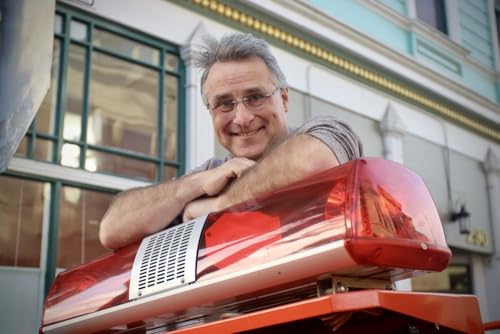
    In Part 2, we pick up where we left off in Part 1. Todd has just learned the process of importing automobiles into the US. He had one under his belt. He was ready for more.

    He'd learned about older Japanese fire trucks and set his sights. He was still going to Japan frequently, and began to make "car friends" over there. As could be expected, there's quite a subculture around cars in many countries, and Todd had found his in his home away from home.

    He found a tiny Japanese fire truck on an auction site, but the going price went out of his range of comfortableness. Normally, he'd need his family's backing to make a move for another automobile. But this time, they were let down that he didn't get the car. And with that, Todd decided to skip auction altogether and instead work with an importer in Sacramento.

    We sidebar a little here for Todd to talk about how Japan incentivizes exporting its slightly used cars all over the world. He brings this up to mention that, when shopping for a Japanese car to import, thanks to a robust selling market, you have a good idea of what you're gonna get.

    Working with that importer, there was another fire truck that caught Todd's eye at auction, but he let that one go, too. Then that same truck ended up on a Japanese used car site with much better photographs, and together with his importer, they pounced. Kiri had served a tiny mountain village, and despite being 30 years old at the time, had only a couple thousand miles on the odometer. And because it had served as a vital utility vehicle, it had been well-maintained. The asking price was well within Todd's comfort zone. Then began the process of getting Kiri to California, a whole other ballgame.

    One snag was that the buying process got underway the first week of March 2020. Yep. The world shutdown and so, Todd thought, did getting his new red fire truck home. But in July that year, the importer called him one day and said, "Your truck is here." Kiri looked pretty much like it looks today—a signature red coat of paint, lights, sirens. But it didn't come with firefighting equipment. Todd supplied that on his own.

    Emblazoned on the door of his new fire truck was the name of the Japanese town it had served before retirement—Kirigamine, a mountain town in Nagano prefecture. Todd, who's visited many times since buying the truck, compares the tiny town to Pescadero along the coast. Todd goes on a tangent here to explain why, as he himself learned along the way, Kiri the car is so small.

    Then I share my reflection on that time in the world. I got married about a year later (in 2021), and my wedding took place outdoors and in the streets of San Francisco. I remember how happy it made people we passed, and ask whether Kiri, once it hit the streets, had a similar effect. Todd goes into some depth about the serendipity and sense of wonder Kiri evokes when he drives his fire truck around.

    Todd says he gets a lot of requests to bring Kiri to birthday parties, but he isn't accepting those at the moment. (He jokes that when you start seeing him at parties, it means he isn't doing too well financially and has turned to his fire truck to help him through tough times.) He will, however, bring the truck to parades and other civic events. He says that since he first rolled Kiri out, it has served as a bridge between Japanese people and the Bay Area. In addition to Japanese and Chinese folks taking delight in seeing Kiri, Todd says that members of our local low rider community have been drawn in as well.

    Kiri's flashing red lights work, but Todd is reluctant to use them, mostly because you're not supposed to. He says that in Japan, fire trucks like Kiri use their sirens/PA system to double as public service announcement speakers. To get their PSAs into Kiri's (and other trucks') system, an input jack was fitted. Todd is able to connect his own player through the same input, and has been loading various messages into Kiri's PA system, including what you heard in the intro to Part 1.

    Thanks to Todd's partner working in publishing, they've been making Kiri calendars, which they sell to raise money for CalFire. Get yours on Kiri's website, teenytinyfiretruck.com. And follow Kiri @teenytinyfiretruck on Instagram.

    Más Menos
    24 m
  • Kiri the Japanese Fire Truck, Part 1 (S8E16)
    Apr 14 2026
    There's a little red Japanese fire truck rolling around all over San Francisco. But instead of putting out fires, Kiri the Japanese Fire Truck is spreading joy and inspiring smiles. In this episode, meet and get to know Todd Lappin, the human being who brought Kiri from Japan to the US—Bernal Heights specifically. We start with Todd's life story in Part 1. He has lived in the 94110 ZIP code for 34 years. But he's originally from New Jersey. "Even after 34 years, New Jersey is like a stain that doesn't wash out," he says. He grew up in what he calls the "Ohio part" of the state. I call it "the pretty part," meaning not New York City-adjacent. Todd is a self-described Gen Xer—growing up mostly in the Eighties, latch-key kid, etc. Most of the growing up happened in Hackettstown, NJ, one of the places where M&M's are made. It's not far from the eastern end of I-80, also. NYC was an hour away and Todd spent plenty of time there as a kid. In addition to being born in New York and raised in New Jersey, Todd spent one year in Oakland as a kid when his navy dad got stationed in Alameda. He's long held a fascination with cars, specifically what are known as "working vehicles." Think of them as cars people use for jobs. He appreciates the aesthetic honesty of such automobiles. Though it was and still is small, Hackettstown served as a hub for surrounding farmland and even smaller nearby towns. When Todd was in high school, one of those surrounding towns' volunteer fire department sold a Cadillac ambulance for $600. He didn't buy it, and regrets that to this day. It's his "Rosebud," so to speak. When he was young, he also started getting deep into Asian culture. For Todd, this fascination stemmed from diving more into the US war in Vietnam. He learned about Confucianism. He ended up going to Brown University for college and getting even deeper into Asian history and culture—focusing first on Chinese, then moving onto Japanese. Todd did a semester abroad in Japan, in fact. He didn't love the school part of his time there, but ended up traveling around the country on his own. Those travels eventually led him into China. After this, he pivoted from studying modern Japan to digging into ancient China, with a specific focus on Daoism. He ended up with a degree in Chinese intellectual history. Going back to Todd's Bay Area connections, besides that one year in Oakland when he was little, he'd visited with his parents when he was a teenager. When he graduated from Brown, he was dating a woman from here. But it was a high school spring break visit that really cemented it for him—this is where he wanted to be eventually. For young Todd in the Eighties, San Francisco felt urban in a way that reminded him of his time in NYC. After that, it was the beauty, the thoughtfulness, as he puts it, that hooked him. Six years or so after that spring break visit, Todd put down roots in SF. The two of us digress to talk in some depth about differences between SF and NYC. One way that Todd characterizes it is: The East Coast anoints. The West Coast creates. I can see what he means. Todd still loves Providence, RI, where Brown is. But a year after graduating and staying there, that SF "hook" pulled him here. When he landed in early-Nineties Mission (1991), it felt like Providence, so there was a familiarity to his new hometown. Zine culture was still big at the time, and Todd did a little writing, much of it journalistic. One of those gigs was to edit a book by one of his mentors—Orville Schell, who was once the dean of the UC Berkeley journalism school. Like Todd, Schell studied Chinese history and culture. So, that was 34 years ago. Todd doesn't think the 94110 has changed, or, as he puts it, hasn't changed enough. The City has grown, but the Mission and Bernal for him are mostly the same. He eventually got a job at and worked for Wired for a while. Years later, he launched Bernalwood, a blog about his neighborhood. This is where Todd's and my worlds first intersected. Todd sees blogs as a natural progression from zines—both have low barriers to entry and so foster a more-independent spirit than established or corporate news orgs. I agree, having been part of the blogging world myself. At this point, we turn to the topic of this episode—Kiri, the tiny Japanese fire truck. Todd shares that story with us all here. Going back to his pivot from studying Japanese to studying Chinese culture, Todd says at that point, he felt he was done with Japan. But in 2004, a friend who was going through a divorce mentioned wanting to visit Japan and Todd accompanied him. This trip brought it all back for him. He had enough of the language stored in his brain to be able to function and had a terrific time. With that flame reignited, Todd has visited Japan "nonstop" since then. On one of those trips, he met someone who'd become something of a "car creator," meaning he was making content around cars and publishing it on YouTube. Todd had been ...
    Más Menos
    31 m
  • Soleil Ho, Part 2 (S8E15)
    Apr 2 2026
    For Part 2, we pick up where we left off in Part 1. Soleil was working in restaurants in Minneapolis, both front-of-house and back, and also starting writing about food around this time. There was a new food publication in Minneapolis at the time called Heavy Table, and Soleil offered to intern for them. At first, it was a lot of looking around for events for the publication to cover. Eventually, there were opportunities to do some writing, and Soleil pounced. That led to other chances to write, and the proverbial ball was rolling. They were also on food stamps at the time, which doesn't surprise me too much. Rewinding a bit, Soleil talks about the food blog they had around 2007. It was mostly for recipes, but it was theirs and theirs alone. They looked up to the big food bloggers of the time, people who are still around and still writing about food. From Minneapolis, Soleil moved to Portland. After they, tried New Orleans with the idea of going to grad school there, but fell back to restaurant work. And then they went to Puerto Vallarta to help their mom open a restaurant there. After Soleil's sister went off to college, their mom had moved to Mexico City. She worked for a restaurant group for a while, then moved to PV to be with friends. Before Soleil arrived in Mexico to help their mom, their mom had opened a bar that later became a restaurant. During their time in Puerto Vallerta, Soleil was still writing about food, and they did a podcast with friends, too. Racist Sandwich had started in Portland, and Soleil kept it going from Mexico. The show was a reaction to blatant white supremacy in the food and restaurant worlds, a problem that, though it's eased some, is still with us today. Juggling the many responsibilities that came with being in their mom's restaurant in Mexico, along with podcasting when they could, it all eventually gave way to Soleil deciding to move back to the US to try being a full-time food writer. So they went back to Minneapolis and stayed for about six months. (Honey the dog chimed in here again, and you'll have to use your imagination to guess what she had to say.) It was 2018, and longtime SF Chronicle food writer Michael Bauer was retiring. Soleil picked up on that from Minnesota and it piqued their interest. The Washington Post was writing about the retirement, and asking folks out here in the Bay Area what they wanted the Chronicle do next. They published a slate of candidates to take over after Bauer, and it included Soleil. Shocked, they applied for the job. They got a phone call shortly after that, and here we are. Soleil's only prior visit to The Bay came in 2011, when they stayed at their friend's apartment in the Tenderloin for a while. They visited Western Addition a lot, went to Zuni (such a good restaurant, though it's mostly for special occasions for my family), and finally had good coffee at Phil's. I ask them whether San Francisco and the Bay Area stood out for them among the many, many places they've called home. They cite the history of the place as being quite the magnet. Then we get to the story of the approach Soleil wanted to bring to writing for the Chronicle, which, in their words, was to give more context to the art of food preparation. After writing on staff for a bit, Soleil got one note from their bosses: They were writing about too many Asian restaurants. We both agree, though: DUH. There are hella Asian restaurants here, and it's part of what a lot of us love about the place. Still, Soleil feels that the paper gave them enough freedom to write about what they wanted to write about. I share the context of my own life and the world around me back in 2018 when I first learned about Soleil, letting them know that I, among many others I'm sure, welcomed them after such a long tenure of their predecessor. We start talking about doing their work during the pandemic, and they mention that they feel they were predisposed to talking about labor and other social aspects of the restaurant business. Eventually, though, it was time to move on. One reason they cite for leaving the Chronicle is that they got tired of being so visible. A significant number of readers were hostile to Soleil, and it got to feel like a mismatch. The rightward political drift of the paper didn't sit well either. They left in 2025. That year, Soleil joined with some friends to launch COYOTE, a worker-owned media outlet. Those friends include: Nuala Bishari, Emma Silvers, Danny Lavery, Rahawa Haile, Estefany Gonzalez, and Cecilia Lei (visit the COYOTE Staff page to learn about a couple other folks who are involved). While still working at The Chronicle and in their off-time, they'd enroll in seminars on what cooperatives are and how to start and run them. They note that existing co-ops are very generous with their years and decades of knowledge, singling out Rainbow Grocery and Oakland's Sustainable Economies Law Center. COYOTE launched last September. Soleil says it's going well, six ...
    Más Menos
    27 m
Todavía no hay opiniones