

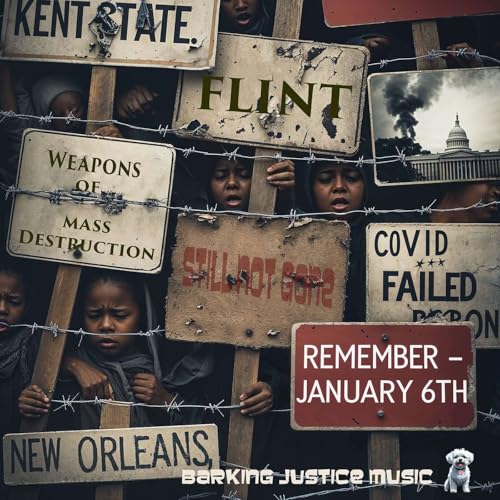
Still Not Gone: An Anthem for America's Betrayed Promise
No se pudo agregar al carrito
Add to Cart failed.
Error al Agregar a Lista de Deseos.
Error al eliminar de la lista de deseos.
Error al añadir a tu biblioteca
Error al seguir el podcast
Error al dejar de seguir el podcast

Still Not Gone: An Anthem for America's Betrayed Promise
-
Narrado por:
-
De:
Some wounds never heal—they ignite.
"Still Not Gone," our new anthem, traces America's recurring nightmares from Kent State to January 6th, connecting atrocities that many would prefer we forget. This episode reveals why we created this musical indictment of those who betrayed America's promise.
Now available: https://on.soundcloud.com/f6wx5R6Elk45c8DLCL
The song begins with the 1970 Kent State massacre, where Nixon's National Guard killed four students for opposing the Vietnam War. We journey through the 40-year Tuskegee experiment, where government doctors watched Black men die from untreated syphilis; through Hurricane Katrina, where families drowned while officials watched from television screens; through Flint, where children drank poisoned water for years while officials denied responsibility. We name those accountable: Thomas Parran, Michael Brown, Rick Snyder, Colin Powell, Dick Cheney, Donald Trump, Stephen Miller, and the 147 members of Congress who voted to overturn an election hours after blood dried on the Capitol steps.
These aren't isolated incidents but a pattern of betrayal. When power faces accountability, it responds first with denial, then with distraction, finally with attempts to erase history itself. Our anthem refuses this erasure. We name names because memory is resistance.
"You can jail the voice, but not the fight. Burn the truth, but it won't die," we sing, because while they can break individuals, they cannot break us all when we stand together. These wounds don't heal naturally—they require justice, truth, and collective action.
Listen to our full performance of "Still Not Gone" and join us in refusing to look away from America's darkest chapters. Share this anthem with those who need to hear that they're not alone in their outrage, their grief, or their determination to build something better from the ashes of what's been betrayed.