Stay Current in Pediatric Surgery Podcast Por StayCurrent: Pediatric Surgery arte de portada

Stay Current in Pediatric Surgery

Stay Current in Pediatric Surgery

De: StayCurrent: Pediatric Surgery
Escúchala gratis

Through GlobalCastMD’s world-class network of physicians and technology, any health system can provide their doctors access to ongoing mentoring and education. Companies can leverage this same network to more effectively train physicians on products and use it to help train their own sales force. Our educational materials aim to provide entertaining, interactive education for anyone, regardless of geography. We truly are: Dedicated to the rapid advancement of care. Everywhere.All rights reserved
Episodios
  • Pediatric Obesity Is a Disease: Treatment, Medications, Surgery & Equity in Care w/ Dr. Justin Ryder
    Mar 18 2026

    In this segment from Lurie Children’s Hospital, Dr. Justin Ryder breaks down the evolving science and treatment paradigm of pediatric obesity—highlighting why it must be approached as a chronic, biologically driven disease rather than a lifestyle issue.

    Key Highlights:

    Obesity Is a Disease: Pediatric obesity is multifactorial, shaped by genetics, epigenetics, hormones, environment, stress, and socioeconomic factors. The newest AAP guidelines formally recognize obesity as a disease and recommend active treatment—not watchful waiting.

    Shift in Clinical Practice: Treatment should be offered to children above the 85th percentile BMI. The model has shifted from prevention-only efforts to a proactive, continuum-based care strategy.

    Continuum of Care: Management includes Intensive Health Behavior and Lifestyle Treatment (26+ contact hours), FDA-approved pharmacotherapy for adolescents, and bariatric surgery for select patients—each playing a role depending on severity and response.

    Efficacy & Challenges: GLP-1 medications demonstrate meaningful weight loss, and bariatric surgery shows durable BMI reduction and improvement in comorbidities. However, weight regain remains a significant biological challenge.

    MASLD & Long-Term Risk: Obesity is strongly linked to metabolic dysfunction–associated steatotic liver disease (MASLD), affecting millions of youth and placing many at risk for cirrhosis, transplant, or hepatocellular carcinoma.

    Equity & Advocacy: Obesity disproportionately impacts children of color and those in under-resourced communities. Access to effective treatment—including medications—is a health equity issue that demands advocacy.

    This session reinforces that pediatric obesity requires early, evidence-based intervention, multidisciplinary care, and systemic advocacy to improve lifelong health outcomes.

    Más Menos
    7 m
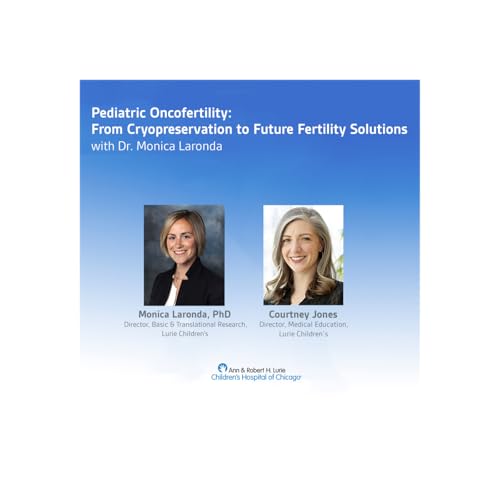
  • Pediatric Oncofertility: From Cryopreservation to Future Fertility Solutions
    Mar 18 2026

    In this educational video from Ann & Robert H. Lurie Children’s Hospital of Chicago, Dr. Monica Laronda explores the rapidly evolving field of pediatric oncofertility—highlighting how fertility preservation is becoming an essential part of care for children at risk of treatment-related infertility.

    Key Highlights:

    Why Fertility Preservation Matters: Cancer therapies and certain genetic conditions can lead to premature gonadal failure, significantly impacting future reproductive potential and long-term quality of life.

    Who Should Be Considered: Fertility preservation extends beyond oncology to include patients with conditions like Turner syndrome and gonadal dysgenesis—emphasizing early counseling regardless of risk level or prognosis.

    Current Clinical Options: Post-pubertal patients may undergo oocyte or sperm banking, while ovarian and testicular tissue cryopreservation offer options for younger patients who are not yet producing mature gametes.

    Risk Stratification: Fertility risk is assessed using treatment exposure (e.g., alkylating agents, radiation) and cumulative dosing, helping guide decision-making and timing of intervention.

    Program Growth & Outcomes: Lurie Children’s has performed hundreds of tissue cryopreservation procedures, demonstrating both feasibility and increasing national awareness of these options.

    Advances in Fertility Restoration: Ovarian tissue transplantation can restore hormone function and fertility, though risks—such as reintroducing malignant cells—remain a key limitation.

    Future Innovation: Cutting-edge research in ovarian tissue engineering, including 3D-printed bioprosthetic scaffolds, is paving the way for safer and more effective fertility restoration.

    This session highlights how multidisciplinary care, research innovation, and early intervention are reshaping the future of fertility preservation for pediatric patients.

    Más Menos
    13 m
  • Colorectal Quiz: Episode 50 16th Annual European Pediatric Colorectal and Pelvic Reconstruction Conference, Stockholm, Sweden, October 2025 - What did we learn?
    Mar 10 2026

    In this special 50th episode of the Colorectal Quiz Podcast, Dr. Marc Levitt and an international panel review key takeaways from the 16th European Pediatric Colorectal Reconstruction Meeting in Stockholm, highlighting emerging ideas, evolving surgical techniques, and global perspectives in the care of children with colorectal conditions.

    Key Highlights:

    Early Irrigation Training in Hirschsprung’s Disease: Some centers are beginning irrigation competency even before ostomy takedown, helping families and patients adapt earlier and potentially reducing post-operative enterocolitis risk.

    Advances in Surgical Technology: Innovations such as robotic-assisted surgery and ICG fluorescence imaging are improving visualization of blood supply during pull-through procedures, helping surgeons reduce complications like leaks and ischemia.

    New Diagnostic Concepts: High-frequency ultrasound may help measure bowel wall muscle thickness to identify aganglionic segments, potentially supporting or supplementing traditional biopsy-based diagnosis.

    Understanding Enterocolitis Risk: Emerging research suggests that reduced mucus protection in proximal bowel segments and mechanical stress on the bowel wall may contribute to microbial imbalance and breakdown of the intestinal barrier.

    The Power of Nursing and Multidisciplinary Care: Dedicated colorectal nursing programs and global case discussions highlighted how long-term outcomes depend not only on surgical technique but also on ongoing bowel management, education, and coordinated care.

    Evolving Techniques for Anorectal Malformations: New procedures such as perineal-preserving PSARP and posterior rectal advancement anoplasty (PRAA) aim to reduce complications while improving functional outcomes.

    Transition to Adult Care: Experts emphasized the need for stronger transition programs and multidisciplinary teams—including gynecology, urology, and sexual health specialists—to support patients with congenital colorectal conditions into adulthood.

    This episode offers a global snapshot of how pediatric colorectal care continues to evolve through collaboration, innovation, and shared clinical experience.

    Más Menos
    25 m
Todavía no hay opiniones