Smarter Payments by Corpay Podcast Por Corpay arte de portada

Smarter Payments by Corpay

Smarter Payments by Corpay

De: Corpay
Escúchala gratis

Exploring trends and breakthroughs in the business-to-business payments space.2025 Corpay Economía Marketing Marketing y Ventas
Episodios
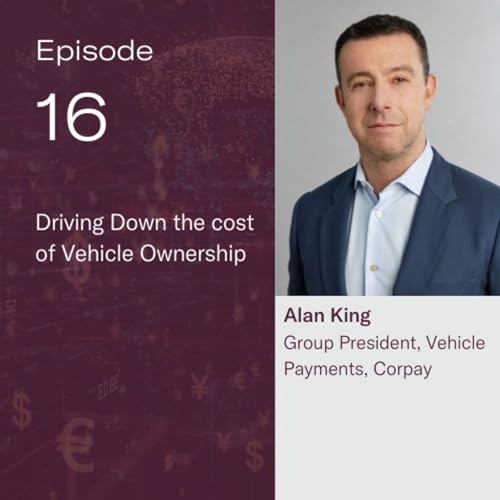
  • Driving Down the Cost of Vehicle Ownership
    Aug 20 2025

    In this episode of Smarter Payments by Corpay, host Brennan Robison interviews Alan King, Group President Vehicle Payments at Corpay, about the rising cost of vehicle ownership and operation for consumers and businesses, and practical ways to offset these costs using technology and data.

    Alan King’s Career Background:
    Alan King shares his journey from telecoms to a global career in payments, including roles at Citi, Visa, and Mastercard, before joining Corpay (formerly Fleetcor). He now oversees a diverse international portfolio in vehicle payments, fleet management, and related SaaS businesses.

    Key Topics Discussed:

    Consumer Vehicle Costs:
    The annual cost of owning a vehicle in the U.S. hit a record high in 2024, with drivers facing increased expenses from inflation, repairs, and especially insurance premiums, which have risen post-pandemic due to supply chain pressures and higher costs for vehicle replacements and repairs.

    Fleet Vehicle Costs:
    Businesses with vehicle fleets face similar pressures as consumers, but costs are amplified by scale. King highlights major cost drivers such as fuel (though prices dropped recently), insurance, repairs, compliance, and taxes — including congestion charges and carbon taxes in regions like Europe and the UK. Local governments also increase costs through higher parking fees and tolls.

    Regional Differences:
    Vehicle ownership is often more expensive in Europe due to higher fuel taxes, mandatory tolls, stricter environmental regulations, and higher labor costs for maintenance. In contrast, US drivers generally pay less for fuel and tolls, and face fewer compliance costs.

    Fleet Management Strategies:
    King emphasizes the importance of accessing and leveraging high-quality data to monitor and manage vehicle costs. Real-time insights into fuel spending, maintenance schedules, and driver routes enable better decision-making, cost reduction, and efficiency. Solutions provided by Corpay offer consolidated data reporting and automation to streamline fleet management.

    Maintenance and Aging Fleets:
    Modern vehicles are increasingly equipped with connected technologies that provide valuable diagnostic data, helping fleet managers optimize maintenance timing and avoid costly breakdowns. King notes that while fleets are trending toward older vehicles, older cars come with reliability risks that require more frequent attention and can lead to false economies if not well managed.

    Electric Vehicles (EVs) vs. Internal Combustion Engines (ICEs):
    EVs shift the cost profile; though upfront costs are higher, they generally have lower fuel and maintenance costs, with some regional incentives available. However, fleet managers must consider battery life, weather impacts, charging infrastructure, and varying incentives or taxes when deciding on vehicle mixes.

    Managing Mixed Fleets:
    The transition to mixed fleets (both ICE and EV vehicles) poses challenges around vehicle choice, charging, data integration, and reporting. Corpay's fleet solutions consolidate billing and data management, and enable features like reimbursement for home charging, simplifying operations for businesses managing both vehicle types.

    Key Advice for Consumers and Fleet Managers:
    King advises that cost management should be an ongoing, dynamic process rather than a periodic review. Staying informed, using available tools, and making incremental efficiency improvements are crucial for both individuals and fleets facing rising vehicle costs.

    Conclusion:
    The episode delivers insight into today’s vehicle cost landscape, highlights the importance of data-driven decision-making, and provides actionable strategies for reducing expenses and managing both traditional and evolving fleet compositions. These principles apply universally — whether managing a personal vehicle or overseeing a large commercial fleet.

    Más Menos
    30 m
  • Powering Culture Through Employee Engagement
    Jun 25 2025

    In this episode, host Brennan Robison is joined by Crystal Williams, Chief Human Resources Officer at Corpay, for a deep dive into how the company uses employee engagement surveys to drive meaningful cultural change. With U.S. engagement at a 10-year low, Williams explains why Corpay has moved beyond traditional satisfaction surveys to focus on measuring true engagement—defined by how much discretionary effort employees are willing to invest in their roles.

    Crystal details how Corpay tailors survey content to reflect company values, wellness, leadership vision, and communication effectiveness. She shares how data-driven insights have led to real policy changes, including expanded personal time off and the creation of a robust internal communications hub. The conversation also explores the role of AI in analyzing survey responses, strategies for boosting participation, and how demographic data helps uncover nuanced engagement trends—such as the post-pandemic rebound among women in the workforce.

    This episode is a must-listen for leaders looking to transform survey feedback into action, and for organizations aiming to build a culture rooted in trust, transparency, and inclusion.

    Más Menos
    19 m
  • How Technology Can Drive SMB Growth
    Jun 5 2025

    In this episode, Brennan Robison speaks with Danny Martucci about the critical role technology plays in supporting small and medium-sized businesses (SMBs), especially in a volatile economic climate. Despite ongoing challenges, 85% of SMBs surveyed by Corpay are optimistic about their growth prospects in 2025, largely driven by the adoption of new technologies.

    Martucci explains how Corpay’s commercial card solutions help businesses improve cash flow, access funding, and streamline financial operations. He describes the evolution from manual, paper-based processes to digital systems, emphasizing how automation has transformed invoice processing, accounts payable, and overall financial management.

    The conversation highlights the growing importance of cloud-based tools, the increasing affordability and ease of adoption for SMBs, and the measurable return on investment through time and cost savings. Martucci also addresses concerns about cybersecurity, noting that digital systems often offer better security and visibility than traditional methods.

    Looking ahead, he shares insights on the integration of AI into financial tools—especially in AP automation—and suggests that AI will continue enhancing software capabilities in intuitive, context-aware ways. For SMBs hesitant about technology adoption, Martucci advises starting with one clear use case to demonstrate value and build from there.

    Más Menos
    17 m
Todavía no hay opiniones