

Skin-Responsive Tint vs Traditional Foundation: Which Is Better for Your Skin Type
No se pudo agregar al carrito
Add to Cart failed.
Error al Agregar a Lista de Deseos.
Error al eliminar de la lista de deseos.
Error al añadir a tu biblioteca
Error al seguir el podcast
Error al dejar de seguir el podcast

Skin-Responsive Tint vs Traditional Foundation: Which Is Better for Your Skin Type
-
Narrado por:
-
De:
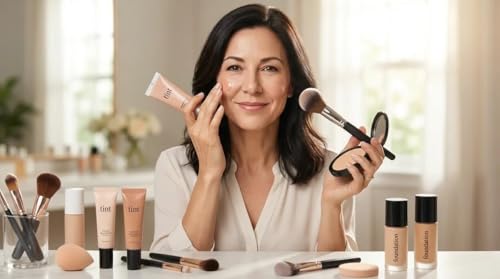
Ever wonder why your foundation looks perfect some days and slides off or clings to dry patches by noon on others? The chemistry behind what you're using might be the problem, not your skin. In this episode, we break down the formulation science, barrier compatibility, coverage mechanisms, and real-world performance of skin-responsive tints versus traditional foundations so you can figure out which one actually works for your skin type and lifestyle.
• Skin-responsive tints use 20 to 50 nanometer encapsulated pigments that react to your skin's pH, creating 20 to 40 percent sheer, buildable coverage, while traditional foundations use 100 to 300 nanometer suspended pigments for immediate, opaque coverage of 40 to 70 percent.
• Traditional foundations with 5 to 15 percent silicones sit at pH 6.5 to 8.0 and can increase transepidermal water loss by 15 to 30 percent, while tints formulated at pH 5.5 to 6.0 with only 0.5 to 2 percent silicones preserve barrier integrity and reduce comedogenic load, making them better for oily, combination, or compromised skin.
• Budget-tier skin-responsive tints in the $10 to $20 range deliver 80 to 90 percent of the performance of prestige formulations because the core pH-reactive iron oxide technology is now commoditized across brands.
• Traditional foundations remain essential for full coverage of significant hyperpigmentation, scarring, or vascular conditions, and for 8 to 12 hour wear without touch-ups, due to their 15 to 20 percent titanium dioxide content and stabilized pigment systems.
Links to any products or resources mentioned in this episode can be found at https://luxurybeautyonabudget.com/skin-responsive-tint-vs-traditional-foundation.