Episodios

  • When Workplace Culture Becomes a Liability
    Apr 1 2026

    Workplace culture can look polished on the outside while hiding toxic behavior and serious legal risk underneath. In my follow-up conversation with Fractional General Counsel and Attorney Tim Papuga, we discuss:


    • Defining workplace culture as lived values
    • Reading culture quickly through respect, trust, and accountability
    • Separating a single bad actor from a leadership and culture failure
    • Understanding why policies and handbooks fail without real enforcement
    • Clarifying the at-will employment myth and how it fuels bad decisions
    • Why conducting workplace investigations is important
    • Choosing internal vs external investigators based on size, power dynamics, and credibility


    Más Menos
    30 m
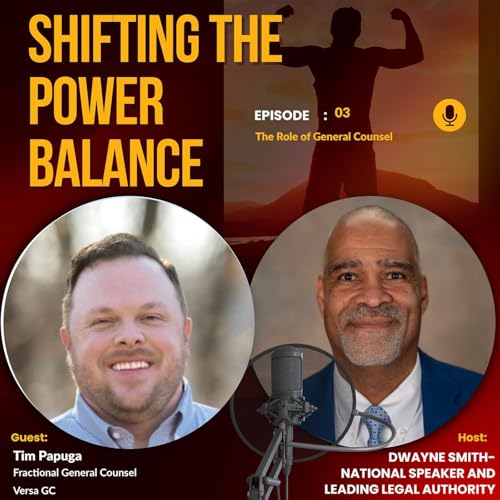
  • The Role of General Counsel
    Mar 24 2026

    In this episode, Tim Papuga, a seasoned legal expert and founder of VersaGC, shares insights on the intersection of legal counsel and business strategy, emphasizing the importance of culture, legal foundations, and the innovative Fractional General Counsel model for small and medium-sized businesses.

    Keywords

    Legal counsel, business strategy, workplace culture, fractional GC, labor law, HR, organizational development


    Key topics

    Legal and business strategy intersection

    Fractional General Counsel model

    Workplace culture and legal issues

    Más Menos
    29 m
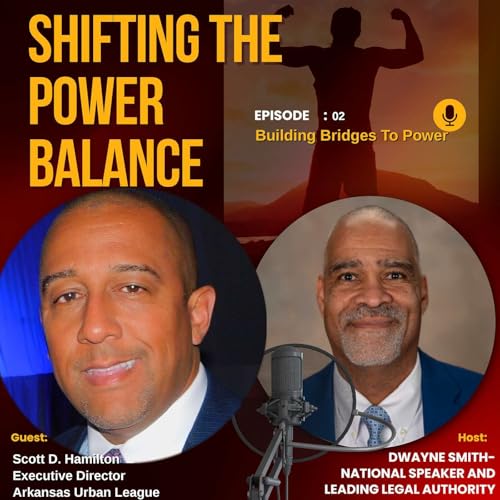
  • Building Bridges to Power - A Conversation with Scott D. Hamilton
    Mar 16 2026

    Shifting the Power Balance: Building Bridges to Power
    A Conversation with Scott D. Hamilton

    What does power really look like—and who gets to use it?

    In this episode of Shifting the Power Balance, I sit down with Scott D. Hamilton to talk about leadership, service, and the long game of creating opportunity. Scott’s journey is anything but linear: from law school to the energy sector, and ultimately to leading the Urban League of Arkansas. Along the way, he’s learned how institutions work, why relationships matter, and what it actually takes to move systems that were never designed to be fair.

    We talk candidly about how Scott’s early experiences shaped his view of advocacy, the influence of his family’s civic legacy, and the moment he chose to leave a successful corporate career to return home and serve his community. This is a conversation about power—not as something to hoard, but as something to build, share, and sustain.

    In this episode, we explore:

    • How law school shaped Scott’s understanding of advocacy, influence, and responsibility
    • Why education, curiosity, and resilience are essential tools for overcoming barriers
    • The lasting impact of family legacy and his father’s example of civic leadership
    • What led Scott to return to Arkansas and step into leadership at the Urban League
    • How trust, relationships, and cross-ideological collaboration drive real community change
    • Why zip code and access to quality education still determine so many life outcomes
    • Practical ways to build power through relationships and shared goals
    • How to work across ideological differences without losing your values
    • The role of voter participation in creating durable systemic change
    • What gives Scott hope—and the legacy he hopes to leave behind

    This conversation is thoughtful, honest, and grounded in lived experience. If you care about leadership, equity, and building pathways to opportunity, this episode will challenge how you think about power—and what you can do with it.

    Más Menos
    1 h y 15 m
  • What is Reasonable - Where Sports, HR, & Law Collide - KSU Firing of Jerome Tang
    Mar 2 2026

    Summary

    In this episode of Shifting the Power Balance, guest host Rudy Davis and show creator and host Dwayne Smith delve into the controversial firing of Kansas State basketball coach Jerome Tang. They explore the legal and procedural aspects of the termination, emphasizing the importance of due process in employment law, especially for public institutions. The discussion highlights the changing landscape of college athletics, the implications of NIL agreements, and the potential reputational harm to the university. Smith discusses that the way K-State handled the firing could have significant legal repercussions, particularly regarding the failure to follow established procedures and the labeling of Tang's actions as immoral.


    takeaways

    - K-State had the right to fire Jerome Tang, but was the process flawed?
    - The firing is more about labor and employment law than sports law.
    - Due process is crucial for public employees like Tang.
    - K-State's decision could set a precedent for future coaching contracts.
    - The landscape of college sports has changed with NIL agreements.
    - Cultural building in teams is still possible, but requires strategy.
    - The definition of 'for cause' in contracts is complex and significant.
    - Governance and oversight are critical in termination decisions.
    - Reputational harm claims must be substantiated with evidence.
    - The failure to follow due process can lead to significant legal consequences.


    Chapters

    00:00 Introduction to Shifting the Power Balance
    02:56 The Firing of Jerome Tang: A Case Study
    10:06 Understanding For Cause Termination
    12:42 The Role of Due Process in Employment
    16:01 Comparative Analysis of Coaching Terminations
    21:11 Legal Implications of Firing a Coach
    27:30 The Impact of Governance on Decision Making
    32:02 Reputational Harm and Its Defensibility
    37:26 The Importance of Procedural Due Process
    42:47 Broader Implications for Kansas State University

    Más Menos
    49 m