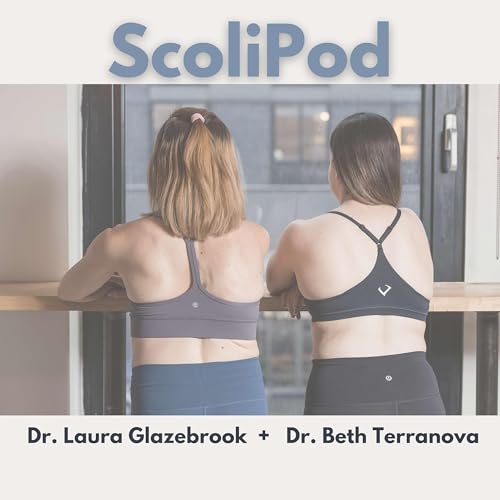
ScoliPod Podcast Por Beth & Laura arte de portada

ScoliPod

ScoliPod

De: Beth & Laura
Escúchala gratis

Welcome to Scolipod, the show that’s rewriting the rules about living with a curved spine! Hosted by Dr. Laura Glazebrook and Beth Terranova —two physical therapists, scoliosis superheroes, and movement enthusiasts—this podcast brings you research-backed solutions, expert insights, and real-life stories that prove one thing: you are more than your scoliosis diagnosis.

© 2026 ScoliPod
Higiene y Vida Saludable Política y Gobierno
Episodios
  • 15: How Scoliosis Affects the Pelvic Floor - What To Know & When to Get Help
    Feb 25 2026

    This week, Dr. Laura and Dr. Beth continue the series on scoliosis and the pelvic floor by diving deeper into how scoliosis can directly influence pelvic floor function—and what symptoms may signal that it’s time to seek help.

    Building on last week's episode, Laura explains how scoliosis-related rotation, asymmetry, and postural shifts can create imbalances in the pelvic floor muscles (much like what we already recognize in the spine, ribs, & trunk). Because the pelvis is directly connected to the spine, scoliosis significantly affects how the pelvic floor contracts, relaxes, & coordinates.

    Listen in as we explore common—but not normal—symptoms, including:

    • Urinary urgency or frequency
    • Leaking with exercise, lifting, or impact
    • Difficulty with bowel movements or gas control
    • Pain with intimacy, pelvic exams, or tampon use
    • Feeling pressure, tightness, or difficulty taking a deep breath

    Dr. Laura & Dr. Beth discuss why these symptoms are frequently normalized or dismissed—especially after pregnancy, with aging, or during hormonal transitions—and why they are common but not normal. They also explain why pelvic floor issues often go undiagnosed for years and how scoliosis can further complicate the picture.

    For clinicians, trainers, and movement professionals, the episode highlights the importance of screening and open conversation. Dr. Laura introduces the Cozean Pelvic Floor Dysfunction Screen, a simple 10-question tool that can help identify when pelvic floor support may be needed and open the door to care.

    The episode also touches on:

    • Why scoliosis-specific exercises are often the first step—even when pelvic floor symptoms are present
    • How spinal fusion and reduced mobility influences pelvic floor function
    • The current gaps in research and why clinical patterns still matter
    • The power of education, curiosity, and non-judgmental conversations

    Whether you’re someone with scoliosis or spinal fusion, a clinician supporting this population, or simply noticing changes in your body and wondering if they matter, this episode helps clarify what’s normal, what’s common, and when support could help.

    Resources & next steps:

    • Dr. Laura's blogs:
      • Does Scoliosis Impact my Pelvic Floor?
      • How Your Spinal Fusion Impacts Your Pelvic Floor
      • How to Support Your Pelvic Floor with Scoliosis or Spinal Fusion
      • The Truth About Kegels
    • Cozean Pelvic Floor Dysfunction Screening Protocol
    • Virtual pelvic floor & scoliosis support with Dr. Laura
    • Pregnancy, postpartum coaching with Dr. Laura
    • Return to exercise support with Dr. Beth


    Finally, don't forget to subscribe to ScoliPod on your favorite pod catcher so you never miss an episode!

    • Listen on Apple Podcasts
    • Listen on Spotify

    Support the show

    Más Menos
    28 m
  • 14: Scoliosis + the Pelvic Floor - What No One Talks About
    Feb 18 2026

    In this episode, Dr. Laura & Dr. Beth kick off a new series on a topic that’s often overlooked—but incredibly important: the connection between scoliosis and the pelvic floor.

    Dr. Laura, a pelvic floor physical therapist with a decade of experience as well as advanced scoliosis training, breaks down what the pelvic floor actually is, what it does, and why good pelvic health is important for everyone—regardless of:

    • Gender
    • Age
    • Pregnancy history
    • Fitness level


    It's important to understand how the pelvic floor functions. From bladder and bowel control to breathing, core stability, sexual function, and lifting heavy weights, the pelvic floor plays a much bigger role in movement and daily life than most people realize.

    Listen in as we explore typical seasons of life in which pelvic floor issues commonly show up (pregnancy, postpartum, menopause, athletics, hormonal changes), and why symptoms like leaking, pain, or pressure have been wrongly “normalized”.

    But "common" doesn't mean "normal", and these issues are treatable—even if you’ve been dealing with them for years. Dr, Laura & Dr. Beth also discuss how scoliosis and spinal fusion can influence core mechanics and pelvic floor function, especially during major life transitions.

    Together let's build awareness, define what’s normal versus what’s common, and help listeners recognize when pelvic floor support may be needed. Whether you have scoliosis, a spinal fusion, or have simply been told “that’s just part of getting older,” this episode opens the door to better understanding—and better options for care.


    Make sure you’re listening in for part 2 in which Dr. Laura breaks down how scoliosis really impacts the pelvic floor - and what you can do about it.


    Resources & next steps:

    If you're interested in a deeper dive on this topic, check out this blog:

    • What is the pelvic floor?

    More to come next week!


    If you’re curious about working virtually with a scoliosis-trained pro, connect with Dr. Laura or Dr. Beth:

    • Dr. Laura's website
    • Dr. Beth’s website


    Join the conversation:

    Have questions about scoliosis-specific PT or want help finding a trained therapist? Reach out to Dr. Laura or Dr. Beth

    And don’t forget to follow, rate, and share ScoliPod to help more people discover evidence-based scoliosis care.


    Finally, don't forget to subscribe to ScoliPod on your favorite pod catcher so you never miss an episode!

    • Listen on Apple Podcasts
    • Listen on Spotify


    Support the show

    Más Menos
    27 m
  • 13: Training With a Curvy Spine - How Athletes With Scoliosis & Fusion Support Their Bodies
    Feb 11 2026

    If you move with intention, you are an athlete. In this episode, Dr. Beth and Dr. Laura get personal about what it really looks like to train as athletes with scoliosis and spinal fusion.

    From Olympic weightlifting to triathlon racing, Beth and Laura share how they support their spines while pursuing demanding athletic goals—and why scoliosis or fusion doesn’t automatically mean you have to stop doing the sports you love.

    Beth opens up about returning to competitive weightlifting, navigating a recent back injury, and preparing for both state and world championships. She explains how scoliosis-specific strength, stabilization, and postural work are integrated directly into her training—not as an afterthought, but as a key part of long-term performance and resilience.

    Laura shares her experience training and competing in triathlons with a long spinal fusion, breaking down how endurance athletes can manage breathing mechanics, rib mobility, trunk rotation, and muscular imbalances. She also discusses how spinal fusion can influence running mechanics—and why that doesn’t mean running is off-limits.

    It's time to debunk the most common myths, including:

    • Whether overhead lifting is “dangerous” with scoliosis
    • If spinal fusion automatically limits athletic potential
    • How bone density, strength training, and long-term spine health are connected
    • The difference between actual limitations and self-imposed ones

    The episode also explores bigger-picture topics like ego in sport, disability labels, adaptive athletics, and the importance of having the right coaching and support team—especially when your spine works a little differently.

    Whether you’re a competitive athlete, a recreational mover, or someone who’s been told to “be careful” just because of your spinal condition, this conversation reinforces one key message: progress is possible, training is individual, and you don’t have to limit yourself more than your body truly requires.


    Resources & next steps:

    • Group strengthening and scoliosis-specific programs
    • Online learning options for athletes and beginners with scoliosis or spinal fusion
    • Working with scoliosis-informed coaches, PTs, and trainers

    If you’re an athlete—or want to become one—with scoliosis or spinal fusion, listen in and rethink what’s possible! Reach out to us to discover where to start.


    If you’re curious about working virtually with a scoliosis-trained pro, connect with Dr. Laura or Dr. Beth:

    • Dr. Laura's website
    • Dr. Beth’s website


    Join the conversation:

    Have questions about scoliosis-specific PT or want help finding a trained therapist? Reach out to Dr. Laura or Dr. Beth

    And don’t forget to follow, rate, and share ScoliPod to help more people discover evidence-based scoliosis care.


    Finally, don't forget to subscribe to ScoliPod on your favorite pod catcher so you never miss an episode!

    • Listen on Apple Podcasts
    • Listen on Spotify

    Support the show

    Más Menos
    25 m
Todavía no hay opiniones