Episodios

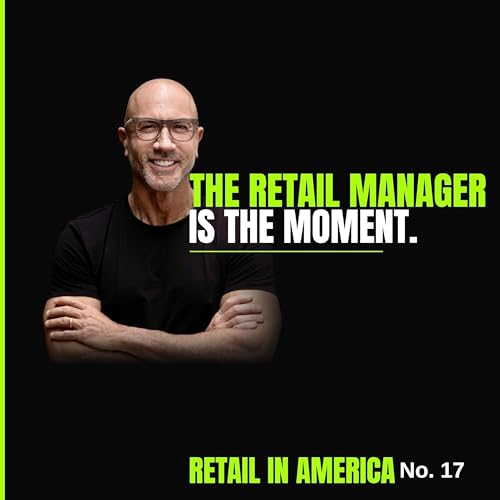
  • The Retail Manager is the Moment.
    Apr 15 2026
    Episode SummaryRetail didn't have a middle management problem. It had a leadership investment problem — and solved it the fastest and worst way possible. In this episode, Ron breaks down what actually happens when you eliminate the manager: the floor walks stop, the conversations stop, and the people who make your strategy real disappear. Three human truths about retail, technology, and the people caught in between.Three Human TruthsRetail: Flattening the org chart didn't create efficiency. It created silence. And silence doesn't mean alignment — it means something is breaking.Technology: We didn't replace managers with AI. We replaced judgment with dashboards — and hoped compliance would feel like leadership. It doesn't.People: Forty-four percent of retail workers are planning to leave. Not because of pay. Because of leadership. They're not asking for more money — they're asking to be known.Research & SourcesBloomberg / Live Data Technologies — Middle Manager LayoffsMiddle managers made up one-third of all layoffs in 2023 — up from 20% in 2018. This analysis was conducted by Live Data Technologies for Bloomberg.Bloomberg: Middle Manager Jobs Make Up 30% of White Collar LayoffsCNBC: Middle Managers Are Getting Laid Off — But Their Role Is 'More Important Than Ever'Korn Ferry — Workforce 2025: Power ShiftsKorn Ferry's annual survey of 15,000 professionals worldwide found that 41% of employees say their organization has slashed management layers. 40% of U.S. employees say they feel a lack of direction at work as a result. More than a third feel directionless without a manager.Korn Ferry Workforce 2025 ReportKorn Ferry Press Release: Workforce 2025 ResearchNote: The script references 'over 40% of companies had flattened management layers.' The Korn Ferry Workforce 2025 data shows 41% of employees globally report this, with 44% in the U.S. Both figures are consistent with the script's claim.Gartner — AI & Middle Management ProjectionGartner projects that through 2026, 20% of organizations will use AI to flatten their organizational structure, eliminating more than half of current middle management positions.Gartner Top Predictions for IT Organizations and Users in 2025 and BeyondMcKinsey — The Manager Relationship & Frontline SatisfactionRelationships with management account for 86% of workers' satisfaction with their interpersonal ties at work. Managers also spend nearly half their time on work that is not leadership — admin, scheduling, and reporting. That's from McKinsey's Power to the Middle research.McKinsey: Are You Stuck in the Middle? (Power to the Middle)McKinsey: The Boss Factor — Making the World a Better Place Through Workplace RelationshipsMcKinsey / Business of Fashion — Retail Worker AttritionLack of inspiring leadership is now among the top reasons retail workers leave — alongside lack of career development. McKinsey's frontline retail research documents this shift directly.McKinsey: How Retailers Can Build and Retain a Strong Frontline Workforce in 2024McKinsey: How Retailers Can Attract and Retain Frontline Talent Amid the Great AttritionNote: The script references '44% of retail workers are planning to leave' attributed to Business of Fashion and McKinsey. The McKinsey retail attrition research is the primary source for the leadership/manager-as-attrition-driver data. If you have a specific Business of Fashion report with the 44% figure, link it alongside these.Ron's BooksRetail Pride — Available at ronthurston.comHuman Pride — Available at ronthurston.comSubscribe & ConnectGet new episodes delivered twice a week: ronthurston.com
    Más Menos
    9 m
  • Your Training Is Working. Your People Are Leaving.
    Mar 27 2026

    Episode 16: Compliance Is Not Development

    Your training is working. Your people are still leaving.

    In this episode of Retail in America, Ron Thurston breaks down the critical difference between completing a training module and actually developing a frontline worker.

    Through the story of DeShawn — a high-performing associate who left for a two-dollar raise because he couldn't see a path forward — Ron contrasts two types of retailers. Company A measures compliance. Company B measures capability. One is losing its investment; the other is multiplying it.

    If your dashboard says training is at 90% but your stores are bleeding talent, this episode is for you.

    What you'll hear in this episode:

    Only 24% of frontline workers feel confident they have the right training to do their jobs — and 40% aren't even clear on what's expected of them. Yet most companies report completion rates above 90%. The dashboard and the frontline worker are living in two completely different realities.

    Harvard Business Review is clear: training embedded in daily workflow is what actually drives performance. And the Forgetting Curve shows that people forget up to 90% of what they learn within a month if it's not applied.

    The data on what's at stake: frontline workers who feel properly trained are 3x more likely to stay. 94% say they would stay longer if a company invested in their development. And 85% want another role inside their company — if they can see the path.

    The desire to grow is not the problem. The visibility of the path is.

    Connect with Ron:

    • Subscribe for weekly insights: ronthurston.com
    • Read RETAIL PRIDE: Amazon
    • Read HUMAN PRIDE: Amazon
    • Retail in America is the show about what's really happening inside retail — the space between the strategy and the person expected to execute it.

    Más Menos
    9 m
  • Young People Are Lonely. Your Frontline Team Is the Answer.
    Apr 7 2026

    Episode 15: The Happiness Report & Retail

    The World Happiness Report 2026 was just published. 136 countries. Hundreds of thousands of respondents. Decades of data.

    And buried inside it is something every retail executive needs to sit with.

    In the United States, young people are dramatically less happy than they were fifteen years ago. The primary driver? The same platforms your customers used to find your store.

    In this episode, Ron explores three human truths — about retail, technology, and the people caught in between — and makes the case that your frontline team may be one of the most important forces in the wellbeing of a generation.

    Reports & Sources Referenced:

    • 📊 World Happiness Report 2026 — Wellbeing Research Centre, University of Oxford / Gallup / UN SDSN
    • 🛍️ Gen Z Purchases 62% In-Store — WSJ / Circana data, via PYMNTS
    • 🏬 42% of Mall Visits Are Social in Nature — Westfield / Advertising Week

    Books Mentioned:

    • Retail Pride by Ron Thurston — ronthurston.com
    • Human Pride by Ron Thurston — ronthurston.com
    • Subscribe at ronthurston.com to get every episode delivered to your inbox, twice a week.

    Más Menos
    7 m
  • The Three Things Your Hiring Process Isn't Testing For.
    Mar 31 2026
    Gen Z is walking into your stores on purpose. They came for connection, community, and a human experience they can’t get from a screen. The question is whether the people you hired are ready to meet them.Most retail job descriptions were written for a store that no longer exists. In this episode, Ron Thurston explores what the experience economy actually demands from your frontline — and what the retailers winning with Gen Z are doing differently.The Three Human Truths1. Retail — You’re Hiring for Transactions. Gen Z Needs an Experience.When Gen Z walks into a physical store, they’re not evaluating it on product selection or price. They’re evaluating it on atmosphere, energy, and the quality of human interaction. Most retail job descriptions are still built around transaction efficiency — POS operation, schedule flexibility, product folding. They were written for a store that no longer exists. The experience economy demands something different: empathy, curiosity, and focus. Those qualities don’t appear on a resume. But they determine every customer interaction.2. Technology — Onboarding for Compliance Is Failing the Experience Economy.McKinsey research shows it takes roughly six to eight weeks for a new frontline hire to reach full productivity. The question is what retailers are teaching during that time. UKG’s global frontline study found that 47% of frontline workers feel there are two separate cultures in their organization — one for the floor, one for everyone else. Nowhere is that gap more visible than in onboarding. Retailers give new associates the operational layer. They rarely give them the experiential layer: what does it actually feel like to work here, and what does it mean to make a customer’s day?3. People — The Retailers Winning With Gen Z Are Rewriting the Role.The best operators have changed three things: what they select for (emotional intelligence, genuine curiosity about people), how they define success on the floor (dwell time, return visit rate, social engagement — not just conversion rate), and how they invest in the manager who develops the frontline team. Because you can hire the right person and onboard them intentionally — and then put them under a manager who doesn’t have the time, training, or support to develop them. And everything you invested in the first two steps evaporates within 90 days.Research Sources — Full Links62% of Gen Z purchases happen in physical stores Deloitte 2025 US Retail Industry Outlook — https://www.deloitte.com/us/en/insights/industry/retail-distribution/retail-distribution-industry-outlook/2025.html52% of Gen Z shoppers share photos or videos during a mall visit Advertising Week — Gen Z and the Mall, 2025 — https://www.advertisingweek.com/gen-z-and-the-mall-202547% of frontline workers feel there are two separate cultures in their organization — one for frontline employees and one for everyone else UKG Global Frontline Study 2026 — More Perspectives from the Frontline Workforce (8,200 workers, 10 countries) — https://www.ukg.com/company/newsroom/global-study-reveals-flexibility-and-financial-wellness-are-top-2026-priorities-frontline-workers32% of all first jobs are in retail — one in four American teenagers works in this industry RETAIL PRIDE — Ron Thurston (referenced in episode) — https://a.co/d/0j4SaAbMGen Z is evaluating physical retail destinations on atmosphere, energy, and quality of human interaction — not product selection or price ICSC — The Rise of Third Places: Becoming Your Community’s Social Experience Hub, 2025 — https://www.icsc.com/news-and-views/icsc-exchange/the-rise-of-third-places-becoming-your-communitys-social-experience-hub-in-202597% of Gen Z shop at brick-and-mortar stores — driven by immediacy, touch, and social experience ICSC — Rise of the Gen Z Consumer Report, 2023 — https://www.icsc.com/news-and-views/icsc-exchange/the-rise-of-the-gen-z-consumerMcKinsey: ~6–8 weeks for a new frontline hire to reach full productivity McKinsey — How Retailers Can Build and Retain a Strong Frontline Workforce, 2024 — https://www.mckinsey.com/industries/retail/our-insights/how-retailers-can-build-and-retain-a-strong-frontline-workforce-in-2024Books ReferencedRETAIL PRIDE by Ron Thurston — #1 Bestseller https://a.co/d/0j4SaAbMHUMAN PRIDE by Ron Thurston https://geni.us/humanprideConnect With RonWebsite: ronthurston.com https://ronthurston.comLinkedIn (Ron): linkedin.com/in/rthurston/ https://linkedin.com/in/rthurston/LinkedIn (Retail in America): linkedin.com/company/retail-in-america/ https://linkedin.com/company/retail-in-america/Subscribe — Episodes to your inbox: ronthurston.com https://ronthurston.com
    Más Menos
    16 m
  • You Don't Understand Why Gen Z Loves Physical Retail
    Mar 27 2026

    62% of Gen Z shops in physical stores — more than any generation before them. They came for community, connection, and a human moment. And the industry’s response is to automate the experience that brought them there.

    This episode examines why Gen Z is choosing physical retail, what they actually need when they walk in, and what winning retailers are doing to meet them there.

    THE THREE HUMAN TRUTHS

    1. RETAIL — Gen Z didn’t come for the product. They came for the person.

    42% cite social activity as their primary reason for shopping in person. They’re seeking belonging, not just a transaction.

    2. TECHNOLOGY — AI is entering the store at exactly the wrong moment.

    Only 14% of consumers trust AI to purchase for them — yet 68% of retailers are deploying AI-powered customer interactions. That’s not a technology failure. That’s a strategy failure.

    3. PEOPLE — The associate who greets Gen Z isn’t just a frontline worker. They’re the brand.

    Retailers winning with Gen Z have invested in their associates as experience creators. They’ve given them time, training, and permission to build relationships.


    SOURCES

    •Advertising Week — Gen Z’s Surprising Love Affair with the Mall (2025)

    •ICSC — The Rise of Third Places: Becoming Your Community’s Social Experience Hub (2025)

    •Salesforce — State of the Connected Customer Report

    •McKinsey — The State of AI in 2025

    •Edelman — Trust Barometer Flash Poll: Trust and Artificial Intelligence at a Crossroads (2025)


    BOOKS BY RON THURSTON

    RETAIL PRIDE and HUMAN PRIDE — available at ronthurston.com and wherever books are sold.


    CLOSING PULL QUOTE

    1. “The brands winning with Gen Z are the brands that still believe in the human moment.”

    Más Menos
    13 m
  • The Strategy Meeting is Over. Nobody Told the Store Manager.
    Mar 23 2026

    Forrester Research is calling this moment ‘peak ambiguity.’ Rising bankruptcies. Falling consumer sentiment. Geopolitical uncertainty. And when strategy is unclear at the top — it’s the frontline that absorbs it first. Every time.

    In this episode, Ron Thurston breaks down three human truths about what retail’s peak ambiguity is really costing your people — and how the right investment right now creates a competitive advantage that’s very hard to close.

    Three Human Truths This Episode

    HUMAN TRUTH #1 — Uncertainty Is a Leadership Problem That Becomes a Frontline Crisis.

    When communication stops at the top, the floor fills the gap with rumors and disengagement. Consumer sentiment is falling. Customers are more demanding and less forgiving. Your frontline needs the most clarity at the exact moment they have the least.

    HUMAN TRUTH #2 — The Manager Crisis Is Retail’s Hidden Emergency.

    The store manager is your AI adoption lead, your retention strategy, and your customer experience all in one. 47% of frontline workers feel there are two separate cultures in their company. The manager is caught between them every single day — and most retailers are dramatically underinvesting in developing them.

    HUMAN TRUTH #3 — Ambiguity Is a Competitive Advantage If You Invest in the Right Layer.

    McKinsey documents a 3-point comp sales lift at the best frontline retail employers. When every competitor is pulling back on people investment, the company that leans in creates a gap that’s very hard to close. Uncertainty isn’t just a threat. It’s a window.

    Takeaways:

    1. Uncertainty has emerged as a pivotal concern in retail, overshadowing topics such as AI and automation.
    2. The prevalent atmosphere of ambiguity necessitates clear and honest communication from leadership to frontline employees.
    3. Store managers are critical stabilizing forces within organizations, deserving of investment and development amidst uncertainty.
    4. Consumer trust is fragile; therefore, investing in frontline personnel establishes a durable competitive advantage in retail.
    5. When leadership fails to communicate effectively, the frontline becomes disengaged, exacerbating the crisis of uncertainty.
    6. The current period of peak ambiguity can serve as an opportunity for organizations that choose to invest in their people.

    Data & Sources

    Forrester Research — Three Themes for Retail in 2026 (March 2026)

    https://www.forrester.com


    UKG — Global Study: Flexibility and Financial Wellness Are Top 2026 Priorities for Frontline Workers (January 2026)

    https://www.ukg.com/company/newsroom/global-study-reveals-flexibility-and-financial-wellness-are-top-2026-priorities-frontline-workers


    McKinsey — How Retailers Can Build and Retain a Strong Frontline Workforce (2024)

    https://www.mckinsey.com/industries/retail/our-insights/how-retailers-can-build-and-retain-a-strong-frontline-workforce-in-2024


    U.S. Consumer Sentiment Index — University of Michigan (2026)

    https://data.sca.isr.umich.edu


    Get the Book


    📘 HUMAN PRIDE: Optimizing Your Human Potential in a Digital Job Market

    → https://www.ronthurston.com

    Más Menos
    14 m
  • You're Deploying AI Faster Than Your Customers Trust It
    Mar 19 2026

    65% of consumers trust AI to compare prices. Only 14% trust it to place an order on their behalf. We’re in the most aggressive AI deployment cycle in retail history — and most customers don’t trust it where it matters most.

    In this episode, Ron Thurston breaks down three human truths about the trust gap between AI technology and the frontline workers and customers caught in between.

    Three Human Truths This Episode

    HUMAN TRUTH #1 — Customers Trust AI for Transactions. Not for Relationships.

    65% trust AI for price comparison. 14% trust it to place an order. The line between utility and relationship is where your frontline earns its keep — and where AI has to earn its place. The frontline worker is the trust infrastructure that makes AI worth deploying.

    HUMAN TRUTH #2 — The Real Disruptor Isn’t AI. It’s the Trust Deficit Behind It.

    Forrester calls it ‘humanity vs tech.’ 53% of Americans believe AI will worsen their ability to think creatively. 50% say it will worsen their ability to form meaningful relationships. That’s the environment your frontline is navigating every shift.

    HUMAN TRUTH #3 — The Companies Winning With AI Are Building Trust First.

    Walmart trained 1.6 million employees before deploying AI — and 6,000+ associates are now building their own tools. Technology pulled by teams, not pushed by leadership. Three questions every retailer should ask before any AI deployment.

    Takeaways:

    1. The rapid deployment of AI in retail necessitates an examination of customer trust levels.
    2. While many consumers trust AI for transactional tasks, they prefer human interaction for nuanced decisions.
    3. A significant majority of consumers express skepticism regarding AI's impact on creativity and relationships.
    4. Companies must prioritize building trust with their frontline teams before implementing AI systems.

    Data & Sources


    YouGov — Which Retail Tasks Do Americans Trust AI With (December 2025)

    https://yougov.co.uk


    Forrester Research — Three Themes for Retail in 2026 (March 2026)

    https://www.forrester.com


    Pew Research Center — How Americans View AI and Its Impact on People and Society (June 2025)

    https://www.pewresearch.org


    Fortune — Walmart Is Offering AI Training to 1.6 Million Workers (February 2026)

    https://fortune.com/2026/02/19/walmart-trillion-dollar-retail-gaint-artificial-intelligence-training-google-partnership-invest-in-workers-not-replace-tech-changing-jobs/


    Get the Book


    📘 HUMAN PRIDE: Optimizing Your Human Potential in a Digital Job Market

    → https://www.ronthurston.com

    Más Menos
    12 m
  • The Turnover Tax — What Retail Is Really Paying for Neglect
    Mar 16 2026
    Retail turnover is running at 81% annually. Everyone in the boardroom knows it. Nobody is treating it like the emergency it actually is.In this solo episode, Ron Thurston breaks down three human truths about what’s really driving frontline employee turnover in retail — and why solving it has nothing to do with pay.Three Human Truths This EpisodeHUMAN TRUTH #1 — Everyone Knows. Nobody’s Treating It Like an Emergency.Retail turnover has been above 60% for decades. Some subsectors are now hitting 81%. Yet boardrooms keep calling it a “known variable” instead of a burning platform.HUMAN TRUTH #2 — This Isn’t a Pay Problem. It’s a Neglect Problem.8 out of 10 reasons frontline workers leave are emotional, not operational. 42% of turnover is viewed by employees themselves as preventable.HUMAN TRUTH #3 — The Real Cost Never Shows Up on a Spreadsheet.A mid-sized retailer at 60% turnover spends roughly $600,000 annually in hard costs alone. At the best frontline retail employers, comparable store sales run 3 full percentage points higher than low performers.TakeawaysThe retail industry currently experiences an alarming annual turnover rate of 81%, indicating a significant challenge that requires urgent attention from leadership.New hires in retail typically require approximately two months to achieve full productivity, meaning that stores are often staffed by individuals still learning their roles.Research reveals that eight out of ten frontline workers leave their retail jobs for emotional reasons, emphasizing the importance of valuing employees and investing in their growth.The disconnect between executive perceptions and frontline realities leads to a neglect problem rather than a pay issue, necessitating a shift in organizational focus and accountability.Preventable turnover is a critical issue, with 42% of employees viewing their departure as avoidable, highlighting the need for proactive management practices.Investing in employee satisfaction and stability can lead to significant improvements in sales performance, demonstrating that human capital is the primary competitive advantage in retail.Data & SourcesFountain — Frontline Work 2025: 5 Trends Shaping the Futurehttps://www.fountain.com/posts/frontline-workforce-trends-2025Harvard Business Review — Why Your Frontline Employee Turnover Is High (April 2025)https://hbr.org/podcast/2025/04/why-your-frontline-employee-turnover-is-highTruRating — Employee Turnover in Retail (2025)https://trurating.com/blog/employee-turnover-in-retail/U.S. Employee Turnover Statistics 2024–2025https://high5test.com/employee-turnover-statistics/McKinsey — How Retailers Can Build and Retain a Strong Frontline Workforce (2024)https://www.mckinsey.com/industries/retail/our-insights/how-retailers-can-build-and-retain-a-strong-frontline-workforce-in-2024theEMPLOYEEapp — Frontline Workforce Trends and Predictions 2025https://theemployeeapp.com/blog/frontline-workforce-trends-and-predictions/Get the Book📘 HUMAN PRIDE: Optimizing Your Human Potential in a Digital Job Market→ https://www.ronthurston.com
    Más Menos
    13 m