Episodios

  • “Last of the Titans” by Richard Vinen
    Apr 3 2026

    The date of June 18, 1940 proved to be the most important day in the lives of two of the best-known world leaders of the 20th century: Winston Churchill and Charles de Gaulle.

    World War II had taken an ugly turn in Europe with the fall of France, and both men took to BBC radio on that day to rally their respective sides, England and France, said Richard Vinen, author of The Last Titans: How Churchill and deGaulle Saved Their Nations and Transformed the World.

    “Both men made critical speeches. It was Churchill’s ‘finest hour’ speech and de Gaulle’s initial call for French resistance," said Vinen, a professor of history at King’s College, London.

    While Churchill’s famous call to arms (“Hitler knows that he will have to break us in this island or lose the war. If we can stand up to him, all Europe may be free and the life of the world may move forward into broad, sunlit uplands. But if we fail, then the whole world, including the United States, including all that we have known and cared for, will sink into the abyss of a new Dark Age made more sinister, and perhaps more protracted, by the lights of perverted science. Let us therefore brace ourselves to our duties, and so bear ourselves that, if the British Empire and its Commonwealth last for a thousand years, men will still say, ‘This was their finest hour.’”) was the result of 40 years of public speaking in the House of Commons, de Gaulle took to the radio microphone for the first time, two days after arriving in London, having been evacuated from his conquered France.

    “Both Churchill and de Gaulle were radio stars,” said Vinen, referring to the four years of wartime speeches made by both men. BBC officials were impressed by de Gaulle’s efforts because he’d never had any experience as a radio broadcaster before.

    Both men also played a role in how their respective countries came to grips with a new world order that precluded empires and was now led by the United States.

    Vinen draws comparisons and similarities between the two men. “(Churchill) liked people and particularly the British. De Gaulle loved France, but he loved it as an abstraction separate from the French people,” he stated.

    As to his next effort, Vinen is taking measure of these interesting times. “I feel history is moving under our feet as we talk. I’d like to know what’s about to happen before I start trying to write about it,” he said.

    Más Menos
    27 m
  • "CrimeReads" articles by Keith Roysdon
    Mar 27 2026

    An upcoming story on the CrimeReads website (https://crimereads.com/) will look at the performances of movie/TV good guys who later took on bad-guy roles and vice versa. It can only be another story by Keith Roysdon, whose previous stories on CrimeReads include looks at writers Richard Matheson and Robert Bloch, a historic scan of Universal monsters, and a review of 1970s disaster movies.

    Having served as a reporter and editor in Muncie, Ind. for some 40 years, Roysdon has written three novels, most recently Seven Angels. Now living in Knoxville, Tenn., Roysdon is also a partner in Constellate Creatives (https://constellatecreatives.com/), a one-stop shop that seeks to help writers publish books with editing and marketing services.

    Marketing a book once it's published is the one thing new authors tend to dread, said Roysdon, happy to provide help in getting a new book noticed.

    Roysdon said his offbeat entertainment stories are the result of an open-minded editor who sees the value in giving a creative talent free rein. “I’ve got to give Dwyer Murphy, my editor at CrimeReads, and everybody there, credit, because the more obscure thing that I can think of, it seems like they're on board with that,” he said.

    Who but Roysdon would review Pray for the Wildcat, a TV movie from ABC made in the 1970s starring Andy Griffith as a corporate boardroom bully who makes life miserable for all those around him? This role flies in the face of the one most of us have for Griffith--good old Andy Taylor from Mayberry, said Roysdon.

    The movie’s cast includes William Shatner, Robert Reid, and Lorraine Gary, who played Chief Brodie’s wife in Jaws, said Roysdon. Other character shifts noted in the article focus on players like Angela Lansbury and Fred MacMurray, he said. The story will be published soon on CrimeReads.

    Writing stories for the crime website keeps Roysdon pretty busy in itself (he’s had more than 75 stories published), but along with the three novels, he also works on reading and editing other writers’ work on the growing Constellate site.

    Recalling his time writing for the newspaper in Muncie where he did movie reviews from 1977 to 1990, a distinct period, said Roysdon, identifying it as a future project he’d like to tackle.

    “It was a really good time for pictures, and that's something that I've considered writing about in the way of a movie book. But I don't know if I'll ever get around to it, because I've got so many other things I want to do,” said Roysdon.

    Whatever Roysdon decides to do, you know the result will be distinctive—and just slightly offbeat.

    Más Menos
    24 m
  • "Making Democracy Count" by Ismar Volic
    Mar 19 2026

    "Making Democracy Count" by Ismar Volic

    Ismar Volic is one math professor who wants to use mathematics to improve our democratic process. His book, Making Democracy Count: How Mathematics Improves Voting, Electoral Maps, and Representation, examines the mathematics that govern how our election systems work or, surprise, don’t work. Volic may be director of the Institute for Mathematics and Democracy at Wellesley College but this isn’t a math textbook. It’s a exploration on better ways to validate the voice of the majority .

    If you’ve heard about topics like ranked choice voting or proportional representation, you may be aware of different approaches to elections. Volic provides the mathematical rationale for why we could be doing better when it comes to recognizing the voice of the people.

    Volić just returned from a trip to his native Bosnia, the country from which he immigrated in the 1990s. Having seen war in that country, he’s well-acquainted with the importance of maintaining democracy.

    Among the subjects Volic tackles in Making Democracy Count are how many of the ways we select candidates in the U.S., particularly when it comes to primaries, fall short, how blatantly devious gerrymandering is, and how dysfunctional the U.S. Electoral College is.

    “Math is a clarifying way at looking at the world,” said Volic, who recognizes that his timing is reaching a wider audience than ever. “There is growing awareness of the faults in our voting systems, and I don’t mean fantasies of widespread voter fraud or conspiratorial voting machines,” he said.

    Instead of gerrymandered districts that elect one person each, multi-member congressional districts, each with the members elected through proportional representation, would be fairer, he said. In Volic’s home state of Massachusetts, each of the nine congressional districts is represented by one person, the winner of the district election.

    That means the Mass. representation now consists entirely of Democrats even though 30 percent of the voters may have voted Republican. A fairer way of deciding on representation would be to have fewer districts—say three—with three representatives from each selected. You would have the same number of representatives: nine, but you’d have Republicans represented, as well.

    Conversely, Democrats, now excluded from Oklahoma's Republican slate of representatives, could have a voice under a system that used multi-representative districts.

    Such a system would provide easier access for third parties, as well, said Volic.

    Más Menos
    34 m
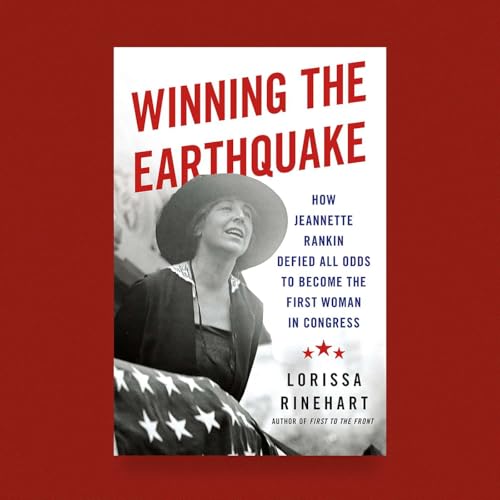
  • “Winning the Earthquake” by Lorissa Rinehart
    Mar 17 2026

    The first woman to serve in the U.S. congress didn’t come from New York or Boston but from Montana. Jeannette Rankin served two terms in Congress—not in succession but terms separated by more than 20 years.

    Among her many distinctions is that she was the only legislator to cast votes against two world wars, once in 1917 and again in 1941. Lorissa Rinehart brings Rankin to life in her book, Winning the Earthquake, a reference to her stated belief you could no more win a war than win an earthquake.

    She was gerrymandered out of office the first time by all-powerful Anaconda Copper, a company that ran the state of Montana (until the copper ran out), and later by WWII proponents who couldn’t abide her not voting for war in the face of Pearl Harbor.

    But Rankin did more than cast votes for peace. Her organizational ability and eloquence helped get women the right to vote in Montana six years before the 19th Amendment was passed to allow women across the country to cast a ballot.

    In 1916, she made the extraordinary decision to visit New Zealand because she wanted to talk to those who lived in a country where women had been voting since 1893. But as Rinehart noted, her trip and stay in New Zealand was not a vacation. Instead, she booked a room in a boardinghouse and took on the role of an “American seamstress,” going house to house mending, stitching and fitting women’s dresses while talking with the people. Rankin learned about advances women had made in the country since obtaining the vote.

    After she was sworn in on April 2, 1917, one of Rankin’s first acts as a new congresswoman was to introduce the Susan B. Anthony Woman Suffrage amendment for consideration by the House. The amendment was first introduced in Congress in 1878. Although it had been debated several times through the years, it had only come to the floor for a vote once in 1887 and was defeated. During the two years of her House term, Rankin consistently advocated for the amendment's passage. She wrote newspaper columns and granted interviews to reporters to keep up publicity for woman suffrage.

    While running for office in 1917, Rankin crossed the state of Montana and “spoke everywhere that would have her and many places that wouldn’t,” said Rinehart. “More and more, she began to fold talk of war into her speeches, often arguing that if women were required to send their sons to war, then surely they should be a party to the decision of whether the country should go at all.”

    When Rankin spoke at schools across the state, she sent students home with buttons and sashes that read, I WANT MY MOTHER TO VOTE.

    Rankin was a keen believer that a majority of Americans would always choose the best path. As a result, she opposed the Electoral College when it came to electing a president. She also spoke against redistricting practices designed to benefit a political party not the majority of the people.

    A champion of democratic reform who ran as a Republican, Rankin has been largely overlooked for the contributions she made in the 20th century, said Rinehart, adding: “Jeannette labored for what she believed to be right until her very last days, without expectation and always with the hope that her words and deeds might one day find resonance in the enduring chorus of an America she loved so dearly. If that time has not yet arrived, surely, she would have believed, it will soon.”

    Más Menos
    27 m
  • "Show Trial" by Thomas Doherty
    Mar 7 2026

    Groundhog Day, Ed Wood, The Big Lebowski, Dark City, and 12 Monkeys. What do these movies have in common?

    They were all made in the 1990s and represented a middle-level film—neither franchise nor family fare. “That’s what we’re missing at the theater nowadays,” said Thomas Doherty, the Brandeis University professor and author whose work frequently appears in the Hollywood Reporter.

    “The middle-level melodrama or thriller used to be well attended at the movie house. Now it goes straight to Netflix,” said Doherty. “We’re missing the smaller films. That product is in jeopardy,” he said.

    Also in jeopardy is the practice of going to the movies. Time will tell whether people will continue to want to see films in the company of their fellow human beings, the professor noted. “There will always be a niche audience. Fans and film buffs will still gather to watch certain films, but most now watch films at home,” he said.

    Doherty related how Hollywood faced a previous challenge when it came to theater attendance in the 1930s. “The Great Depression traumatized Hollywood. The movie industry thought that it was immune to any kind of downturn,” he said.

    Radio had entered the picture, piping, for the first time, entertainment directly into the home. Then there was the little matter of expendable income. Folks were out of work and relying on breadlines just to get by. Even the small cost of a film became an extravagance for many.

    But Hollywood got through it. The question is now whether the theater can stage another rebound at a time when the studios own the content and send serial dramas directly into the home?

    Doherty pointed out that going to the movies used to be part of a courtship ritual. When a guy asked a girl to go out, he let his date decide on the picture to see. So you had a lot of movies designed to appeal to women, said Doherty, questioning whether that ritual is still in effect.

    Looking ahead, the challenge for the theater operator will be coming up with an experience you can’t get at home, said Doherty.

    Show Trial (cover pictured above) is a book that Doherty wrote in 2018 about the congressional hearings looking into Communist associations in Hollywood that brought about blacklists. “It’s hard to say what impact having so many screenwriters and movie people unable to work for 10 years had on the entertainment industry. We just don’t know what could have been produced in that time,” he said.

    What we do know is that there were definite tragedies among blacklisted individuals, said Doherty. Marguerite Roberts, who worked at Metro-Goldwyn-Mayer, had been one of the most respected and highest-paid screenwriters in Hollywood, he noted. In 1951, Roberts was called before the U. S. House Committee on Un-American Activities. Even though she merely accompanied her husband to meetings, when she declined to answer questions about being a member of the Communist Party, she spent the next 10 years unemployed, said Doherty.

    Finally, in 1961, Roberts found work again. In 1969, Roberts wrote the screenplay for True Grit, a film that won John Wayne his only Oscar. Wayne raved about the script that Roberts produced, Doherty said.

    Doherty has a new book coming out in April on the rise of archival documentaries in the 1930s. How Film Became History focuses on how most of us learn our history—through moving pictures—got started.

    Más Menos
    30 m
  • "Road to Nowhere" by Emily Lieb
    Mar 2 2026

    In the mid-1950s, Baltimore’s Rosemont neighborhood was alive and vibrant with smart rowhouses, a sprawling park, corner grocery stores, and doctors’ offices. By 1957, a proposed expressway threatened to gut this Black, middle-class community from stem to stern. That highway was never built, but it didn’t matter—even the failure to build it destroyed Rosemont economically, if not physically.

    In Road to Nowhere: How a Highway Map Wrecked Baltimore, writer and historian Emily Lieb tells the history of the neighborhood and the highway that never happened. The book reveals the interwoven tragedies caused by racism in education, housing, and transportation policy. Black families had been attracted to the neighborhood after Baltimore’s Board of School Commissioners converted several white schools into “colored” ones, which laid the groundwork for predatory real-estate agents who bought low from white sellers and sold high to determined Black buyers.

    Despite financial discrimination, Black homeowners built a thriving community before the city council formally voted to condemn some 900 homes in Rosemont for the expressway, leading to deflated home values and even more predatory real estate deals.

    “It took me a while to see what an important role Baltimore’s public schools played in Rosemont’s story—but once I did, it changed the way I thought about the whole book,” said Lieb. “Initially, I thought I was telling a story about a highway that started in the 1950s and ended two decades later. Instead, I was telling a much longer story about a whole city, one that started right after the Civil War and continues through today.”

    Baltimore was a Jim Crow city, which means that until 1954, its schools were legally segregated. Decisions school officials made about whether a school was going to serve white students or Black ones determined where Baltimoreans could live, since families were unlikely to settle where their children could not go to school. Many people assume segregated neighborhoods made segregated schools, but in Baltimore, it was the other way around.

    Through World War II, segregated schools kept most of West Baltimore’s schools for Black students—and, by extension, most of its Black population— concentrated in the older parts of the city. By the early 1950s, though, those old schools and neighborhoods were getting run-down and overcrowded. Rather than desegregating so that families could live and go to school where they liked, officials started to convert white-branded schools in the newer parts of West Baltimore into schools for Black students. And as soon as the city made it possible for their children to go to school in those newer neighborhoods, middle-class Black homeowners started to move in. That’s what created Rosemont.

    Segregated schools were good business because they created a captive market. Prospective Black homebuyers had a limited supply of housing to choose from, which inflated the price. And they also could not pay for their housing using the same kinds of affordable, government-insured mortgage loans that banks started offering their white counterparts during the New Deal. Instead, they typically had to get both their houses and their loans from the speculative real-estate companies known as “blockbusters.” That meant they paid more for their homes, and they paid more for the money they used to buy them.

    Blockbusting leached the wealth of the families who moved to Rosemont during the 1950s and early 1960s, but by itself, it didn’t keep the neighborhood from being the kind of place people scrimped and saved for and dreamed about living in. Still, over time, all the little things blockbusting took from Rosemonters started to add up. So, by the time city and state officials were looking for a neighborhood to bulldoze for an expressway, they could point t

    Más Menos
    30 m
  • "Vote with Your Phone" by Bradley Tusk
    Feb 28 2026

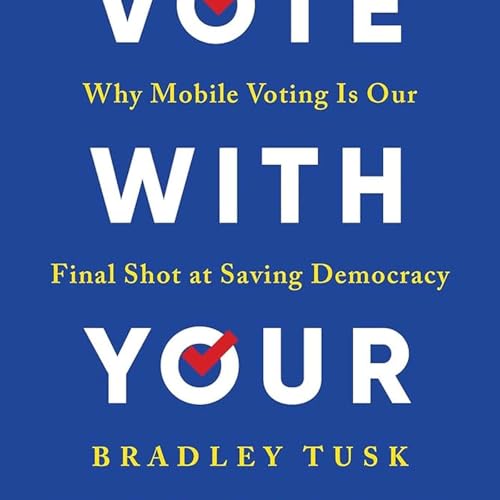
    We think nothing of ordering dinner, shopping for clothes, or banking on our phones anymore. So why not vote?

    That’s what Bradley Tusk has been working on. In his book, Vote with Your Phone: Why Mobile Voting Is Our Final Shot at Saving Democracy, the New York venture capitalist spells out the details and the benefits of making it easier for people to vote.

    Along with the general public, Tusk wants to reach young people, folks who have grown up relying on their smartphones.

    “Typically, young people have organized around radical causes—civil rights, women’s rights, the anti-war movement. But today, almost incredibly, the most radical possibility is finding common ground. The next great reform will come from pushing the country into the middle and forcing our government to become competent and functional again,” he said.

    What makes mobile voting safe is something called end-to-end verification, said Tusk. “It gives voters the ability to verify their ballot is recorded and cast correctly and that nothing tampered with their vote,” he said.

    Mobile voting would be another option for voters, Tusk suggests. “Voting by phone is effectively the same thing as voting by mail,” he said. Voters would be free to vote any way they please, including using the mails, or going to the polls to register a vote in person, he said.

    The benefit, of course, is that mobile voting would increase participation. Instead of a 10 percent voter turnout for a primary, you could see a 40 to 50 percent turnout, said Tusk.

    Having served as deputy governor in Illinois (2003-2006) and campaign manager for Mike Bloomberg’s 2009 mayoral bid, Tusk knows about political realities. He knows that making it easier for voters to vote won’t come easily. “The real opposition to mobile voting will ultimately come from the political world,” he said.

    That’s where people need to weigh in, said Tusk. “We at the Mobile Voting Project can draft and get bills introduced that would legalize mobile voting in your state. But we can only pass those bills if you get involved,” said Tusk, addressing the nation’s youth.

    This year, a local election in Anchorage, Alaska, for the first time, will allow mobile voting. Tusk hopes that other local elections will soon follow.

    More information is available at mobilevoting.org.

    Más Menos
    29 m
  • "Everybody Loses: The Tumultuous Rise of American Sports Gambling" by Danny Funt
    Feb 13 2026

    An exploration into the perilous world of American sports gambling, journalist Danny Funt interviews the power players of the betting boom at FanDuel, DraftKings, and beyond.

    He relates the story of ESPN Bet, a failed attempt by the sports giant to compete with the major sports gambling operation.

    As the first major investigation into America’s sports gambling industry, Everybody Loses describes how fast that professional organizations such as the National Football League and Major League Baseball went from being adamantly opposed to sports gambling spreading outside of Las Vegas to becoming sponsors.

    The vast amount of money spent by sports gambling firms to attract business and convert skeptics is tabulated in Everybody Loses. FanDuel and DraftKings spent $750 million in 2015—more than the entire beer industry—in advance of the NFL season that year.

    Thirty-eight states have now legalized sports gambling, said Funt, as the effort to transform a nation of sports fans into a nation of sports gamblers continues to gather momentum. The author said, having seen the problems that the tumultuous rise of sports betting has created, he’s fearful that the problem is likely to soon spiral out of control.

    On the near horizon is online casino gambling, now allowed in seven states, where gambling interests make even more money than they do through sports betting.

    Victims of the gambling craze include those who place bets they can't afford, their families, and often the athletes themselves, he said.

    Funt notes that even lesser-known players are vulnerable, harassed by gamblers who may have lost money if a shot went in at the buzzer, upsetting the spread.

    Funt, who covers sports betting as a contributor to The Washington Post, said he made a visit to England where legalized gambling has been in place for several decades. Funt came away discouraged at the number of betting shops that allow one to bet on virtually anything that now saturate downtown London.

    A graduate of Georgetown University and the Columbia Journalism School, Funt also addresses the history of sports betting in this country in his book, going back to the 1919 Black Sox scandal when members of the Chicago White Sox were banned for life for their part in “fixing” that year’s World Series.

    Más Menos
    32 m