Episodios

  • The Unspoken Contract | Alignment, Expectations, and Invisible Rules
    Mar 27 2026

    When we sign a job offer, we agree to a salary and a set of tasks. But what about the "hidden" expectations we never actually discussed?

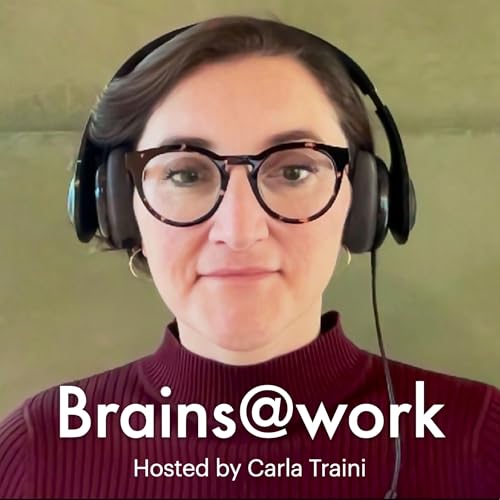
    In this episode of Brains at Work, we explore the concept of the Psychological Contract—the unspoken partnership between an employer and an employee. Just like in a personal relationship, discovering you aren't "on the same page" usually happens too late. For neurodivergent professionals, these invisible rules can be the difference between thriving and failing.

    Inside the Episode:

    • The "Defined" vs. The "Implicit": Breaking down the gap between the formal Job Description and the social/cultural expectations that aren't in the handbook.

    • The Relationship Parallel: Why "defining the relationship" (DTR) is just as critical in the boardroom as it is in private life to avoid misalignment and resentment.

    • The Neurodivergent Disconnect: Why relying on "common sense" or "reading the room" is a flawed strategy for neurodiverse teams and how it leads to burnout.

    • The Audit Checklist: Practical advice for both neurotypical and neurodivergent professionals to extract information and clarify non-verbal expectations.

    Strategic Insight:

    Clarity is a form of kindness, but in business, it's a form of Operational Efficiency. When expectations are explicit, we remove the cognitive load of "guessing," allowing every brain to focus on the work that actually matters.

    Más Menos
    7 m
  • How AI is reshaping the world of consultancy
    Mar 23 2026

    Undercurrents of Change is a podcast about the signals beneath the surface of change. In each episode, Marc Bolick and Arne van Oosterom explore the deeper shifts shaping business, leadership, and innovation, beyond the headlines and the hype. Through conversations with entrepreneurs, builders, and thinkers, we look at what people are actually experiencing as they navigate uncertainty and transformation in their work.

    In this first episode, we speak with Miikka Leinonen, entrepreneur, business owner, and co-author of AI Pathway. Mika works closely with leadership teams trying to turn AI ambition into real organizational change.

    Together we explore how AI is reshaping the world of consultancy, why many leadership teams still struggle to act despite the urgency, and the deeper question many professionals are quietly asking themselves today: what is my real value in a world where AI can do so much of the work?

    It's an honest conversation about experimentation, uncertainty, and the human side of technological change.

    Más Menos
    37 m
  • The Cost of Fitting In | Professionalism, Masking, and Burnout
    Mar 20 2026

    Every professional wears a mask, but for some, the weight of that mask is unsustainable.

    In this episode of Brains at Work, we explore Masking—the conscious or subconscious suppression of natural responses to conform to social expectations. We start with a universal truth: in the business world, everyone masks to some degree. However, for neurodivergent individuals, this isn't just "office etiquette"—it is a constant, high-stakes performance that leads to a specific type of exhaustion.

    Inside the Episode:

    • The Universal Mask: Why the modern workplace demands a "standardized" persona (socializing, eye contact, and small talk) and how we all participate in this social contract.

    • The Neurodivergent Tax: Analyzing the intensity of masking for ADHD and Autistic professionals, where every gesture and sentence is manually processed.

    • From Burst to Burnout: Understanding the cycle of the "Autistic/ADHD Burst"—the sudden collapse of energy after prolonged masking—and how it differs from standard work stress.

    • Sustainable Culture: How leaders can reduce the "masking tax" to unlock genuine productivity and prevent long-term talent attrition.

    Key Strategic Insight:

    If your team is spending 40% of their cognitive energy trying to "act normal," you are only getting 60% of their actual talent. Reducing the need for masking isn't just a wellness initiative; it's an ROI strategy for human capital.

    Más Menos
    9 m
  • Brains@Work - Now vs. Not Now | The Neurobiology of Time Blindness
    Mar 12 2026

    Time management is often treated as a skill to be learned, but for many, it is a sensory experience that differs at a neurological level.

    In this episode of Brains at Work, we break down the concept of "Time Blindness" and the Now vs. Not Now binary that defines the ADHD and neurodivergent experience. If you've ever wondered why some professionals thrive under last-minute pressure while struggling with long-term project milestones, this conversation is for you.

    Inside the Episode:

    • The Binary Horizon: Why the neurodivergent brain often categorizes tasks into only two buckets: Now (urgent/stimulating) and Not Now (invisible).

    • The Dopamine Connection: How the perception of deadlines is tied to brain chemistry, and why "starting early" isn't always a cognitive option without the right triggers.

    • Beyond the Calendar: Why traditional tools like Gantt charts or standard reminders often fail, and what actually works for temporal organization.

    • Leading Through the Fog: How managers can provide "external scaffolding" to help teams navigate long-term projects without micro-managing.

    Strategic Insight:

    We move away from the "laziness" myth to look at Temporal Horizons. Understanding how a brain perceives the future allows us to build workflows that provide the necessary friction or flow at exactly the right moment.

    Más Menos
    8 m
  • Brains@Work - Top-Down vs. Bottom-Up | The Mechanics of Decision Making
    Mar 9 2026

    How does your brain build a map of the world before you make a choice?

    In this episode of Brains at Work, we dive into the fundamental cognitive divide in the workplace: the difference between Top-Down and Bottom-Up information processing. While these terms are often used in management, they have a profound neurological basis that dictates how neurotypical and neurodivergent professionals navigate data, projects, and strategy.

    Inside the Episode:

    • The "Big Picture" vs. The "Foundational Detail": Understanding why some brains start with a mental framework (Top-Down) while others build reality from a granular collection of facts (Bottom-Up).

    • Neurodivergent Strengths: Why Bottom-Up thinkers are often the first to spot systemic risks and innovative patterns that Top-Down thinkers might miss.

    • The Collision in the Boardroom: How different processing styles lead to friction in decision-making—and how to translate between them.

    • Strategic Integration: How leaders can leverage both styles to create more robust, evidence-based business outcomes.

    Key Takeaway:

    Effective leadership isn't about choosing one method over the other; it's about recognizing that a neurodiverse team provides a 360-degree view of any challenge. When we bridge the gap between "the forest" and "the trees," we make better decisions.

    Más Menos
    10 m
  • Brains@Work - A brand new series on Neurodiversity and work -
    Feb 27 2026
    In this inaugural episode of Brains at Work, I delve into the profound relationship between human cognition and our work environments. As a designer and researcher with a focus on psychology and neuroscience, I explore how understanding the intricacies of the brain can revolutionize the way we approach work. We uncover the significance of decision-making processes, recognize inherent biases, and highlight the importance of neurodiversity in the workplace. Throughout our discussion, I emphasize the need for inclusivity and emotional safety in professional settings. It's essential to recognize that work is not merely a series of tasks; it is fundamentally about cognition. By embracing a design framework that considers every unique cognitive profile, we pave the way for a working environment that supports and nurtures the capabilities of all individuals, irrespective of their cognitive styles. I share my journey and the multifaceted roles I play in this field, underscoring the complexity of defining oneself when wearing multiple professional hats. My aim is to facilitate a shift in perspective—one that urges businesses and individuals to cultivate creativity and harness the collective potential of their teams. Join me as we set the stage for future conversations and engage in discussions designed to empower everyone to thrive at work. This is just the beginning of an exciting exploration into designing work that truly accommodates every brain. 00:00:13 Introduction to Brains at Work 00:01:17 The Many Hats We Wear
    Más Menos
    2 m
  • The Story of Jakob Knutzen - Adventure, Creative Energy and Parenthood -
    Dec 22 2025
    We often meet people through their professional surface. The roles they've held. The companies they've built. The neat story their CV tells. It's efficient. It helps us place each other quickly. But it also skips a more interesting question. Who are you when the career story goes quiet? That question sits at the heart of a this conversation Morgan Duta had with Jakob Knutzen. Not as a quote machine or a success case, but as a mirror for something many of us recognize, often uncomfortably. Because Jakob talks very openly about a moment that I've seen again and again in leaders, founders, and senior professionals. The moment where you suddenly realize you can see your entire future. And it scares you. When predictability becomes a problem Jakob describes leaving a consulting path not because it was failing, but because it was too clear. The promotions, the rhythm, the outcomes. Everything made sense. And that was precisely the problem. It wasn't risk that pushed him away. It was boredom disguised as safety. That resonates deeply. Not because everyone should leave their job or move across the world, but because that moment of clarity is information. When the future becomes entirely predictable, the question is no longer "is this good enough?" but "is this alive enough for me?" Many people misread that feeling as restlessness or lack of gratitude. Jakob frames it differently. He treats it as a signal that experience, challenge, and growth matter more to him than optimizing for certainty. We are terrible at judging risk One of Jakob's sharper observations is how badly we assess risk, especially in hindsight. From the outside, his choices look dramatic. Moving countries. Switching domains. Building companies without ticking all the expected boxes first. But from the inside, the downside was limited. He knew he had a safety net. He knew what "failure" would actually look like in concrete terms. And this is where the conversation becomes uncomfortable in a useful way. Jakob is explicit about privilege. If you come from stability, if you have a solid base, some financial or social safety, then constantly holding yourself back "just to be safe" can become a form of self-deception. Not everyone has that room to move. But if you do, maybe the question isn't whether you're allowed to take risks. Maybe it's why you're not using the space you've been given. That's not a moral judgement. It's an invitation to be honest. Adventure is not what we think it is Another thing Jakob reframes beautifully is the idea of adventure. It's easy to confuse adventure with travel. With geography. With movement on a map. But for him, adventure is much broader. It's about experience. Attention. Staying open to being changed by what you're doing. Interestingly, becoming a father didn't reduce that sense of adventure. It deepened it. He talks about experiencing the world through the eyes of his son, about how everyday life suddenly becomes intense, surprising, and meaningful in new ways. That matters, because it expands how we think about ambition. Ambition doesn't have to mean more scale, more speed, more visibility. It can also mean more presence. More learning. More lived experience. A bigger internal life, not just a bigger external footprint. Leadership as creating conditions Jakob doesn't describe himself as a "creative genius". In fact, he's quite explicit that creativity isn't central to his identity. What he is good at is something else. Channeling creative energy. Removing obstacles. Creating the conditions in which others can do the best work of their lives. That's a subtle but important shift in how we think about leadership. In his work with facilitation, product building, and teams, leadership isn't about having the best ideas. It's about helping a group move from point A to point B without collapsing into noise, politics, or safe mediocrity. That's facilitation in its purest form. And it's increasingly relevant in a world where tools, processes, and AI can easily overwhelm human attention. The real enemy is the average One of Jakob's strongest points is also one of the most confronting. Most teams don't fail because they lack talent. They fail because they converge. They aim for what everyone can agree on. They smooth out edges. They optimize for comfort. And that's how generic work gets made. He's blunt about it. Convergence to the mean is how bland products, forgettable strategies, and soulless experiences are created. Especially now, when AI makes it easier than ever to generate "acceptable" output. What cuts through that isn't more ideas. It's taste. Taste, courage, and communication Jakob talks about taste as the ability to say what is good and what is not, and to stand behind that judgement. Taste is opinion. Opinion requires courage. And courage only matters if you can communicate it clearly. This is where his thinking becomes particularly relevant in the age of AI. As generating content becomes easier, expressing ...
    Más Menos
    1 h y 5 m
  • The Story of Warren Yu - Lessons From a Systemic Pirate -
    Dec 8 2025

    Every now and then you meet someone who comes from a world so far from your own that you expect the conversation to be polite, distant, and maybe a bit abstract. That's what I thought when Warren Yu joined us for Creative Leaders Unplugged. He carries decades of experience inside one of the most rigid and hierarchical systems imaginable, the U.S. military and government. I come from design, creativity, messy entrepreneurship. Two planets, right?

    But from the very first minute, something unexpected happened. We didn't meet as a military officer and a designer. We met as humans. He told stories about family, heritage, loss, identity, the same stories we all carry whether we come from Shanghai, Hungary, New York or Haarlem.

    That's when I realised: the starting point for creative leadership is always the same. Strip away the titles, the roles, the armour. Ask someone who they are. And then simply listen.

    What unfolded after that was like watching a movie. Warren is one of those natural storytellers who pulls you straight into the world he's lived in, from his grandfather's assassination to CIA front companies to being accused of "witchcraft and black magic" on a Navy ship because he dared to bring a new idea into a rigid system.

    And still, somehow, everything he said resonated deeply with what we talk about in design thinking. The power of culture over technology. The need to make it safe to fail. The importance of "yes, and…". The courage to hold space for others. The leader's job of clearing obstacles so people can run freely.

    At one point he describes his design studio, a simple conference room he quietly transformed into a kind of pirate ship inside the system. A place where people could bring fragile ideas, experiment, fail, recover, collaborate across ranks and cultures. A NICU for innovation, he called it. And I thought: yes, this is creative leadership in its purest form.

    Not the shiny version. The subversive version. The courageous, slightly rebellious, meaningful version.

    What struck me most is how his whole journey mirrors something many creative leaders recognise:

    being an outsider, navigating contradictions, learning to adapt, holding multiple perspectives, and seeing what others miss. The pirate who doesn't disrupt for ego, but for the greater good.

    We ended our conversation with one simple question:

    What are you looking forward to?

    His answer was surprisingly soft and human, to help people, to create meaning, to help organisations rediscover their purpose when they've drifted away from it.

    That's the thing about pirates.

    They're not trying to burn the ship.

    They're trying to remind everyone why they're sailing in the first place.

    This episode is full of stories, insights, emotion, humour and hard-earned wisdom. Honestly, we could have talked for hours. But I hope the part we captured inspires anyone who feels stuck in a system, anyone wondering how to make change from the inside.

    Maybe the answer isn't to break the system.

    Maybe it's to create a small space where new possibilities can breathe.

    A place where people feel safe to bring their ideas, their doubts, their scars.

    A place where stories can be told.

    A place where pirates are welcome.

    Enjoy the episode.

    And Warren, go write that book. The world needs it.

    Más Menos
    1 h y 42 m