Psychedelics Today Podcast Por Psychedelics Today arte de portada

Psychedelics Today

Psychedelics Today

De: Psychedelics Today
Escúchala gratis

Psychedelics Today is the planetary leader in psychedelic education, media, and advocacy. Covering up-to-the-minute developments and diving deep into crucial topics bridging the scientific, academic, philosophical, societal, and cultural, Psychedelics Today is leading the discussion in this rapidly evolving ecosystem. Ciencia Ciencias Biológicas Enfermedades Físicas Higiene y Vida Saludable
Episodios
  • Betty Aldworth & Ismail Ali: MAPS Co-Executive Directors on Leadership, Research, and the Future of Psychedelics
    Mar 19 2026

    MAPS co-executive directors Betty Aldworth and Ismail Ali join Psychedelics Today to talk about leading one of the most visible organizations in the psychedelic field during a period of transition. The conversation covers their move into permanent leadership, how they work together, and how MAPS is thinking about research, education, policy, and movement strategy after a difficult period for the organization and the broader field.

    Más Menos
    1 h y 22 m
  • Joe Moore Psychedelics Today on Leadership, Integration, and the Psychedelic Landscape
    Mar 9 2026

    Jen Davenport joins Psychedelics Today to interview co-founder Joe Moore about the growth of Psychedelics Today, the broader psychedelic ecosystem, and how professionals are beginning to engage with psychedelic ideas.

    Davenport is the founder of Iron Thread Partners and a graduate of the Vital psychedelic training program. Her work focuses on executive leadership, decision making, and organizational development. In this conversation she asks Moore about the evolution of Psychedelics Today and the changes he has witnessed across the psychedelic field over the past decade.

    Moore explains that Psychedelics Today began as a podcast exploring psychedelic research, therapy, and culture. Over time the project expanded into a media and education platform covering psychedelic science, harm reduction, and professional training. The organization now produces podcasts, journalism, courses, and public conversations about psychedelics and their place in modern society.

    A central part of the discussion is psychedelic integration. Moore notes that insight during a psychedelic experience does not automatically lead to lasting change. The integration process often requires continued work through journaling, meditation, therapy, and community support. These practices help people translate insights into stable changes in behavior and perspective.

    The conversation also explores policy changes in the United States. Colorado's Natural Medicine framework is creating a regulated system for psychedelic services while the state also maintains a broader decriminalization approach. Moore discusses the tension between regulated access and grassroots psychedelic culture, as well as the questions around accessibility, pricing, and corporate participation.

    Davenport asks how executives and professionals are approaching psychedelics. In some circles psychedelics are framed as tools for creativity or performance. Moore cautions against this framing. Psychedelics often open difficult personal material and should be approached with care rather than treated as productivity tools.

    Education remains a recurring theme throughout the episode. As public interest grows, Moore stresses the importance of studying the legal landscape, understanding the scientific literature, and developing responsible practices for preparation and integration.

    The conversation offers a grounded look at how Psychedelics Today approaches the psychedelic resurgence. Rather than focusing on hype, Moore emphasizes education, safety, and thoughtful engagement with psychedelic experiences.

    Más Menos
    1 h y 7 m
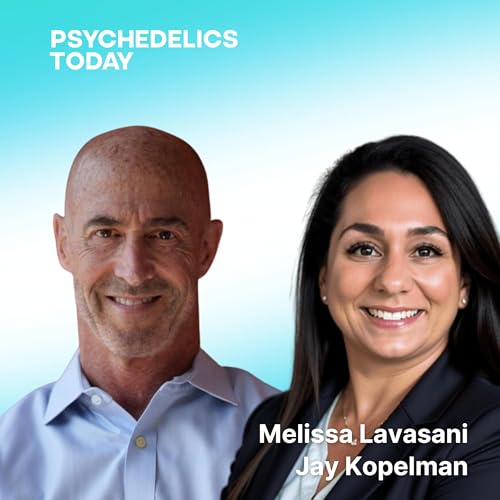
  • PT 649 - Melissa Lavasani and Jay Kopelman
    Feb 19 2026
    Melissa Lavasani & Jay Kopelman join our podcast to discuss how psychedelic policy is actually moving in Washington, DC. Lavasani leads Psychedelic Medicine Coalition, a DC-based advocacy organization focused on educating federal officials and advancing legislation around psychedelic medicine. Kopelman is CEO of Mission Within Foundation, which provides scholarships for veterans and first responders seeking psychedelic-assisted therapy retreats, often outside the United States. The conversation centers on veterans, the VA, and why that system may be the first realistic federal pathway for psychedelic care. Early Themes Lavasani describes PMC's work on Capitol Hill, including hosting events that bring lawmakers, staffers, and advocates into the same room. Her focus is steady engagement. In DC, progress often happens through repeated conversations, not headlines. Kopelman shares his background as a Marine and how his own psychedelic-assisted therapy experience led him to Mission Within. The foundation has funded more than 250 scholarships for veterans and first responders seeking treatment for PTSD, mild traumatic brain injury, depression, and addiction. They connect this work to pending veteran-focused legislation and explain why the VA matters. As a closed health system, the VA can pilot programs, gather data, and refine protocols without the pressures of private healthcare markets. Core Insights A recent Capitol Hill gathering, For Veteran Society, brought together members of Congress and leaders from the psychedelic caucus. Lavasani describes candid feedback from lawmakers. The message was clear: coordinate messaging, avoid fragmentation, and move while bipartisan interest remains. Veteran healthcare is not framed as the final goal. It is a starting point. If psychedelic therapies can demonstrate safety and effectiveness within the VA, broader adoption becomes more plausible. Kopelman raises operational realities that must be addressed: Standardized safety protocols across providersIntegration support, not medication aloneClear training pathways for cliniciansReal-world data beyond tightly screened clinical trials They also address recent negative headlines involving ibogaine treatment abroad. Kopelman emphasizes the need for shared learning across providers, especially when adverse events occur. Lavasani argues that inconsistency within the ecosystem can slow federal confidence. Later Discussion and Takeaways The discussion widens to federal momentum around addiction and mental health. Lavasani notes that new funding initiatives signal growing openness to innovative treatment models, even if psychedelics are not named explicitly in every announcement. Both guests stress that policy moves slowly by design. Meetings, follow-ups, and relationship building often matter more than public statements. For clinicians, researchers, operators, and advocates, the takeaways are direct: Veterans are likely the first federal pathwayPublic education remains essentialSafety standards must be shared and transparentIntegration and workforce development need attention now If psychedelic medicine enters federal systems, infrastructure will determine success. Frequently Asked Questions What do Melissa Lavasani & Jay Kopelman say about VA psychedelic policy? They argue that veteran-focused legislation offers a realistic first federal pathway for psychedelic-assisted care. Is ibogaine currently available through the VA? No. They discuss ibogaine in the context of private retreats and future possibilities, not an existing VA program. Why do Melissa Lavasani & Jay Kopelman emphasize coordination? Lawmakers respond more positively when advocates present aligned messaging and clear priorities. What safety issues are discussed by Melissa Lavasani & Jay Kopelman? They highlight the need for standardized screening, monitoring, integration support, and transparent review of adverse events. Closing Melissa Lavasani & Jay Kopelman provide a grounded look at how psychedelic policy develops inside federal systems. Their message is practical: veterans may be the first lane, but long-term success depends on coordination, safety standards, and sustained engagement. Closing This episode captures a real-time view of how federal policy could shape the next phase of the psychedelic resurgence, especially through veteran-facing legislation and VA infrastructure. Melissa Lavasani & Jay Kopelman argue that coordination, public education, and shared safety standards will shape whether access expands with credibility and care. Transcript Joe Moore: [00:00:00] Hello everybody. Welcome back to Psychedelics Today. Today we have two guests, um, got Melissa Sani from Psychedelic Medicine Coalition. We got Jake Pelman from Mission Within Foundation. We're gonna talk about I bga I became policy on a recent, uh, set of meetings in Washington, DC and, uh, all sorts of other things I'm sure. Joe Moore: But thank you both for ...
    Más Menos
    1 h y 10 m
Todavía no hay opiniones