Episodios

  • Roger the Engineer by The Yardbrids: Psychedelia, Experimentation, and Jeff Beck’s Genius
    Mar 10 2026

    Roger the Engineer is the 1966 studio album by the influential British rock band The Yardbirds, widely regarded as a classic of 1960s rock. Originally released in the UK simply as Yardbirds and in the US (and some other countries) as Over Under Sideways Down, it became known as Roger the Engineer thanks to the quirky cartoon cover drawn by band member Chris Dreja depicting the band’s audio engineer.

    This record stands out in the Yardbirds’ catalog for several reasons: it’s their only UK studio album made up entirely of original material, and it’s the sole album featuring guitarist Jeff Beck on all tracks, showcasing his innovative use of guitar effects and fearless experimentation.

    Musically, the album blends blues-rock roots with touches of psychedelia, hard rock energy, and adventurous sonic textures — from the driving rhythm and catchy hooks of “Over, Under, Sideways, Down” to the raw blues grooves of “The Nazz Are Blue”, and the more atmospheric, chant-like elements found on tracks like “Turn Into Earth” and “Hot House of Omagararshid”.

    Critically, Roger the Engineer has grown in stature over the decades. It reached the UK Top 20 on release and has since been celebrated in retrospectives; it appears in Rolling Stone’s list of the 500 Greatest Albums of All Time and in the book 1001 Albums You Must Hear Before You Die.

    Overall, the album captures the Yardbirds at a creative peak — restless, inventive, and pushing the boundaries of British blues-based rock toward the psychedelic and progressive sounds that would define the second half of the 1960s.


    Website
    Support the show
    Contact
    Más Menos
    31 m
  • Original Pirate Material by The Streets: The Album That Changed UK Garage Forever
    Mar 3 2026

    Original Pirate Material is the groundbreaking 2002 debut album from British music project The Streets, the brainchild of singer-producer Mike Skinner. Recorded largely at home in a Brixton room, it fuses elements of UK garage, electronic beats and hip-hop rhythms into a style that wasn’t quite like anything else at the time. What really sets the album apart is Skinner’s voice: conversational, candid and distinctively British, he delivers vivid, witty, and deeply human vignettes about everyday life — nights out, being skint, relationships, drinking, club culture and the ups and downs of youth — with sharp humour and emotional honesty.

    Critically acclaimed on release and now seen as a defining record of its era, Original Pirate Material helped bring UK garage and local storytelling into the mainstream, winning plaudits for its originality, charm, and raw portrayal of working-class UK life.


    Website
    Support the show
    Contact
    Más Menos
    29 m
  • Zombie by Fela Kuti & Africa 70: Afrobeat’s Boldest Protest Record
    Feb 24 2026

    Zombie (1976) by Fela Anikulapo Kuti & Africa 70 is one of the most ferocious and politically confrontational albums in the history of African music. Built on Fela’s signature Afrobeat—long, hypnotic grooves driven by layered percussion, cycling bass lines, stabbing horns, and call-and-response vocals—the album functions as both a musical marathon and a blistering act of protest.

    The title track, which takes up most of the record, is a biting satire aimed at the Nigerian military. Fela portrays soldiers as mindless “zombies,” trained only to obey commands without thought or conscience. Delivered in a mix of pidgin English and Yoruba-inflected phrasing, the lyrics are simple, repetitive, and intentionally chant-like, allowing the message to hit with relentless force as the groove stretches on. The band locks into a tense, almost militaristic rhythm, while the horns punctuate the song like alarms, underscoring the sense of confrontation and mockery.

    Musically, Zombie is a masterclass in controlled intensity. Africa 70 plays with absolute precision, maintaining deep-pocket funk while slowly building pressure over extended runtimes. Rather than chasing variation, the music thrives on repetition as resistance, using subtle shifts in rhythm and horn lines to keep the listener engaged while reinforcing the song’s political stance.

    The album’s impact went far beyond music. Its release directly provoked Nigeria’s military regime, culminating in a violent attack on Fela’s Kalakuta Republic compound—a moment that cemented Zombie as a cultural and political flashpoint. Today, the album stands as a towering example of how music can function as protest, satire, and communal rallying cry, embodying Fela Kuti’s belief that sound itself could be a weapon against oppression.


    Website
    Support the show
    Contact
    Más Menos
    37 m
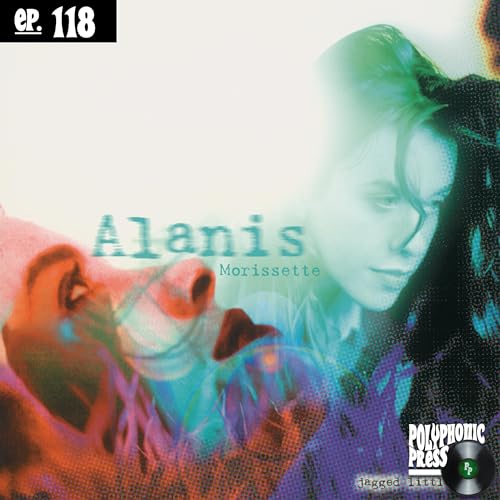
  • Jagged Little Pill by Alanis Morissette: The Confessional Album That Took Over the World
    Feb 3 2026

    Released in 1995, Jagged Little Pill is the breakthrough third album by Canadian singer-songwriter Alanis Morissette, and one of the defining records of the ’90s. Blending confessional songwriting with alternative rock, pop, and a sharp-edged emotional honesty, the album became a cultural earthquake. Morissette channels anger, vulnerability, and self-discovery with a rawness that was almost unheard of in mainstream pop at the time.

    Produced largely with Glen Ballard, the album pairs jagged, crunchy guitars with conversational lyrics that feel like pages ripped from a diary—unfiltered, self-aware, and cathartic. Tracks like “You Oughta Know” and “Right Through You” bristle with fury and betrayal, while “Ironic”, “Hand in My Pocket”, and “You Learn” expand the emotional palette to include humor, irony, introspection, and hope.

    What makes Jagged Little Pill so enduring is both its boldness and its relatability. Morissette gave a voice to complicated, messy emotions—anger, confusion, empowerment, sexual autonomy, frustration—and did it with hooks strong enough to conquer radio, MTV, and global charts. The album went on to become one of the best-selling records of all time, earned multiple Grammy Awards, and remains a timeless cornerstone of confessional rock songwriting.


    Website
    Support the show
    Contact
    Más Menos
    33 m
  • At Fillmore East by The Allman Brothers Band: A Masterclass in Live Improvisation
    Jan 20 2026

    At Fillmore East is widely regarded as one of the greatest live albums ever recorded, a blistering showcase of The Allman Brothers Band at their creative and improvisational peak. Recorded over two nights in March 1971 at New York’s storied Fillmore East, the album captures the band’s raw chemistry, genre-blending artistry, and telepathic musical interplay. What makes this record legendary is not just the performances—it’s the atmosphere: that unmistakable mix of Southern blues grit, jazz-inspired jamming, and psychedelic swagger.

    The album highlights the dual-lead guitar magic of Duane Allman and Dickey Betts, the soulful vocals and organ work of Gregg Allman, and the band’s powerhouse rhythm section. Songs stretch out with intention and purpose, not indulgence—epic takes like “Whipping Post” and “In Memory of Elizabeth Reed” become full emotional journeys, with the band pushing each theme into new territory. Even the blues standards they cover feel newly electrified, buoyed by virtuosity, spontaneity, and a fearless sense of exploration.

    A cornerstone of Southern rock and a defining document of early ’70s live music, At Fillmore East is more than a concert recording—it’s a moment in time, captured with honesty and fire, that continues to influence jam bands, guitarists, and live-recording philosophy to this day.


    Website
    Support the show
    Contact
    Más Menos
    44 m
  • Full Moon Fever by Tom Petty: From Label Rejections to Multi-Platinum Triumph
    Jan 13 2026

    Full Moon Fever (1989) is Tom Petty’s first solo album, though it still carries the unmistakable spirit of the Heartbreakers and the sonic fingerprints of producer/collaborator Jeff Lynne. The record is bright, warm, and breezy—full of chiming guitars, stacked harmonies, and the kind of effortless hooks that feel like they’ve always existed. It’s one of Petty’s most accessible and immediately lovable works, striking a balance between rock-and-roll swagger and California-sunlight charm.

    Musically, the album blends jangly power-pop, roots rock, and a hint of Lynne’s polished, Beatlesque production style. Lyrically, Petty is relaxed, humorous, and reflective. You get big-hearted optimism ("I Won’t Back Down"), mythic wanderlust ("Runnin’ Down a Dream"), and contemplative melancholy ("Free Fallin’"). There’s also a playful looseness throughout the record—Petty didn’t seem weighed down by expectations, and that freedom comes through in the songwriting.

    The result is an album that feels both intimate and huge, personal yet universal. It became one of Petty’s defining works, not only because of its hit singles, but because it captures him at his most open, melodic, and confident. It’s the sound of a great songwriter leaning fully into his strengths and delivering an album that still feels timeless.


    Website
    Support the show on Patreon
    Contact

    Support this podcast at — https://redcircle.com/polyphonic-press-classic-album-reviews/donations
    Más Menos
    42 m
  • Dry by PJ Harvey: The Gritty 1992 Album That Changed Indie Rock
    Jan 6 2026

    Dry (1992) is PJ Harvey’s fierce and arresting debut album—an explosive arrival that instantly set her apart from every other voice in early ’90s alternative rock. Recorded with her original trio (Rob Ellis and Steve Vaughan), the album is raw, unvarnished, and emotionally unfiltered, driven by jagged guitars, stark arrangements, and Harvey’s commanding, shape-shifting vocals.

    Thematically, Dry plunges into desire, bodily autonomy, vulnerability, and power, often flipping traditional gender roles on their head. Songs like “Dress” expose the expectations placed on women with biting wit, while “Sheela-Na-Gig” merges mythology and sexuality into something both confrontational and darkly humorous. Throughout the album, Harvey wields minimalism like a weapon—the production is rough, the edges deliberately frayed, making every lyric and every tremor in her voice hit with greater force.

    Despite (or because of) its grit, Dry sounds remarkably self-assured for a debut. It’s visceral, urgent, and unafraid of messy emotions, introducing PJ Harvey as an artist who wouldn’t just push boundaries—she would explode them. Over time, the album has come to be seen as one of the defining statements of ‘90s indie rock and a blueprint for countless artists who followed.


    Website
    Support the show on Patreon
    Contact

    Support this podcast at — https://redcircle.com/polyphonic-press-classic-album-reviews/donations
    Más Menos
    30 m
  • So by Peter Gabriel: How an Avant-Rock Outsider Made a Pop Classic
    Dec 2 2025

    Peter Gabriel’s So is one of the most iconic art-pop albums of the 1980s, a record that blends emotional vulnerability, ambitious production, and global musical influences into something both personal and cinematic. After years of being known as the “enigmatic” former Genesis frontman—dabbling in experimental textures, avant-rock, and political themes—Gabriel pivoted toward a more accessible yet deeply crafted sound with So. The result was a creative crossroads where pop hooks met worldbeat rhythms, and cutting-edge studio techniques met soulful songwriting.

    At its heart, So is an album about connection—romantic, spiritual, and human. You can hear it in the yearning “In Your Eyes,” the playful and sensual “Sledgehammer,” the haunted introspection of “Red Rain,” and the grief-stricken storytelling of “Don’t Give Up,” his duet with Kate Bush. The album pairs emotional depth with sonic brilliance: meticulously layered percussion, innovative sampling, and a wide palette of instruments from horns to synthesizers to traditional African rhythms.

    So also marked Gabriel’s breakthrough into the mainstream, supported by visually groundbreaking music videos—especially “Sledgehammer,” which became a cultural phenomenon thanks to its stop-motion innovation. But the album remains far more than its singles. Its sequencing, flow, and emotional arc make it a cohesive, immersive listen that still feels fresh decades later.

    In short: So is a rare achievement—an art-rock album that became a pop classic without compromising its intelligence, experimentation, or emotional honesty. If you’re exploring the most enduring albums of the ’80s, this one is essential.


    Website
    Support the show on Patreon
    Contact

    Support this podcast at — https://redcircle.com/polyphonic-press-classic-album-reviews/donations
    Más Menos
    37 m