Episodios

  • A Single Spark Can Start a Prairie Fire (January 1930) (Part Two)
    Mar 21 2026

    We conclude our close reading of Mao’s January 5, 1930 letter to Lin Biao. In this episode, Mao discusses his method for understanding the possibilities for revolution in China, as well as the particular tactics to be employed by the Red Army. He also conducts a minor self-criticism.

    Further reading:
    Stuart Schram, ed., Mao’s Road to Power, vol. 3: From the Jinggangshan to the Establishment of the Jiangxi Soviets, July 1927-December 1930
    Pang Xianzhi and Jin Chongji, Mao Zedong: A Biography, vol. 1: 1893-1949
    Mao Zedong, “A Single Spark Can Start a Prairie Fire”

    Some names from this episode:
    Lin Biao, commander of the first column of the Fourth Red Army
    Lu Diping, general who ruled Hunan from 1928–29 and Jiangxi from 1929-31

    Episode artwork:
    Envelope from a different letter that Mao wrote to Lin Biao

    Subscribe on Substack: peopleshistoryofideas.substack.com

    Support the show

    Más Menos
    31 m
  • A Single Spark Can Start a Prairie Fire (January 1930) (Part One)
    Mar 14 2026

    We begin our close reading of Mao’s January 5, 1930 letter to Lin Biao.

    Further reading:
    Stuart Schram, ed., Mao’s Road to Power, vol. 3: From the Jinggangshan to the Establishment of the Jiangxi Soviets, July 1927-December 1930
    Pang Xianzhi and Jin Chongji, Mao Zedong: A Biography, vol. 1: 1893-1949
    David Apter and Tony Saich, Revolutionary Discourse in Mao’s Republic
    Mao Zedong, “A Single Spark Can Start a Prairie Fire”

    Some names from this episode:
    Lin Biao, commander of the first column of the Fourth Red Army
    Li Lisan, leading Communist
    He Long, leader of a soviet in the Hunan-Hubei border region
    Li Wenlin, leader of Donggu base area
    Fang Zhimin, leader of Northeastern Jiangxi soviet

    Episode artwork:
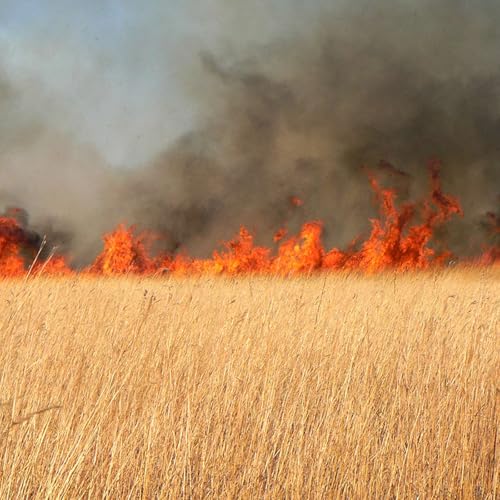
    Picture of a prairie fire (in Illinois)

    Subscribe on Substack: peopleshistoryofideas.substack.com

    Support the show

    Más Menos
    23 m
  • How Brainwashing was Good and Maoist Propaganda was True: An Interview with leading China scholar Aminda Smith
    Mar 7 2026

    This interview with Dr. Aminda Smith of Michigan State University touches on topics including why good PRC history is left history; thought reform, reeducation through labor, and brainwashing; the veracity of the propaganda produced for a global audience during the Mao years; and the Maoist legacy in China today.

    Further reading and watching:
    Aminda Smith, Thought Reform and China’s Dangerous Classes
    Aminda Smith, “The Maoism of PRC History”
    Aminda Smith, “Brainwashing and World Revolution”
    Aminda Smith, “The Legacies of 'Brainwashing': Cold War Ideology and Modern Chinese History” (the content of this talk is similar to the paywalled book chapter on brainwashing)
    Stephen Andors, China’s Industrial Revolution
    Positions Politics website
    H-PRC website
    Brian DeMare, Land Wars: The Story of China's Agrarian Revolution
    Richard Wolin, The Wind From the East: French Intellectuals, the Cultural Revolution, and the Legacy of the 1960s
    Philosophy is no Mystery
    Mao Zedong, “On Contradiction”
    Jonathan Spence, The Search for Modern China
    Zheng Yangwen, Ten Lessons in Modern Chinese History
    Maurice Meisner, Mao's China and After
    Jonathan Spence, The Gate of Heavenly Peace: The Chinese and Their Revolution
    Rebecca Karl, Mao Zedong and China in the Twentieth-Century World: A Concise History
    Yueran Zhang, “Leninists in a Chinese Factory: Reflections on the Jasic Labour Organising Strategy”
    “Seeing through Muddied Waters, Part 1: Jasic, Strikes & Unions”
    “New Alliance of Students-Workers in Struggle of Union Formation: The Case of Jasic Conflict”
    “Longing for the Cultural Revolution in China Today”
    Rae Yang, Spider Eaters: A Memoir

    Support the show

    Más Menos
    58 m
  • Chen Duxiu Update (or, the Devil Makes Work for Idle Hands) (1929)
    Dec 11 2025

    The story of how the co-founder and first General Secretary of the Chinese Communist Party became a Trotskyist.

    Further reading:
    Gregor Benton, China’s Urban Revolutionaries: Explorations in the History of Chinese Trotskyism, 1921-1952
    Gregor Benton, Prophets Unarmed: Chinese Trotskyists in Revolution, War, Jail, and the Return from Limbo
    Lee Feigon, Chen Duxiu: Founder of the Chinese Communist Party
    Chang Kuo-t’ao [Zhang Guotao], The Rise of the Chinese Communist Party (2 volumes)
    Tony Saich, The Rise to Power of the Chinese Communist Party
    Jane Price, Cadres, Commanders, and Commissars: The Training of the Chinese Communist Leadership, 1920-1945

    Some names from this episode:
    Chen Duxiu, co-founder of the Communist Party of China
    Li Dazhao, co-founder of the Communist Party of China
    Zheng Chaolin, Chinese Trotskyist
    Li Lisan, leading Communist
    Yin Kuan, resigned as Provincial Secretary in Anhui
    Peng Shuzhi, resigned as Provincial Secretary in Zhili
    Wang Zekai, Chinese Trotskyist
    Liu Bojian, former Provincial Secretary in Hubei
    Ren Xu, Chinese Trotskyist
    Xiang Ying, Jiangsu Provincial Secretary following the 6th Party Congress
    Cai Zhende, member of Jiangsu Provincial Committee
    Zhou Enlai, head of the Organization Department of the Central Committee
    Wang Ruofei, sent to work in a factory in Moscow as punishment for Trotskyism before recanting
    Qu Qiubai, top leader of Communist Party from the summer of 1927 until the Sixth Congress
    Zhang Guotao, leading Communist

    Episode artwork:
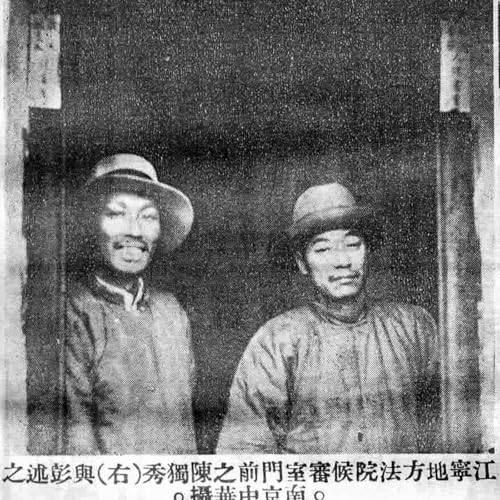
    Chen Duxiu with Peng Shuzi in 1932

    Support the show

    Más Menos
    31 m
  • Did the German Communists Really Say “After Hitler, Our Turn?” Exploring the Historical Evidence
    Nov 21 2025

    Responding to listener queries about the evidence behind this common assertion regarding the KPD’s underestimation of the fascist threat.

    Further reading:
    Jane Degras, ed., The Communist International, 1919-1943: Documents, vol. 3: 1929-1943
    International Press Correspondence
    Communist International journal (1933)
    Documents from the 13th Plenum of the ECCI

    Some names from this episode:
    Chen Duxiu, co-founder of the Communist Party of China
    Hermann Remmele, leading KPD Reichstag member
    Heinrich Brüning, German Chancellor from 1930-1932
    Osip Piatnitsky, leading Comintern figure
    Wilhelm Pieck, leader of KPD from 1934

    Episode artwork:
    Autonome Antifa (M) poster from 1991

    Support the show

    Más Menos
    19 m
  • Revolution in the ‘20s, Go For It: The ‘Third Period’ Comes to China
    Oct 31 2025

    The 1920s that is. The Comintern lets the Chinese Communist Party’s Central Committee know how the objective conditions in China are ripening for revolution.

    Further reading:
    Nikolai Bukharin, “On the International Situation and the Tasks of the Chinese Communist Party”
    Nicholas Kozlov and Eric Weitz, “Reflections on the Origins of the ‘Third Period’: Bukharin, the Comintern, and the Political Economy of Weimar Germany”
    Robin Kelley, Hammer and Hoe: Alabama Communists during the Great Depression
    Theodore Rosengarten, All God’s Dangers: The Life of Nate Shaw
    Sebastian Haffner, Failure of a Revolution: Germany 1918-1919
    Chen Jian, Zhou Enlai: A Life
    Jane Degras, ed., The Communist International, 1919-1943: Documents, vol. 3: 1929-1943
    So Wai-chor, The Kuomintang Left in the National Revolution, 1924–1931

    Some names from this episode:
    Nikolai Bukharin, general secretary of the executive committee of the Comintern (1926-1929)
    Rosa Luxemburg, German communist leader murdered in 1919
    Karl Liebknecht, German communist leader murdered in 1919
    Li Lisan, leading Communist
    Stalin, Stalin
    Feng Yuxiang, northwestern warlord who turned on Chiang Kai-shek during Sino-Soviet war
    Wang Jingwei, the overall leader of the Guomindang Left
    Chen Gongbo, main ideologue of the Reorganization Comrades Association
    Chen Duxiu, co-founder of the Communist Party
    He Long, leader of a soviet in the Hunan-Hubei border region

    Episode artwork:
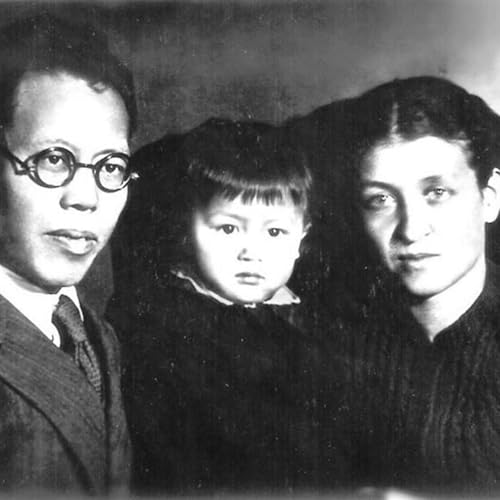
    Li Lisan with family

    Support the show

    Más Menos
    27 m
  • The Chinese Communist Party Interventions in the 1929 Sino-Soviet War
    Oct 10 2025

    How the Chinese Communist Party tried to turn war into revolution in Manchuria in 1929.

    Further reading:
    Bruce A. Elleman and Stephen Kotkin, eds., Manchurian Railways and the Opening of China
    Michael M. Walker, The 1929 Sino-Soviet War
    Chong-Sik Lee, Revolutionary Struggle in Manchuria: Chinese Communism and Soviet Interest, 1922-1945
    “Japan Moves Town to Reach Coal Vein”

    Some names from this episode:
    Miles Lampson, British minister to China
    Yang Jingyu, Fushun special branch secretary of the CCP
    Liu Shaoqi, Communist labor organizer and secretary of the CCP’s Manchurian Committee from June 1929 to March 1930
    Ting Chün-yang, veteran communist sent to Manchuria
    Meng Yongqian, veteran communist sent to Manchuria

    Episode artwork:
    Postcard of a Fushun coal mine from the early 1940s

    Support the show

    Más Menos
    23 m
  • The 1929 Sino-Soviet War Concludes
    Jun 28 2025

    The final Soviet offensive, and some details on Chiang Ching-kuo’s activities as a student in Moscow.

    Further reading:
    Bruce A. Elleman and Stephen Kotkin, eds., Manchurian Railways and the Opening of China
    Michael M. Walker, The 1929 Sino-Soviet War
    Jay Taylor, The Generalissimo's Son: Chiang Ching-Kuo and the Revolutions in China and Taiwan

    Some names from this episode:
    Zhang Xueliang, Manchurian warlord
    Feng Yuxiang, northwestern warlord who turned on Chiang Kai-shek during Sino-Soviet war
    Joseph Stilwell, United States military attaché in China
    Mikhail Borodin, Comintern agent and political head of Soviet mission to aid the Guomindang during the first Communist-Guomindang united front
    Chiang Ching-kuo, son of Chiang Kai-shek Zhou Enlai, leading Communist
    Vasily Blyukher, commander of the Special Far Eastern Army
    Aleksandr Cherepanov, commander of the 39th Rifle Division in the Soviet Far East

    Episode artwork: Picture of a young Chiang Ching-kuo

    Support the show

    Más Menos
    22 m