Episodios

  • Trump vs. The Pope: A Political and Spiritual Showdown
    Apr 17 2026
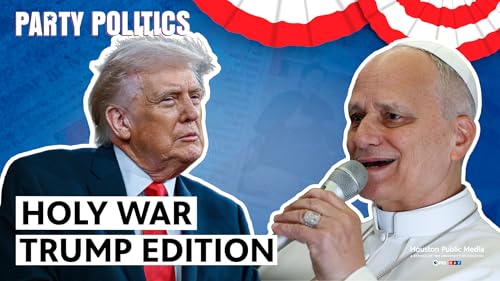
    This week on Party Politics, co-hosts Brandon Rottinghaus and Jeronimo Cortina discuss a political fight between Donald Trump and Pope Leo XIV quickly became the most unexpected — and politically risky.The tension began after Pope Leo criticized how some political leaders use scripture to justify policies, emphasizing that the teachings of Jesus center on love, compassion, and caring for neighbors. The comments were widely interpreted as a rebuke of Trump-era rhetoric.Trump fired back, claiming the Pope would not have been elected without his presidency — escalating the dispute into a rare public clash between a U.S. president and the head of the Catholic Church.The stakes are significant. There are roughly 53 million Catholics in the United States — about 20% of the electorate. For many, the Pope holds enormous moral authority, making this feud more than just another political disagreement.Political observers say this is particularly risky for Trump, who has relied heavily on religious voters. While Trump has often clashed with political opponents, a fight with a global religious leader introduces new uncertainty.Adding fuel to the fire, an AI-generated image circulated online depicting Trump as a doctor — with imagery many interpreted as portraying him as Jesus. The image sparked backlash across religious communities and overshadowed other White House messaging efforts.Trump later said he did not intend to portray himself as Jesus, but the controversy had already dominated headlines. As the administration attempted to focus on affordability and economic messaging, the Trump-Pope clash took center stage.But the feud was only one part of a chaotic political week.Congress saw sudden shakeups as Eric Swalwell and Tony Gonzales announced resignations within hours of each other, raising questions about accountability and shifting the balance of power. Republicans now face an even tighter margin in the House, complicating legislative strategy.The week also raised broader questions: Do political scandals still matter? While some lawmakers step down, others remain in office despite investigations, highlighting how partisan dynamics continue to shape accountability.Meanwhile, tensions with Iran escalated, with reports of a naval blockade and the possibility of additional troop deployments. Oil prices climbed above $100 a barrel, pushing gas prices higher and creating potential political headwinds.Other moments also competed for attention, including a DoorDash-themed White House messaging push and an impromptu press conference involving Melania Trump that generated additional headlines.Back in Texas, rising gas prices prompted Sid Miller to call on Greg Abbott to temporarily suspend the motor fuel tax.Texas Democrats also face major fines following the August quorum break, adding another layer of political tension as the election cycle approaches.The outlook for the Texas House remains uncertain, with retirements and competitive districts raising the possibility of shifts in power.Meanwhile, the Texas Senate race continues to gain attention, highlighted by a major fundraising haul from James Talarico, potentially reshaping the political landscape.Despite the wide range of developments, the Trump-Pope feud stood out as the most unexpected story of the week — a clash between politics and religion that could carry lasting political consequences.NATIONAL TOPICS:House Representatives Eric Swalwell & Tony Gonzales resign.Republicans are now down a vote in Congress.Do scandals still matter?Donald Trump's AI image sparks feud with Pope Leo XIV.Impact of President Trump's feud with the pope.DoorDash PR moment.Melania Trump's impromptu press conference.Iran update.TEXAS TOPICS:AG Commissioner Sid Miller calls for Governor Greg Abbott to temporarily pause the motor fuel tax.Texas Democrats hit with major fines in response to August quorum break.Outlook on the Texas House.Texas Senate race.James Talarico's campaign brings in major funds.In addition to YouTube, Party Politics airs every Friday night at 8:00 p.m. CT on Houston Public Media TV-8 (PBS), or listen every Friday at 7:30 p.m. CT on News 88.7. The audio podcast is also available on Apple Podcasts (or wherever you get your podcasts).
    Más Menos
    27 m
  • Trump, Iran Tensions, Birthright Citizenship Fight, and Texas Senate Drama
    Apr 13 2026

    It was another whirlwind week in politics, and this episode of Party Politics co-hosts Brandon Rottinghaus and Jeronimo Cortina tackled everything from rising tensions with Iran to a major Supreme Court battle and growing political fights in Texas.

    The president announced a two-week ceasefire with Iran, stepping back from escalating rhetoric that had raised fears of military conflict. While the pause signals potential diplomacy, little has changed — Iran still maintains its nuclear capabilities and leadership structure.

    The economic impact is already being felt, with rising gas prices and concerns about oil supply disruptions. With midterms approaching, both parties are watching closely as voters begin to feel the effects.

    In a historic move, the president attended Supreme Court arguments over birthright citizenship — a case that could reshape interpretation of the 14th Amendment.

    The administration argues that children born to undocumented immigrants or temporary visa holders should not automatically receive citizenship. Opponents say the policy is long-standing constitutional precedent.

    Regardless of the ruling, pushing the issue to the Supreme Court — and attending in person — highlights how central immigration remains to the political conversation.

    The political shakeups continued with the firing of Attorney General Pam Bondi. While the White House did not give a clear reason, controversy surrounding the handling of Epstein-related files and broader dissatisfaction with performance likely played a role.

    The move also reflects ongoing tensions between loyalty and effectiveness within the administration.

    In Texas, the Senate race between Attorney General Ken Paxton and Senator John Cornyn continues to intensify. New controversies involving donor-funded hotel stays and disputes between state leaders added to the political drama. Paxton also released an AI-generated campaign ad targeting Cornyn, underscoring how technology is increasingly shaping campaigns.

    Lawmakers are also preparing for the next Texas legislative session, with priorities including data centers, health care affordability, aviation infrastructure, teacher certification, and even discussions about annexing parts of neighboring states.

    From international tensions to state-level political fights, this week’s Party Politics breaks down the biggest stories shaping political conversations — and what they could mean heading into the next election cycle.

    NATIONAL TOPICS:

    Conflict with Iran.

    How congress and voters can respond to the conflict with Iran.

    President Trump proposes a massive national budget.

    Trump visits SCOTUS during birthright citizenship case.

    United States Attorney General Pam Bondi fired.

    Who could be the next Attorney General?

    TEXAS TOPICS:

    Governor Greg Abbott shares AI rescue image from Iran.

    Texas Attorney General and Comptroller battles.

    Ken Paxton launches new AI ads aimed at John Cornyn.

    A look at interim charges ahead of the next Texas legislative session.

    In addition to YouTube, Party Politics airs every Friday night at 8:00 p.m. CT on Houston Public Media TV-8 (PBS), or listen every Friday at 7:30 p.m. CT on News 88.7. The audio podcast is also available on Apple Podcasts (or wherever you get your podcasts).
    Más Menos
    27 m
  • Partial Shutdown Chaos Hits Home
    Mar 27 2026
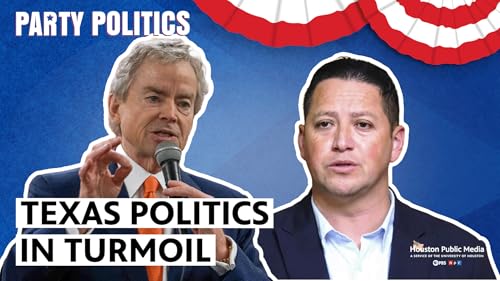
    This week on Party Politics, Co-hosts Brandon Rottinghaus and Jeronimo Cortina discuss how national and Texas political tensions collide as lawmakers brace for a turbulent stretch ahead of the midterms.At the national level, Republicans quietly weigh the possibility of a midterm conference as party leaders assess strategy and internal divisions. Meanwhile, a partial government shutdown ripples outward, triggering airport delays and renewing questions about how Washington manages basic operations. The panel also unpacks the latest developments in the Iran conflict and what escalating rhetoric could mean for U.S. foreign policy. Closer to home, new sexual abuse allegations involving Cesar Chavez spark difficult conversations about legacy, accountability, and how institutions respond to claims decades later.Texas politics are no less volatile. Senator JD Vance is set to visit the state, underscoring Texas’ outsized role in national conservative politics. Attorney General Ken Paxton makes headlines with his appearance at CPAC, while prominent Democrats also fan out across Texas, testing messaging and momentum ahead of key races. Inside the Capitol, new lieutenant governor committee assignments hint at shifting priorities and power dynamics. The Republican Senate runoff tightens, raising the stakes for November, and the episode closes with the lighter—but still telling—controversy dubbed “Talarico Vegan-Gate,” a reminder that culture wars can erupt anywhere, anytime.From global conflict to statehouse intrigue, Party Politics breaks down what matters—and what it all could mean for the road ahead.NATIONAL TOPICSGOP considers midterm conference.Partial Government Shutdown and airport delays.Iran War Update.Cesar Chavez sexual abuse allegations.Cabinet members meeting.TEXAS TOPICSJD Vance to visit Texas.Ken Paxton featured at CPAC.Democrats visiting Texas.Lieutenent Governor's committee assignmentsRepublican Senate RunoffTalarico Vegan-GateIn addition to YouTube, Party Politics airs every Friday night at 8:00 p.m. CT on Houston Public Media TV-8 (PBS), or listen every Friday at 7:30 p.m. CT on News 88.7. The audio podcast is also available on Apple Podcasts (or wherever you get your podcasts).
    Más Menos
    27 m
  • Why Texans Don’t Vote — And What Could Change That
    Mar 20 2026
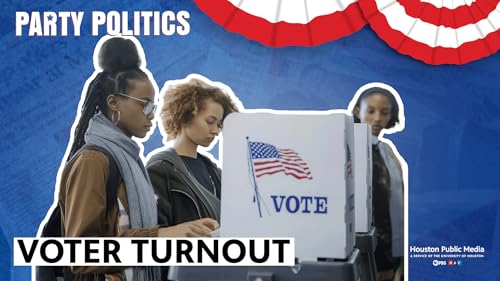
    Why do so many Texans sit out elections—even when local decisions shape daily life? On this episode of Party Politics, co-hosts Brandon Rottinghaus and Jeronimo Cortina, break down the real reasons behind Texas’ persistently low voter turnout.Texas routinely ranks near the bottom nationally when it comes to voter participation. While turnout sometimes spikes during competitive presidential elections, midterms often draw only a fraction of eligible voters, and municipal elections can see participation fall into the single digits. The hosts explain that this isn’t just about apathy—it’s about a mix of structural barriers, costs, and perceptions that shape whether people see voting as worth their time.At the center of the discussion is civic duty: the idea that voting is a responsibility tied to being an active citizen in a representative democracy. But civic motivation alone often isn’t enough. Voting also comes with costs—time spent researching candidates, navigating long ballots, figuring out where and when to vote, and overcoming registration hurdles. In Texas, where voters must register in advance and ballots can be lengthy and complex, those costs can discourage participation, especially for people with less time or access to information.The conversation also examines how election rules and policies affect turnout. Mail voting, voter ID laws, and limits on local voting innovations all play a role in shaping who votes and who doesn’t. While concerns about election security frequently dominate political debates, the hosts argue that making voting easier and making it safer are not mutually exclusive goals.Competition—or the lack of it—is another key factor. In districts where outcomes feel predetermined, many voters don’t believe their vote will matter. That sense of inefficacy is reinforced by redistricting practices and one-party dominance, even as Texas’ rapidly changing demographics suggest the potential for more competitive elections in the future.A significant portion of the episode focuses on Latino voter turnout, which remains lower on average despite Latinos making up one of the largest and fastest-growing segments of the Texas electorate. The hosts stress that Latino voters are not a monolith and point to inconsistent outreach from political parties, younger average age, and socioeconomic factors as major contributors to lower participation. Sustained engagement—not just last-minute appeals during election season—is critical to changing that pattern.Looking ahead, the hosts explore possible solutions: stronger civic education starting at an early age, more resources for local election officials, clearer communication with voters, and even bold ideas like making Election Day a holiday. Whether through better funding, policy changes, or cultural shifts that celebrate participation, the episode makes the case that higher turnout isn’t just possible—it’s essential.TOPICS:
    • What motivates voters?
    • Lack of competitive elections.
    • Issues mobilizing voters.
    • The power of the vote.
    • Roadblocks to voting in Texas.
    • Low Latino voter turnout.
    • Policies that impact voting.
    • How to motivate non-voters.
    In addition to YouTube, Party Politics airs every Friday night at 8:00 p.m. CT on Houston Public Media TV-8 (PBS), or listen every Friday at 7:30 p.m. CT on News 88.7. The audio podcast is also available on Apple Podcasts (or wherever you get your podcasts).
    Más Menos
    27 m
  • Texas Primary Overdrive: Runoffs, Realignments, and Record Turnout
    Mar 13 2026
    On this episode of Party Politics, co-hosts Jeronimo Cortina and Brandon Rottinghaus go into overtime after one of the most active Texas primaries in recent memory.What was expected to be a sleepy election instead delivered record-breaking turnout, historic numbers of runoffs, and warning signs for both parties heading into November. Democratic turnout surged by roughly 200 percent, while Republicans saw gains of more than 120 percent—an unmistakable signal of voter engagement driven by polarization, national politics, and high-profile statewide races.The conversation dives deep into the marquee Senate showdown, where John Cornyn narrowly edged Ken Paxton, setting up a Republican runoff. The hosts unpack what this bare-knuckle contest means for party unity, fundraising, and the growing power of insurgent candidates in low-turnout runoff elections.Down the ballot, the surprises kept coming. From the attorney general’s race to the powerful comptroller’s office, candidates aligned with—or running against—Greg Abbott reshaped the Republican landscape. The episode also explores the fallout of incumbents losing to challengers from their right, a trend that could shift the Texas Legislature even further ideologically.For Democrats, the primary offered cautious optimism. Independent voters and Latino voters broke decisively toward Democratic candidates in several regions, especially South Texas and the Rio Grande Valley. Cortina and Rottinghaus stress that this is not a full political realignment—but it is a signal that messaging, policy follow-through, and candidate quality will matter more than ever in November.With redistricting consequences looming, election fatigue setting in ahead of May runoffs, and national politics hovering over every contest, this episode breaks down what the Texas primary results really tell us—and what they don’t.TOPICS:Record breaking March Primary voter turnout.Takeaways from the top of the ticket races in Texas.John Cornyn and Ken Paxton move to runoff.Mayes Middleton pull ahead of Chip Roy.Don Huffines wins the comptroller’s race.Nathan Sheets defeats Sid Miller in Agriculture Commissioner race.Bo French and Jim Wright head to runoff for Texas Railroad Commissioner.Vikki Goodwin and Marcos Vélez head to a lieutenant governor runoff.House race runoffs.Incumbent Dan Crenshaw defeated by Steve Toth.Redistricting favors the democrats in March primary.Latino votes surge in the valley.In addition to YouTube, Party Politics airs every Friday night at 8:00 p.m. CT on Houston Public Media TV-8 (PBS), or listen every Friday at 7:30 p.m. CT on News 88.7. The audio podcast is also available on Apple Podcasts (or wherever you get your podcasts).
    Más Menos
    27 m
  • March Primary Madness: War Abroad and Wild Results in Texas
    Mar 6 2026
    A turbulent week in politics delivered both international tension and major shakeups in Texas elections. On this week’s episode of Party Politics, co-hosts Brandon Rottinghaus and Jeronimo Cortina unpack how conflict overseas and surprising primary results at home could shape the political landscape heading into November.The episode begins with the escalating conflict between the United States and Iran, a development that could redefine the political stakes for Donald Trump. The administration has framed the strikes as a necessary response to Iran’s nuclear ambitions and support for terrorism. But the messaging surrounding the operation has been uneven, and public opinion remains divided.Polling shows Americans split over whether the strikes were justified, raising questions about the political risk of entering a new overseas conflict in an election year. Cortina notes that wars can quickly spiral beyond their original objectives — and if oil markets destabilize or the conflict spreads, the global economic consequences could be severe.The conflict is also reigniting debate in Washington over presidential war powers. While Congress traditionally holds the authority to declare war, presidents often act first and notify lawmakers later under national security claims. Even with criticism from some members of Congress, Rottinghaus says it’s unlikely lawmakers will successfully challenge the administration’s authority in the near term.Beyond Washington, the international conflict is already reverberating in Texas politics. Investigators are examining whether a deadly shooting in Austin may have been influenced by tensions related to the war. If confirmed, the incident could further inflame political debates around immigration, religion, and national security in the state.Meanwhile, the Texas primary elections delivered their own political drama.On the Democratic side, James Talarico narrowly claimed victory over Jasmine Crockett in a closely watched race. Confusion over voting locations in Dallas County added controversy to an already tight contest. Cortina suggests Talarico’s strong ground game may have given him the edge, while polling ahead of the election proved wildly inaccurate.Republicans also saw a competitive contest unfold between John Cornyn and Ken Paxton, sending the race into a runoff. With control of the Senate looming in the background, the outcome could hinge on whether Trump ultimately throws his endorsement behind a candidate.Down-ballot races produced even more surprises. Dan Crenshaw became the first Republican incumbent since 2014 to lose a primary, defeated by challenger Steve Toth after tensions with Trump allies and criticism of the Freedom Caucus.And the primary season isn’t over yet. Several races — including contests for attorney general and multiple congressional districts — are heading to runoffs, ensuring Texas voters will soon be back at the polls.With geopolitical uncertainty abroad and political chaos at home, Rottinghaus and Cortina say this year’s election cycle is only getting started.NATIONAL TOPICS:The aftermath of the United States attack on Iran.What is next for the United States of America?TEXAS TOPICS:The political implications of an Austin gunman's actions in last week’s shooting.James Talarico defeats Jasmine Crocket in the Texas Senate Democratic Primary.Ken Paxton and John Cornyn head to a Texas Republican Senate runoff.Dan Crenshaw loses GOP primary against Steve Toth.In addition to YouTube, Party Politics airs every Friday night at 8:00 p.m. CT on Houston Public Media TV-8 (PBS), or listen every Friday at 7:30 p.m. CT on News 88.7. The audio podcast is also available on Apple Podcasts (or wherever you get your podcasts).
    Más Menos
    27 m
  • Cartel Violence, Supreme Court Tariffs, and Trump’s State of the Union
    Feb 27 2026
    This week on Party Politics, hosts Brandon Rottinghaus and Jeronimo Cortina unpack a fast-moving political landscape that spans international security, presidential power, and the high-stakes road to the midterms.The episode opens with escalating cartel violence in Mexico, tied to recent unrest in Puerto Vallarta following the capture—and death—of a major cartel leader from the Jalisco New Generation Cartel. The discussion explores why the arrest initially appeared to be a win for the Mexican government and President Donald Trump, but how cartel fragmentation could fuel even more violence. The hosts also examine the role of U.S. intelligence, the capacity of the Mexican state to restore order, and whether instability could spill over into Texas and the United States.From there, attention shifts to Washington, where the Supreme Court of the United States strikes down President Trump’s use of emergency powers to impose sweeping tariffs. The ruling raises major questions about executive authority, refunds for businesses that paid the tariffs, and the political fallout as most Americans oppose the policy. Brandon and Jeronimo discuss how the administration may pivot to other legal tools—and how tariffs could shape inflation narratives heading into the midterms.The conversation then turns to President Trump’s State of the Union address. While the speech featured moments of rare bipartisanship it was light on actionable policy and heavy on rhetoric that may energize the base while alienating independents. They also debate whether the State of the Union, increasingly resembling a campaign rally, has outlived its usefulness in its current form.Back in Texas, Trump’s upcoming visit signals growing Republican concern about turnout and competitiveness in what has become a nationally watched battleground state. That concern is amplified by the ongoing scandal surrounding Rep. Tony Gonzales, where internal GOP divisions, razor-thin House margins, and the possibility of an extreme primary challenger could put the seat—and Republican control—at risk.The episode closes with a lighter but revealing political moment: President Trump’s pardon of former Dallas Cowboys lineman Nate Newton. The move could be part of a broader pattern of celebrity clemency, raising questions about justice, politics, and the message such pardons send to the public.NATIONAL TOPICS:

    Cartel violence in Mexico.

    United States Supreme Court rules against Trump Tariffs.

    State of the Union.

    Should the State of the Union format be revamped?

    TEXAS TOPICS:

    President Donald Trump to visit Texas ahead of the midterm election.

    Tony Gonzalez scandal continues.

    Voter turnout spikes in Democratic midterm primary election.

    President Donald Trump pardons former Dallas Cowboy football player Nate Newton.

    In addition to YouTube, Party Politics airs every Friday night at 8:00 p.m. CT on Houston Public Media TV-8 (PBS), or listen every Friday at 7:30 p.m. CT on News 88.7. The audio podcast is also available on Apple Podcasts (or wherever you get your podcasts).
    Más Menos
    27 m
  • Texas Primary Election Turmoil: Jesse Jackson’s Legacy, GOP Divisions, and Media Controversies
    Feb 20 2026

    If you or someone you know may be struggling with suicidal thoughts, contact the 988 National & Suicide Crisis Lifeline by calling or texting 988.

    This week on Party Politics, co-hosts Brandon Rottinghaus and Jeronimo Cortina examined how a turbulent election season is colliding with moments of national reflection and intensifying political drama in Texas. The episode opened with the death of civil rights leader Jesse Jackson at 84, whose legacy continues to shape modern debates over voting rights, political organizing, and coalition-building.

    Texas politics also marked the passing of actor Robert Duvall at 95, while attention quickly turned back to the March primary election. With early voting approaching, the co-hosts discussed what voters should be watching for — from turnout patterns and messaging shifts to how endorsements and campaign spending may sway close races.

    Several controversies are already shaping the political landscape. U.S. Rep. Tony Gonzales is facing scrutiny over reports of an extramarital affair, while political figure Nathan Sheets revealed past struggles with addiction, prompting discussion about transparency, accountability, and voter forgiveness. Questions have also emerged around comptroller candidate Don Huffines after reports that his family owns a former New York ranch tied to Jeffrey Epstein.

    The role of media in the campaign spotlighted another flashpoint after CBS pulled an interview with Texas Rep. James Talarico from The Late Show with Stephen Colbert, citing FCC concerns — fueling debate over political speech and broadcast caution during election season.

    Finally, the episode explored the soaring cost of Texas’ U.S. Senate primary and growing fractures within the Republican Party, as endorsements from Gov. Greg Abbott increasingly diverge from those backed by President Donald Trump. Together, these developments highlight a high-stakes moment for Texas voters, with implications reaching far beyond the state’s borders.

    NATIONAL TOPICS:Jesse Jackson dies at 84TEXAS TOPICS:Actor Robert Duvall dies at 95.What should voters watch for leading up to the March primary election?Austin Representative Tony Gonzales extramarital affair scandal.Nathan Sheets reveals previous addictions and complicated past.Comptroller candidate Don Huffines' family own former New York Epstein ranch.CBS pulls James Talarico's interview on the Colbert show due to FCC concerns.Expensive Texas Senate primary election race.Endorsements: Governor Greg Abbott vs. President Donald Trump.In addition to YouTube, Party Politics airs every Friday night at 8:00 p.m. CT on Houston Public Media TV-8 (PBS), or listen every Friday at 7:30 p.m. CT on News 88.7. The audio podcast is also available on Apple Podcasts (or wherever you get your podcasts).
    Más Menos
    27 m