Episodios

  • P1: Philippe Cousteau Jr.
    Jan 1 2005
    PD-1 Philippe Cousteau Jr. Interview
    Más Menos
    17 m
  • From Backmount to Sidemount: Lamar Hires on the Dive Rite Transpac
    Jan 2 2005
    Episode Description In this episode of Pod Diver Radio, we're on location at Dive Rite HQ in Lake City, Florida with Lamar Hires to dive deep into the design, evolution, and versatility of the Transpac harness system. Lamar shares the origin story of the Transpac from tough expedition work in remote Japanese cave systems, and how the need to hike, crawl, and sump-dive with gear led to a soft, modular harness that could do what rigid backplates couldn't. Lamar breaks down how the Transpac scales from single-tank recreational diving to heavy doubles and into full sidemount with the Nomad system, all while maintaining fit, comfort, and familiarity. We explore the differences between UK "sump-first" sidemount roots and Florida-style cave sidemount, why sidemount is the ultimate self-sufficient / "solo-capable" rig, how it integrates with scooters, and why starting newer or smaller-framed divers (like teens) in a modular harness gives them a smoother path into technical and cave diving later on
    Más Menos
    13 m
  • Blue Beams & Burn Time: HID Lighting Deep Dive with Barry Miller
    Jan 3 2005
    In this episode, we head into the Salvo Diving workshop with Barry Miller for a masterclass on underwater lighting. Barry breaks down exactly how HID (High Intensity Discharge) lights work, why tech divers love their color temperature and insane burn times, and how ballasts, bulbs, and battery chemistry (lead acid, NiMH, lithium-ion) all fit into the equation. If you've ever wondered why a 10W HID can out-perform old 50W halogens—or what "5600K" really means underwater—this is your geeky, glowing deep dive into dive lights.
    Más Menos
    17 m
  • Shark Portraits & Black-and-White Magic: Underwater Imaging with Donald Tipton
    Jan 4 2005
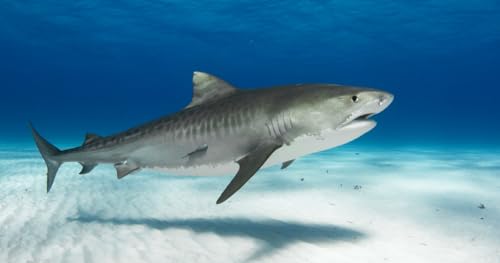
    In this image-driven episode of Pod Diver Radio, we dive deep into underwater photography with fine-art shooter and filmmaker Donald Tipton. If you're a photographer who loves sharks, black-and-white, or just learning how to "see" better underwater, this one's for you. Host Joe Cocozza kicks things off at Dosal Scuba Center in Middletown, NJ with operations manager and gear guru Bob Benson, introducing a new recurring segment, The Gear Bench—where Bob will break down life-support gear care and maintenance for serious divers and shooters who depend on their kit. Then we hand the mic to Donald for an extended masterclass on shark photography: Why understanding species-specific behavior (Caribbean reef sharks vs nurse sharks vs great whites) is the foundation of safe, compelling images. How pro shark wranglers at Stuart Cove's can "sculpt" an encounter with bait—controlling numbers, energy level, and positioning for both video and stills. Practical tips for lighting and composition in the blue: working fast, shooting almost intuitively, and setting exposure before the action starts. Why autofocus often fails in open-water shark scenes, and how to pre-set manual focus distances (3 ft, 5 ft, 10 ft) so you never miss the shot. The artistic power of black-and-white shark imagery—using ambient light + strobe to create graphic, monochrome portraits that really belong in B&W. Donald also previews his Stewart Cove five-day photo & video workshops with the Shark Research Institute, and talks about using digital workflows to craft dramatic black-and-white underwater images. Whether you're shooting DSLR, mirrorless, or video, this episode is packed with field-tested ideas to make your next shark dive look like a gallery show instead of a grab shot.
    Más Menos
    14 m
  • Black & White Below: Tech Diver's Guide to Monochrome Underwater Imaging
    Sep 16 2005
    In this "short but sweet" episode of the Pod Diver ScubaCast, host Joe Cocozza spotlights one of the tech community's favorite big-animal shooters: Donald Tipton, author of On the Face of the Waters, cave diver, wreck diver, and all-around Renaissance waterman. Joe kicks things off with a profile of Don—classically trained pianist, deep cold-water wreck veteran, cave diver, and specialist in filming and photographing whales, mantas, sharks, dolphins, manatees and other supersized critters. From free diving with humpbacks to joining Joe on dark Northeast wrecks, Don brings a tech diver's mindset to underwater imagery. Then Don takes over with a focused masterclass on black-and-white underwater photography—especially relevant for tech divers who spend their time on wrecks, in caves, and in low-vis, monochrome environments: Why big animals and shipwrecks are perfect subjects for black & white. How to "see in monochrome" and pre-visualize the final image before you even drop on the wreck. Using light direction and texture (side-lighting, ambient vs strobe) to carve structure out of the gloom. Tonal separation: why some color scenes die in B&W, and how to pick scenes that will actually work in grayscale. Film vs digital workflows for converting color files into powerful monochrome images. Why practice, repetition, and time in the water (just like tech training) are the real secret to strong images. To close, Joe hands the mic to his 13-year-old daughter Ariel for a fun, diver-kid review of the movie "The Cave"—a monster flick built around extreme cave explorers in Romania and the Yucatán. It's a light finish that will still make every cave/overhead junkie smile. If you're a technical diver who loves wrecks, caves, big animals, and wants your images to look as serious as your gas plan, this episode will get you thinking differently about what you see through the viewfinder.
    Más Menos
    22 m
  • Gas, Gears & Graveyards: Membrane Nitrox and Deep Wreck Tech Diving
    Sep 25 2005
    Inside the Gas Room: Trimix Blending and Northeast Wreck Penetration In this tech-heavy episode of Pod Diver Radio, Joe and Rescue Diver Rachel broadcast from the New Jersey shore and dive into the infrastructure behind serious diving: gas systems, deep wrecks, and how wreck and cave philosophies overlap (and don't). First up, Joe Simmons of Divers Two (Avon-by-the-Sea, NJ) takes us behind the scenes of his nitrox membrane compressor system: How membrane systems strip nitrogen and deliver banked nitrox on demand Why he moved away from partial pressure blending for day-to-day fills Using the same system to blend trimix, minimize helium waste, and hot-fill tech cylinders efficiently Real-world lessons on filtration, heat management, and why shop owners should budget for upgrades (cooling, extra filtration, helium integration) Then Capt. Dan Crowl joins Joe to talk about the evolution of technical diving—with a focus on Northeast shipwrecks versus cave diving: How cave and wreck environments drive different approaches to lines, navigation, and standardization Why a wreck's man-made structure changes how you plan penetrations compared to "wet rock" caves Environmental differences: cold, low-vis, current-swept Jersey wrecks vs. warm caves and blue-water wrecks Gear considerations for deep wrecks like the U-boat and tankers: doubles, multiple deco gases, helium-based mixes, and backup lighting Where and why divers start using trimix and how gas choices have evolved from old-school "heliair" to modern mixes If you're a technical diver, gas blender, or aspiring wreck/cave crossover diver, this episode will give you a nuts-and-bolts look at how the gas gets in your tanks—and how that gas shapes the dives you do.
    Más Menos
    21 m
  • Tech Time with Dr. Richard Vann: Decompression Risk & the Tech Diver
    Oct 5 2005
    Decompression Safety Interview: With Dr. Richard Vann Phd of DAN. In this special "Tech Time" episode, Joe sits down with Dr. Richard Vann of Divers Alert Network (DAN) to dig into the hard numbers behind decompression risk in both recreational and technical diving. Dr. Vann breaks down real-world incidence rates of DCS, why cold-water wreck diving may carry up to 15× the risk of warm-water Caribbean profiles, and how factors like workload, temperature, and dive conditions can matter just as much as your depth-time curve. You'll hear how the U.S. Navy, North Sea commercial divers, and Gulf of Mexico operators each define "acceptable risk," and what that means for tech divers doing deep, long, or complex dives. Dr. Vann also explains why DAN needs your depth-time and gas-switch data, and makes a direct appeal to the tech and cave community to start logging and sharing dives so future decompression models can better reflect real technical profiles. We wrap with how DAN supports divers worldwide, plus a quick shout from explorer Jill Heinerth on personalized training in cave, rebreather, and imaging. If you breathe helium, run stages, or plan long deco, this one's for you.
    Más Menos
    14 m
  • One Breath, Big Science: Martin Stepanek & Dr. Richard Vann on Freediving and Deep Physiology
    Oct 15 2005
    In this episode of Pod Diver Radio, we connect the dots between cutting-edge dive physiology and world-class freediving performance. First, Joe and Rescue Diver Rachel sit down with Dr. Richard Vann of Divers Alert Network (DAN) and Duke University. Dr. Vann breaks down the science of hyperbaric and hypobaric physiology—how gases, pressure, and decompression stress really affect the human body. While much of his work comes from technical and commercial diving, the concepts of CO₂ retention, inert gas loading, deep stops, and thermal stress are directly relevant to serious freedivers pushing depth and duration. Then we switch to pure breath-hold. Junior diver Ariel reviews the freediving documentary Cayman 2005: Diver Down, and Joe talks with 7-time world record freediver Martin Stepanek. Martin shares: How he progressed from monofin pool sprinting to dives beyond 100m / 330 ft on one breath What it actually feels like to do an 8-minute static apnea The training philosophy behind Performance Freediving International (PFI) How yoga-inspired breathing, relaxation, and pranayama integrate into modern freedive training Early warning signs of hypoxia and blackout (tunnel vision, color loss) and why safety protocols and a trained buddy are non-negotiable Why freediving is not about being a freak or "half-dolphin," but about trainable technique and progressive adaptation If you're a freediver who loves both data and depth—equal parts physiology nerd and line-diving addict—this episode will feed your brain and your next training cycle.
    Más Menos
    44 m
adbl_web_global_use_to_activate_DT_webcro_1694_expandible_banner_T1