

Opioid Addiction: RNA Biology, Brain Inflammation & Psychedelic Therapy
No se pudo agregar al carrito
Solo puedes tener X títulos en el carrito para realizar el pago.
Add to Cart failed.
Por favor prueba de nuevo más tarde
Error al Agregar a Lista de Deseos.
Por favor prueba de nuevo más tarde
Error al eliminar de la lista de deseos.
Por favor prueba de nuevo más tarde
Error al añadir a tu biblioteca
Por favor intenta de nuevo
Error al seguir el podcast
Intenta nuevamente
Error al dejar de seguir el podcast
Intenta nuevamente

Opioid Addiction: RNA Biology, Brain Inflammation & Psychedelic Therapy
-
Narrado por:
-
De:
Send a text
Gene regulation through RNAs, the neurobiology of opioid addiction, and how psychedelics affect drug-seeking by modulating inflammation and plasticity. Not medical advice.
TOPICS DISCUSSED:
- Gene regulation basics: DNA transcribes to RNAs, including non-coding types like microRNAs that inhibit mRNA translation into proteins, influencing up to 60% of the proteome.
- Non-coding RNAs in neuroplasticity: MicroRNAs and circular RNAs regulate synaptic changes, with activity-induced ones like miR-485-5p linked to rapid responses in drug cue memory and addiction reinforcement.
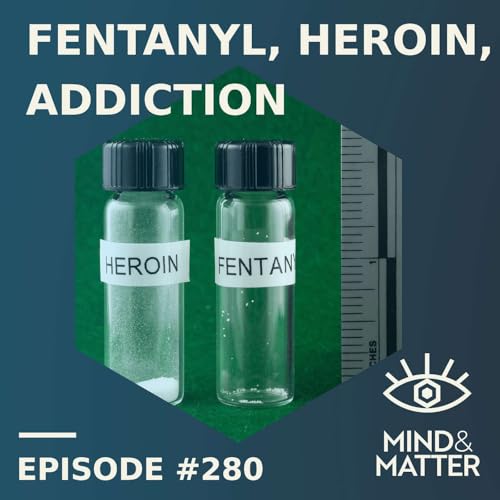
- Opioid addiction models: Rats self-administer heroin or fentanyl via levers, showing compulsive seeking; fentanyl’s higher potency drives faster learning but similar long-term effects to heroin when doses are equated.
- Differences between opioids: Heroin and fentanyl both activate mu-opioid receptors for euphoria and dopamine release, but fentanyl lingers longer; no major behavioral differences in seeking once potency is matched.
- Psilocybin’s effects on addiction: A single psilocybin dose post-abstinence reduces heroin-seeking in rats by dampening neuroinflammation in brain regions like the nucleus accumbens and prefrontal cortex.
- Brain Inflammation: Opioids induce pro-inflammatory changes via cytokines like IL-17A and pathways like TNF-alpha, leading to glial activation and blood-brain barrier leaks; psilocybin counters this.
- MicroRNA biomarkers: Blood microRNAs reflect gene expression patterns tied to disease states, with potential to predict opioid relapse risk, treatment response, or neonatal withdrawal severity non-invasively.
- Future research: Ongoing work links psilocybin’s serotonin 2A activation to anti-inflammatory gene changes, plus human studies on microRNAs for personalized addiction treatments.
ABOUT THE GUEST: Stephanie Daws, PhD is an associate professor at Temple University in the Center for Substance Abuse Research and Department of Neurosciences, where she researches mechanisms of drug-seeking behavior with a focus on opioids and psychedelics.
RELATED EPISODE:
- M&M 2 | Psilocybin, LSD, Ketamine, Inflam
Support the show
Health Products by M&M Partners:
- SporesMD: Premium mushrooms products (gourmet mushrooms, nootropics, research). Use code 'nickjikomes' for 20% off.
- Lumen device: Optimize your metabolism for weight loss or athletic performance. MINDMATTER gets you 15% off.
- AquaTru: Water filtration devices that remove microplastics, metals, bacteria, and more from your drinking water. Through link, $100 off AquaTru Carafe, Classic & Under Sink Units; $300 off Freestanding models.
- Seed Oil Scout: Find restaurants with seed oil-free options, scan food products to see what they’re hiding, with this easy-to-use mobile app.
- KetoCitra—Ketone body BHB + electrolytes formulated for kidney health. Use code MIND20 for 20% off any subscription (cancel anytime)
For all the ways you can support my efforts
Todavía no hay opiniones