Episodios

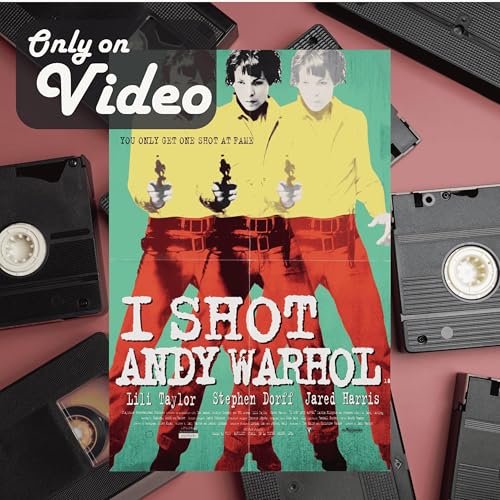
  • I Shot Andy Warhol: Mary Harron’s Uncomfortable, Brilliant Debut
    Jan 27 2026
    What if the most famous moment in Andy Warhol’s life wasn’t really about him at all?In this episode of Only On Video, I kick off a season focused on director Mary Harron, with her debut feature, I Shot Andy Warhol.This isn’t a true-crime thriller or a political screed. It’s a character study that forces you to consider Valerie Solanas without telling you how to feel about her. And as a starting point for Harron’s career, it already contains the DNA of American Psycho: dark humor, moral ambiguity, and an obsession with outsiders who don’t fit cleanly into cultural myths.In This Epsiode🎬 Context: The Film and the MomentThe mid-1990s indie film boom (Fargo, Trainspotting, Dazed and Confused)VHS, Sundance, and why forgotten stories suddenly had an audienceAndy Warhol as a canonized pop icon—and Valerie Solanas as a cultural footnoteWhy Harron was drawn to Solanas instead of Warhol🎥 Why Mary Harron?How American Psycho made me start paying attention to directorsWhy Harron’s worldview—not genre or actors—is the connective tissueWhat makes I Shot Andy Warhol such a confident first feature👥 Cast & Crew BreakdownMary Harron and her background in punk journalism and outsider cultureEllen Kuras’ gritty, claustrophobic cinematographyJohn Cale (Velvet Underground) scoring a Warhol-adjacent storyChristine Vachon’s track record producing marginalized, character-driven filmsLili Taylor’s unsettling, fully committed performance as Valerie SolanasJared Harris as a deliberately hollow, distant Andy Warhol📕 StorylineThe film’s fragmented structure and why it avoids procedural storytellingValerie’s trauma, radicalization, and obsession with being taken seriouslyThe SCUM Manifesto as ideology, satire, and emotional anchorParanoia, rejection, and the slow march back to the opening crime🎞 HighlightsLili Taylor’s fearless performanceUnexpected dark humor (“I don’t wanna get into that right now”)The Factory as a strange, temporary refugeCampy moments like the anarchist “militarization” montageA restrained, effective soundtrack🧠 LegacyHow this film launched Mary Harron’s career and set her thematic blueprintThe clear through-line to American PsychoWhy the film gave Valerie Solanas context without redemptionThe SCUM Manifesto’s renewed cultural life after the film’s releaseFun & Weird Trivia from the Episode🎥 Almost a documentary: Harron originally planned this as a doc but pivoted due to lack of archival material and reluctant interview subjects.🖼 Replica Warhol art was destroyed after filming at the request of Warhol’s estate.🎸 Lou Reed hated the movie—specifically the idea of giving Solanas attention at all.🎶 Yo La Tengo appears as the Factory band, channeling ’60s art-rock through a ’90s indie lens.🤝 John Cale scoring the film adds a meta layer—he and Warhol actually knew each other.Next UpAmerican Psycho, Mary Harron’s most famous film, Christian Bale’s breakout role, and one of the most misunderstood satires of the last 30 years.If you enjoy thoughtful, director-focused deep dives that go beyond plot summaries, follow the show and share it with a fellow film nerd.Listen and subscribe at https://onlyonvideo.com
    Más Menos
    22 m
  • American Psycho: Mary Harron's Misunderstood Masterpiece
    Feb 2 2026
    In Episode 2 of Only On Video, I dig into Mary Harron’s most famous film: American Psycho. This is one of my all-time favorites—not because it’s “fun,” but because it’s brutally precise: it’s a horror film, a pitch-black comedy, and a cultural critique masquerading as a slasher...And it’s still being argued about 25 years later.You start in a recognizable world of 1980s Wall Street excess, then you realize you’re trapped inside Patrick Bateman’s performance of humanity. By the end, you’re left with a question the film refuses to settle: did any of this happen, and does it even matter if it didn’t?In This EpisodeContext: Release, Era, and Why It HitPremiered at Sundance (January 2000), theatrical release (April 2000), and why early reviews were mixedSet in 1987 Manhattan at peak Reagan-era yuppie greed, but released at the tail end of the 1990s boomHow the film became a cult object: business cards, Huey Lewis, skincare routine, “videotapes”Why the satire still lands—and why it’s also frequently misunderstoodFrom Bret Easton Ellis Novel to Harron’s FilmThe book’s notoriety and cultural controversyHow Harron and co-writer Guinevere Turner made a version that’s not “violence as entertainment”Why implication, aftermath, and ambiguity are the pointHow the movie blends genres (satire, horror, thriller, fever dream) and why that’s both its strength and a barrier for some viewersDirector’s Context: The Casting Battle and the Movie We Almost GotHarron’s insistence on Christian Bale before he was a household nameThe studio’s push for Leonardo DiCaprio and the brief “what if” of Oliver Stone directingWhy getting Harron back in the chair mattered for the film’s tone and meaningWhy This Film Matters to MeThe movie that helped me see film as literatureRewatchability: even after multiple viewings, small details keep deepening the worldThe feeling it leaves you with: “Wait… what just happened?” as the movie shifts from literal to metaphorCast & Crew BreakdownBehind the CameraMary Harron’s second feature and a major leap in confidence, budget, and cultural volatilityGuinevere Turner’s co-writing and the film’s sharp grasp of gender, power, and imageCinematography by Andrzej Sekuła (Reservoir Dogs, Pulp Fiction) and how this New York feels bigger and more alive than I Shot Andy WarholJohn Cale’s score versus the aggressively bright pop needle drops (Huey Lewis, Whitney Houston, Phil Collins) that turn Bateman’s monologues into satireIn Front of the CameraChristian Bale as Patrick Bateman: meticulous, terrifying, funny, and deeply performativeWillem Dafoe as Detective Kimball: the perfect unreadable foilReese Witherspoon as Evelyn: vapid image management as a mirror of BatemanJared Leto as Paul Allen: envy made flesh, and an easy target for Bateman’s status panicTheroux/Lucas/Ross as the blur of interchangeable suits (intentional, but still one of my only “meh” spots)Story Highlights (Spoilers)Spoiler section covers:Bateman’s morning routine as a thesis statement: control, curation, no “real” selfThe social ecosystem: reservations, coke bathrooms, and identity confusionThe business card showdown as high-stakes status theaterThe Huey Lewis monologue into the axe murder: the film locking its tone into placeEscalation: violence, paranoia, and the film’s slide toward cartoonish breakdown (naked chainsaw chase, police shootout fantasy)The voicemail confession, the erased consequences, and the final “THIS IS NOT AN EXIT” trapdoor endingTrivia and Interesting BitsBale’s Bateman was inspired by a Tom Cruise interview: intensely friendly, “nothing behind the eyes”In the novel, Tom Cruise is literally Bateman’s neighbor (the film drops this, but keeps the influence)Bale’s commitment: stayed in Bateman’s American accent off-set; cast/crew reportedly didn’t hear his real voice until the wrap partyDafoe’s interrogation scenes were shot three ways (suspects him / doesn’t / neutral) and edited together beat-by-beat to keep you off balanceDespite a modest budget (around $7 million), a large portion reportedly went to music licensing—and the movie uses those songs as story structure, not backgroundHighs and LowsLowlightsBateman’s coworkers are intentionally flat and interchangeable, which supports the satire but reduces contrast in the surrounding worldGenre fluidity (satire/horror/thriller) is genius but also why some viewers bounce off itThe ending’s ambiguity can feel “too smart” or emotionally unrelieving if you came for a conventional horror payoffA lingering question the film provokes: is anyone good here, or is the point that this class ecosystem has hollowed out everyone?HighlightsBale’s performance: the definitive version of Bateman as both literal monster and symbol of class crueltyThe sound/music design: Cale’s cold score colliding with candy-coated popThe iconic set pieces that became cultural shorthand (...
    Más Menos
    26 m
  • The Notorious Bettie Page: The Reason Your Grandfather Kept the Garage Door Locked
    Feb 9 2026
    In Episode 3 of Only On Video (Mary Harron Season), I cover The Notorious Bettie Page—Harron and Guinevere Turner’s tonal left-turn after American Psycho. Instead of a satire about a narcissistic killer, this one follows a woman who becomes a cultural flashpoint simply for existing publicly in her own body.But, Bettie isn’t a rebel or a provocateur.She’s an “unintentional revolutionary”: cheerful, sincere, religious, and—by the standards of mid-century America—dangerously unashamed. The film’s central tension isn’t Bettie versus herself. It’s Bettie versus a society that worships her in private and condemns her in public.In This EpisodeContext: Release, Reception, and the Cultural MomentPremiered at TIFF (2005), U.S. release (April 2006)A mid-2000s culture split: nostalgia for “old America” alongside renewed debates about censorship, sexual agency, and patriarchyBettie’s rediscovery in the 80s and revival in the 90s/early 2000s (fashion, pop culture, pin-up aesthetics)Why the film didn’t hit as a box-office “moment” despite Page’s renewed visibilityHistorical Frame: Post-War Moral Panic1950s America, Red Scare-era anxiety, and the “war on obscenity”A national panic where men hold the microphone: government, church, and institutions defining “corruption”The film’s recurring hypocrisy: the same culture that profits from desire punishes women for being desirableDirector’s Context: Harron and Turner’s “Unintentional Revolutionary”Harron’s third feature and her second collaboration with Guinevere TurnerThe long development history (work began in the early 1990s)Harron’s fascination with Bettie’s contradictions: nude without shame, devout without ironyThe visual idea: black-and-white vintage Americana shifting to color as Bettie finds freer groundWhy This Film Belongs in This SeasonSame core Harron themes: power, gender, control, hypocrisy, and cultural punishmentA clean contrast with American Psycho: Bateman hides behind perfection; Bettie refuses to hide at allThe story is not cynical—Bettie is neither villain nor cautionary tale, just a likable person navigating a society built to shame herCast & Crew BreakdownBehind the CameraMary Harron + Guinevere Turner: the same team as American Psycho, but with a warmer, more curious toneCinematography by Maysie Hoy:Black-and-white as a direct echo of vintage pin-up photographyColor in Miami as a visual marker of space, freedom, and easeScore by Mark Suozzo:Period-adjacent, light, jazzy, supportive without pushing the film into melodramaHBO Films backing: more polish, but still intimate and character-focusedIn Front of the CameraGretchen Mol as Bettie Page:Radiant, sincere, and strangely untouched by the moral noise around herA “comeback” lead performance that carries the movie’s tonal balancing actLili Taylor as Paula Klaw:Pragmatic and protective, grounding Bettie within the pin-up worldChris Bauer as Irving Klaw:Opportunistic but not cartoonish; a businessman with limitsDavid Strathairn as Senator Estes Kefauver:Quiet menace as the face of institutional controlReturning Harron collaborators (Jared Harris, Cara Seymour, others) adding continuity across wildly different filmsStory Highlights (Spoilers)Act I: Innocence and ConstraintNashville upbringing, strict religious framework, and implied early traumaMarriage, violence, and the first quiet act of defiance: leavingNew York as escape, reset, and search for controlAct II: Discovery and ContradictionModeling begins as playful and almost innocent—joyful rather than “scandalous”“Men’s photography clubs,” obscenity laws, and the Klaws introducing fetish/bondage workThe surprising tone of the fetish scenes: not lurid, not exploitative, often upbeatA defining contradiction the film leans into:“I believe in Jesus,” delivered while in bondage gearBettie’s worldview: talent is a gift from God, and she’s using hersAct III: Exposure and “Redemption”Miami shift into color and a new sense of easeThe home-front hypocrisy: family judgment paired with private keeping of her imagesThe Senate investigation tightening—and Bettie never being allowed to speak for herselfThe film’s closing statement on shame:“I’m not ashamed… Adam and Eve were naked… when they sinned, they put on clothes.”Lowlights and HighlightsLowlightsPacing: at 90 minutes, it can still feel slow, with tension arriving lateLimited emotional range: Bettie’s internal drive remains deliberately opaque, sometimes to the film’s detrimentStylization: black-and-white-to-color is effective, but can feel blunt or “conceptual”A neat ending: faith-as-closure feels tidier than the ambiguity you might expect after Harron’s earlier filmsUnderplayed legacy: the film ends before Bettie’s second life as a pop-culture icon fully emergesHighlightsThe social critique: men commit real harm with little consequence while Bettie’s body becomes the “national crisis”...
    Más Menos
    21 m
  • The Moth Diaries: Just Another Young Adult Vampire Movie?
    Feb 16 2026
    In Episode 4 of Only On Video, I cover Mary Harron’s 2011 gothic horror film The Moth Diaries—a psychological vampire story set at an elite girls’ boarding school. It never reached the cult status of American Psycho or I Shot Andy Warhol, and for me it’s one of Harron’s weaker features, but it’s still an interesting pivot: a director known for satire and biographical outsiders testing her themes inside supernatural fiction.My main takeaway: the ideas are solid—grief, isolation, identity, adolescent intensity—but the execution often feels half-baked: heavy-handed foreshadowing, flat dialogue, and an anticlimactic ending that doesn’t earn the emotional payoff it’s reaching for.What This Episode CoversContext: Release, Reception, and the 2011 Vampire HangoverPremiered at the Venice International Film Festival (September 2011), then a quiet limited releaseLow commercial impact (roughly $400K worldwide) and harsh critical responseWhy it was a tough moment for vampire films: post-Twilight expectations, mainstream “romantic” vampire energy, and Harron going quieter and stranger insteadGenre and Historical DNASet in the early 2000s but built from 19th-century gothic foundations (Carmilla, Dracula)Adapted from Rachel Klein’s 2002 novel, originally framed as an anonymous diarist’s accountThe film’s core move: vampire mythology as metaphor—less lore, more emotional parasiteDirector Context: Harron Without TurnerHarron’s fourth feature and her first screenplay written entirely solo (no Guinevere Turner)A deliberate pivot away from satire/biopic into internal, psychological genre storytellingA career “experiment” that hints at later work where she handles psychological material more effectivelyCast & Crew BreakdownBehind the CameraWritten and directed by Mary Harron, adapted from Rachel KleinCinematography (Declan Quinn): desaturated, early-2010s grey-blue atmosphere that adds mood but also dates the filmScore (Lesley Barber): one of the stronger elements—minimalist unease plus female indie pop that tracks Rebecca’s emotional shiftIn Front of the CameraSarah Bolger as Rebecca (the diarist / narrator): sympathetic but underwritten; more reactive than drivingLily Cole as Ernessa: eerie and mannequin-like in a way that works for the role; one of the brighter spotsSarah Gadon as Lucy: the most natural performer, but the story loses her too early to carry the emotional weightScott Speedman as Mr. Davies: the “cool teacher” who turns predatory; effectively repulsive and thematically on-pointJudy Parfitt as Miss Rood: reliable grounding presence as headmistressStory Highlights (Spoilers)Act I: Innocence and ForeshadowingRebecca returns to school after witnessing her father’s suicide (graphic, immediate darkness)Ernessa arrives: pale, quiet, menacing—telegraphed as the center of gravity from her first sceneMr. Davies frames the text: “Sex, blood, and death” as the vampire story trifecta (the movie is not subtle about what’s coming)Act II: Obsession and IsolationLucy drifts toward Ernessa; Rebecca spirals into jealousy, grief, paranoiaGothic imagery escalates: moths, dust, antique room details, disappearances, mysterious deathRebecca’s diary fragments; visions blur; it’s unclear what’s supernatural and what’s psychologicalSuicide ideation threads through the story (razor blade motif)Act III: Death and ReleaseLucy weakens, is hospitalized, then dies off-screen (emotionally underplayed)Rebecca finds and burns Ernessa’s coffin; the climax arrives abruptly, without a full confrontationErnessa appears one last time; Rebecca drops the razor blade—symbolic release from the spiralThe Ambiguity ProblemThe movie aims for “real and metaphorical” ambiguity (vampire as grief/depression/desire), but unlike American Psycho, the uncertainty here tends to feel confusing rather than enriching—especially because the school’s emotional reactions to death feel strangely muted.Trivia and Interesting BitsIn the novel, the narrator’s name is never revealed; she’s simply “the diarist.” Harron names her Rebecca, grounding the story more concretely (and possibly nodding to the gothic jealousy of Rebecca)Harron said she hadn’t seen Twilight during production, despite inevitable comparisonsHarron described Ernessa as “both real and metaphorical”—a psychological parasite more than a traditional monsterStyle inspiration: 1970s European gothic horror (mood over jump scares), though the approach doesn’t land as effectively hereHighs and LowsHighlightsVampire-as-metaphor: grief, loneliness, and adolescent jealousy externalized rather than lore-drivenPsychological, non-romantic approach: isolation as the horror, not “sexy vampire” fantasyThe setting works: gothic school atmosphere with modern teen touches (Rock Band, dorm-room rebellion)As a season entry, it shows Harron’s willingness to stretch into new genres even when the result is ...
    Más Menos
    20 m
  • Daliland: Mary Harron’s Portrait of Salvador Dalí
    Feb 23 2026
    In the Season 1 finale of Only On Video, I close things out with Dalíland—Mary Harron’s most recent feature, and a return to the art world after I Shot Andy Warhol. This time, though, we’re not watching an artist rise. We’re watching what happens when the persona becomes the whole machine—when art, ego, commerce, and self-parody blur into one continuous performance.Daliland is an above-average, often magnetic biopic anchored by Ben Kingsley and Barbara Sukowa, with a vivid 1970s art-scene atmosphere. It’s also looser and less urgent than its ingredients suggest, and it sometimes feels unsure whether it wants to be an art-market thriller, a relationship study, or a character portrait of decline.What This Episode CoversContextPremiered at TIFF (September 2022), released theatrically in 2023, modest box officeMixed critical response, with standout praise for Kingsley and SukowaWhy this film works as a bookend to the season: Harron back in “artist mythology,” but at the end of the arc instead of the beginningHistorical FrameMid-1970s: Dalí as a celebrity icon more than a surrealist innovatorPrints, editions, authenticity, and “Dalí-as-currency” in a changing art marketThe film’s core idea: not decline as tragedy, but genius wrestling with aging and the inability to stop performingDirector ContextCo-written with John C. WalshA notable structural choice: the story filtered through James, a young assistant and witness, rather than being fully inside Dalí’s headHow it completes an informal Harron arc of artists living inside myth (I Shot Andy Warhol → Bettie Page → Dalíland)Cast and Crew BreakdownBehind the CameraCinematography: glossy 1970s glamour, hotel-suite intimacy, handheld energy (effective for closeness, sometimes distracting)Score/soundtrack: Spanish/classical textures mixed with 70s rock and entourage chaos; music used as personality, not wallpaperIn Front of the CameraBen Kingsley as Salvador Dalí: theatrical, hilarious, insecure, fragile—often in the same sceneBarbara Sukowa as Gala: muse/manager/martyr; sustaining Dalí while being trapped by himChristopher Briney as James: audience proxy and observer; useful lens, limited personal arcAndreja Pejić as Amanda Lear: a deliberate casting choice that complements Lear’s real-life mystique and ambiguitySupporting appearances that reinforce Dalí’s orbit: Alice Cooper, Jeff Fenholt, and Ezra Miller as young Dalí in flashbacksStory HighlightsAct I: New York — Celebrity Genius as RoutineDalí living at the St. Regis, surrounded by hangers-on and controlled chaosJames gets pulled into Dalí’s world and starts to feel like he “belongs” on this other planetDalí’s persona as currency: signatures, spectacle, and the performance of being “Dalí”The check-signing gag as thesis: Dalí turns even paying a bill into art (and a dodge)The New York Show: The Myth SlipsThe exhibition underwhelms; the comeback doesn’t materializeDalí and Gala fracture publicly; James is fired from the gallery jobThe story pivots to Europe and the darker mechanics behind the legendAct II: Spain — Forgery, Dependence, and the Weight of AgingPrints/lithographs authenticity subplot: Dalí signing ahead of production, money moving, truth getting blurryGala’s fortress life and her lover; the marriage as mutual dependence, not romanceFlashbacks to young Dalí/Gala: how she provided structure and confidence—how the myth was builtJames confronts the fraud; Dalí retreats into self-deception because myth is survivalEpilogue: 1985 — The Persona’s AfterimageYears later, post-fire injury and post-Gala, James returns a signature bookDalí flips through the many versions of himself—an ending that quietly reinforces the film’s obsession with identity-as-performanceFunny / Interesting Facts and MomentsThe restaurant check signature: “When Dalí signs, they do not cash it. They frame it.” A perfect micro-scene for Dalí’s blend of genius, ego, and financial gamesmanship.Alice Cooper’s real-life Dalí connection: the film’s hologram collaboration isn’t random—Dalí and Cooper actually did cross paths creatively in the 1970s.Amanda Lear casting: Harron’s choice to cast Andreja Pejić reads like an intentional nod to Lear’s self-created ambiguity and public mythmaking.Dalí’s pre-signing practice: the film’s fraud subplot ties into long-running debates about late-career Dalí prints and authenticity.Surrealism as legacy, not trend: the movie doesn’t lecture on surrealism, but it quietly shows Dalí living in a world where the “movement” has passed and only the “name” remains.Highs and LowsLowlightsThe narrative lacks urgency despite inherently high-stakes material (fraud, collapsing career, volatile marriage)Handheld camerawork can feel mismatched with the material’s visual precisionFlashbacks are thematically necessary but often too thin to fully landJames works as a witness, but his subplot threads ...
    Más Menos
    27 m