Nutritional Medicine Podcast Podcast Por Benjamin Brown arte de portada

Nutritional Medicine Podcast

Nutritional Medicine Podcast

De: Benjamin Brown
Escúchala gratis

The Nutritional Medicine Podcast is the official podcast of the Nutritional Medicine Institute (NMI), an educational, advocacy and research group committed to advancing the science and practice of nutritional medicine. The podcast features interviews with leading scientists, clinicians and advocates of nutritional medicine, including integrative, functional and lifestyle medicine-based approaches. Expert interviews are focused on the role of diet and nutrition, environment, behaviour and lifestyle as determinants of health. We explore science that informs the application of personalised lifestyle, dietary interventions and nutrient-based supplements in clinical practice. Your host is Benjamin Brown, Director of the Nutritional Medicine Institute and expert in personalised nutrition and lifestyle medicine. The contents of the NMI Podcast are for educational purposes and intended for health professionals. This information is not a substitution for standard medical care. Health professionals are solely responsible for the care and treatment provided to their own patients.2025 Enfermedades Físicas Higiene y Vida Saludable
Episodios
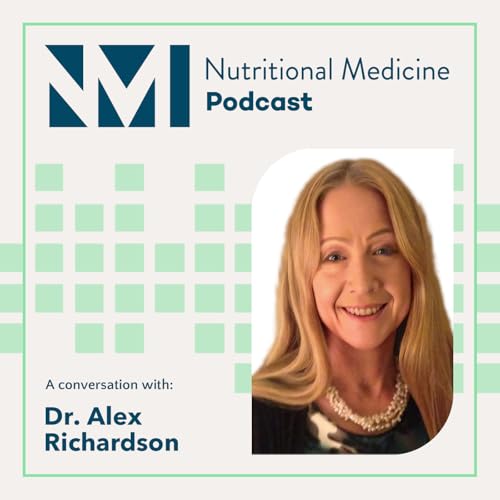
  • Dr. Alex Richardson: Pioneering Clinical Research into Food and Mental Health
    Mar 27 2026

    This remarkable conversation with Dr. Alex Richardson covers the development of her research that was some of the first to demonstrate the influence of food and nutrition on mood and behaviour. Dr. Richardson has been hugely influential in putting nutrition for mental health on the map, especially in areas such as dyslexia, dyspraxia, ADHD, depression and schizophrenia. From genetics, biochemistry, and nutrition to physiological and psychological functioning, we explore diverse themes relevant to everyone.

    About our guest:

    Dr Alex Richardson is a world-renowned researcher, educator, speaker and published author; and the Founder Trustee and Scientific Director of the UK-based charity, Food and Behaviour (FAB) Research. Based at the University of Oxford for 30 years, the impact of her 90+ peer-reviewed publications places Dr Richardson in the top 3% of academic researchers worldwide.

    In addition to her work for FAB, she is currently a Visiting Research Fellow at the University of Bournemouth, Research Consultant for the Centre of Nutrition and Behaviour at the Rotherham, Doncaster and South Humberside NHS Trust, and research collaborator with the Dept of Psychology at the University of Swansea.

    Alex is best known for her research into how nutrition (particularly fatty acids) can affect behaviour, learning and mood, as her pioneering clinical trials were the first to show that dietary supplementation with omega-3 (and omega-6) fats can improve behaviour and learning in children with dyslexia, dyspraxia, ADHD and related conditions; and that this approach may also help many other children without such diagnoses. She also published some of the earliest reports of successful nutritional approaches to both depression and schizophrenia in young adults, which have subsequently been confirmed and extended by others.

    Her work has always been highly inter-disciplinary and collaborative, involving several large-scale collaborative programmes that include studies of epidemiology, genetics, brain imaging, biochemistry and nutrition as well as physiological and psychological functioning. Her main interests centre on the role of nutrition in brain health, and its implications for behaviour, learning and mood, particularly in relation to: neurodevelopment, mental health, links between mental and physical health.

    Alex's research has also always been primarily aimed at developing new methods of identification and management that will have real practical benefit.

    In addition to her role as a founder director of FAB Research, she also helped to found the Dyslexia Research Trust, was a co-opted Trustee and Scientific Advisor to the Dyspraxia Foundation, served on the Biomedical Research Committee of Autism Unravelled, and liaised closely with the Hyperactive Children's Support Group, among many others.

    Guest websites and links:

    • https://www.fabresearch.org

    Selection of our guest's publications:

    • Montgomery P, Burton JR, Sewell RP, Spreckelsen TF, Richardson AJ. Fatty acids and sleep in UK children: subjective and pilot objective sleep results from the DOLAB study--a randomized controlled trial. J Sleep Res. 2014 Aug;23(4):364-88.
    • Richardson AJ, Burton JR, Sewell RP, Spreckelsen TF, Montgomery P. Docosahexaenoic acid for reading, cognition and behavior in children aged 7-9 years: a randomized, controlled trial (the DOLAB Study). PLoS One. 2012;7(9):e43909.
    • Richardson A. They Are What You Feed Them: How Food Can Improve Your Child's Behaviour, Learning and Mood. Harper. 2010.
    • Cyhlarova E, Montgomery P, Ross MA, Richardson AJ. Niacin skin test response in dyslexia. Prostaglandins Leukot Essent Fatty Acids. 2007 Aug;77(2):123-8.
    • Richardson AJ, Puri BK. A randomized double-blind, placebo-controlled study of the effects of supplementation with highly unsaturated fatty acids on ADHD-related symptoms in children with specific learning difficulties. Prog Neuropsychopharmacol Biol Psychiatry. 2002 Feb;26(2):233-9.
    Más Menos
    1 h y 17 m
  • Dr. James Greenblatt: Depression; A Functional Medicine Approach Focusing on Underlying Causes
    Feb 25 2026

    For over 30-years, Dr Greenblatt has been practicing, researching and educating health providers on the role of personalised nutrition in psychiatry and remains at the forefront of this important area. His new book Finally Hopeful: The Personalized, Whole-Body Plan to Find and Fix the Root Causes of Your Depression is a landmark contribution and will transform people's lives while highlighting the power of personalised, evidence-based nutrition practice to improve mental health care.

    Guest:

    Dr. James Greenblatt

    About our guest:

    James Greenblatt, MD, is a globally recognized pioneer in functional and integrative psychiatry with over 30 years of clinical experience. He has dedicated his career to transforming the treatment of mental health disorders through precision-based approaches that integrate laboratory testing, nutritional interventions, and root-cause analysis. Dr. Greenblatt earned his medical degree and completed a psychiatry residency at George Washington University, and pursued a Child and Adolescent Psychiatry fellowship at Johns Hopkins Medical School. A prolific author, Dr. Greenblatt has written nine books, including his newest title, Finally Hopeful: The Personalized, Whole-Body Plan to Find and Fix the Root Causes of Your Depression, and the bestseller Finally Focused: The Breakthrough Natural Treatment Plan for ADHD. He serves as an Assistant Clinical Professor of Psychiatry at Tufts University School of Medicine and Dartmouth College's Geisel School of Medicine. Previously, he served as Chief Medical Officer for Walden Behavioral Care/Monte Nido, a national mental health organization specializing in eating disorders. In 2019, Dr. Greenblatt founded Psychiatry Redefined, a leading platform for continuing education for clinicians in functional and integrative psychiatry, designed to bridge critical knowledge gaps for mental health professionals.

    Guest websites and links:

    • https://www.jamesgreenblattmd.com
    • https://www.psychiatryredefined.org/

    Selection of our guest's publications:

    • Greenblatt J, Gottlieb B. Finally Hopeful: The Personalized, Whole-Body Plan to Find and Fix the Root Causes of Your Depression. Penguin Random House. 2026.
    • Greenblatt J, Dimino JC. Functional Medicine for Antidepressant Withdrawal. FriesenPress. 2022.
    • Greenblatt J. Finally Focused: The Breakthrough Natural Treatment Plan for ADHD. Harmony. 2017.
    Más Menos
    32 m
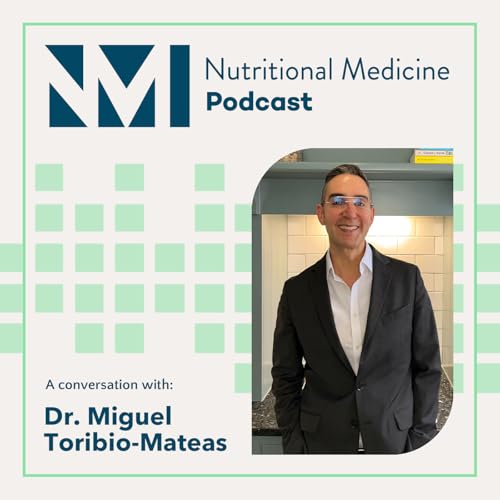
  • Dr. Miguel Toribio-Mateas: Navigating Nutrition Misinformation with Context, Nuance and Compassion
    Jan 30 2026

    Dr Miguel is a remarkable scientist in that he gracefully bridges the worlds of research, education, clinical practice, public outreach and compassion in his work. This interview explores topics relevant to the translation of science to real world relevance in an authentic, compassionate and humanistic way. We also explore his new book ADHD Body and Mind: A Compassionate Guide to Rewilding Your Nervous System with Neuroscience, Nutrition, and Gut-Brain Health.

    Guest:

    Dr. Miguel Toribio-Mateas

    About our guest:

    Dr. Miguel Toribio-Mateas is a clinical neuroscientist, applied microbiologist, and nutritionist with over 25 years of experience in healthcare, science, and technology. His research explores the microbiota-gut-brain axis, investigating how diet and lifestyle influence mood, cognition, and behaviour. With a doctorate in gut microbiome and mental health, his work has earned recognition, including the prestigious Santander Universities Work-Based Learning Award in 2016 and publication in peer-reviewed journals like the BMJ.

    Dr. Miguel has led transdisciplinary research projects, designing and overseeing clinical trials that examine the role of nutrition in psychiatric and neurodevelopmental conditions. He previously held a five-year research fellowship at London South Bank University, focusing on gut health's impact on cognitive function and mental wellbeing. Currently, he is part of a multi-centre team evaluating natural approaches to ADHD management and holds an Honorary Research Fellowship at Cardiff University's School of Psychology. Alongside his research, he is a lecturer in nutrition at the University of West London, where his work focuses on quality improvement in public health interventions and their interface with gut and brain health.

    He is has a self-compassionate guide to the neuroscience of ADHD, which will be published in April 2026 by Jessica Kingsley Publishers. Through his research, teaching, and writing, Dr. Miguel empowers individuals to make informed, evidence-based dietary choices that nurture both body and mind—always with the understanding that self-care is not about perfection, but about kindness and adaptability.

    Guest websites and links:

    • https://drmiguelmateas.com
    • https://www.instagram.com/drmiguelmateas

    Selection of our guest's publications:

    • Toribio-Mateas M. ADHD Body and Mind: A Compassionate Guide to Rewilding Your Nervous System with Neuroscience, Nutrition, and Gut-Brain Health. ‎Jessica Kingsley Publishers. 2026.
    • Lawrence K, Fibert P, Toribio-Mateas M, Gregory AM, Hobbs J, Quadt F, Wright S, Cotter PD, Patel S, Myrissa K. Effects of kefir on symptoms, sleep, and gut microbiota in children with ADHD: a randomised controlled trial. BMC Psychiatry. 2025 Nov 24;25(1):1117.
    • Toribio-Mateas M, Noble G. Making Room for Every Voice: Reimagining Person-Centred Care in the Neurosciences. Health Expect. 2025 Aug;28(4):e70350.
    • Lawrence K, Fibert P, Hobbs J, Myrissa K, Toribio-Mateas MA, Quadt F, Cotter PD, Gregory AM. Randomised controlled trial of the effects of kefir on behaviour, sleep and the microbiome in children with ADHD: a study protocol. BMJ Open. 2023 Dec 7;13(12):e071063.
    • Toribio-Mateas MA, Bester A, Klimenko N. Impact of Plant-Based Meat Alternatives on the Gut Microbiota of Consumers: A Real-World Study. Foods. 2021 Aug 30;10(9):2040.
    • Shevlyakov A, Nikogosov D, Stewart LA, Toribio-Mateas M. Reference values for intake of six types of soluble and insoluble fibre in healthy UK inhabitants based on the UK Biobank data. Public Health Nutr. 2021 Jun 9:1-15.
    • Toribio-Mateas M. Harnessing the Power of Microbiome Assessment Tools as Part of Neuroprotective Nutrition and Lifestyle Medicine Interventions. Microorganisms. 2018 Apr 25;6(2):35.

    Más Menos
    1 h y 13 m
Todavía no hay opiniones