Episodios

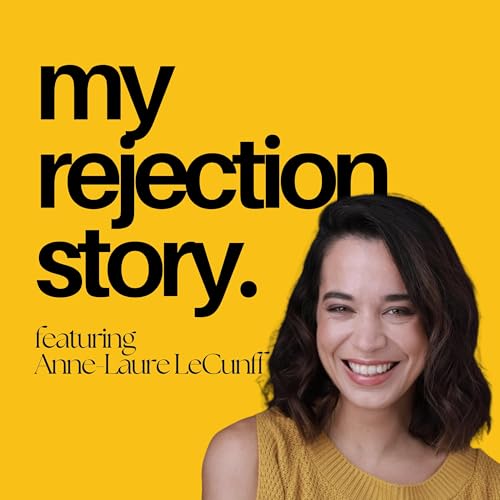
  • Anne-Laure LeCunff: Overcoming Negativity Bias Through Tiny Experiments
    Mar 18 2026

    Why does one rejection have the power to override dozens of wins? Why does your brain cling to the time you were told you're not good enough — and quietly use that story to limit what you try next?

    In this episode of My Rejection Story, Alice is joined by Anne-Laure Le Cunff (neuroscientist and author of Tiny Experiments) to explore how the negativity bias shapes our response to rejection, why the brain's survival wiring keeps us playing small, and how tiny experiments can help us break free.

    Anne-Laure explains the neuroscience behind brain negativity bias: your brain records negative experiences with far more weight than positive ones because in ancestral environments, rejection meant being cast out of the group, which meant death. This negative bias psychology made sense for survival, but in modern life the negativity bias quietly convinces us that raising our hand or trying something new is a threat worth avoiding. She also introduces the self-consistency fallacy — the belief that because you've always been a certain way, you must continue that way. This negative cognitive bias narrows possibility and keeps us stuck.

    If you've seen Anne-Laure Le Cunff's TED talk or her Anne-Laure Le Cunff Big Think appearance, you'll recognize the themes — but this conversation goes deeper into the personal fear behind the framework. Anne-Laure shares her own story of leaving Google after a health scare, launching a startup for the wrong reasons, and finding liberation when it failed. That failure became the catalyst for everything that followed, including Tiny Experiments by Anne-Laure Le Cunff.

    Together they explore how to stop negativity bias from running your life — not through willpower, but through curiosity-driven experimentation and metacognition. They discuss why big goals often backfire, why tracking metrics without tracking how you feel is a trap, and how negative attribution bias causes us to internalize rejection as proof of unworthiness rather than information. Anne-Laure Le Cunff's tiny experiments framework offers an alternative: small, time-bound actions evaluated through honest reflection on both external results and internal experience. This is overcoming negativity bias not by fighting your brain, but by giving it new data.

    In this episode they explore:


    • How the negativity bias developed as a survival mechanism and why it backfires today
    • The self-consistency fallacy and how past rejection becomes a limiting identity story
    • Why you cannot rationalize your way out of fear and what actually works
    • The neuroscience of exposure therapy and rewiring brain negativity bias
    • Anne-Laure's journey from Google to burnout to building Ness Labs
    • Why big goals trigger the arrival fallacy and social comparison
    • How metacognition makes experiments meaningful
    • Intentional imperfection and communicating your limits to prevent burnout
    • The difference between toxic productivity and mindful productivity
    • This episode is an invitation to stop letting the negativity bias write your story. Your brain's job is to keep you safe — your job is to decide whether safe is enough.

    Connect with Anne-Laure Le Cunff

    Website: nesslabs.com

    Instagram: @neuranne

    Book: Tiny Experiments, https://www.amazon.ae/Tiny-Experiments-Freely-Goal-Obsessed-World/dp/0593715136

    Chapters

    00:00 The Self-Consistency Fallacy and How Rejection Shapes Identity

    02:10 The Negativity Bias and Why Your Brain Overweights Rejection

    05:25 Why Rational Thinking Cannot Override Fear

    07:57 Exposure Therapy and Rewiring the Brain

    09:33 Leaving Google and a Life-Threatening Health Scare

    13:46 How the Brain Handles Uncertainty

    17:52 When Failure Becomes Liberation

    22:02 Tiny Experiments as a Tool for Rebuilding Agency

    29:35 Metacognition and Reflecting on What Actually Worked

    34:59 Anne-Laure's Own Tiny Experiments

    41:45 Intentional Imperfection and Overcoming Burnout

    46:11 Mindful Productivity Over Toxic Productivity

    Más Menos
    48 m
  • How Abandonment Issues Can Contribute to Fear of Rejection, with Dr. Carol Chu-Peralto
    Feb 18 2026

    Why does rejection sometimes feel bigger than the moment itself? Why can a missed text, a declined invitation, or a breakup trigger something that feels far older and deeper than the situation at hand?

    In this episode of My Rejection Story, Alice is joined by Dr. Carol Chu-Peralta, clinical psychologist and trauma specialist, to explore the powerful link between rejection and abandonment. Together, they unpack what rejection abandonment really means, how early caregiver dynamics shape our fear of rejection and abandonment, and why abandonment wounds can amplify even small relational disappointments.

    Dr. Carol explains the key difference between rejection and abandonment: rejection is often situational and time-limited, while abandonment tends to be chronic, relational, and rooted in early attachment experiences. When someone carries rejection abandonment issues from childhood, everyday rejection can feel like proof of being fundamentally unworthy. What might objectively be a mismatch can subjectively register as rejection abandonment betrayal injustice trauma.

    Throughout the conversation, they explore how fear of rejection abandonment issues can develop into anxiety rejection abandonment patterns in adulthood—such as overanalyzing relationships, keeping people at arm’s length, or rejecting others first to avoid being left.

    They also dive into healing: how to pause before spiraling, how to differentiate between intuition and trauma response, and how gradual exposure, community, and movement can support overcoming rejection and abandonment. Rather than offering quick fixes, this episode offers grounded, practical insight into rejection sensitivity and abandonment—and what it takes to build resilience without shaming yourself.

    If you’ve ever wondered what does rejection abandonment mean in real life, why feelings of abandonment and rejection can feel existential, or how rejection and abandonment trauma shape your relationships today, this conversation will help you understand your patterns with more clarity and compassion.

    In this episode, they explore:

    • The psychological difference between rejection and abandonment—and why it matters

    • How fear of rejection and abandonment often stems from early caregiver dynamics

    • Why people with rejection abandonment issues may personalize neutral events

    • The link between rejection sensitivity and abandonment trauma

    • How anxiety around rejection abandonment shows up in adult relationships

    • How to pause, label, and reframe negative self-talk loops

    • How to tell the difference between red flags and trauma-triggered fear

    • Why gradual exposure (not extreme “rejection challenges”) builds real resilience

    • The role of community in healing rejection and abandonment trauma

    • How bilateral movement and somatic work support trauma processing

    This episode is an invitation to see your fear of rejection abandonment not as weakness, but as an adaptive response that once kept you safe. Healing isn’t about eliminating vulnerability—it’s about building capacity to stay present when connection feels risky.

    Connect with Dr. Carol Chu-Peralta:

    Website: www.centerforresiliency.com
    Instagram: https://www.instagram.com/centerforresiliencynj/


    Chapters

    00:00 What Does Rejection Abandonment Mean?
    03:00 The Difference Between Rejection and Abandonment
    07:00 How Abandonment Trauma Fuels Fear of Rejection
    12:00 Anxiety Rejection Abandonment in Adult Relationships
    18:00 Why Rejection Can Feel Like Betrayal or Injustice
    24:00 Pausing Before You Personalize
    31:00 Intuition or Trauma Response? How to Tell the Difference
    39:00 Exposure Therapy and Building Rejection Resilience
    47:00 Loneliness, Isolation, and the Fear of Being Seen
    53:00 Movement, Bilateral Processing, and Healing Trauma
    01:00:00 Final Thoughts: Overcoming Rejection and Abandonment Without Shaming Yourself

    Más Menos
    57 m
  • Listener Favorite: Guy Winch on How to Heal From Romantic Rejection
    Feb 11 2026

    Why does heartbreak hurt so much? According to psychologist and bestselling author Guy Winch, it’s not just emotional—it’s biological. Heartbreak hijacks your brain like an addiction, making it one of the most painful experiences a person can endure. In this episode, Guy breaks down the science of heartbreak, the biggest mistakes people make when trying to move on, and why heartbreak needs a mourning ritual—just like grief. If you’ve ever struggled to let go, this episode is for you.

    Website:

    ⁠https://www.guywinch.com⁠

    Guy’s TED Talks:

    ⁠https://www.ted.com/speakers/guy_winch⁠

    Guy’s Books:

    📕How to Fix a Broken Heart

    ⁠https://www.amazon.com/dp/1501120123⁠

    📕Emotional First Aid: Healing Rejection, Guilt, Failure, and Other Everyday Hurts

    ⁠https://www.amazon.com/dp/0142181072⁠

    📕The Squeaky Wheel: Complaining the Right Way to Get Results, Improve Your Relationships, and Enhance Self-Esteem

    ⁠https://www.amazon.com/The-Squeaky-Wheel-Guy-Winch-Ph-D-audiobook/dp/B004INR2VU/⁠

    Listen to Guy’s PodcastDear Therapists:

    ⁠https://podcasts.apple.com/us/podcast/dear-therapists-with-lori-gottlieb-and-guy-winch/id1523340696⁠

    Chapters:

    00:00 Introduction to Guy Winch

    03:32 Heartbreak as the Ultimate Rejection

    09:45 Why Heartbreak Feels Like Drug Withdrawal

    14:20 The Science Behind Rejection and Emotional Pain

    19:05 The Mistakes People Make When Healing from Heartbreak

    24:40 Why Social Media Stalking Makes It Worse

    30:15 The Importance of a Mourning Ritual for Heartbreak

    37:00 How to Stop Idealizing Your Ex

    42:18 Replacement Strategies—The Healthy Way to Move On

    48:30 Rebuilding Rejection Resilience and Dating Again

    🎧 Listen to the full episode to learn how to heal a broken heart and move forward with resilience!


    Más Menos
    50 m
  • Listener Favorite: Arielle Estoria on The Human Need for Belonging & Unfolding
    Feb 4 2026

    What if the fear of rejection is actually a fear of being fully seen?

    In this poetic and soul-searching episode, author and spoken word artist Arielle Estoria opens up about what it means to grow beyond who the world expects you to be—and how devastating, liberating, and cyclical that journey can be.

    Best known for her viral Arielle Estoria poems, her book The Unfolding, and her ability to speak straight to the soul, Arielle shares the deeply personal story behind her own “unfolding.” She discusses the grief of leaving behind old identities, the risk of becoming someone new, and the human need for belonging—especially when you no longer fit the roles that once made you feel loved.

    We talk about how her relationship with her husband gave her the courage to question inherited beliefs, why creativity is a core value in her life, and what it means to trade approval for truth. Whether you're in the middle of your own unfolding story or afraid to let go of the identity you’ve outgrown, this conversation is a balm for anyone who's ever felt the sting of having no sense of belonging.

    What We Cover:

    • The awakening: What it feels like to outgrow the life that once felt safe

    • How Arielle’s husband became a catalyst for growth and authenticity

    • Grief as part of growth: What we don’t talk about when we talk about becoming

    • Letting go of people, labels, and spaces that no longer reflect who you are

    • Why creativity as a value is about healing, not performance

    • The cost of honesty: Losing gigs, friends, and familiarity—and choosing truth anyway

    • What it means to rewrite your “too much” narrative

    • How her book The Unfolding and her album The Art of Unfolding were created for her own healing first

    • The one Arielle Estoria quote every creator needs to hear

    • How rejection became redirection—and why the work always finds who it’s meant for

    • Using art to create belonging, not applause

    • Why even non-artists can use creativity for healing

    Quotes That Hit Hard:

    💬 "I’d rather have friends who love me whole than love me half."
    💬 "That’s the old story. Now, what’s the new one?"
    💬 "Creativity is not about sounding good—it’s about speaking soul to soul."
    💬 "Rejection isn’t a dead end. Sometimes, it’s a reroute to yourself."

    Chapters:

    00:00 – Intro
    01:30 – Awakening vs autopilot living
    04:45 – How her husband gave her permission to explore
    08:30 – The grief of growing and letting go
    12:00 – Rejection, community loss, and spiritual dissonance
    15:10 – Redefining self-worth and belonging
    18:20 – How Arielle Estoria poems became a healing practice
    22:45 – Why her writing isn’t for the ears—but for the soul
    26:10 – Her response to low book sales and how she redefined success
    30:45 – Can anyone access healing through art? (Yes.)
    35:00 – The raw vulnerability of publishing your truth
    40:00 – What rejection taught her about audience, ego, and trust
    43:00 – Rewriting the unfolding story in real time

    Resources:

    • 📚 Arielle Estoria books: The Unfolding

    • 🎧 The Art of Unfolding – Spoken word album (Spotify, Apple Music, etc.)

    • 🔗 Website: www.arielleestoria.com

    • 📲 Instagram: @arielleestoria

    Más Menos
    47 m
  • How to Deal with Book Publishing Rejection, & Tips for Landing the Book Deal with Allison Lane
    Jan 28 2026

    Why does book rejection feel so personal—so final? Why does a book rejection letter have the power to stall a project for years, even when the idea still matters? And how do some authors seem to land book deals—sometimes before the book is even written—while others stay stuck in endless rejection cycles?

    In this episode of My Rejection Story, Alice is joined by Allison Lane, founder of Allison Lane Literary, a former PR executive turned book strategist who has helped every one of her clients land an agent and secure a book publishing deal. Together, they unpack what rejection in the publishing world actually means—and why it’s rarely about your worth, talent, or intelligence.

    Allison reframes rejection as a strategic signal, not a dead end. Drawing from decades in PR, brand strategy, and publishing, she explains why most aspiring authors misunderstand how the industry works, why writing the full book too early can actually hurt your chances, and how to become “book rejection proof” by thinking like a business—not a hopeful artist waiting for approval.

    Throughout the conversation, Alice and Allison explore how childhood rejection, shame, and trauma shape creative ambition, why nonfiction books are sold on proposal (not passion), and how authors can learn how to get a book deal with no money, without an agent, or before writing the book—if they understand the real rules of the game.

    In this episode, they explore:

    • Why book publishing rejection is usually a signal—not a verdict

    • What a book rejection letter is actually telling you (and what it’s not)

    • How to deal with rejection when writing books without losing momentum

    • How to get a book deal without an agent—and when an agent actually matters

    • How to get a book deal with a publisher by pitching the idea, not the manuscript

    • Why nonfiction authors should learn how to get a book deal before writing the book

    • How to get a book publishing deal by widening—not narrowing—your audience

    • Why “being good” isn’t what sells books, and what does

    • How authors with small platforms still land major deals (including lessons from Allison Lane books and clients)

    Rather than romanticizing rejection or offering empty encouragement, this episode gives listeners a clear-eyed look at the publishing ecosystem—where books are products, authors are brands, and rejection is part of the filtering process, not a personal failure.

    If you’ve ever asked yourself how do you get a book deal? or how can I get a book deal without burning years on the wrong strategy? this conversation will fundamentally change how you approach publishing—and rejection itself.

    Connect with Allison Lane:
    Website: https://lanelit.com

    LinkedIn: https://www.linkedin.com/in/allisonlanelit/


    Chapters

    00:00 Rejection as Redirection—and Why Publishing “No’s” Aren’t Dead Ends
    03:30 Saying Yes Early: Why Idealism Can Quietly Stall Creative Careers
    08:45 What PR Teaches You About Pitching—and Why Most Book Pitches Fail
    13:30 ADHD, Trauma, and Why Rejection Cuts Deeper for Some Creators
    18:00 Shame, Silence, and the Stories We’re Afraid to Write
    23:00 Why Some People Grow After Trauma—and Others Get Stuck
    27:30 Imposter Syndrome, Ambition, and the Fear of Being Left Behind
    32:00 Standing Out Without Credentials: How Alison Learned to Be Unignorable
    37:00 Why Writing the Full Book First Is a Mistake in Nonfiction
    41:00 How Publishers Actually Decide Which Books to Buy
    46:00 The Myth of “Too Niche” vs. the Reality of Audience Expansion
    51:00 Why Books Don’t Sell Because They’re Good—and What Actually Makes Them Sell
    56:00 Becoming the Marketer of Your Own Book (Without Doing Everything)
    01:00:30 Building a Platform Before the Book—and Why Timing Matters
    01:02:00 Final Thoughts: Becoming Book-Rejection-Proof and Taking Action

    Más Menos
    1 h y 4 m
  • What is Family Estrangement? (Brooklyn Beckham Mess & More)
    Jan 21 2026

    What does it actually mean when someone cuts off their family — and why does family estrangement provoke such intense reactions from the outside world?

    In this short solo episode, Alice uses the recent public fallout involving Brooklyn Beckham, David Beckham, and Victoria Beckham as a cultural moment to explore family rejection and estrangement, one of the most misunderstood — and stigmatized — forms of rejection.

    Rather than speculating about who is right or wrong in the Beckham situation, Alice explains why public stories about family conflict are almost always incomplete. She unpacks why family estrangement in adulthood can be both a necessary act of self-protection and an emotionally devastating loss — and why outsiders often rush to assign blame when an adult child cuts contact with their parents.

    Drawing directly from Psychology Today research, this episode breaks down what family estrangement actually is, why adult children most often initiate it, and why it’s frequently confused with family alienation or scapegoating. Alice also explores why family estrangement stories — especially high-profile ones like the Brooklyn Beckham situation — trigger such strong emotional reactions, moral judgments, and assumptions about loyalty.

    In this episode, Alice explains:

    • What family estrangement really means, based on psychological research

    • Why estrangement usually unfolds slowly over years, not suddenly or impulsively

    • The most common reasons adult children experience family rejection, including emotional abuse, neglect, and clashes of values

    • The difference between family estrangement and family alienation — and why black-and-white thinking can signal unresolved harm rather than clarity

    • Why family estrangement carries so much stigma, shame, and social judgment

    • What research shows about how long family estrangement typically lasts, and why reconciliation isn’t always possible — or healthy

    • Why people are so uncomfortable with the idea that someone might need distance from their family to protect their mental health

    Alice also addresses why public speculation about the Brooklyn Beckham feud — including assumptions about control, loyalty, and marriage — reflects broader cultural discomfort with family estrangement and rejection trauma, rather than any real understanding of what happens behind closed doors.

    This episode is not about celebrity gossip.
    It’s about family estrangement, rejection, boundaries, and the psychological toll of being misunderstood when the people who are supposed to love you become unsafe.

    If you’ve ever struggled to understand why someone would estrange themselves from their family — or if you’ve lived through family rejection and felt judged, dismissed, or forced to justify your decision — this episode offers clarity without blame.


    Resources mentioned:

    Psychology Today — Family Estrangement (Reviewed by Psychology Today Staff)
    https://www.psychologytoday.com/us/basics/family-dynamics/family-estrangement

    Fern Schumer Chapman, What Research Tells Us About Family Estrangement (2024)
    https://www.psychologytoday.com/us/blog/brothers-sisters-strangers/202402/statistics-that-tell-the-story-of-family-estrangement

    Calling Home podcast: https://podcasts.apple.com/us/podcast/calling-home-with-whitney-goodman-lmft/id1706820976


    Chapters:

    00:00 Why the Brooklyn Beckham Story Triggered Such a Strong Reaction
    02:00 Why We Don’t Actually Know What’s Happening Inside That Family
    04:00 What Family Estrangement Is — and What It Isn’t
    06:00 Why Adult Children Cut Off Parents
    08:00 Estrangement vs. Alienation: Complexity vs. Black-and-White Thinking
    10:30 Why Family Estrangement Is So Stigmatized
    13:00 How Long Estrangement Lasts — and Whether Reconciliation Is Possible
    15:00 Final Thoughts: Why Family Rejection Is One of the Hardest Losses to Explain


    Más Menos
    23 m
  • Why Are We So Afraid of Rejection? A Survival-Based Exploration from an Evolution Expert
    Jan 7 2026

    Why does rejection feel so threatening—sometimes even more destabilizing than physical danger? Why does losing approval, status, or belonging shake our confidence so deeply? And why does the fear of rejection seem impossible to fully “heal” or outgrow?

    In this episode of My Rejection Story, Alice is joined by Jeremy Sherman, an evolution and social science researcher who studies the origins of life, human behavior, and what he calls the “black market of confidence.” Together, they explore rejection not as a psychological flaw—but as a survival mechanism rooted deep in human evolution.

    Jeremy challenges the idea that rejection hurts simply because of brain wiring or trauma. Instead, he reframes rejection as a threat to confidence itself—something humans have always needed to stay alive, belong to groups, and navigate danger. With language, imagination, and social comparison layered on top of biology, humans became uniquely vulnerable to rejection in ways no other species is.

    Throughout the conversation, Alice and Jeremy unpack why confidence operates like a scarce resource, why humans quietly compete for affirmation while pretending they don’t need it, and why attempts to “solve” rejection often miss the point entirely.

    In this episode, they explore:

    Why fear of rejection didn’t evolve for happiness—but for survival
    How humans operate in a constant “black market” of confidence and affirmation
    Why language and imagination make rejection more destabilizing for humans than animals
    The evolutionary trade-off between visibility, status, and danger
    Why confidence feels abundant until it disappears—and why we panic when it does
    Why there may be no permanent cure for fear of rejection, only ways to live with it more honestly

    Rather than offering tidy solutions, this episode invites listeners to sit with paradox: the need for confidence, the inevitability of rejection, and the freedom that comes from recognizing that this tension is part of being human—not evidence that something is wrong with you.

    If you’ve ever wondered why rejection feels existential, why confidence feels fragile, or why approval seems to matter more than logic says it should, this conversation will leave you thinking—and possibly relieved that the struggle isn’t personal.


    Connect with Jeremy:


    TRYING BEINGS Youtube Channel: https://www.youtube.com/channel/UCjH_fBN6aQQ0uw5324tSrcg?view_as=subscriber

    Instagram: instagram.com/jeremyshermanphd/?hl=en

    Chapters

    00:00 Why Rejection Feels Like a Survival Threat
    02:00 Introducing Jeremy Sherman and a New Way to Think About Rejection
    06:00 Confidence as a Scarce Resource—and a Black Market
    11:00 Language, Imagination, and Why Humans Fear Rejection So Deeply
    18:00 Why Confidence Feels Stable—Until It Disappears
    26:00 The Evolutionary Trade-Off Between Visibility and Safety
    34:00 Why There Is No Permanent Cure for Fear of Rejection
    43:00 Aging, Status Loss, and the Fear of Becoming Invisible
    52:00 Purpose, Community, and What Happens When Roles End
    01:02:00 Final Thoughts: Living With Rejection, Not Solving It

    Más Menos
    1 h y 6 m
  • Tracy Otsuka: How to Overcome Learned Helplessness with ADHD
    Dec 24 2025

    In this episode, ADHD thought leader, author, and host of the Tracy Otsuka podcast joins Alice for a conversation about identity, rejection, and the quiet conditioning that teaches so many women to shrink. Drawing from her own story and the research behind learned helplessness psychology, Tracy explains why women with ADHD are especially vulnerable to internalizing criticism — and how those early messages of “you’re too much,” “you’re not enough,” “you’re disorganized,” shape a lifetime of self-doubt.

    Tracy breaks down the learned helplessness meaning in practical terms: the moment you stop trying because every attempt has been shut down. She shares learned helplessness examples from childhood socialization, school environments, and relationships where girls are punished for intuition, sensitivity, and non-linear thinking. And she clarifies the difference between weaponized incompetence vs learned helplessness — one is manipulation, the other is survival.

    She also explains the neuroscience behind why ADHD brains shut down during rejection, why emotional flooding sends the prefrontal cortex offline, and how that creates a cycle of avoidance, fear, and stalled decision-making. Tracy and Alice explore the overlap between learned helplessness and depression, how masking becomes a default for ADHD women, and why regaining a sense of agency begins with identity, not productivity hacks.

    This conversation is for anyone who’s ever felt stuck, ashamed, or convinced they “can’t trust their brain.” For anyone wondering how to explain the concept of learned helplessness to themselves or others, or why learned helplessness ADHD patterns can be reversed with intention, identity work, and small acts of self-trust. Tracy reminds us that the opposite of helplessness isn’t perfection — it’s action, built one decision at a time.

    If you’ve ever felt like you’re living someone else’s version of your life, or if you want to understand why ADHD women struggle despite being intuitive, brilliant, and highly capable, this episode is a must-listen. Tracy’s work — through her coaching, her Tracy Otsuka book, and her learned helplessness podcast conversations — offers a blueprint for reclaiming your agency and building an identity rooted in who you truly are.

    Resources & Links:

    • Tracy’s book: ADHD for Smart Ass Women

    • Tracy’s podcast: ADHD for Smart Ass Women

      Website & Programs: ADHDforSmartWomen.com


    • Chapters

      00:00 The Double Standard: Why Women With ADHD Carry More Shame
      03:40 Intuition, Sensitivity, and Reading the Room
      04:35 What Rejection Does to an ADHD Brain
      06:51 Socialization, Masking, and the Roots of Learned Helplessness
      07:26 Learned Helplessness Meaning: When Self-Preservation Becomes Avoidance
      09:15 The Gendered Misdiagnosis of ADHD & Emotional Flooding
      12:18 Action, Dopamine, and Why Interest Drives Everything
      13:49 Trauma, Identity, and Reversing Learned Helplessness
      15:40 Finding Your Area of Interest & Building Positive Emotion
      18:07 How Tracy Wrote Her Book Using Fun, Challenge, and Social Accountability
      21:33 Intention, Identity, and Becoming Someone You Trust
      24:59 The Opposite of Helplessness: Pride, Purpose, and Dopamine


    Más Menos
    26 m