Episodios

  • Dogs Save Lives: Depression, Grief & The Human-Animal Bond That Keeps Us Alive w/ Dr. David Haworth
    Feb 15 2026

    In this episode, I continue my conversation with Dr. David Haworth, and we're going somewhere deeper—into the human-animal bond that saves lives. Not metaphorically. Literally.


    We explore what enrichment actually looks like for your individual dog (hint: it's not one-size-fits-all), the real stories of heart dogs and the lessons they teach us, what the Golden Retriever Lifetime Study revealed about cancer and the microbiome, why guilt and anxiety are part of loving deeply, and how to honor the end of life with grace.


    If you've ever felt like your pet understands you in ways humans don't, if you've grieved an animal so deeply it surprised you, or if you've wondered if you're doing enough for them—this conversation will meet you exactly where you are.


    KEY INSIGHTS:

    ✨ What enrichment actually looks like: mind stimulation, body stimulation, and emotion stimulation tailored to your individual dog.


    ✨ Why opening a window brings an entire universe of stimulation to dogs—they experience the world through their noses.


    ✨ The concept of "sniffy walks" where dogs read the newspaper on every vertical surface versus exercise walks for training.


    ✨ Why laser pointers can trigger obsessive compulsive prey drive in cats—not fun, but frantic and stressful.


    ✨ How the Golden Retriever Lifetime Study revealed that cancer is overrepresented in dogs, but not as much as we thought when you factor in age and life expectancy.


    ✨ Why the future of longevity and cancer treatment lies in microbiome medicine, and how AI can help us understand the complexity of gut health.


    ✨ How dogs with anxiety often have microbiome imbalances, and why the gut-brain connection affects behavior, hormones, and food preferences.


    ✨ Why quality of life matters more than length of life, and how pets teach us to "square the curve"—living well until the very end.

    ✨ How our pets often tell us when it's time to let go, and why honoring that is one of the greatest gifts we can give them.


    ✨ Why guilt and anxiety are part of loving deeply, and how these feelings mean you're doing it right.


    ✨ How calmer, more confident pet parents often have calmer, more confident dogs—they pick up on our energy.


    FOLLOW:

    Dr. David Haworth on LinkedIn: https://www.linkedin.com/in/david-haworth/


    Integrative Pet Wellness Center: https://integrativepet.com Integrative Pet Wellness Center on Instagram: @integrativepet

    Dr. Lily Chen on Instagram: @dr.lilychen @the.unicorn.vet


    ➡️Sign up to our newsletter to get more holistic pet care tips 🐶🐈‍⬛


    Más Menos
    44 m
  • Modern Pet Parenting: Technology, Enrichment & The Reality of Dog Ownership w/ Dr. David Haworth
    Feb 8 2026

    We've made being a dog safer than ever before. But is safer actually better?


    Think about it: We leave our dogs alone for 8-10 hours a day. We live in apartments where they can't run free. We keep them away from other dogs until they're 16 weeks old. And then we create an entire industry—TVs for dogs, automatic ball launchers, anxiety medications—to manage the fallout of a lifestyle that, let's be honest, we created.


    So here's the uncomfortable question: Are we solving real problems, or are we just trying to make ourselves feel better about asking dogs to adapt to a world that wasn't built for them?


    In this episode, I sit down with Dr. David Haworth, a veterinarian with a PhD who has worked at every level of the animal health industry—from Pfizer to PetSmart Charities to Morris Animal Foundation. He's currently on the Board of Dog TV, a network scientifically designed to reduce stress for pets home alone.


    And before you roll your eyes at "TV for dogs," stay with us—because what we're really exploring isn't about screens or gadgets. It's about the ethics of modern pet ownership, what enrichment actually means, and whether we're being honest with ourselves about what dogs truly need.


    If you've ever felt guilty leaving your dog home, questioned whether you're doing "enough," or wondered if technology is helping or just distracting from bigger problems, this episode is for you.


    KEY INSIGHTS:


    ✨ Why "safer" isn't always healthier for dogs, and how risk, learning, and engagement are essential for their wellbeing.


    ✨ What Dog TV actually is: scientifically designed content to calm, engage, or provide habituation therapy (not just random videos).


    ✨ How modern TVs (60 frames per second) finally allow dogs to see screen content, unlike older TVs that just flickered.


    ✨ Why bad behavior is the fastest way to erode the human-animal bond, and how environmental enrichment prevents it.


    ✨ Why we need to stop prescribing "just walk your dog 2 miles a day" when real life doesn't always allow for it.


    ✨ The hard truth: most people put less thought into getting a dog than buying a car they'll replace in 2-3 years.


    ✨ How dogs mirror the parts of our personality we need to see—especially the negative ones we'd rather ignore.


    ✨ The powerful statistic: After a spouse dies, having a dog doubles your survival rate in the first year because it forces you to maintain routine.


    ✨ Why the human-dog bond is fundamentally different from other animal bonds, and why we need better language to describe it.


    RESOURCES:
    Dog TV: dogtv.com
    Embark Genomics: Breed identification and genetic health testing
    Dr. David Haworth's longevity-focused pet podcast launching in 2026


    FOLLOW:
    Dr. David Haworth on LinkedIn: LinkedIn


    Integrative Pet Wellness Center: https://integrativepet.com
    Integrative Pet Wellness Center on Instagram: @integrativepet
    Dr. Lily Chen on Instagram: @dr.lilychen @the.unicorn.vet


    👉Sign up to our newsletter to get more holistic pet care tips 🐶🐈‍⬛


    Más Menos
    46 m
  • She's Cured 70+ Cats from FIP: Here's What Every Cat Owner Needs to Know w/ Dr. Lisa Fiorenza
    Feb 1 2026
    I know what you're thinking. Wait, isn't this podcast about dogs? Yes. Yes it is. But today, we're doing something different because sometimes there's information so important, so lifesaving, that it doesn't matter if you're a dog person, a cat person, or both.If you're listening to this episode, there's a good chance your heart is heavy. Maybe you just heard the words "FIP" from your vet. Maybe you're watching your kitten fade and you feel helpless. Maybe you've been told there's nothing that can be done.I need you to hear this: FIP is no longer a death sentence.I'm sitting down with Dr. Lisa Fiorenza again, a veterinarian who has cured over 70 cats from Feline Infectious Peritonitis (FIP) since 2020. Seventy cats who were supposed to die are now thriving.For decades, FIP was considered incurable. When I graduated from vet school in 2007, we were taught that if a cat was diagnosed with FIP, the kindest thing we could do was prepare the family to say goodbye. There was no treatment. No hope.But that's not true anymore.In this special episode, Dr. Lisa is sharing everything you need to know: how to recognize FIP early, what treatment actually works, where to find help if your vet isn't aware of the cure that's now legally available in the United States, and what the success rate really looks like.Spoiler: It's 95% if treatment is started in time and the cat is responding well.This information could save a cat's life. Whether you have cats, know someone who does, or just care about animals—please listen, take notes, and share this episode with anyone who loves cats.There is hope, and we are here to help you find it 💚KEY INSIGHTS:✨ How FIP went from a death sentence to a 95% cure rate, and why every cat parent needs to know this now.✨ What FIP (Feline Infectious Peritonitis) really is: a coronavirus that mutates in certain cats and hijacks their immune system, causing massive inflammation.✨ Why FIP is most common in kittens and often triggered by stress like vaccines, surgery, adoption, new pets, or environmental changes.✨ How to recognize FIP early: decreased appetite, decreased energy, weight loss, and sometimes a distended belly (wet form) or neurologic/eye symptoms (dry form).✨ Why FIP is called "the great pretender" and how it can look like so many other diseases, making diagnosis challenging.✨ How the drug GS (a pro-drug of remdesivir) became the cure for FIP after research published in 2018 by UC Davis and Dr. Niels Pedersen.✨ Why underground Facebook groups saved tens of thousands of cats before the drug was legalized in June 2024.✨ How treatment now costs $600-$4,000 (depending on cat size and pharmacy) compared to the previous $4,000+ for unregulated injectable versions.✨ Why oral GS is now the preferred treatment over injectable (it's less painful, more effective, and doesn't cause bladder stones).✨ What minimal testing you need before starting treatment: blood count, chemistry panel, and feline leukemia/FIV test to rule out other diseases.✨ Why creating drug resistance is a serious concern, and why treatment should only be used when there's strong clinical suspicion of FIP.✨ How to find FIP-savvy vets and resources, including the FIP Global Cats Facebook group and FIP Vet Education Group.RESOURCES:🐾 Dr. Lisa's FIP White Paper – Free resource on diagnosing and treating FIP @DrLisaHolisticVet🐾FOLLOW:Dr. Lisa Fiorenza on Instagram: @drlisaholisticvet Dr. Lisa Fiorenza on Facebook: facebook.com/doctorLisa Integrative Pet Wellness Center: https://integrativepet.com Integrative Pet Wellness Center on Instagram: @integrativepet Dr. Lily Chen on Instagram: @dr.lilychen @the.unicorn.vet Sign up to our newsletter to get more holistic pet care tips 🐶🐈‍⬛
    Más Menos
    44 m
  • You're Not Imagining It: Why You and Your Pet Share the Same Health Problems — With Dr. Lisa Fiorenza
    Jan 25 2026
    Have you ever noticed that when you're anxious, your dog seems anxious too? Or that you and your pet struggle with the same health issues — digestive problems, autoimmune diseases, even the same kind of anxiety? You're not imagining it.In this powerful conversation, Dr. Lily sits down with Dr. Lisa Fiorenza, an integrative veterinarian who sees this pattern every single day in her practice. Together, they explore the fascinating connection between pet and human health, the gut-brain axis, microbiome restoration therapy, and why our animals are often mirrors of our own emotional and physical state.This episode will change the way you think about healing — not just for your pet, but for yourself too.Key Insights✨The Mirror Phenomenon Pets and their people often present with remarkably similar health issues. Dr. Lisa shares how she consistently sees anxious owners with anxious pets, people with GI issues whose pets have chronic diarrhea, and even families dealing with autoimmune diseases alongside their cats experiencing the same condition. This isn't coincidence — it's a message.✨The Gut-Brain Connection 95% of our serotonin (our "happy chemical") is made in the intestines. When the gut is out of balance, it doesn't just affect digestion — it impacts mood, anxiety, behavior, and overall health. The same is true for our pets. Healing the gut can transform not just physical symptoms, but emotional wellbeing too.✨Microbiome Restoration Therapy (MBRT) Dr. Lisa walks us through MBRT — a two-step process using rectal ozone to clear out harmful bacteria's "suit of armor" (biofilm), followed by healthy fecal transplant material to repopulate the gut with beneficial microbes. This therapy is creating profound transformations in pets with chronic GI issues, anxiety, autoimmune conditions, and even cancer.✨Energy and Emotions Matter Our pets pick up on our emotional state in ways we're only beginning to understand. Dr. Lisa emphasizes the importance of managing our own anxiety and grief — especially during palliative care or end-of-life situations — so we don't transfer that emotional burden onto our beloved companions.✨Integrative Medicine Works Best When You Don't Have to Choose You don't have to pick between conventional and holistic care. The magic happens when you combine them — using surgery, chemotherapy, or medications alongside acupuncture, herbs, and microbiome restoration to support the body's natural healing capacity and improve outcomes.✨Prevention is Everything So many chronic diseases start years before symptoms appear. By the time pets are visibly sick, inflammation and imbalance have often been building for a long time. Preventive integrative care — addressing gut health, nutrition, and emotional wellbeing early — can change the trajectory entirely.Resources & LinksConnect with Dr. Lisa Fiorenza:Practice name: Dragonfly Holistic Veterinary CareLinktree: linktr.ee/DrLisaHolisticVetEmail: dragonflyholisticvet@gmail.comFacebook: facebook.com/DogtorLisaInstagram: @drlisaholisticvetIntegrative Pet Wellness Center: https://integrativepet.comIntegrative Pet Wellness Center on Instagram: @integrativepetDr. Lily Chen on Instagram: @dr.lilychen @the.unicorn.vet Sign up to our newsletter to get more holistic pet care tips 🐶🐈‍⬛
    Más Menos
    59 m
  • Inside the Mind of a Monk Vet: How Ancient Wisdom Explains Modern Pet Health Issues w/ Dr. Bharat Kumar
    Jan 18 2026

    In this episode, I sit down with Dr. Bharat Kumar, once an emergency vet, now a holistic house call vet, to explore a part of pet health that's often overlooked: the emotional, energetic, and spiritual lives of our animals.


    Dr. Kumar blends Ayurveda, psychology, meditation, Reiki, acupressure, and holistic medicine to better understand the rich emotional and mental landscape our pets navigate.


    We talk about why dogs in India seem to face different health challenges than dogs in the U.S., why our animals often carry the emotions they absorb from us, and how meditation and energetic presence can support deeper healing.


    If you’ve ever felt like your pet was holding up a mirror to your inner world, this episode is for you.


    KEY INSIGHTS:

    ✨ How pets absorb the emotions of their humans — and why they struggle to process what they take on.


    ✨ Why animals in India have fewer chronic diseases, and what that reveals about their lifestyles.


    ✨ How Dr. Kumar’s background in Ayurveda and meditation shapes his understanding of inflammation, gut health, and long-term wellness.


    ✨ How energetic presence, intention, and calm can change a pet’s behavior instantly during an exam or treatment.


    ✨ Why spiritual practices like Reiki and meditation help pets release stored stress and emotional “residue.”


    ✨ Why fixing the gut is often the first step in resolving allergies, anxiety, GI issues, and immune dysfunction.


    ✨ Why Dr. Kumar believes pets are “enlightened beings” whose health depends on the energy of their environment — including their humans.


    RESOURCES:

    Dr. Bharat and I might be collaborating on a meditation retreat for pet parents next year. To make sure you don’t miss any updates join my email list here 🐶👇


    Get meditation retreat updates and holistic pet parent tips


    FOLLOW:

    You can book an appointment with Dr. Kumar through this website: https://comfortpawsmobilevet.com/

    Dr. Kumar On Instagram: @drbhrtkumar

    Integrative Pet Wellness Center: https://integrativepet.com

    Integrative Pet Wellness Center on Instagram: @integrativepet

    Dr. Lily Chen on Instagram: @dr.lilychen @the.unicorn.vet


    Sign up to our newsletter to get more holistic pet care tips 🐶🐈‍⬛


    Más Menos
    1 h y 27 m
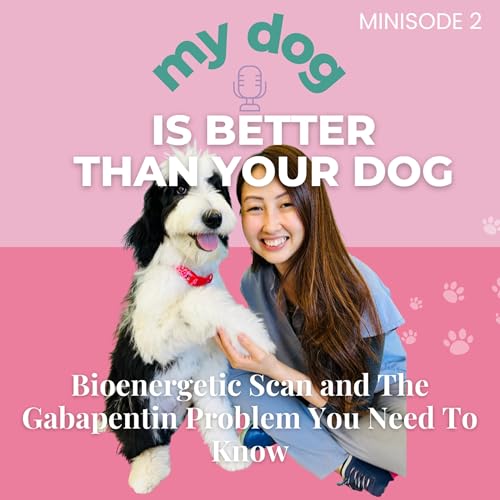
  • Bioenergetic Scan and The Gabapentin Problem You Need To Know
    Jan 14 2026

    In this personal minisode, Dr. Lily Chen opens up about her word for 2026, a surprising case that's changing how she practices medicine, and an important study every pet parent (and human) taking gabapentin should know about.


    This isn't a typical episode with a guest expert or clinical protocols. This is Dr. Lily, fresh back from Taiwan and about to head to VMX, sitting with you and sharing what's on her mind—trust, bioresonance breakthroughs, chronic pain management, and why asking better questions matters now more than ever.


    If your pet is on long-term medication, dealing with chronic vomiting or pain, or if you're simply curious about the future of integrative medicine, this episode is for you.


    WHAT YOU'LL HEAR IN THIS EPISODE:

    💚 Dr. Lily's word for 2026 – Why "trust" is her anchor for the year ahead


    💚 The indoor cat with chronic vomiting – How a bioresonance scan revealed glyphosate toxicity (and what that means)


    💚 Qest 4 bioresonance explained – Why Dr. Lily believes this is the next step in medicine


    💚 The gabapentin study everyone needs to know – New research linking long-term use to dementia and cognitive decline


    💚 Alternatives to chronic pain medication – From acupuncture and laser therapy to PRP, prolotherapy, and amnion injections


    💚 Why the gut microbiome affects pain – The gut-nerve connection that changes everything


    💚 The invitation to ask better questions – Why symptom management isn't enough anymore


    CONNECT WITH DR. LILY & INTEGRATIVE PET WELLNESS CENTER:

    📍 FOLLOW:

    Integrative Pet Wellness Center: https://integrativepet.com

    Integrative Pet Wellness Center on Instagram: @integrativepet


    Dr. Lily Chen on Instagram:

    @dr.lilychen @the.unicorn.vet

    💌 Sign up for our newsletter to get more holistic pet care tips 🐶🐈‍⬛


    INTERESTED IN QEST 4 BIORESONANCE TESTING?

    We now offer remote testing for pets everywhere. Contact us to learn more: 📧 Email: info@integrativepet.com

    📩Instagram: @integrativepet


    Más Menos
    17 m
  • Is Animal Fiber the Missing Link for Kidney Disease, Bloat & Chronic GI Issues in Dogs? w/ Dr. Conor Brady
    Jan 11 2026
    KEY INSIGHTS:What if the real missing piece in your dog’s diet isn’t more plant fiber (like pumpkin or sweet potato)… but the animal fiber (cartilage, ligaments, skin) their body was truly built to thrive on?In this episode, I sit down with Dr. Conor Brady, a dedicated PhD researcher, writer, and founder of Dogs First and DCV Holistic, to uncover one of the most overlooked topics in pet nutrition: fiber.We dive into fascinating studies, from one showing that more plant fiber in the human diet can actually worsen constipation, to research revealing that big cats in zoos had fewer kidney issues when fed meat with the hide still on, and we explore many more thought-provoking findings that challenge what we’ve been taught.Honestly, it all makes a strong case for feeding our pet carnivores the animal fiber their bodies crave.So if your dog or cat is dealing with gas, or you're worried about bloat, or your pet has kidney issues (or you're hoping to prevent them), this episode truly will change how you think about feeding your pet. ✨ What animal fiber is and how cartilage, ligaments, bone and hide feed the microbes our pets need.✨ Why plant fiber behaves so differently in humans versus dogs and cats, and how their digestive systems struggle to ferment it.✨ How plant fiber can increase gas and bloating, and why that can be risky for deep-chested breeds prone to bloat. ✨ Why bloat is rarely seen in raw-fed dogs, and how studies link kibble and high-FODMAP plant fibers to fermentation gas.✨ How natural phosphorus from real food differs from synthetic phosphates in kibble, and why phosphates are the real concern.✨ Why hydration matters more than anything for kidney support, and how dry kibble works against the body’s needs.✨ Why “complete and balanced” labels can be misleading, and how many pet foods fail to meet minimum nutrient standards.✨ How early-life feeding shapes food preferences, and why some pets struggle to transition away from kibble.✨ Why removing plant fiber — not adding more — may support constipation, diarrhea and IBS or IBD symptoms in certain pets.✨ Why dietary variety matters more than perfection, and how true balance happens over time rather than in every single bowl.RESOURCES: Book a consultation with Dr.Conor 👇https://dogsfirst.ie/book-an-appointment/Check out his products 👇https://dogsfirstshop.ie/Dr.Conor’s courses for pet parents 👇https://dogsfirst.ie/all-courses/Dr.Conor’s book👇https://www.amazon.co.za/Feeding-Dogs-Science-Behind-Debate/dp/1916234003FOLLOW:Dr.Conor Brady’s Website: https://dogsfirst.ie/about-dr-conor-brady/Dr.Conor Brady On Instagram: @dogsfirstirelandIntegrative Pet Wellness Center: https://integrativepet.comIntegrative Pet Wellness Center on Instagram: @integrativepetDr. Lily Chen on Instagram:@dr.lilychen @the.unicorn.vet➡️Sign up to our newsletter to get more holistic pet care tips 🐶🐈‍⬛
    Más Menos
    1 h y 36 m
  • Ask Dr. Lily Chen: Your Questions Answered
    Jan 4 2026
    Happy 2026! We're kicking off the new year with something special: your questions answered.In this episode, I answer the most thoughtful questions you sent in about everything from helping a 9-year-old Pomeranian with hair loss navigate Cushing's vs. Alopecia X, to understanding how your own stress directly impacts your pet's health, to breaking down PEMF therapy and infrared heat for pain relief.We also dive into why rotating your pet's food matters more than finding one "perfect" kibble, how to spot early arthritis before your pet starts limping, where to find integrative vets near you, and whether eggshell supplements are right for your pet.If you've ever felt overwhelmed by conflicting pet health advice or wondered if that supplement at the pet store is actually worth it, this episode will help you cut through the noise and make empowered decisions for your pet 💜KEY INSIGHTS:✨ How to tell the difference between Cushing's disease and Alopecia X in dogs with hair loss, and why borderline test results require looking at symptoms, trends over time, and urine cortisol testing.✨ Why PHOVIA light therapy is helping Pomeranians with Alopecia X regrow their fur after multiple sessions.✨ How your emotional and mental health directly affects your pet's wellbeing, including research showing pets and their people share similar microbiomes just from living together.✨ Why energy and frequency medicine is becoming measurable through bioenergetic devices, and how your pet's cells respond to the electrical charge around them.✨ Where to find holistic and integrative veterinarians near you: directories from AHVMA, Chi University, IVAS, CIVT, and O3 Vets.✨ Why fecal transplants aren't the only option for dog allergies, and how herbal therapy, acupuncture, diet changes, bioenergetics, and ozone therapy (MAH/UVBI) can address the root cause.✨ How to recognize early arthritis in dogs before they start limping: hesitation before jumping, less enthusiasm for walks, stiffness in the morning, and subtle changes like not playing with toys.✨ Why pets often "come alive" again after arthritis treatment, doing things they haven't done in years, proving they were in chronic pain all along.✨ How PEMF therapy and infrared heat work for dog pain relief, circulation, and cellular repair, with comparable results to NSAIDs but without the side effects.✨ Why no two pets should be on the same probiotic (even in the same household), and how bioenergetic testing can show which supplements match your pet's unique body.✨ And the most important reminder: stop feeding the same food for life. Variety is the real insurance policy for nutrition, and your pet's body will tell you what works.RESOURCES:Find a Holistic Vet Near You:AHVMA (American Holistic Veterinary Medical Association)Chi UniversityIVAS (International Veterinary Acupuncture Society)CIVT (International College of Integrative Veterinary Therapies)Integrative Pet Wellness Center Resources:https://integrativepet.com/resourcesFOLLOW:Integrative Pet Wellness Center: https://integrativepet.comIntegrative Pet Wellness Center on Instagram: @integrativepetDr. Lily Chen on Instagram: @dr.lilychen @the.unicorn.vet➡️ Sign up to our newsletter to get more holistic pet care tips 🐶🐈‍⬛
    Más Menos
    1 h y 5 m