Episodios

  • Training: A wellness, mindfulness, and personal growth brand focused on helping individuals live more intentional lives.
    Apr 14 2026

    Listen and subscribe to Money Making Conversations on iHeartRadio, Apple Podcasts, Spotify, www.moneymakingconversations.com/subscribe/ or wherever you listen to podcasts. New Money Making Conversations episodes drop daily. I want to alert you, so you don’t miss out on expert analysis and insider perspectives from my guests who provide tips that can help you uplift the community, improve your financial planning, motivation, or advice on how to be a successful entrepreneur. Keep winning!

    Two-time Emmy and Three-time NAACP Image Award-winning, television Executive Producer Rushion McDonald interviewed Paris Fletcher.

    Entrepreneur, content creator, and founder of Full Bloom, a wellness brand focused on self-discovery and personal growth.

    🎭 Entertainment Background

    • Originally from San Diego, now based in Douglasville, Georgia.
    • Started as a professional dancer, touring globally at age 19.
    • Transitioned into acting and commercials in Los Angeles.
    • Despite early success, she faced industry frustrations and rejection, leading her to seek a more fulfilling path.

    🌱 Birth of Full Bloom

    • During the pandemic, she began posting motivational content on TikTok.
    • Focused on affirmations, journal prompts, and self-help
    • Her content resonated deeply, growing a large following:
      • 205,000+ followers
      • 5 million+ likes

    📓 The Journal: Back to Me

    • A guided journal with over 365 prompts and space for daily affirmations.
    • Designed to help users:
      • Reflect on their lives
      • Strengthen self-awareness
      • Navigate adversity and rejection
    • Available in hardcover and digital formats.

    💡 Why “Full Bloom”?

    • Inspired by her love of plants.
    • Symbolizes how people, like plants, need the right environment and care to thrive.
    • Represents growth, healing, and transformation.

    💼 Entrepreneurial Journey

    • Started her business with no formal budget or loan—just belief in her product and community.
    • Funded it herself and reinvested profits to grow inventory.
    • Emphasizes quality, authenticity, and community engagement.
    • Encourages others to start before they feel ready and trust the process.

    💬 Key Messages

    • Be honest and vulnerable—people connect with real stories.
    • Journaling is a powerful tool for mental clarity and emotional resilience.
    • You don’t need all the answers to begin—just start.
    • Inspiration and motivation are powerful forces on social media and in life.

    📲 Connect with Paris Fletcher

    • Website: fullbloominspo.com
    • Social Media: @fullbloominspo on all platforms

    #SHMS #STRAW #BEST

    See omnystudio.com/listener for privacy information.

    Más Menos
    25 m
  • Financial Advice: He is demystifying personal finance, redefine wealth‑building, and emphasize the importance of preparation.
    Apr 14 2026
    Listen and subscribe to Money Making Conversations on iHeartRadio, Apple Podcasts, Spotify, www.moneymakingconversations.com/subscribe/ or wherever you listen to podcasts. New Money Making Conversations episodes drop daily. I want to alert you, so you don’t miss out on expert analysis and insider perspectives from my guests who provide tips that can help you uplift the community, improve your financial planning, motivation, or advice on how to be a successful entrepreneur. Keep winning! Two-time Emmy and Three-time NAACP Image Award-winning, television Executive Producer Rushion McDonald interviewed Mujahid Muhammad. Interview Summary Interview with Rushion McDonald – Money Making Conversations Masterclass Interview Purpose The purpose of this interview is to demystify personal finance, redefine wealth‑building, and emphasize the importance of preparation, capitalization, and disciplined planning. Mujahid Muhammad, a personal financial coach and founder of Wealth Coaching Stratosphere, shares a deeply personal journey marked by financial success, failure, rebuilding, and hard‑earned wisdom. Through candid storytelling, the interview reframes wealth not as risky speculation or quick wins, but as a long‑term process grounded in personal financial stability, liquidity, and informed decision‑making. The conversation is designed to help everyday people avoid common financial traps and approach real estate and investing from a position of strength rather than desperation. Major Themes & Key Takeaways 1. Experience Is the Best Teacher Mujahid’s financial philosophy is rooted in lived experience. After building a seven‑figure real estate portfolio early in life, he suffered devastating losses due to Hurricane Katrina and the 2008 housing collapse. These setbacks reshaped his understanding of leverage, risk, and preparation. Key takeaway: Financial success without safeguards can collapse quickly. 2. Leverage Without Liquidity Is Dangerous One of the most powerful lessons Mujahid shares is that being “asset‑rich but cash‑poor” is a vulnerable position. His earlier strategy relied heavily on leverage without sufficient reserves, leaving him exposed when disaster struck. Key takeaway: Liquidity is protection; leverage alone is not wealth. 3. Fix Personal Finance Before Building Businesses Mujahid stresses that many people pursue entrepreneurship or real estate in hopes of fixing personal financial struggles—often with disastrous results. Instead, personal financial stability must come first. Key takeaway: Solve your personal finances before using business to create wealth. 4. Wealth Is a Process, Not a Product The interview reinforces that financial improvement isn’t something you buy—it’s something you build over time. Mujahid emphasizes facing financial reality honestly instead of avoiding uncomfortable truths. Key takeaway: Progress starts by looking at the numbers, not ignoring them. 5. The Five Financial Stratospheres Mujahid introduces his Wealth Coaching Stratosphere model, outlining five levels of financial development: Financial FailureFinancial HealthFinancial FluencyFinancial WealthFinancial Independence Each stage represents a mindset and requires different behaviors and priorities. Key takeaway: Knowing your financial “stratosphere” determines your next move. 6. Capitalization Comes Before Real Estate Mujahid advises against entering real estate before reaching financial fluency. While creative financing exists, retaining real estate requires cash flow, reserves, and patience. Key takeaway: You can buy property with little money—but you cannot keep it that way. 7. The Importance of Capital and Opportunity Funds He emphasizes saving, emergency funds, and opportunity funds as prerequisites to investing. Capital allows individuals to recognize and act on opportunities without panic. Key takeaway: Capital creates clarity—and choices. 8. Infinite Banking and Financial Autonomy Mujahid explains the Infinite Banking Concept, which focuses on reclaiming control over the banking function through properly structured life insurance, allowing individuals to access capital without relying on traditional lenders. Key takeaway: Financial independence includes controlling how you access capital. 9. Debt Freedom Is Hard—but Worth It Through personal stories of tackling significant student loan and consumer debt, Mujahid emphasizes that debt freedom requires sacrifice, time, and unity—especially within marriage. Key takeaway: Debt freedom is attainable, but only through commitment and discipline. 10. Coaching Provides Accountability and Perspective Mujahid describes financial coaching as objective guidance from someone who has navigated the journey before. Coaching is positioned as a serious commitment, not casual advice. Key takeaway: Accountability accelerates growth. Notable Quotes “Leverage without liquidity is stupidity.” “We try to use business to solve ...
    Más Menos
    30 m
  • Marketing: She went viral unintentionally with a review of Harold’s Chicken, most of her clients come through word of mouth.
    Apr 14 2026

    Listen and subscribe to Money Making Conversations on iHeartRadio, Apple Podcasts, Spotify, www.moneymakingconversations.com/subscribe/ or wherever you listen to podcasts. New Money Making Conversations episodes drop daily. I want to alert you, so you don’t miss out on expert analysis and insider perspectives from my guests who provide tips that can help you uplift the community, improve your financial planning, motivation, or advice on how to be a successful entrepreneur. Keep winning!

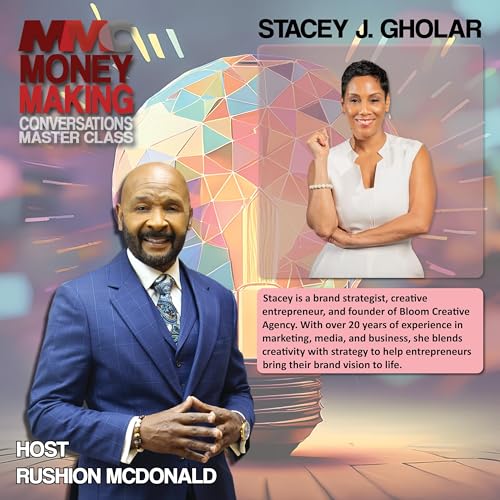
    Two-time Emmy and Three-time NAACP Image Award-winning, television Executive Producer Rushion McDonald interviewed Stacey Gholar.

    🔹 Summary of the Interview

    Stacey Gholar, founder of Bloom Creative Agency, shares her journey from being a young mother in Chicago to becoming a brand strategist and creative entrepreneur with over 20 years of experience in marketing, media, and business. She emphasizes the importance of aligning personal identity with brand strategy, especially in the digital age. Stacey discusses her approach to brand audits, the role of social media, the impact of AI, and her passion for empowering women through entrepreneurship and skincare.

    🔹 Key Takeaways 1. What Is a Brand Strategist?

    • A brand strategist helps individuals and businesses define and articulate their brand clearly.
    • “You are the brand, but you have to put the brand together in a way that people can articulate what you do.”

    2. Social Media Strategy

    • Stacey conducts social media audits to ensure alignment between personal and business branding.
    • She recommends having separate personal and business accounts, but acknowledges blending them when appropriate.

    3. Discovery Process

    • Her process starts with a discovery call to understand the client’s “why” and goals.
    • She believes passion must drive entrepreneurship—not just money.

    4. Digital Branding & AI

    • Stacey identifies as a digital brand specialist, helping Gen X women and others pivot into digital spaces.
    • She uses AI tools like ChatGPT and Google Gemini to enhance productivity but values human connection.
    • “AI is an asset… but I don’t solely rely on it.”

    5. Email Marketing

    • Email is still vital: “If you're solely on social media, you can lose your business in a minute.”
    • She advocates for funnel systems and community building outside of social platforms.

    6. Going Viral vs. Being Valuable

    • “You don’t need to go viral. You just need to be valuable.”
    • She went viral unintentionally with a review of Harold’s Chicken, but stresses the importance of sustainable value over fleeting attention.

    7. Brand Refresh & Outreach

    • Most of her clients come through word of mouth, but she’s expanding her reach via social media.
    • She encourages clients to step out of their comfort zones and engage in community-driven initiatives.

    8. Skincare Line

    • Stacey founded Skin Light Skincare at age 50 to promote pro-aging and natural beauty.
    • She now focuses on organic body oils that are clean, hydrating, and hormone-safe.

    🔹 Notable Quotes

    • “Experience has been the best teacher for me.”
    • “You don’t need to go viral. You just need to be valuable.”
    • “If you stop learning, you stop growing.”
    • “I want you to be a part of building your brand—not just me doing it for you.”
    • “Social media is great, but word of mouth is still real.”

    #SHMS #STRAW #BEST

    See omnystudio.com/listener for privacy information.

    Más Menos
    34 m
  • Life Benefits: He explains how Social Security Disability Insurance (SSDI) and Supplemental Security Income (SSI) really works.
    Mar 13 2026
    Listen and subscribe to Money Making Conversations on iHeartRadio, Apple Podcasts, Spotify, www.moneymakingconversations.com/subscribe/ or wherever you listen to podcasts. New Money Making Conversations episodes drop daily. I want to alert you, so you don’t miss out on expert analysis and insider perspectives from my guests who provide tips that can help you uplift the community, improve your financial planning, motivation, or advice on how to be a successful entrepreneur. Keep winning! Two-time Emmy and Three-time NAACP Image Award-winning, television Executive Producer Rushion McDonald interviewed Leonard S. Graham. Social Security disability advocate, Leonard S. Graham joined Rushion McDonald on Money Making Conversations Master Class to explain how Social Security Disability Insurance (SSDI) and Supplemental Security Income (SSI) really work, who qualifies, and how misconceptions prevent people—especially within the Black community—from receiving benefits they are legally entitled to. Graham has over 35 years of experience assisting clients nationwide with disability claims, appeals, and hearings. The conversation sheds light on the disability process, eligibility, the appeals system, the role of advocates vs. attorneys, and the importance of education, honesty, and persistence in navigating Social Security. 🎯 Purpose of the Interview The interview aims to: Educate listeners on Social Security disability benefits, including eligibility, filing, and appeals.Debunk common myths, such as the belief disability is only for seniors.Explain SSDI vs. SSI, work credits, resource limits, and Medicare connections.Highlight the importance of advocacy, especially for underserved communities unfamiliar with the system.Encourage individuals not to fear or stigmatize applying for disability, and to avoid misinformation from non‑professionals. 🔑 Key Takeaways 1. Disability Isn’t Just for Seniors Many mistakenly think Social Security disability is only for people over 65, but anyone with the required work credits can qualify, regardless of age—even individuals in their 20s or 30s. 2. Working Does NOT Automatically Disqualify You Applicants can work while applying as long as they do not exceed the monthly substantial gainful activity (SGA) threshold of $1,690 per month. 3. Every Claim Is Unique—Don’t Compare Your Case to Others Graham warns clients not to take advice from neighbors or relatives because each disability case depends on medical evidence, work history, age, and individual conditions. 4. SSDI Requires Work Credits; SSI Is Needs-Based SSDI: Requires 20 credits minimum, 40 credits for maximum benefit, earned through past work. Assets do not affect eligibility.SSI: For people with low resources ($2,000 single / $3,000 married). Primary home/car do not count as resources. 5. Medicare Comes After Approval Medicare eligibility begins 24 months after being awarded SSDI benefits. 6. Appeals Are Normal—Most Initial Claims Are Denied 95% of initial applications are denied, and the real opportunity often comes during a hearing before an administrative law judge. Persistence is essential. 7. Honesty Prevents Fraud & Overpayments Applicants should always disclose their financial situation truthfully to avoid fraud investigations and repayment demands. 8. Disability Benefits Can Provide Back Pay Approved claimants often receive a Notice of Award detailing monthly benefits and any back pay owed. Representatives are only paid from back pay—not monthly benefits. 9. Stigma & Fear Prevent People from Applying Graham emphasizes that pride, fear, and misinformation often stop people—especially in the Black community—from seeking help, even when disability support could save them financially. 🗣️ Notable Quotes ✔ On Who Needs Disability “What if you get in a car accident… or have an illness and you can’t work? Those are reasons to file for disability.” ✔ On Misinformation “Don’t talk to your neighbor or relatives about your claim… Each claim is its own individual claim.” ✔ On Work Limits “You can still work and have an active claim as long as you don’t gross over $1,690 a month.” ✔ On Stigma “Some people feel applying for benefits makes them look a certain way. But the system is there to help you when you are unable to work.” ✔ On Honesty “Just tell the truth. If they catch you on the fraud side, you’ll have to pay the money back.” ✔ On Perseverance “Getting a denial is nothing out of the norm… The key is to continue with the claim.” #SHMS #STRAW #BESTSee omnystudio.com/listener for privacy information.
    Más Menos
    24 m
  • Brand Building: Her firm helps individuals and organizations unlock potential, elevate performance, and lead with purpose, specializing in STEM leadership.
    Mar 5 2026
    Two-time Emmy and Three-time NAACP Image Award-winning, television Executive Producer Rushion McDonald interviewed Bamidele Farinre Founder of No Ceiling Consulting, a biomedical scientist, STEM expert, agile project manager, and advocate for professional development, mentorship, and removing internal and systemic limitations (“ceilings”). They discuss her STEM background, the evolving role of AI in science, the meaning of “no ceilings,” navigating personal and professional barriers, mentorship, setbacks, agile leadership, and how individuals—especially people of color—can create opportunity even in the face of bias and structural limitations. 🎯 Purpose of the Interview The purpose of having Bamidele on the show was to: 1. Highlight her work at No Ceiling Consulting Her firm helps individuals and organizations unlock potential, elevate performance, and lead with purpose, specializing in STEM leadership, DEI, professional development, and agile project management. 2. Explore the concept of “No Ceilings” She provides a framework for breaking through personal and professional barriers—emphasizing that many “ceilings” are internal, learned, or based on access and systemic issues. 3. Discuss STEM, AI, and the future of work She explains the growing role of automation and AI, how it reshapes STEM roles, and why professionals must upskill, adapt, and embrace professional development. 4. Provide strategies for career advancement Her insights include mentorship, persistence, self‑advocacy, managing setbacks, and adopting agile mindsets. 💡 Key Takeaways 1. STEM + AI = New Opportunities, Not Job Loss Automation and AI enhance efficiency, reduce manual labor, and create new roles—especially in labs and diagnostics. Instead of replacing workers, AI demands that professionals upskill and leverage technology for faster, better outcomes..txt).txt) 2. “No Ceilings” Means Removing Internal + External Barriers Bamidele distinguishes between: Personal ceilings Internal doubtsImposter syndromeFeeling “not enough” despite capabilityLearned perceptions from bias or discouraging environments Professional ceilings Being overlooked for opportunitiesLack of access to resources (even when resources exist)Systemic barriers, bias, and limited upward mobility “No ceilings” means operating from a mindset of possibility, not limitation. 3. Mentorship Is the Missing Link in Many Careers Mentorship provides: GuidanceAccessA blueprint from those who have “been there”Confidence building She explains that while mentorship is more visible today, access to the right mentorship still matters. 4. Setbacks Are Strategies in Disguise She argues setbacks can redirect you to more aligned paths. Her personal example: She failed her A‑level science subjects in the UKA lecturer told her to “rethink her career”Instead, she re‑enrolled, tried again, and succeeded Setbacks force reassessment, new strategies, and new paths—if you don’t let them define you. 5. Professional Success Requires Initiative and Advocacy She emphasizes: Don’t wait for opportunities—go after themKnock on multiple doorsApply for roles even if you don’t feel 100% readyLearn from interviews even if you don’t get the job Rushion supports this point with his IBM story: opportunity started when he stopped complaining and clearly shared his goals. 6. Agile Leadership Applies Beyond Technology Agile principles help leaders: Think quickly and adaptFocus on collaboration and accountabilityEncourage self‑managementSupport teams through “servant leadership”Reflect and iterate rather than waiting for perfect plans Agile mindset = resilience + responsiveness. 7. Faith, Vision, and Purpose Drive Her Journey Bamidele speaks candidly about: Faith guiding her through rejection and setbacksConversations with God grounding herBelieving her life is a “living testimony” of grace and perseverance 🗣 Notable Quotes (with citations) On AI and automation “Automation makes life easier… without it, manual methods take hours, weeks, months to get results.”.txt) [Bamidele F…(Podcast) | Txt] On embracing AI “AI is not taking your jobs, but those that ignore the AI will be left behind.” On personal ceilings “You’re thinking to yourself, ‘I can’t do it,’ even though you have the evidence to show you can.” On professional ceilings “You may have access, but you don’t have access to access.” On initiative “I don’t wait for opportunities—I always go for it. Worst case, you’ll say no.” On setbacks “When you have a setback, you’re thinking: what can I do? This can’t stop me.” On mindset “Life is all about risk. You have to look for solutions; there has to be another way.” On faith “Grace carried me to where I am today… my life is a living testimony.” On the meaning of ‘No Ceilings’ “Why do we even have a ceiling in the first place? Let’s operate in a world where we don’t...
    Más Menos
    32 m
  • Brand Building: He gives insights on relationship-building, authenticity, and visibility—reinforcing that in the digital era, it’s not just “who you know,” but who knows you.
    Mar 3 2026
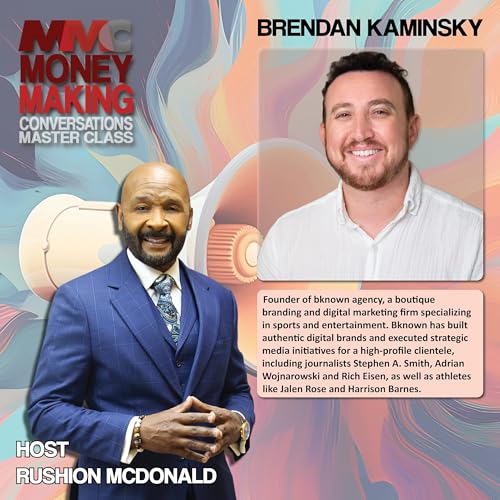
    Listen and subscribe to Money Making Conversations on iHeartRadio, Apple Podcasts, Spotify, www.moneymakingconversations.com/subscribe/ or wherever you listen to podcasts. New Money Making Conversations episodes drop daily. I want to alert you, so you don’t miss out on expert analysis and insider perspectives from my guests who provide tips that can help you uplift the community, improve your financial planning, motivation, or advice on how to be a successful entrepreneur. Keep winning! Two-time Emmy and three-time NAACP Image Award-winning television Executive Producer Rushion McDonald interviewed Brendan Kaminsky. Founder of B Known Agency, a boutique branding and digital marketing firm specializing in sports and entertainment. Kaminsky shares his journey from consulting, to working at ESPN, to eventually launching his own agency. He discusses helping major personalities like Stephen A. Smith, Jalen Rose, Harrison Barnes, and Rich Eisen develop strong social media identities and storytelling strategies. Brendan explains why he left ESPN after six and a half years—despite the security, prestige, and Disney benefits—to pursue entrepreneurship. He describes how brand building has shifted from traditional media to a landscape where relatability, vertical video, audience engagement, and consistent content matter more than follower counts. He also talks about the pressure of managing public-facing work in real time, the importance of being accessible to high‑profile clients, the rising role of AI in content creation, and how social platforms have become core to modern marketing strategies. Additionally, Brendan shares specific examples of working with Jalen Rose on mixing sports commentary with community-focused storytelling and describes how Rich Eisen’s annual “Run Rich Run” 40‑yard dash evolved into a signature charitable brand moment. The interview closes with insights on relationship-building, authenticity, and visibility—reinforcing that in the digital era, it’s not just “who you know,” but who knows you. PURPOSE OF THE INTERVIEW 1. To highlight Brendan Kaminsky’s entrepreneurial journey McDonald explores how Kaminsky transitioned from a major corporation (ESPN) to founding a successful agency. 2. To educate listeners on the evolving world of branding and digital media Kaminsky explains how branding now depends on relatability, vertical video, and engagement over follower count. 3. To provide actionable guidance for entrepreneurs and creators The interview teaches how consistency, accessibility, and storytelling help build a recognizable digital brand. 4. To show how athletes and media personalities use content to expand influence Brendan walks through real client strategies—from Jalen Rose’s community work to Rich Eisen’s fundraising dash. 5. To explore the role of AI in modern marketing Kaminsky discusses how AI assists with analytics, research, and identifying viral content moments. KEY TAKEAWAYS 1. Relatability drives modern branding People connect with authenticity, not polished promotion. Talk to your audience, not at them. 2. Engagement matters more than follower count Algorithms reward content that resonates, regardless of how many people follow you. A creator with 10,000 followers can hit a million views. 3. Social media requires presence and accessibility High-profile clients expect responsiveness; being available is key to agency success. 4. Vertical video is the new standard Optimizing content for mobile consumption is essential—TV graphics no longer dictate how content is built. 5. AI is an asset, not a threat Kaminsky uses AI for virality scoring, caption suggestions, research, and identifying strong clips from long-form content. 6. Data tells the story Success can be clearly measured through views, engagement, and growth—unlike billboards or traditional media. 7. Use “hot topics” to highlight deeper work For clients like Jalen Rose, trending sports conversations help drive attention to community-focused initiatives like his leadership academy. 8. Brand moments can start from something small Rich Eisen’s 40-yard dash evolved into a signature charity event and content anchor. 9. Entrepreneurship requires trusting your gut He left ESPN without telling anyone beforehand to avoid discouragement—because he felt the pull to build his own vision. 10. Visibility creates opportunity In the digital era, it’s not just who you know—it’s who knows you. NOTABLE QUOTES On entrepreneurship “I trusted my gut… I didn’t tell one person I was leaving ESPN because I didn’t want anyone to make me doubt myself.” On branding “People want to relate to you. They want to get to know you.” “Talk directly to your audience.” On social metrics “It’s become a lot more about engagement and views than total follower number.” On accessibility “You could be the best at your job, but if a client can’...
    Más Menos
    28 m
  • Financial Tips: Her interview educates people on entrepreneurship, financial literacy, credit repair, estate planning.
    Feb 24 2026
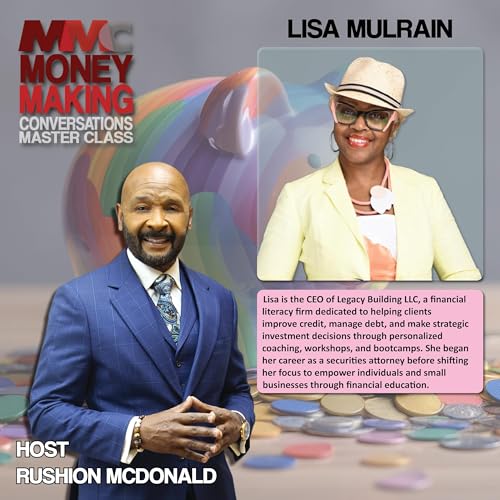
    Listen and subscribe to Money Making Conversations on iHeartRadio, Apple Podcasts, Spotify, www.moneymakingconversations.com/subscribe/ or wherever you listen to podcasts. New Money Making Conversations episodes drop daily. I want to alert you, so you don’t miss out on expert analysis and insider perspectives from my guests who provide tips that can help you uplift the community, improve your financial planning, motivation, or advice on how to be a successful entrepreneur. Keep winning! Two-time Emmy and Three-time NAACP Image Award-winning, television Executive Producer Rushion McDonald interviewed Lisa Mulrain. CEO of Legacy Building LLC and founder of Mulrain Law, in a wide‑ranging conversation about financial literacy, credit repair, estate planning, community impact, and the mindset shifts required for long-term financial success. The discussion highlights her personal journey, her transition from federal service to entrepreneurship, and her mission to educate and empower individuals—especially in minority communities—to build and protect wealth. 🎯 Purpose of the Interview The purpose of Lisa’s appearance on Money Making Conversations Masterclass was to: 1. Educate listeners on financial literacy She breaks down credit repair, debt management, estate planning, and smart investing in simple, actionable terms. 2. Promote her services Lisa shares how Legacy Building LLC helps clients strengthen their financial footing and how Moraine Law protects the assets they build. 3. Inspire financial empowerment Lisa’s personal story—from growing up in a financially challenged environment to becoming a securities attorney and entrepreneur—reinforces the idea that financial transformation is possible for anyone. 4. Encourage mindset change She stresses that financial improvement begins with understanding one’s money mindset, especially for people raised in environments of scarcity. 💡 Key Takeaways Below are the major themes and lessons Lisa shares throughout the discussion. 1. Your Money Mindset Shapes Your Financial Life Lisa emphasizes that many financial problems stem from long‑standing beliefs formed during childhood—especially in communities where money was scarce. People often develop a “lack mentality”, influencing decisions like using credit irresponsibly or putting bills in a child’s name. She teaches clients to first understand why they ended up in financial trouble before addressing how to fix it. 2. Credit Repair Requires Understanding the Root Cause Lisa rejects quick‑fix credit repair approaches. Instead, she helps clients: Assess what led to their financial hardshipIdentify self-inflicted issues (overspending, poor planning)Contact creditors directlyNegotiate payoffs or settlementsAvoid repeating the same mistakes She notes that high‑interest credit cards (often 20%+) make it nearly impossible to pay off debt without a consolidation strategy. 3. Estate Planning Is Essential—Not Optional Lisa stresses that everyone, not just wealthy people or seniors, needs an estate plan. Key points: A will and trust prevent the state from deciding what happens to your assets.Even celebrities like Prince and Aretha Franklin suffered consequences of no estate plan, leading to long probate battles.Trusts allow individuals to manage their own assets during life and ensure smooth transfer after death.Estate planning protects homes, bank accounts, cars, jewelry, and other valuables. She also explains that a trust must be funded and a will acts as a secondary backup. 4. Smart Investing Starts Early and Happens Consistently Lisa outlines a clear investing roadmap: ✔ Use employer 401(k) match Not contributing at least, the match percentage (e.g., 4% in federal roles) means leaving free money on the table. ✔ Open and fund a Roth IRA After‑tax money → tax‑free growthContributions can be withdrawn without penalty before age 59½ in emergenciesLimits vary by age and year (e.g., $7,000 to $8,500) ✔ Open a brokerage account She prefers long‑standing firms like Charles Schwab and Fidelity that allow fractional investing. ✔ Time in the market beats timing the market Small consistent investments grow over time; you don't need large sums to start. ✔ Always research Look at a company’s history, layoffs, strategy, and performance over time before investing. 5. Combining Law + Finance Gives Clients Full Protection Lisa explains the unique advantage of running a financial literacy firm and a law firm: Legacy Building: teaches people to build assetsMoraine Law: protects those assets This integrated model helps clients avoid mistakes, shield wealth, and plan for long-term financial security. 6. Her Vision for Legacy Building LLC In 5 years, she sees: National and international expansionPartnerships with small businessesPartnerships with government agencies where employees earn good salaries but lack financial educationIncreased financial literacy and asset ...
    Más Menos
    29 m
  • Uplift: She founded Jackets for Jobs-it has provided professional attire and career training to more than 40,000 job seekers.
    Feb 17 2026
    Listen and subscribe to Money Making Conversations on iHeartRadio, Apple Podcasts, Spotify, www.moneymakingconversations.com/subscribe/ or wherever you listen to podcasts. New Money Making Conversations episodes drop daily. I want to alert you, so you don’t miss out on expert analysis and insider perspectives from my guests who provide tips that can help you uplift the community, improve your financial planning, motivation, or advice on how to be a successful entrepreneur. Keep winning! Two-time Emmy and Three-time NAACP Image Award-winning, television Executive Producer Rushion McDonald interviewed Dr. Alison Vaughn. International speaker, author, and CEO/founder of Jackets for Jobs, a Detroit-based nonprofit that, for over 26 years, has provided professional attire and career training to more than 40,000 job seekers. Rushion McDonald leads a deep-dive conversation into her origin story, faith-driven entrepreneurship, struggles, workforce development, women’s empowerment, and the profound human stories behind her mission. Purpose of the Interview The interview aims to: 1. Inspire entrepreneurs and community leaders By showing how faith, persistence, and purpose can build a 26‑year nonprofit that changes lives. 2. Highlight the importance of appearance and confidence in employment Vaughn explains how professional attire boosts self‑esteem and job‑seeker success. 3. Showcase the impact of Jackets for Jobs and encourage public support She explains donation needs, especially professional clothing and plus‑size attire. 4. Educate listeners about workforce development and women’s empowerment She outlines common barriers job seekers face and how proper support transforms families and communities. Key Takeaways 1. The “Catch‑22” That Sparked Her Mission Job seekers often lack professional clothing. Without clothing, they can’t get interviews; without interviews, they can’t get jobs. Jackets for Jobs was built to break that cycle. 2. Faith Was the Foundation Vaughn repeatedly attributes her longevity to divine guidance—leaving a career at United Airlines to follow a vision she didn’t fully understand at the time.“I stepped out on faith… God gave me the vision. 3. Longevity: 26 Years in a Tough Sector With most small businesses lasting 5–10 years, surviving 26 years—especially as a nonprofit—is extraordinary.Over 40,000 job seekers have been served. 4. Self-Education in Entrepreneurship With limited internet 26 years ago, she learned business through library books, including Grant Writing for Dummies and other “Dummies” titles.Her story was later featured in the Detroit News and USA Today, and the Dummies publishers even sent her books. 5. Workforce Development Explained Workforce development means helping unemployed residents gain jobs and stability—critical in Detroit, where unemployment has historically been high. 6. Women’s Empowerment: Changing Mindsets She noticed many women on government assistance had low confidence or relied on men financially.She wrote “Ms. Goal Digger, Not Gold Digger” to teach self-sufficiency, financial independence, and professional self-presentation. 7. Appearance = Confidence = Currency Professional attire changes posture, self-worth, and interview success.Clients leave “with a pep in their step,” she says. 8. The Emotional Toll and Motivation She recalls stories of clients who: survived sex trafficking,were sleeping in cars,struggled with multiple children and no resources,or rode the bus with infants in freezing weather. These moments keep her going but also weigh heavily.She emphasizes hiring staff who have compassion and resist judgment.] 9. Entrepreneurship vs. 9–5 Reality Entrepreneurship is “24/7,” especially in nonprofits where money must be accounted for with precision.People don’t just give to a cause—they give to a leader they trust. 10. Success Defined While she has celebrated major achievements like ringing the NASDAQ closing bell twice, she says real success is:“When someone unemployed calls me and tells me they have a job.”. Notable Quotes (All from Transcript) On Founding Her Nonprofit “I stepped out on faith… God gave me the vision.”.“If you didn’t have an outfit for an interview, you didn’t go… It was a catch‑22.”. On Longevity “To be able to say I have lasted 26 years… that’s a testimony in itself.” On Confidence “Confidence is currency.”.“Their posture is different… that’s why they’re going to get that job.”. On Entrepreneurship “If you want to start a nonprofit, be prepared for 24/7 and a lot of paperwork.”. “There’s a difference between day wear and date wear.”“I want you to change your mindset.”. On Impact “Everyone that walks through has a story… you have to have compassion and not judge.” On True Success “Helping someone get a job… that’s success to me.”. #SHMS #BEST #STRAWSee omnystudio.com/listener for privacy ...
    Más Menos
    28 m